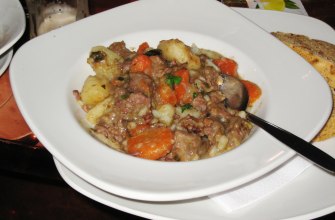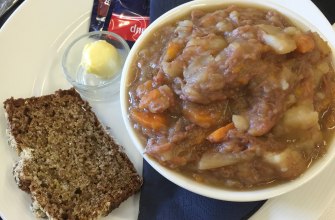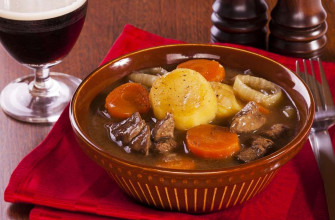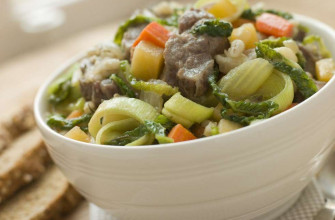
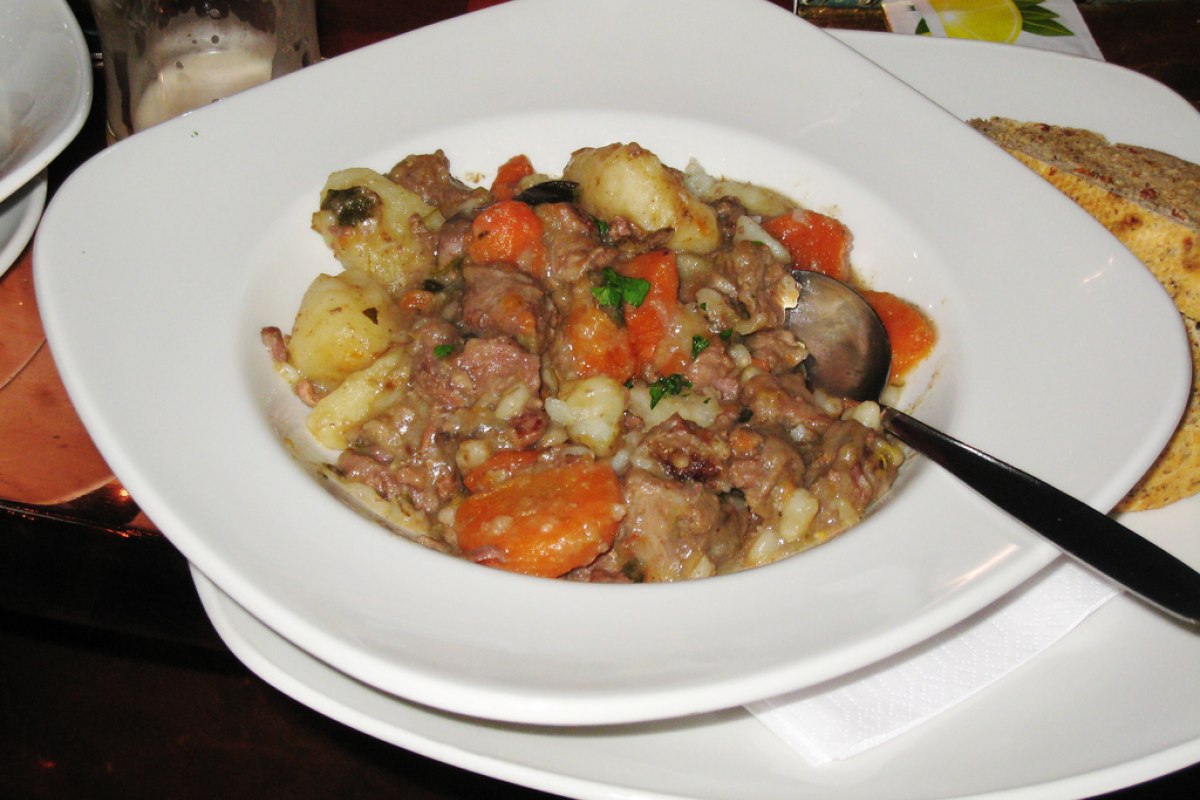
A slow cooker was made for Irish stew. The dish already wants long, gentle, unattended hours, and a crockpot delivers exactly that while you are out of the house. Load it in the morning before you leave, and come home in the evening to tender meat and a thick, rich broth waiting for you. The catch is that a slow cooker behaves differently from a pot on the hob, and a recipe copied straight across without adjusting the liquid, the layering and the potatoes turns out watery and pale. A few changes fix all of it.
Why a slow cooker suits this dish
Irish stew was built around the tough, cheap cuts that need hours to soften, mutton neck, lamb shoulder, beef shin. Those cuts are exactly what a slow cooker handles best, holding a low, steady temperature that breaks down collagen into silky richness without any attention. The same low heat that ruins a quick cut rewards a stewing one. For a working household the appeal is the old one made modern: the pot looks after itself while you do something else, which is precisely how the dish was cooked over a banked turf fire two centuries ago.
Slow cooking is older than Ireland’s kitchens
The electric slow cooker is new, but slow cooking in Ireland is ancient. Scattered across the country are nearly six thousand recorded fulachtaí fia, Bronze Age burnt mounds dating from around 1500 to 500 BC, each built around a wood-lined trough where water was heated with fire-cracked stones to cook slowly over hours. Ireland was the most prolific user of this hot-stone technology in Bronze Age Europe, and the sites appear in Irish literature from the ninth century, where folklore tied them to the Fianna, the warrior band of Fionn Mac Cumhaill. Whatever else they were used for, they record a four-thousand-year-old Irish habit of cooking low and slow with gentle, steady heat.
Closer to living memory, the cottage version was the bastible, the heavy three-legged cast-iron pot hung over the turf fire, with coals heaped on its lid. It baked the soda bread and held the stew that murmured away through the afternoon while the work got done. The electric slow cooker is the direct heir of that bastible over the hearth: the same principle of low, unattended heat and a heavy pot, only with a thermostat instead of a turf fire. Seen that way, a crockpot stew is not a modern shortcut but the newest tool for one of the oldest ways the Irish have cooked.
The appliance itself arrived from America. The slow cooker grew out of a 1930s bean cooker, was relaunched by the Rival company as the Crock-Pot in 1971, and boomed through the 1970s when an oil crisis and more women working outside the home made an all-day cooker that ran on pennies suddenly appealing. It reached Irish kitchens through the late 1970s and 1980s, and took quickly to the stew the bastible had cooked for centuries.
The three changes that matter
Treat the slow cooker as its own method rather than a hob recipe left on longer, and three adjustments make the difference.
- Use less liquid. A slow cooker is sealed, so almost nothing evaporates, and the vegetables release their own water as they cook. Cut the liquid in a hob recipe by about a third, or the stew comes out thin and soupy.
- Layer dense vegetables at the bottom. The heat comes from the base and sides, so carrots, onions and potatoes belong on the bottom where they cook through, with the meat sitting on top.
- Mind the potatoes. Eight hours dissolves a floury potato entirely. Use a slightly waxier variety, or cut the potatoes large and add them for the last couple of hours, so they thicken the broth without vanishing.
Get those three right and a slow cooker produces a stew indistinguishable from the stovetop version. Slow-cooker owners consistently report the same culprit behind a watery, disappointing pot: too much liquid, the single most common error when a hob recipe is copied across without cutting the stock back.
To brown or not to brown
The one step a slow cooker cannot do is build colour, so decide before you start. For a beef and Guinness stew, browning the meat and reducing the stout in a pan first is worth the extra few minutes, because that deep flavour is the whole point of the dish and the crockpot will never create it. For a paler lamb or traditional stew, you can skip browning entirely and stay true to the white-stew method, adding everything raw. Some modern slow cookers have a sear function that lets you brown in the same pot, which saves washing up. If yours does not, a frying pan is worth dirtying for a beef stew and worth skipping for a traditional one.
Slow cooker timings
The numbers depend on the meat and the setting, but these ranges are reliable.
- Lamb or beef on low: seven to eight hours, the best setting for tenderness.
- Lamb or beef on high: three and a half to four and a half hours when you are shorter on time.
- Potatoes added late: the final two hours on low, or one hour on high, to keep them whole.
- Dairy or cream: the last twenty minutes only, since long cooking splits it.
Resist the urge to lift the lid. Every peek releases heat and steam and adds fifteen or twenty minutes to the cook.
The science of the slow cook
The reason a cheap cut turns luxurious in a crockpot comes down to collagen. Tough cuts like neck, shin and shoulder are full of connective tissue that is rubbery when cooked fast but melts into gelatine when held at a low temperature for hours. That gelatine is what thickens the broth and gives a long-cooked stew its glossy, lip-coating body, the quality a quick stew never has. A slow cooker sits in the ideal window for that conversion, warm enough to break the collagen down but never hot enough to boil the meat into dry strings. The same gentle heat keeps the potatoes and onions slowly surrendering their starch into the liquid, so a properly built slow cooker stew thickens itself without any flour at all. Rushing the process on a high setting works, but the low setting gives a noticeably silkier result, which is why most cooks who own a slow cooker swear by the eight-hour day.
A slow cooker Irish stew recipe
This serves six and uses lamb for a classic result. Swap in beef and a can of stout for a Guinness version, browning the meat first.
Ingredients
- 1.3 kg lamb shoulder or neck, in large pieces
- 5 potatoes, a waxier variety, half in large chunks held back for later
- 3 onions and 2 leeks, sliced
- 3 carrots, in thick rounds
- 600 ml lamb or chicken stock, less than a hob recipe
- 1 tablespoon tomato puree, optional
- 2 bay leaves and a few sprigs of thyme
- 1 tablespoon cornflour, to thicken at the end if needed
- Sea salt, black pepper and chopped parsley
Method
- Layer the onions, leeks, carrots and the first half of the potatoes across the bottom of the slow cooker.
- Sit the lamb on top. For a beef and stout version, brown the meat and reduce the stout in a pan first.
- Add the stock, tomato puree if using, bay and thyme, and season. The liquid should come about halfway up, not cover everything.
- Cook on low for seven to eight hours, or high for four, without lifting the lid.
- Add the reserved chunky potatoes for the final two hours on low.
- If the broth is thin at the end, stir in a tablespoon of cornflour slaked in cold water and cook on high for fifteen minutes.
- Season, scatter with parsley and serve with brown bread.
It holds on the keep-warm setting for an hour or two without harm, and tastes even better reheated the next day.
What to serve and how to store it
A slow cooker stew comes out rich and thick, so the sides stay simple. Brown soda bread or a floury boiled potato handles the broth, with cold Irish butter. Buttered cabbage, kale or young carrots on the side add colour and a bit of bite against the soft stew. The dish keeps three days in the fridge and freezes for three months, and the long, gentle cook means it reheats better than almost anything, the flavour deepening each time. Cool it quickly and refrigerate within two hours, then warm it through gently on the hob rather than boiling, which would tighten the meat you spent all day softening.
Which stews work in a slow cooker
Not every version of the dish suits the method. The slow, collagen-melting cuts are perfect for it, but the delicate ones are not.
- Best in a crockpot: beef and Guinness, lamb, mutton and traditional stews, all of which want long hours.
- Fine with care: vegetarian stew, as long as you add quick vegetables and greens near the end so they do not turn to mush.
- Not suited: seafood stew, which cooks in minutes and turns rubbery over hours. Make that one on the hob.
Common questions
Do you need to brown meat before slow cooking Irish stew?
For beef and Guinness stew, yes, since the colour is the flavour and the crockpot cannot create it. For a pale lamb or traditional stew, you can skip browning and add the meat raw in the white-stew style.
Why is my slow cooker stew watery?
Too much liquid. A sealed slow cooker barely evaporates and the vegetables add their own water, so use about a third less than a hob recipe and thicken at the end with cornflour if needed.
How long does Irish stew take in a slow cooker?
Seven to eight hours on low or about four on high for lamb or beef. Low is better for tenderness. Add potatoes in the last two hours so they hold their shape.
Can you put raw potatoes in a slow cooker?
Yes, but floury potatoes dissolve over a long cook. Use a waxier variety, or add large chunks for only the final couple of hours so they thicken the broth without falling apart. If you prefer a floury potato for its flavour, keep the pieces extra large and accept that some will melt into the sauce and thicken it for you.
Related recipes
For the full background and every variation, see the Irish stew guide. For the stovetop methods, read Irish lamb stew and Irish beef stew.
Sources
- Bord Bia, the Irish Food Board
- Teagasc, potato varieties and storage
- Safefood Ireland, safe slow cooking guidance
- Irish Archaeology, fulacht fiadh and Bronze Age cooking
- Dúchas, the National Folklore Collection of Ireland
- National Museum of Ireland, Country Life
- Fáilte Ireland, National Tourism Development Authority
- Charles Haynes, Irish stew photograph, Wikimedia Commons, licensed CC BY-SA 2.0