Irish coffee was invented to warm up cold, stranded air passengers on the west coast of Ireland in 1943. A chef named Joe Sheridan poured whiskey into the coffee of shivering transatlantic travellers at the Foynes flying-boat terminal, floated cream on top, and created a drink that crossed the Atlantic and became a classic. The recipe is four ingredients and one piece of technique, the floating cream, that trips up most people who try it at home. This guide gives the real origin, the original recipe and the method that makes the cream sit on top instead of sinking.
The Foynes origin story
Before transatlantic jets, the flying boats that carried passengers between Europe and America landed at Foynes in County Limerick, on the Shannon estuary. On a bitter night in the winter of 1943, a flight bound for New York turned back to Foynes in bad weather, and the chef in the terminal restaurant, Joe Sheridan, set about warming the miserable passengers. He added Irish whiskey and sugar to hot coffee and topped each glass with lightly whipped cream. An American passenger, surprised and grateful, asked whether he was drinking Brazilian coffee. Sheridan answered that it was Irish coffee, and the name stuck. The Foynes terminal is now the Flying Boat and Maritime Museum, where the story and the original recipe are kept, and the town holds an Irish coffee festival in his memory. Sheridan himself was later hired away to the Buena Vista in San Francisco, carrying his recipe across the Atlantic in person, so the inventor and the bar that made the drink famous are part of the same unbroken story rather than two rival claims.
How it conquered America
The drink might have stayed a local curiosity but for a travel writer. Stanton Delaplane, a San Francisco columnist, tasted Irish coffee at Shannon and brought the idea back in 1952 to Jack Koeppler, a bartender at the Buena Vista Cafe in San Francisco. The Buena Vista began serving it on the tenth of November 1952 and has poured it ever since, by the thousands, becoming the place that made Irish coffee famous in the United States. Koeppler struggled at first with the cream, which kept sinking into the coffee, and the solution came from an unlikely source: the mayor of San Francisco, George Christopher, who ran a dairy and advised aging the cream for around two days so it would whip thicker and float. That dairy tip is the reason your Irish coffee works or fails.
The original recipe
Joe Sheridan’s Irish coffee was specific, and the original ingredients are worth following.
- Irish whiskey. Sheridan used Powers Gold Label, a peppery Dublin whiskey. Any good Irish whiskey works, smoother brands giving a gentler drink.
- Coffee. Hot, strong, freshly brewed black coffee, enough to fill most of the glass.
- Sugar. Demerara or brown sugar, not white. The sugar is not optional, because it does more than sweeten.
- Cream. Fresh cream, lightly whipped to a soft, just-pourable consistency, floated on top and never stirred in.
That is the whole drink. There is no cream liqueur, no spray can, no flavoured syrup. The pleasure is in drinking the hot, sweet, whiskey-laced coffee through the cool layer of cream.
Choosing the whiskey
The whiskey shapes the drink, and the choice is a matter of style. Joe Sheridan reached for Powers Gold Label, a robust, peppery Dublin pot-still whiskey with enough backbone to stand up to the strong coffee and sweet cream. A spicy whiskey like Powers or Redbreast cuts through and keeps the drink from turning cloying. A smoother, lighter blend such as Jameson or Tullamore Dew gives a gentler, rounder Irish coffee that lets the coffee lead. Avoid anything heavily peated or smoky, which fights the coffee rather than joining it, and there is no need to use an expensive aged whiskey, since the coffee and sugar would mask its finer notes anyway. A good standard Irish whiskey is exactly right. Irish whiskey itself is one of the three protected Irish spirits, triple-distilled for the smoothness that suits the drink.
An Irish coffee recipe
This makes one glass. A warmed, stemmed glass is traditional and stops the hot coffee cracking it.
Ingredients
- 1 measure of Irish whiskey, about 40 ml
- 2 teaspoons demerara or brown sugar
- Hot, strong black coffee to fill
- About 50 ml fresh cream, lightly whipped
Method
- Warm a stemmed glass by filling it with hot water, then pour the water out.
- Add the sugar and the whiskey to the warm glass.
- Pour in the hot coffee to about two centimetres from the rim and stir until the sugar is fully dissolved.
- Whip the cream until it just thickens but still pours, softer than for a cake.
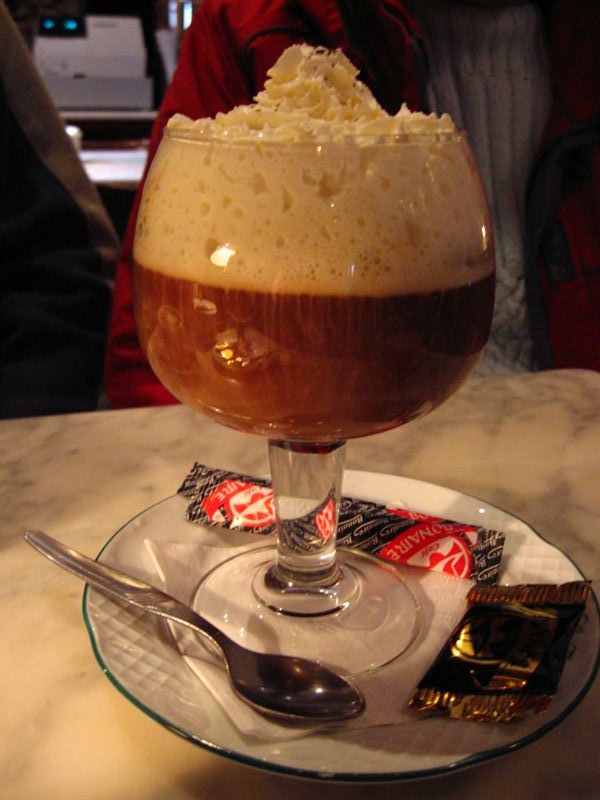
- Pour the cream slowly over the back of a warm spoon held just touching the surface, so it spreads and floats in a layer.
- Serve at once, without stirring, to drink the hot coffee through the cool cream.
The secret to floating the cream
The whole drink stands or falls on the cream, and three things make it float.
- Dissolve the sugar. Sugar makes the coffee denser, and the denser the coffee, the more easily the cream rests on it. A drink without sugar will not hold the float. This is why the sugar is part of the technique as much as the taste.
- Whip the cream to the right point. Soft peak is the target, thick enough to sit on the surface but still loose enough to pour. Over-whipped cream sits in a stiff lump; under-whipped cream sinks straight through.
- Pour over the back of a spoon. Holding a warm spoon against the surface breaks the fall of the cream so it spreads gently across the top rather than plunging in. Pour slowly.
Get those three right and the cream holds in a clean white layer that lasts to the bottom of the glass.
Common mistakes
- Skipping the sugar. Without it the coffee is too thin for the cream to float. Always dissolve the sugar first.
- Over-whipping the cream. Stiff cream sits in a blob instead of a smooth layer. Stop while it still pours.
- Using a cold glass. A cold glass cools the coffee and risks cracking. Warm it first.
- Stirring at the end. The point is to drink through the cream. Stirring turns it into a milky coffee and loses the contrast.
- Cheap instant coffee. The coffee carries the drink, so brew it strong and fresh.
Irish coffee and the hot whiskey family
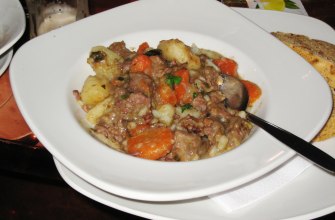
Irish coffee belongs to a small family of warming Irish whiskey drinks. The hot whiskey, or hot toddy, swaps the coffee and cream for boiling water, sugar, a slice of lemon studded with cloves and a measure of whiskey, the traditional Irish cure for a cold. The Baileys-based variations and the modern coffees laced with Irish cream liqueur are descendants of Sheridan’s idea rather than the original. For a non-alcoholic finish to a meal, the same glass of strong coffee with a float of cream and no whiskey is sometimes called a Gaelic coffee. Whichever you pour, an Irish coffee is the natural end to a dinner of Irish stew and a slice of something sweet.
Common questions
Who invented Irish coffee?
Chef Joe Sheridan, at the Foynes flying-boat terminal in County Limerick in the winter of 1943, who added whiskey and sugar to coffee and floated cream on top to warm cold transatlantic passengers.
What whiskey is best for Irish coffee?
Joe Sheridan used Powers Gold Label, a peppery Dublin whiskey. Any good Irish whiskey works. Smoother brands give a gentler drink, spicier ones a bolder one.
Why does the cream sink in my Irish coffee?
Usually no sugar in the coffee, or cream whipped to the wrong texture. Dissolve the sugar so the coffee is dense, whip the cream to a soft pour, and float it over the back of a warm spoon.
Do you stir Irish coffee?
You stir to dissolve the sugar before adding the cream, then never again. The drink is meant to be sipped hot through the cool cream layer, so stirring it after spoils the effect.
What glass do you serve Irish coffee in?
A warmed, stemmed glass is traditional, both to show off the layers of dark coffee and white cream and to keep the heat in. The stem keeps the hot glass off the hand, and warming it first stops the hot coffee from cracking the glass. A heatproof tulip-shaped glass is the classic choice, and Irish glassmakers make handsome versions, but any warmed heatproof glass does the job.
Related recipes
For what to drink it after, see the guide to Irish desserts and traditional Irish food.
Sources
- Foynes Flying Boat and Maritime Museum, Irish Coffee Centre
- Jameson, the origin of Irish coffee
- Bord Bia, the Irish Food Board
- Fáilte Ireland, National Tourism Development Authority
- The Irish Times, food and drink
- Good Food Ireland