
The food the world eats on Saint Patrick’s Day is mostly not Irish, and the day itself began as something quieter than a parade. For most of its history the seventeenth of March was a single day off from the long fast of Lent, when an Irish family could eat meat, drink a toast and go to Mass, and the feast on the table was spring lamb or bacon and cabbage, never the corned beef of the American version. This guide sorts the real traditions from the green-dyed inventions and maps a proper Irish Saint Patrick’s Day menu, drawn from the dishes the Irish actually cook.
The man and the feast
Saint Patrick, the patron saint of Ireland, died on the seventeenth of March in the year 461, having spent decades as a missionary bishop founding churches and schools across the island. The date of his death became his feast day, Lá Fhéile Pádraig in Irish, the Day of the Festival of Patrick. For more than a thousand years it was a religious holy day rather than a carnival, marked by Mass, the wearing of a sprig of shamrock, and a family meal. The legends, that he drove the snakes from Ireland and used the three-leaved shamrock to explain the Trinity, grew up around the day and gave it its green emblem, but the heart of it was a saint’s feast in the middle of spring.
A day off from Lent
The thing most people have forgotten is that Saint Patrick’s Day fell in the middle of Lent, the forty-day fast before Easter when meat, drink and rich food were given up. The feast day was a sanctioned break in that fast, the one day in six weeks when the rules lifted. That single fact shaped everything about the traditional meal. After weeks of plain food, the day was a chance to kill the bacon, cook a proper dinner and pour a drink, which is why eating and drinking became bound up with it. The celebration was not excess for its own sake; it was a brief, blessed pause in a long abstinence, and the food carried the weight of that release.
What the Irish actually eat
The traditional Saint Patrick’s Day dinner in Ireland is not corned beef. It is one of two things, both tied to the spring season and the cottage larder.
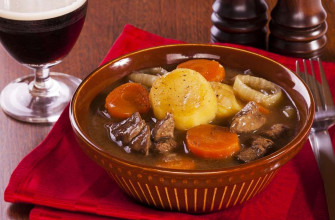
- Spring lamb stew. Lamb comes into season in March, so a pot of Irish lamb stew made with new-season meat is the natural feast-day dish, the warming centre of the meal.
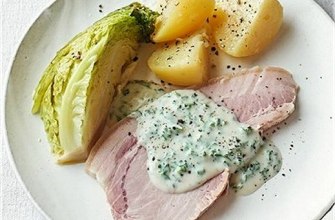
- Bacon and cabbage. The other classic is bacon and cabbage, a boiled bacon joint with cabbage cooked in the same pot, the dish most Irish people would name as their own.
Around the main dish sits the rest of the Irish table: floury potatoes, a loaf of soda bread to mop the plate, and something sweet to finish. None of it is dyed green, and none of it is corned beef.
The corned beef myth
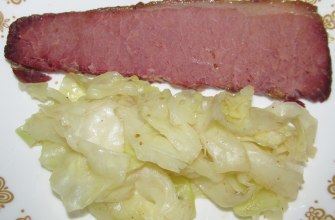
The corned beef and cabbage served across America every March is a genuine Irish-American tradition, but it is not what Ireland eats. The story is one of emigration. In Ireland the everyday meat was the pig, so the feast-day dish used bacon. When famine emigrants reached the cities of America in the nineteenth century, they found beef cheaper and more plentiful than pork, and bought cheap salt-cured corned beef from the Jewish butchers of their neighbourhoods. The substitution stuck, and corned beef and cabbage became the holiday meal of Irish America, a dish born of the diaspora rather than the homeland. The full story sits in the corned beef guide. Order it in a Dublin tourist pub and you are eating a taste of New York, not of Ireland.
Drowning the shamrock
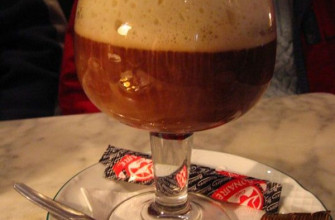
The drink of the day has its own old custom, far older than green beer. At the end of the celebrations the sprig of shamrock worn in the lapel was dropped into the bottom of a cup, which was then filled with whiskey, and the drink toasted to Saint Patrick, to Ireland and to the company. This was Pota Phádraig, Patrick’s Pot, and it came with a final flourish: the shamrock was either swallowed with the last mouthful or lifted out and thrown over the left shoulder for good luck. It was a single, ceremonious drink to close the day, the Irish opposite of a day of green pints. A glass of Irish whiskey, a hot Irish coffee, or a measure of Irish cream carries the same spirit far better than anything dyed.
How the parade came home
The parade, the loudest part of the modern day, is not an Irish invention at all. It came from America. The first Saint Patrick’s Day parade was held not in Dublin but in Boston in 1737, followed by New York in 1762, when homesick Irish soldiers and emigrants marched to remember home. The custom grew through the great Irish-American cities, and in 1962 Chicago began dyeing its river green, a flourish that started when pollution-control workers found the dye traced illegal discharges and decided it could mark the day instead. Ireland itself made the feast an official public holiday only in 1903, through the Bank Holiday Act introduced by the Irish MP James O’Mara, and the big carnival parades now seen in Dublin were largely imported back from the diaspora in the twentieth century. The day the world celebrates was, in large part, shaped abroad and sent home.
The wearing of the green
The shamrock is the one truly Irish emblem of the day, and it has its own quiet ritual. By tradition a fresh sprig of three-leaved shamrock is worn in the lapel or pinned to the coat for Mass and the day’s celebrations, a living badge rather than a plastic one. Children were given a small bunch to wear to school, and a sprig was sent in letters to relatives abroad so the emigrant could pin a piece of home to the coat on the day. The colour green followed from the shamrock and from older associations with Ireland itself, but in the traditional day it was a single green sprig, not a head-to-toe costume. Even the green of the shamrock had meaning, standing for the spring that the feast sat in and for the saint’s lesson of the Trinity, three leaves on one stem. The modern sea of green hats and beads is a long way from that small, deliberate sprig of real clover.
Saint Patrick’s Day around the world
No national day has travelled further. Wherever the Irish emigrated, in their millions through the famine and after, they carried the feast with them, and it took root in the cities they settled. New York, Boston, Chicago and Sydney hold some of the largest celebrations on earth, often dwarfing anything in Ireland itself, and landmarks from the Sydney Opera House to the Chicago River turn green for the night. Montserrat, a tiny Caribbean island settled by Irish indentured servants, marks it as a national holiday. This global reach is why the day looks the way it does: the parades, the green rivers and the public spectacle were built by the diaspora and beamed back to a home country that, for most of its history, marked the day far more soberly. Ireland has since embraced the festival version, building a multi-day Saint Patrick’s Festival in Dublin, but the contrast between the quiet holy day and the worldwide party remains the day’s central tension.
Festive baking for the day
The sweet end of the Saint Patrick’s table leans on the same baking that fills the Irish tin all year. A porter cake, dark and stout-soaked, suits a celebration, as does a warm apple cake with custard. Slices of buttered barmbrack and a plate of biscuits sit beside the pot of tea that follows the meal. Because the day was a release from Lenten plainness, the baking mattered: a proper cake was part of marking the break in the fast. Green-iced cupcakes belong to the modern commercial day; a porter cake belongs to the real one.
The green-everything age
Somewhere in the journey from a Lenten holy day to a global party, the food and drink turned green and the meaning thinned. Green beer, green milkshakes and shamrock-shaped everything belong to the modern commercial day rather than any Irish tradition, and most Irish people regard them with a wince. The authentic version is quieter and better: a good dinner of lamb or bacon, a loaf of soda bread, a proper drink and, if you like, a sprig of real shamrock. Cooking the traditional meal is the surest way to mark the day as the Irish do, rather than as the marketing does.
A Saint Patrick’s Day menu from the Irish kitchen
For a Saint Patrick’s Day dinner built on real Irish food rather than clichés, the cluster has every course. This is a menu drawn entirely from traditional dishes.
- To start: an Irish starter of smoked salmon on brown bread, or a bowl of Irish potato soup or seafood chowder.
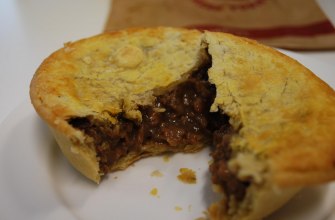
- The main: spring lamb stew or bacon and cabbage, with a beef and Guinness pie for a heartier table.
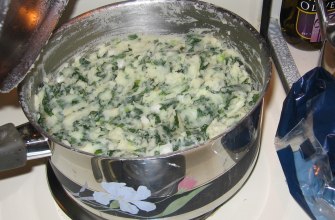
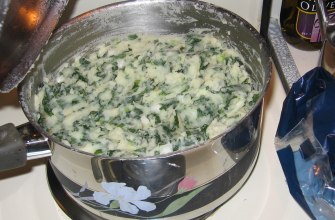
- On the side: colcannon or champ, and a loaf of brown or soda bread.
- To finish: Irish apple cake with custard, or a slice of porter cake.
- To drink: Irish coffee, a measure of homemade Irish cream, or a pint of stout.
Every dish on that list is covered in full in the traditional Irish food guide, the pillar that ties the whole table together.
Frequently asked questions
What do the Irish actually eat on Saint Patrick’s Day?
Traditionally spring lamb stew or bacon and cabbage, with potatoes and soda bread, not corned beef. Corned beef and cabbage is the Irish-American version, born of cheaper beef in the cities of America.
Why is corned beef associated with Saint Patrick’s Day?
Because Irish emigrants in nineteenth-century America found beef cheaper than the bacon they ate at home and bought cheap corned beef from Jewish butchers. The dish became the holiday meal of Irish America, but it never replaced bacon and cabbage in Ireland.
What is drowning the shamrock?
An old custom of dropping the day’s shamrock into a glass of whiskey, drinking a toast, and then either swallowing the shamrock or throwing it over the shoulder for luck. The drink was called Pota Phádraig, or Patrick’s Pot.
When did Saint Patrick’s Day become a holiday?
It became an official public holiday in Ireland in 1903 under the Bank Holiday Act introduced by the MP James O’Mara. The big parades, however, began in America, in Boston in 1737, and were later imported back to Ireland.
Sources
- Ireland.ie, official Saint Patrick’s Day
- National Museum of Ireland, history of Saint Patrick’s Day customs
- Bord Bia, the Irish Food Board
- Dúchas, the National Folklore Collection of Ireland
- Fáilte Ireland, National Tourism Development Authority
- National Museum of Ireland, Country Life