Italy is one of the most rewarding cycling destinations in Europe. Cycling is a deeply rooted national passion in the country, and every year tens of thousands of cycling enthusiasts from across the world come to Italy to enjoy some of the most beautiful rides on the continent. Two factors make Italy such a great cycling destination: the famously mild Mediterranean weather and the extraordinary range of landscapes packed into a single country, from the alpine passes of the north to the rolling vineyards of Tuscany, the flat coastal plains of the Adriatic and the wild mountain villages of the south. This 2026 guide walks through the best cycling routes, the most famous races, the rules of the road, the bike-friendly trains, the seasons and the practical details for planning a cycling holiday in Italy.
Why Italy Is a Cycling Paradise
Italy invented modern road cycling. The country gave the world legends such as Fausto Coppi, Gino Bartali, Marco Pantani and Vincenzo Nibali, and Italians have won the Giro d’Italia more than any other nation. The cycling culture goes far beyond elite racing: every Sunday morning, the country roads of Tuscany, Emilia-Romagna, Veneto and Lombardy fill with amateur club riders in colourful kits stopping at local cafes for an espresso and a brioche after their morning loop. The infrastructure for visiting cyclists has expanded enormously over the past decade, with hundreds of dedicated cycling hotels, guided tour companies, GPS route networks and protected greenways now available across the country.
Italy also holds an extraordinary geographical variety for such a small country. You can climb a 2,500-metre alpine pass in the Dolomites in the morning and ride through olive groves on the Mediterranean coast the same week. The food, the wine, the historic towns and the warm welcome of the locals all add to the experience.
Cycling and Trains in Italy
Unlike cycling in some other European countries such as Spain or Switzerland, cyclists in Italy may find that getting around with a bike on public transport requires a little planning. Many trains in Italy allow passengers to bring bicycles on board, but the rules vary depending on the type of train.
The main categories:
- Regional trains (Regionale and Regionale Veloce). Almost all regional trains accept bicycles in their dedicated bike compartments. Look for the bicycle logo on the side of the carriage.
- Long-distance high-speed trains (Frecciarossa, Frecciargento, Frecciabianca). These services accept bicycles only if they are folded or fully disassembled inside a bike bag with maximum dimensions of 80x110x40 cm. A built-up bike cannot be brought on a Frecciarossa unless it is broken down.
- Italo high-speed trains. Same rule: bikes must be packed into a bike bag.
- Intercity trains. Most Intercity services have a limited number of bicycle spaces that must be reserved in advance.
It is forbidden to bring a built-up bicycle into the passenger cabin on any Italian train. The cost is reasonable: a bicycle ticket on regional trains in 2026 costs around 3.50 to 5 euros for a full day, valid on as many regional trains as you like within 24 hours. This is a great option if you plan to do several short cycling runs in a single day and want to use the trains to skip the less scenic stretches between them.
Most ferry services in Italy, including those across Lake Garda, Lake Como, the Bay of Naples and the Adriatic to Croatia, also accept bicycles for a small extra fee.
The Cycling Season in Italy
Because the weather in Italy is generally good for most of the year, there is no single cycling season, and a great trip can be had at almost any time. The exceptions are the high alpine passes in the north, which are typically closed by snow from October or November through May or June. Major passes like the Stelvio, the Gavia and the Mortirolo only open from June to early October, and many cyclists time their trips around these dates.
The general cycling calendar:
- April to early June. Spring is one of the best windows for southern and central Italy. Tuscany, Umbria, Sicily and Puglia are at their most beautiful, with wildflowers in full bloom, mild temperatures and long daylight.
- Late June to early September. Peak summer. Ideal for the high alpine passes, the Dolomites and the Italian lakes. The lowlands and coast can get very hot, with temperatures often above 35 degrees Celsius.
- Mid-September to late October. The classic shoulder season. Stable weather, golden vineyards in Tuscany and Piedmont, the harvest in full swing and far fewer crowds than the summer months.
- November to March. Cycling continues year-round in the south, in Sicily and along the Mediterranean coast. The north shuts down at altitude but the Po Valley remains rideable on milder days.
Italy is not an excessively rainy country, and the chances are you will see far less rain than in northern Europe, but a lightweight waterproof jacket belongs in every saddlebag just in case.
The Best Cycling Regions and Routes in Italy
Italy holds literally hundreds of cycling routes that span the length and breadth of the country. Wherever you go, there are great rides nearby. The best place to start your research is the local tourist information office of the town where you are staying. The most famous cycling regions are listed below.
Tuscany and the Eroica Heartland
Tuscany is the most famous cycling region in Italy among foreign visitors, thanks to its rolling hills, cypress-lined country roads, vineyards, hilltop villages and warm Mediterranean climate. The area around Siena, Florence, Chianti and the Val d’Orcia ranks among the most photographed landscapes in Europe. The famous L’Eroica cycling event, held every October in the village of Gaiole in Chianti, brings together thousands of cyclists riding on vintage steel bikes along the white gravel roads (strade bianche) that have become a symbol of Tuscan cycling.
The Dolomites
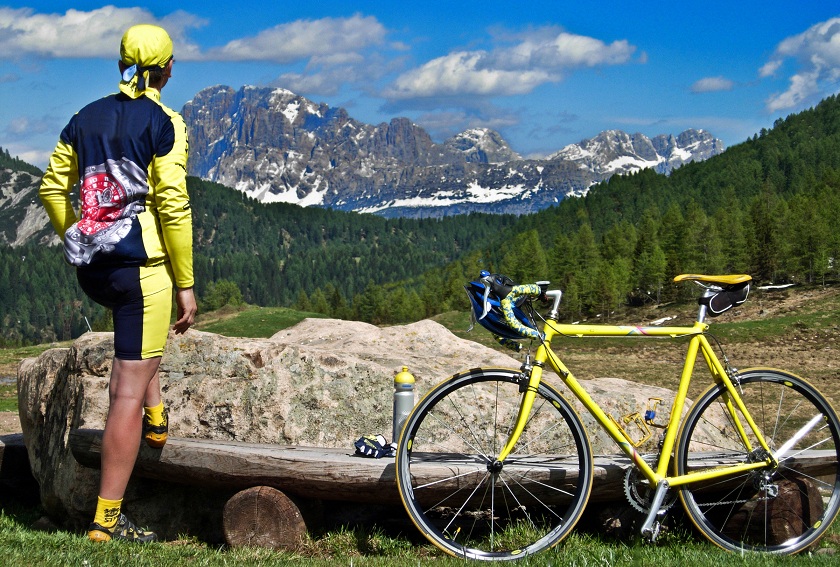
The Dolomites in northeastern Italy offer some of the most spectacular alpine cycling on the planet. Famous climbs include the Passo Pordoi, Passo Sella, Passo Gardena, Passo Falzarego, Passo Giau and the legendary Sellaronda circuit, a four-pass loop that climbs over 1,800 metres in around 55 km. The Dolomites are also the setting for the famous Maratona dles Dolomites sportive every July, one of the most prestigious mass-participation cycling events in Europe.
The Alps and the Stelvio Pass
The Italian Alps hold some of the most legendary climbs in cycling, including the Passo dello Stelvio, with its famous 48 hairpin bends, the Passo del Mortirolo, the Passo Gavia, the Colle delle Finestre and the iconic Cima Coppi climbs that frequently feature in the Giro d’Italia. The high passes typically open from late May or June through early October.
The Italian Lakes
Lake Como, Lake Garda and Lake Maggiore offer beautiful lakeside roads, dramatic mountain backdrops and pleasant cycling at all elevations. The famous Ghisallo climb above Lake Como is the spiritual home of Italian cycling, with a small chapel dedicated to the Madonna del Ghisallo, the patron saint of cyclists, and an excellent cycling museum next door.
Piedmont and the Wine Roads
The wine regions of Piedmont, including the Langhe, Roero and Monferrato hills around Alba and Barolo, offer some of the most rewarding cycling in northern Italy. The roads are quiet, the scenery is stunning, and you can stop for a glass of Barolo, Barbaresco or Nebbiolo at almost any village. UNESCO inscribed the Piedmont vineyard landscape on the World Heritage list in 2014.
Puglia and the Heel of Italy
The southern region of Puglia offers flat coastal cycling, white-sand beaches, ancient olive groves with thousand-year-old trees and the unique trulli houses of Alberobello. The Ciclovia dell’Acquedotto, a long-distance route along the historic aqueduct of Apulia, is one of the most ambitious cycling projects in southern Europe.
Sicily and Sardinia
Both major Mediterranean islands offer year-round cycling with mild winters, dramatic mountain interiors and stunning coastlines. Sicily holds the famous climb of Mount Etna, one of the most challenging volcanic ascents in Europe, while Sardinia is famous for its quiet inland roads, rocky coves and the dramatic Supramonte mountains.
The Via Francigena and Long-Distance Routes
The historic Via Francigena, the ancient pilgrim route from Canterbury to Rome, has been adapted for cyclists and offers a 1,000 km north-south route through Tuscany, Lazio and beyond. Other major long-distance routes include the Ciclovia del Sole (along the spine of Italy from the Brenner Pass to Sicily), the Ciclovia VENTO along the Po river from Venice to Turin, and the Adriatic coastal route that runs the length of Italy’s eastern coast.
The Giro d’Italia and Other Cycling Competitions
The main cycling competition held in Italy is the famous Giro d’Italia, one of the three Grand Tours of professional road cycling alongside the Tour de France and the Vuelta a Espana. The Giro is held every May and lasts about three weeks, with stages that crisscross the entire country and traditionally finish with brutal climbs in the Alps and Dolomites in the final week. The race has been running since 1909 and is famous for its pink leader’s jersey, the maglia rosa, named after the colour of the Italian sports newspaper La Gazzetta dello Sport that founded the race. Italian cyclists have historically dominated the competition, although in recent decades international winners have become more common.
Other major Italian races and amateur events include:
- Milan-San Remo, the famous one-day classic in March that opens the spring racing calendar.
- Strade Bianche, a one-day race held in March on the white gravel roads around Siena.
- Il Lombardia, the “Race of the Falling Leaves”, a one-day classic held every October in northern Italy.
- Maratona dles Dolomites, a famous mass-participation sportive in the Dolomites in early July.
- L’Eroica, the vintage cycling festival in Tuscany every October.
- Granfondo Stelvio Santini, a major sportive over the Stelvio Pass each June.
Cycling Rules and Safety in Italy
Italian road traffic rules apply to cyclists, and the legal framework is more developed than many visitors expect. The key rules to know:
- Helmets. Helmets are not legally required for adult cyclists on most public roads, but they are strongly recommended and required at most organised events.
- Lights and reflectors. Bicycles ridden after dark or in tunnels must have working front (white) and rear (red) lights, plus reflectors.
- Reflective vest. A high-visibility reflective vest is mandatory when riding outside built-up areas after dusk, in tunnels or in poor visibility.
- Drinking and cycling. The legal blood alcohol limit for cyclists is the same as for car drivers (0.5 grams per litre). Penalties for cycling under the influence can be severe.
- Mobile phones and headphones. Using a mobile phone or wearing both earphones while cycling is illegal.
- Cycling on motorways. Strictly forbidden.
- Cycling in towns. Many historic centres in Italy are pedestrian-only zones (ZTL) that allow bicycles, but watch for one-way streets and tram tracks.
Italian drivers are generally accustomed to cyclists, especially in popular cycling regions, but the standard of driving in major cities can be aggressive. Stick to back roads when possible, and consider riding in groups for safety. The interests of safety should always come before convenience: wear a helmet, use lights and a reflective vest in low light, and take normal precautions on busy roads.
Cycling Hotels and Tour Operators
Italy has hundreds of dedicated cycling hotels (hotel per ciclisti) that cater specifically to visiting cyclists. These hotels offer secure bike storage, basic workshop tools, laundry for cycling kit, early breakfasts, energy snacks for the road, GPS route maps and often guided rides led by local club cyclists. Look for the official Italy Bike Hotels network certification.
Several international and Italian tour operators run guided cycling holidays, with options that range from self-guided trips with luggage transfers between hotels to fully guided small-group tours with support vehicles, mechanics and professional guides. Popular operators include InGamba, Tourissimo, Andiamo Adventours, Trek Travel and Backroads.
Renting a Bike in Italy
If you do not want to bring your own bicycle, high-quality road bikes, gravel bikes, mountain bikes and e-bikes can be rented in all the major cycling regions. Rates run from around 30 euros per day for a basic bike to 60 to 80 euros per day for a high-end carbon road bike. Most rental shops include a helmet, basic tools, water bottles and a saddlebag with a spare tube. Book in advance for the peak season (June to September), especially in the Dolomites and Tuscany.
Practical Tips for Cycling in Italy
- Bring or rent the right bike. A road bike works for paved routes, a gravel bike opens up the famous strade bianche and a mountain bike is best for the Alps and the trail networks of Trentino.
- Train your legs in advance. Italian routes often involve long climbs, even in the rolling hills of Tuscany.
- Stay hydrated. Carry plenty of water, especially in summer. Public fountains in Italian villages almost always provide free, drinkable water.
- Plan around the weather. Avoid the hottest hours of the day in summer (between 12:00 and 16:00) and start early.
- Use the right apps. Komoot, Strava, Ride with GPS and the official Bicitalia network all offer detailed Italian cycling routes.
- Carry a small repair kit. A spare tube, tyre levers, a multi-tool and a mini-pump should always be in the saddlebag.
- Eat like a local. Italian cyclists swear by the mid-ride coffee and pastry stop. The food and wine are part of the experience, so build the schedule around long lunches.
- Travel insurance. Make sure your policy covers cycling and any racing or sportive events you plan to enter.
Final Thoughts
Italy rewards cyclists with a combination of scenery, history, culture, food and warm weather that few other countries can match. From the legendary climbs of the Dolomites and the Stelvio to the white gravel roads of Tuscany, the wine country of Piedmont, the lakes of Lombardy, the olive groves of Puglia and the volcanic slopes of Mount Etna, the country offers a different kind of ride for every level of fitness and every taste. Pack the lycra, charge the bike computer, brush up on your Italian for ordering espresso and head out into the country that invented modern road cycling. Few experiences in life beat a long Italian climb followed by a plate of fresh pasta and a glass of local wine on a sunlit terrace at the end of the day.