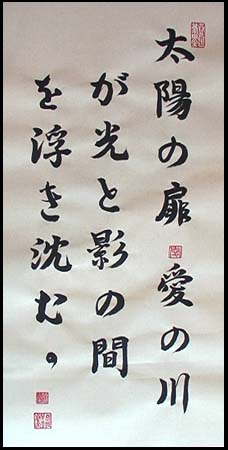
Japanese calligraphy, known as shodō (書道, “way of writing”), developed from Chinese brush-and-ink traditions introduced to Japan around the 6th century CE by Buddhist missionaries and evolved over 1,400 years into a distinct art form that today sits inside every Japanese elementary school curriculum as a compulsory subject. The art form combines three writing systems used simultaneously: kanji (Chinese characters imported into Japanese), hiragana (developed around the 9th century from cursive kanji for native Japanese words), and katakana (developed alongside hiragana from simplified kanji fragments, now used mostly for loanwords). A single calligraphic work may mix all three writing systems depending on the poem or text being rendered.
This guide covers the history of Japanese calligraphy from its Chinese origins through the Heian-era emergence of a distinct Japanese style, the three main script styles used across different works, the tools and materials that define shodō practice, the master calligraphers whose works still set the standards, calligraphy’s role in Japanese schools today, and practical information for visitors interested in studying or collecting the art.
Origins: From China to Japan
Chinese calligraphy reached Japan in the 6th and 7th centuries via Buddhist monks who carried sutras and religious texts across the Sea of Japan. The oldest surviving calligraphic text in Japan is the halo inscription on the bronze Yakushi Nyorai statue at Horyuji Temple near Nara, written in the Chinese Shakeitai script during the Asuka period (538-710 CE). That inscription predates any Japanese text written in a distinctly Japanese style by over a century.
Early Japanese calligraphy followed Chinese models closely. The most revered calligrapher in early Japan was the 4th-century Chinese master Wang Xizhi (王羲之), whose style dominated Japanese brush practice for roughly 500 years. Buddhist sutra-copying monks (shakyō practitioners) produced thousands of manuscripts in Chinese-style script during the Nara period (710-794); the Kongō Jōdaranikyō and other sutras from this period are among the oldest hand-copied Buddhist texts surviving anywhere in the world.
The tanka collection called the Soukou Shujitsu, written in 749 CE, shows the first distinctly Japanese brush style diverging from Chinese models. By the beginning of the Heian period in 794, Japanese calligraphers had begun to develop their own aesthetic principles, though Chinese masters remained reference points.
The Heian Period and the Birth of Japanese Style
The Heian period (794-1185) produced the defining figures of Japanese calligraphy. Emperor Kammu’s move of the capital from Nara to Heian-kyō (modern Kyoto) in 794 began a 400-year era of court culture that put poetry, literature, and calligraphy at the centre of aristocratic life.
Three Heian calligraphers became known as the Sanpitsu, or Three Brushes:
- Kukai (空海, 774-835), also known as Kobo Daishi, the founder of Shingon Buddhism. Kukai studied in Tang-dynasty China and brought back calligraphic techniques that became canonical in Japan. His work on Chinese models shows technical mastery matching the best Tang calligraphers.
- Emperor Saga (786-842), an imperial practitioner who elevated calligraphy to official court status
- Tachibana no Hayanari (782-844), scholar and court official known for bold brushwork
A later trio, the Sanseki (Three Brush Traces), emerged in the mid-Heian period and produced the first fully Japanese calligraphic style:
- Ono no Michikaze (894-966), considered the founder of purely Japanese-style calligraphy (wayō)
- Fujiwara no Sukemasa (944-998), known for elegant hiragana work
- Fujiwara no Yukinari (972-1027), refined the wayō style into its classical form
The development of hiragana during this period fundamentally changed Japanese calligraphy. Court ladies used hiragana (initially called onnade, or women’s hand) to record personal poetry and literature, producing works like Murasaki Shikibu’s Tale of Genji. Male scholars increasingly mixed hiragana with kanji for Japanese poetry (waka), producing the hybrid kanji-kana script that defines Japanese writing today.
The Three Script Styles of Japanese Calligraphy
Modern shodō works in three main script styles, each suited to different purposes and aesthetic moods:
Kaisho (楷書): Standard Script
Kaisho is the block-style script where each character appears fully formed with distinct strokes. Students begin shodō training with kaisho because the careful stroke order and spacing teach the fundamental discipline of the brush. Kaisho works well for official documents, name plaques, and formal inscriptions. The style’s origins trace back to Tang-dynasty China, and the standard Japanese kaisho still resembles the style codified then.
Gyōsho (行書): Semi-Cursive Script
Gyōsho (literally “running script”) connects some strokes within characters and sometimes between characters, producing a flowing appearance without losing legibility. Most everyday handwritten Japanese uses gyōsho or something close to it. In shodō, gyōsho balances spontaneity with readability, making it the most common style for personal correspondence, poetry scrolls, and mid-range formal work.
Sōsho (草書): Cursive Script
Sōsho (literally “grass script”) flows continuously with entire characters sometimes reduced to a single fluid motion. Only practiced calligraphers can read sōsho reliably; the reduction of characters often obscures meaning without context. Sōsho works best for artistic expression where the emotion of the brushstroke matters more than the literal text. Many Zen calligraphic works use sōsho.
Two additional specialised styles appear in Japanese calligraphy but are used less frequently:
- Tensho (篆書): seal script, used mostly for carved stone seals (hanko) and formal inscriptions
- Reisho (隷書): clerical script, an intermediate style between seal and standard, common on formal plaques and temple signs
The Four Treasures of the Study
Japanese calligraphy uses the same four fundamental tools developed in China, known collectively as the “four treasures of the study” (bunbō shihō):
- Fude (筆): the brush, made from animal hair (horse, deer, weasel, wolf, or sheep) attached to a bamboo or wooden handle. Different sizes suit different scripts: small brushes for fine kaisho, large brushes for bold sōsho work. Quality brushes hold their shape across years of use with proper care.
- Sumi (墨): black ink, traditionally produced as solid sticks made from soot, animal glue, and fragrance compounds. The stick is ground on a wet inkstone to produce liquid ink of the desired consistency. Modern calligraphers sometimes use bottled liquid ink for convenience, but master practitioners still grind their own for the control over ink density.
- Suzuri (硯): the inkstone, typically carved stone with a grinding surface and a well for collecting ground ink. Quality inkstones from Japan (Akama) or China (Duanxi, Sheyan) can cost hundreds to thousands of euros for collector pieces.
- Washi (和紙): Japanese paper, handmade from mulberry bark (kōzo), hemp, or other fibres. Washi absorbs ink differently from Western paper, producing the soft bleed that defines shodō aesthetics. Different washi varieties suit different brush styles.
Beyond the four treasures, calligraphers use a felt underpad (shitajiki) to absorb excess ink, a paperweight (bunchin) to hold the paper flat during writing, and water droppers (suiteki) to control moisture on the inkstone.
Master Calligraphers Across Japanese History
Japanese calligraphy history holds dozens of major figures beyond the Heian-period Sanpitsu and Sanseki. Some particularly influential later masters:
- Hon’ami Kōetsu (1558-1637): Edo-period polymath and calligrapher whose Rinpa-school aesthetic influenced Japanese decorative arts for centuries
- Ōtagaki Rengetsu (1791-1875): Buddhist nun who combined calligraphy with pottery, creating thousands of ceramic pieces inscribed with her own waka poems
- Kusakabe Meikaku (1838-1922): Meiji-era master who revived Chinese-style calligraphy as a response to excessive Westernisation
- Kaneko Ōtei (1906-2001): 20th-century master who extended sōsho into modern abstraction, influencing contemporary Japanese art
- Morita Shiryū (1912-1998): key figure in modern Japanese calligraphy who bridged traditional technique with post-war abstract expressionism
- Inoue Yūichi (1916-1985): avant-garde calligrapher whose works sell for substantial sums at contemporary art auctions
The Inoue Yūichi Foundation and the Morita Shiryū archive both hold substantial collections of 20th-century master works, and Tokyo’s major art museums (Tokyo National Museum, Idemitsu Museum of Arts) exhibit historic calligraphy regularly.
Shodō in Japanese Schools Today
Calligraphy is a compulsory subject in Japanese elementary schools from third grade through sixth grade under the broader Japanese language curriculum. Students learn basic brush control, stroke order for kanji, and the difference between pen-based handwriting and brush calligraphy. Middle school typically continues calligraphy as an option or as part of art classes. High school students can choose between shodō, painting (kaiga), and music as their required arts elective.
The New Year’s shodō tradition (kakizome) sees schools and families across Japan gathering on January 2 to write a single aspirational phrase or poem for the year ahead. Department stores, shrines, and community centres host kakizome events. The practice connects calligraphy to the cultural calendar in a way that few other art forms achieve.
Competitive calligraphy (shodō contests) run at school, prefectural, and national levels. The All Japan Shodō Contest receives tens of thousands of student entries annually, with winning works displayed at major galleries in Tokyo. Adults pursue shodō through community classes, private tutoring, and formal schools certified by major calligraphic organisations like the Mainichi Shodōkai.
Zen Calligraphy and Spiritual Practice
Zen Buddhist calligraphy (zenga) developed as a separate tradition where the act of writing becomes a meditative practice. Zen calligraphers typically work in sōsho or highly abstract styles, sometimes producing a single brushstroke (ichi) or a calligraphic circle (ensō) as a complete work. The Zen emphasis on spontaneity and mushin (no-mind) transforms the practice from technical skill into spiritual exercise.
Notable zenga calligraphers include:
- Hakuin Ekaku (1686-1768): Rinzai Zen master whose paintings and calligraphy revived Japanese Zen practice and are now held in major museum collections worldwide
- Sengai Gibon (1750-1837): Zen monk whose playful minimalist calligraphy gained cult following among 20th-century collectors
- Torei Enji (1721-1792): Hakuin’s successor, known for powerful bold brushwork
Zen calligraphy tends to privilege expression over legibility. A single ensō produced by a master can appear deceptively simple but encodes decades of practice in its single-breath circular motion. Western art collectors began recognising zenga as a distinct genre in the mid-20th century, and prices for Hakuin and Sengai works now run into hundreds of thousands of euros at major auctions.
Japanese Calligraphy in the Modern World
Contemporary Japanese calligraphy operates across multiple registers. Traditional shodō schools continue classical practice. Modern calligraphers experiment with abstract expression, digital calligraphy, and calligraphy-as-performance. Commercial applications include:
- Logo and brand identity design, particularly for premium Japanese brands
- Restaurant and temple signage throughout Japan
- Film and theatre title design, including for productions outside Japan
- Fashion (calligraphy on kimono, yukata, and contemporary clothing)
- Interior decoration (hanging scrolls, screens)
- Certificate design for awards and achievements
- Wedding invitations and memorial documents
Popular interest has grown through social media. YouTube channels showing calligraphy demonstrations receive millions of views; Instagram calligraphy accounts reach audiences who never planned to practice shodō themselves. The global spread of Japanese culture through manga, anime, and food has carried calligraphy along as a recognisable visual marker of Japanese aesthetic tradition.
For broader context on traditional Japanese visual arts, see our traditional Japanese art guide, which covers painting, printmaking, and crafts alongside calligraphy.
Where to See and Study Japanese Calligraphy
Visitors to Japan can encounter shodō at several levels:
- Tokyo National Museum (Ueno): comprehensive collection of historic calligraphy spanning Heian through Edo periods
- Idemitsu Museum of Arts (Tokyo): large collection including Sengai’s Zen calligraphy
- Kyoto National Museum: classical Heian calligraphy and Buddhist sutra manuscripts
- Mitsui Memorial Museum (Tokyo): calligraphy tied to the Mitsui family’s tea ceremony collection
- Calligraphy Museum (Taito Book Arts Museum, Tokyo): dedicated shodō museum in Taito ward
- Sankeien Garden (Yokohama): historic Japanese garden with calligraphy exhibitions in former samurai residences
- Kyoto temples: Ryōan-ji, Daitoku-ji, and others display historic Zen calligraphy on scrolls
Hands-on classes are available at many tourist-oriented venues in Tokyo and Kyoto. Half-day introduction workshops typically cost 3,000-6,000 yen and provide brush, ink, paper, and instruction in English. Longer multi-week courses run through language schools and traditional arts centres for more serious students.
Collecting Japanese Calligraphy
Collector interest in Japanese calligraphy has grown steadily since the 1970s. Market tiers:
- Student and amateur works: 50-500 euros, usually sold through galleries, online auctions, or directly from calligraphy schools
- Established contemporary master works: 1,000-10,000 euros for hanging scrolls or large framed pieces
- Early 20th-century master works (Kaneko, Morita): 5,000-50,000 euros depending on size and rarity
- Historic Edo-period works including Zen calligraphy (Hakuin, Sengai): 20,000-200,000+ euros at major auctions
- Heian-period original calligraphy: museum-level rarity, with only a handful of works in private hands worldwide
Authentication is important. Many famous names have been forged extensively, especially for Edo-period Zen masters. Reputable auction houses (Sotheby’s, Christie’s, Bonhams’ Japanese art sales) and specialised dealers provide provenance documentation. Museums offering authentication services include the Tokyo National Museum for particularly important works.
Frequently Asked Questions
What is Japanese calligraphy called?
Japanese calligraphy is called shodō (書道), literally “way of writing.” The term parallels other Japanese traditional arts ending in -dō (judo, kendo, sado), emphasising calligraphy as a disciplined practice leading to self-cultivation rather than simply a skill.
How is Japanese calligraphy different from Chinese calligraphy?
Chinese calligraphy uses only kanji (Chinese characters). Japanese calligraphy uses kanji, hiragana (developed in 9th-century Japan), and katakana, often mixed within a single work. Japanese style also developed distinct aesthetic preferences during the Heian period that differ from Chinese canon, particularly in how hiragana flows between kanji.
What are the tools for Japanese calligraphy?
The four treasures of the study: fude (brush), sumi (ink stick), suzuri (inkstone), and washi (paper). Supporting tools include a felt underpad, paperweight, and water dropper. Quality starter sets run 50-150 euros; professional-grade materials cost substantially more.
How long does it take to learn Japanese calligraphy?
Basic brush control takes 3-6 months of regular practice. Proficiency in kaisho style takes 1-2 years. Competence in gyōsho and sōsho takes 3-5 years of serious study. Master-level recognition requires decades. Many Japanese practitioners treat shodō as a lifetime practice similar to martial arts or tea ceremony.
Can anyone practice shodō?
Yes, the basic practice is open to anyone regardless of Japanese language knowledge. Many non-Japanese calligraphy students start with simple kanji or phrases without learning the language in depth. Understanding the writing systems enriches the practice but is not a prerequisite.
Who are the most famous Japanese calligraphers?
Historical: Kobo Daishi (Kukai), Emperor Saga, Ono no Michikaze, Fujiwara no Yukinari, Hakuin Ekaku, Sengai Gibon, Hon’ami Kōetsu. Modern: Morita Shiryū, Inoue Yūichi, Kaneko Ōtei. Contemporary commercial calligraphers and Instagram artists add a broader current-generation layer of popular figures.
Is Japanese calligraphy taught in schools?
Yes, shodō is compulsory in Japanese elementary schools from grade three through grade six, and continues as an optional subject in middle and high school. The New Year tradition of kakizome (first writing of the year) on January 2 is practiced in schools and households across Japan.
Sources and Further Reading
- Japanese Calligraphy: The Art of Line and Space – Christopher J. Earnshaw, Charles E. Tuttle
- Brushed Voices: Calligraphy in Contemporary Japan – Kristine Aono, Columbia University Press
- Zen Painting and Calligraphy – John M. Rosenfield and Henry Trubner, Museum of Fine Arts Boston
- The Way of Japanese Calligraphy – Ryozo Toyoshima, Kodansha International
- Heian Japan, Centers and Peripheries – Mikael S. Adolphson, Edward Kamens, Stacie Matsumoto (eds), University of Hawaii Press
- Tokyo National Museum calligraphy collection online database – tnm.jp