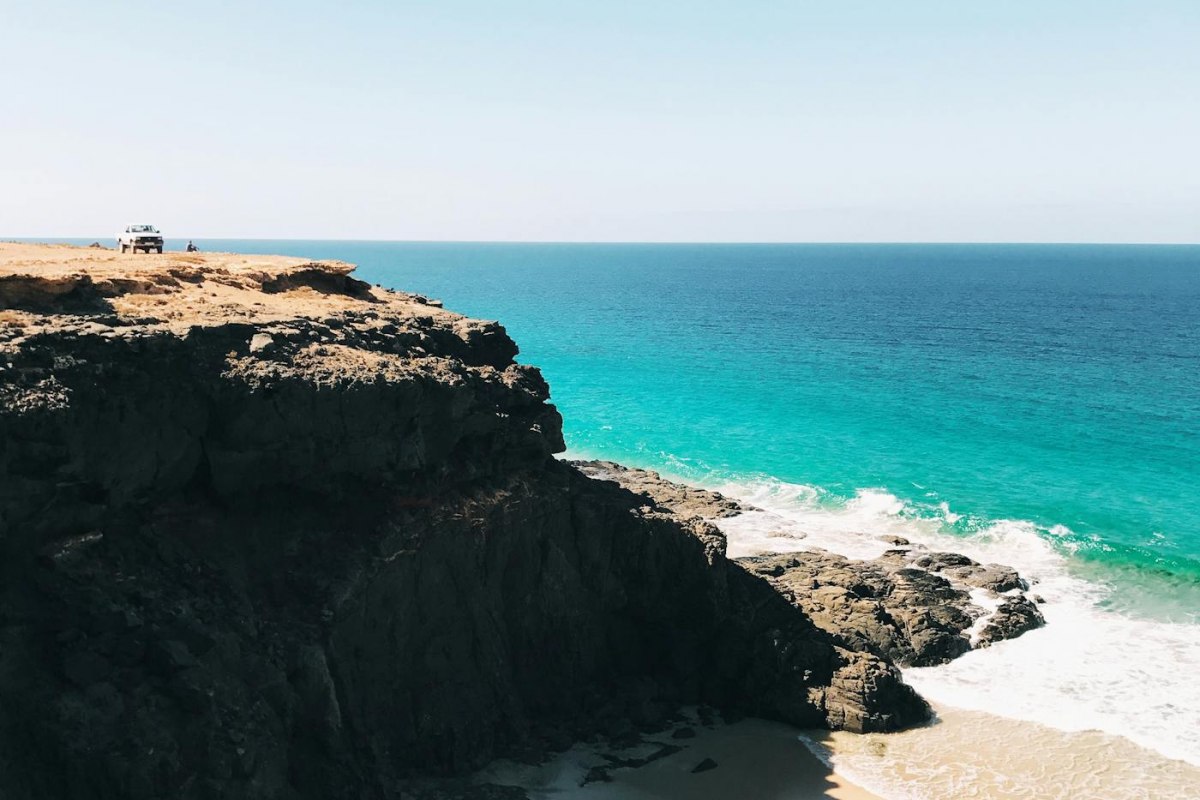
Fuerteventura has the finest and longest beaches in the Canary Islands, roughly 150 kilometres of them, ranging from white-sand dunes and shallow turquoise lagoons to wild Atlantic surf and a strange black-sand cove built from pulverised lava. This guide sorts them by what you actually want, calm family swimming, surf and wind, wild scenery or easy resort sand, and adds the practical detail the listicles skip. For the wider island, see our Fuerteventura travel guide.
How the island’s beaches divide
Before picking a beach, it helps to understand the basic geography that decides what each one is like:
- The north (Corralejo and El Cotillo): white-sand dunes, reef-sheltered lagoons and surf breaks, exposed to the wind but with calm pockets.
- The east (Caleta de Fuste): sheltered, calm, partly man-made resort bays, the most protected swimming.
- The south-east (Sotavento and Jandia): the island’s longest continuous sand, with a tidal lagoon and strong afternoon wind.
- The west (Ajuy, Cofete): wild, surf-battered ocean beaches, dramatic but often dangerous for swimming.
The single most useful rule on this island: the sea is calmest in the morning, and the trade wind builds through the afternoon, so plan swimming and snorkelling for earlier in the day on the exposed coasts.
The best beaches for calm family swimming
For shallow, sheltered water where children can paddle safely:
- La Concha and Los Lagos, El Cotillo: reef-protected lagoons on the north-west coast where the water stays shallow, clear and warm, the safest swimming on the island, covered in our El Cotillo guide.
- Caleta de Fuste: a calm horseshoe bay sheltered from the open Atlantic, with gentle water right in front of the resorts.
- The inner Sotavento lagoon: at the right tide, a vast warm shallow behind a sandbar, brilliant for small children and beginners.
- Playa del Castillo and the resort coves: small protected patches near the towns for an easy dip.
The dunes and white-sand beaches
The island’s signature postcard beaches are the dune-backed whites of the north and south:
- Grandes Playas, Corralejo: a long run of white sand and turquoise water beside the protected Corralejo dunes, virgin in many stretches and backed by the largest mobile dune field in the Canaries. Nudism is accepted along much of it. See our Corralejo guide.
- Playa de Sotavento: a vast, pale, wind-swept beach on the Jandia peninsula, the centre of the island’s windsurfing and kitesurfing scene, in our windsurfing guide.
- Playa de Jandia and Playa del Matorral, Morro Jable: more than four kilometres of golden sand backed by a protected salt marsh at the southern town, covered in our Morro Jable guide.
- Playa de la Barca and Esquinzo: the long southern run between Costa Calma and Morro Jable, broad and sandy with steady wind.
The wild beaches
For drama over swimming, the island’s remote and unusual beaches are unforgettable:
- Cofete: a 12-kilometre arc of empty sand on the back of the Jandia peninsula, backed by sheer mountains and reached by a long unpaved track. Strong currents make it a place to walk, not swim, and it is overlooked by the mysterious Villa Winter, covered in our Jandia peninsula guide.
- Playa de Ajuy: a striking black-sand beach on the west coast, the dark sand made of pulverised basalt from the island’s volcanic origin. The Spanish conquerors are said to have first landed here in 1402, and the village keeps an authentic, low-key feel.
- The Caleta Negra caves at Ajuy: a short cliff walk north of the beach leads to sea caves cut into some of the oldest rock in the whole Canary archipelago, part of the basal complex, the submarine foundation on which the islands were later built. It is a rare chance to stand on rock older than the islands themselves.
More beaches worth knowing
Beyond the headline names, a few less-famous beaches reward anyone staying nearby or touring with a car:
- Playa de la Garita and Las Playitas: dark-sand local beaches on the east and south-east coast, used mostly by islanders, quiet even in season.
- Pozo Negro: a black-pebble fishing-village cove on the east coast with simple seafood restaurants and an authentic, untouristy feel.
- Playa de Esquinzo and Butihondo: broad sandy beaches below the southern resort cliffs, reached by steps and ramps, quieter than the main Jandia strip.
- El Burro and the Sotavento flats: the kite and windsurf beaches where the lagoon forms, as much a spectacle to watch as to swim.
- Playa de la Concha, near Corralejo: small sheltered patches among the dunes for those who want shelter rather than the open Grandes Playas.
Snorkelling and underwater life
The clear Atlantic water makes several beaches good for snorkelling, especially where reefs shelter the shallows. The El Cotillo lagoons, the rocky edges of Caleta de Fuste bay and the protected water around the islet of Lobos all hold fish, and the visibility is usually best in the calm of the morning before the wind stirs the surface. Expect to see ornate wrasse, parrotfish, damselfish and, over sandy patches, rays, with the occasional octopus in the rocks. Bring your own mask and fins, since beach-side hire is patchy outside the main resorts, and stick to the sheltered spots, as the open surf beaches are too rough and murky for snorkelling. For boat-based marine life, the dolphin and whale trips in our boat trips guide reach the deeper water.
The island’s most unusual beaches
A few Fuerteventura beaches are worth seeking out precisely because they are not ordinary sand:
- Popcorn Beach (Playa del Bajo de la Burra): a cove between Corralejo and Majanicho where the shore is covered not in sand but in pale, knobbly white shapes that look uncannily like popcorn. They are rodolitos, the bleached calcareous skeletons of a coralline algae, and each piece takes decades to form, which is why removing them is both selfish and now discouraged. Bring nothing away but photographs.
- Aguas Verdes: a stretch of the west coast near Betancuria’s municipality where the lava has formed natural rock pools, the piscinas naturales, that fill with clear Atlantic water and shelter swimmers from the open swell.
- La Pared: a long golden beach on the west coast at the island’s narrow waist, one of the main surf beaches, with dramatic sunsets and strong currents that make it better for surfing than swimming.
- Playa de Esmeralda: on the east coast near Costa Calma, named for the emerald tone its shallow water can take on a bright day.
- Playa de Garcey: a remote west-coast beach best known as the resting place of the American Star, a former ocean liner that ran aground here in a storm in 1994 and remained a dramatic wreck on the rocks for years before the sea broke it apart.
Nudism and the naturist tradition
Fuerteventura has a long and relaxed naturist tradition, and it is worth knowing before you go. Nudism is legal and openly accepted on many of the island’s beaches, particularly the open dune beaches of Corralejo and the quieter stretches of Sotavento, Cofete and the south. There is no strict separation in most places, so clothed and nude bathers share the same long sands without fuss. If you prefer to avoid it, the busier resort beaches at Caleta de Fuste and the centre of Corralejo are the most conventional, while the further you walk from the access points on the big dune beaches, the more naturist the sand becomes.
Blue Flags and facilities
Several Fuerteventura beaches hold the Blue Flag, the international award for water quality, safety and facilities, including beaches at Corralejo, Caleta de Fuste and Morro Jable. The Blue Flag beaches reliably have lifeguards in season, showers, accessible ramps and nearby cafes. The wild beaches like Cofete and Ajuy, by contrast, have few or no facilities and no lifeguards, so come prepared with water, shade and sun protection, and take any litter away with you. The strong sun and wind mean a beach windbreak and high-factor sunscreen earn their place on any Fuerteventura beach day.
Beach safety on an Atlantic island
The open Atlantic is not the calm Mediterranean, and a few points keep a beach day safe:
- Respect the flags: red means no swimming, and it is there for a reason on the exposed west and south coasts where currents are strong.
- Beware rip currents: the surf beaches such as Cofete, Ajuy and Piedra Playa can pull strong, so swim only where it is marked safe.
- Swim in the morning: the calmest water and lightest wind come early, before the afternoon trade wind builds the chop.
- Mind the wind as much as the waves: even calm-looking beaches can be uncomfortable with blowing sand by mid-afternoon, so a windbreak helps.
Frequently asked questions
Which is the best beach in Fuerteventura?
It depends on what you want: La Concha at El Cotillo for calm family swimming, Grandes Playas at Corralejo for white-sand dunes, Sotavento for wind sports, and wild Cofete for scenery. There is no single best, which is the island’s strength.
Does Fuerteventura have a black-sand beach?
Yes, Playa de Ajuy on the west coast, where the dark sand is pulverised basalt from the island’s volcanic origin. The nearby Caleta Negra caves hold some of the oldest rocks in the Canaries.
Which beaches are best for families with young children?
The reef-sheltered lagoons at El Cotillo, the calm bay at Caleta de Fuste and the shallow inner Sotavento lagoon are the safest, with gentle, warm, shallow water.
Is nudism allowed on Fuerteventura beaches?
Yes, it is legal and widely accepted, especially on the open dune beaches at Corralejo and the quieter southern stretches. The main resort beaches stay more conventional if you prefer.
Are Fuerteventura beaches safe for swimming?
The sheltered east-coast and lagoon beaches are calm and safe, but the open west and south coasts have strong currents and surf. Always heed the warning flags and swim in the morning when the sea is calmest.
Sources and further reading
- Cabildo de Fuerteventura, island council and beaches
- Reserva de la Biosfera Fuerteventura
- Saladar de Jandia protected wetland, Ministerio para la Transicion Ecologica