Spain produces 44 percent of the world’s olive oil. The province of Jaen alone accounts for a quarter of global output, pressing more oil each year than the entire country of Greece. That single statistic explains something fundamental about Spanish cooking: olive oil is not an ingredient here but a medium, the base layer of nearly every dish from a breakfast tostada rubbed with tomato to a midnight plate of fried calamari. Spanish food builds on a small number of high-quality staples, treats cooking as a social act rather than a chore, and varies so sharply between regions that a meal in Galicia and a meal in Andalusia can feel like they belong to different countries.
This article covers Spain’s major traditional dishes, the regional differences that define them, the meal schedule that shapes daily life, and the ingredients that hold the cuisine together.
How Geography Shapes Spanish Cooking
Spain stretches across 505,000 square kilometers with coastline on both the Atlantic and the Mediterranean, a central plateau above 600 meters, and mountain ranges that isolate regions from each other. These geographic divisions created distinct food traditions long before modern transport connected them.
The northern coast, from Galicia through Asturias and the Basque Country, faces the Atlantic and produces seafood-heavy cooking. Galician pulpo a la gallega (octopus with paprika and olive oil) and Basque bacalao al pil-pil (salt cod in garlic and oil emulsion) come from fishing communities that built their kitchens around whatever the boats brought in. The green, wet climate also supports dairy farming, making butter and cream more common in northern cooking than elsewhere in Spain.
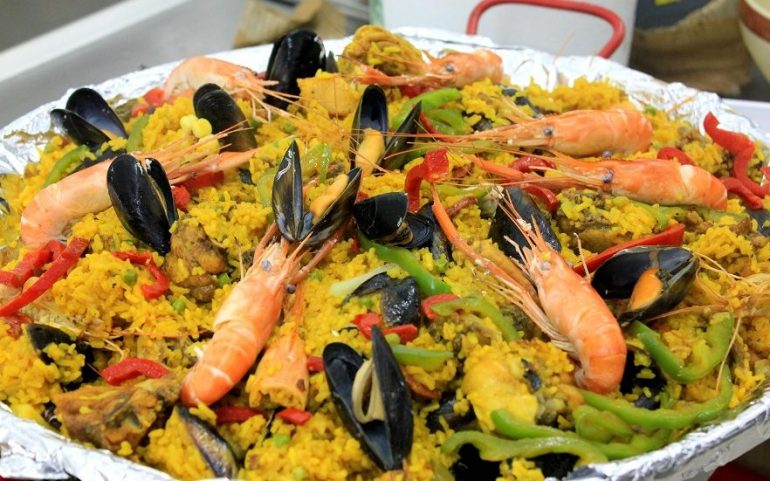
The Mediterranean coast, from Catalonia through Valencia to Murcia, gave Spain its most internationally recognized dish. Paella originated in the rice paddies around Valencia’s Albufera lagoon, where farmers cooked rice over wood fires with whatever was available: rabbit, snails, green beans, and rosemary in the original regional version. The seafood paella that tourists associate with Spain is a coastal adaptation, not the original.
Andalusia in the south brings the strongest North African and Arab influence. Eight centuries of Moorish rule (711-1492) left a deep mark on southern cooking. Gazpacho, the cold soup of raw tomatoes, peppers, garlic, bread, and olive oil, is an Andalusian invention suited to summers where temperatures regularly exceed 40 degrees Celsius. Fried fish (pescaito frito) served in paper cones at beachside stands reflects the long Andalusian coastline and the region’s preference for frying in olive oil.
The central plateau (Castilla y Leon, Castilla-La Mancha) produces roasted meats and hearty stews. Cochinillo asado (roast suckling pig) from Segovia and cordero lechal (roast milk-fed lamb) from Burgos rely on simple preparation and local livestock rather than complex sauces or spice combinations.
Meal Times and the Sobremesa
Spanish meal times run later than anywhere else in Western Europe. Breakfast (desayuno) is light, typically coffee with a tostada (toasted bread with olive oil and tomato) or a pastry, eaten between 7 and 9 in the morning. A mid-morning snack (almuerzo) bridges the gap to lunch.
Lunch (comida) is the main meal. Spaniards eat it between 2 and 4 in the afternoon, often in two or three courses: a starter of soup, salad, or vegetables; a main of meat or fish; and dessert or coffee. The meal’s scale reflects its importance. Workplaces traditionally allowed a two-hour lunch break, and although this has shortened in many urban offices, the cultural weight of the midday meal persists.
Dinner (cena) rarely starts before 9 or 10 at night and runs lighter than lunch. A plate of cured meats, a tortilla espanola, or a few tapas dishes shared at a bar covers most weeknight dinners.
The sobremesa, the period of conversation that follows a meal, has no direct equivalent in English. Families, friends, and colleagues linger at the table after eating, talking over coffee or a digestif. Rushing away from the table after the last course is considered rude. The sobremesa can stretch for an hour or more on weekends, turning a meal into a social event that fills the afternoon.
Tapas and the Culture of Shared Plates
The word “tapa” means “lid” or “cover” in Spanish. The most repeated origin story claims that bartenders in Andalusia placed a slice of bread or ham over a glass of sherry to keep flies out, and customers began expecting the accompaniment as standard. Whether or not this specific story is true, the practice of serving small plates alongside drinks became established in southern Spain by the 13th century and spread across the country over the following centuries.
Modern tapas range from a saucer of olives to elaborate miniature dishes. Common tapas include patatas bravas (fried potatoes with spicy tomato sauce), croquetas (bechamel-filled croquettes, often with jamon or cod), gambas al ajillo (shrimp in garlic and olive oil), pimientos de padron (blistered green peppers with coarse salt), and boquerones en vinagre (white anchovies marinated in vinegar).
Tapas bars operate differently depending on the region. In parts of Andalusia, a tapa still arrives free with each drink order. In the Basque Country, the equivalent tradition is the pintxo (pronounced “pincho”), a small snack served on a slice of bread and held together with a toothpick. San Sebastian’s old town packs dozens of pintxo bars into a few blocks, and locals move between them over the course of an evening, eating one or two items at each stop.
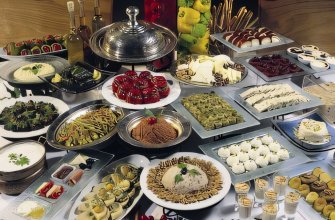
Spanish party and gathering food follows the same logic of small, shared plates scaled up for larger groups.
Signature Dishes Across the Country
Tortilla Espanola
The Spanish omelette consists of eggs, thinly sliced potatoes, and (depending on who you ask) onion, all fried in olive oil and then set into a thick, round cake. Cooks flip the tortilla using a plate, a technique that takes practice to execute without disaster. The debate over whether onion belongs in a proper tortilla generates strong opinions across Spain. Every bar in the country serves tortilla by the slice, making it the closest thing Spain has to a universal national dish.
Paella
Authentic Valencian paella uses bomba or calasparra rice, saffron, green beans, garrofon (a large white bean), rabbit, chicken, snails, and rosemary, cooked in a wide, shallow pan over an open flame. The socarrat, the caramelized rice crust that forms on the bottom of the pan, is considered the best part. Variations with seafood, mixed meats, or vegetables exist across Spain, though Valencians tend to view these adaptations with suspicion.
Cocido Madrileno
Madrid’s signature stew combines chickpeas, vegetables, pork belly, chorizo, morcilla (blood sausage), and beef, simmered for hours. Restaurants serve it in three courses called vuelcos: first the broth with noodles, then the chickpeas and vegetables, then the meats. The format turns a one-pot dish into a structured meal.
Fabada Asturiana
The Asturian bean stew uses large white fabes (butter beans) slow-cooked with chorizo, morcilla, and pork shoulder in a thick, rich broth. The dish belongs to the rainy, green north and functions as cold-weather fuel for a region where temperatures and terrain differ sharply from the Mediterranean coast.
Pulpo a la Gallega
Galician octopus is boiled until tender, sliced into rounds, arranged on a wooden plate, and dressed with olive oil, coarse salt, and pimenton (smoked paprika). The preparation is minimal, which means the quality of the octopus determines the dish.
Jamon, Olive Oil, and the Staple Pantry
Two products define the Spanish kitchen above all others: cured ham and olive oil.
Jamon serrano comes from white pigs and is dry-cured for 12 to 18 months. Jamon iberico comes from black Iberian pigs raised in the dehesa (oak woodland) of southwestern Spain. The highest grade, jamon iberico de bellota, comes from free-range pigs fed on acorns during the montanera fattening season from October to February. A whole leg of iberico de bellota costs several hundred euros and is carved in paper-thin slices using a long, flexible knife. Dedicated jamon bars in Madrid and Barcelona employ professional cortadores (carvers) who train for years.
Spain grows over 200 olive varieties across approximately 2.5 million hectares of groves. Picual, the dominant variety in Jaen, produces a robust, slightly bitter oil suited to frying. Arbequina, grown in Catalonia and Aragon, yields a milder, fruitier oil used for finishing dishes and dressing salads. Hojiblanca from Cordoba and Malaga falls between the two.
Other pantry staples include pimenton (smoked paprika from Extremadura, essential for chorizo and many stews), saffron from La Mancha (the world’s most expensive spice by weight, used in paella and other rice dishes), Manchego cheese from La Mancha (made from the milk of Manchega sheep), and chorizo in its many regional variations.
Frequently Asked Questions
What is the most popular traditional food in Spain?
Tortilla espanola (Spanish omelette) is the most widely eaten dish across all regions. Every bar and restaurant in Spain serves it. Paella is the most internationally recognized Spanish dish, though it originates specifically from Valencia. Jamon serrano and iberico appear on tables throughout the country as both a tapa and a meal accompaniment.
Why do Spaniards eat so late?
Spain’s meal schedule shifted during the Franco era when many workers held two jobs, pushing meals later into the day. Spain also sits in the wrong time zone for its geography, using Central European Time despite being geographically aligned with Britain and Portugal, which means the sun sets later relative to the clock. Cultural habits, including the sobremesa tradition of post-meal conversation, reinforce the late schedule.
What is the difference between tapas and pintxos?
Tapas are small shared plates served throughout Spain, originating in Andalusia. Pintxos (or pinchos) are the Basque Country equivalent: small snacks served on bread and held together with a toothpick. In some parts of Andalusia, a tapa arrives free with each drink. Pintxos are typically priced individually and displayed on the bar counter for customers to choose.
What is jamon iberico de bellota?
It is dry-cured ham from free-range black Iberian pigs fed on acorns (bellotas) during the autumn and winter fattening season. The acorn diet gives the fat a distinctive nutty flavor and a high oleic acid content. A whole leg cures for 24 to 48 months and can cost several hundred euros. It is considered the finest cured ham in the world.
Is Spanish food spicy?
Spanish food uses very few hot spices. Garlic, olive oil, saffron, and smoked paprika (pimenton) provide the primary flavoring. Pimenton comes in sweet (dulce), bittersweet (agridulce), and hot (picante) varieties, but most Spanish cooking uses the sweet version. The only routinely spicy elements are patatas bravas sauce and pimientos de padron, which are mild except for the occasional hot pepper in the batch.
Sources:
- Olive Oils from Spain – “Traditional Recipes from the Various Regions of Spain” (oliveoilsfromspain.org)
- AFAR Magazine – “12 Most Iconic Spanish Dishes and Where to Try Them” (afar.com)
- Spanish Sabores – “Top Essential Spanish Recipes” (spanishsabores.com)
- Spain Vistas – “Spanish Food Culture: A Guide” (spainvistas.com)
For the food of one Spanish city in depth, see our guide to food in Barcelona and its Catalan specialities.