Thailand’s festival calendar runs on three overlapping systems: the Buddhist religious calendar, the Thai royal calendar, and the regional folk traditions of the northeast, north, and south. The country’s most photographed event – the mass release of sky lanterns during Yi Peng in Chiang Mai – draws international visitors who book hotels a year in advance, but smaller festivals in rural provinces generate the same level of local participation with a fraction of the foreign attention. Songkran (Thai New Year) shuts down the country for three official days in April, Loy Krathong fills every river and canal with floating candles in November, and the Vegetarian Festival in Phuket stages rituals that rank among the most extreme religious practices in Southeast Asia. This guide covers the major festivals by season, what each one involves, and the practical details visitors need to attend.
Songkran: Thai New Year and the Water Festival
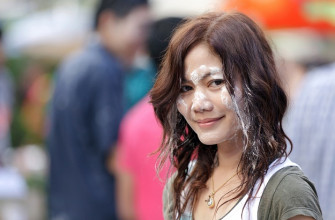
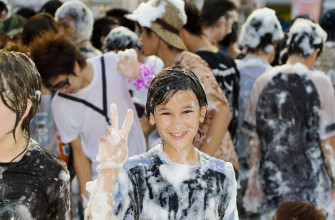
Songkran runs from April 13 to 15, marking the traditional Thai New Year and the transition from the dry season to the approaching monsoon rains. The festival combines Buddhist merit-making rituals – pouring scented water over Buddha images and over the hands of elders to receive blessings – with the massive public water fights that have made Songkran internationally recognizable. Streets in Bangkok’s Khao San Road, Chiang Mai’s old city moat area, and Pattaya’s Beach Road fill with people armed with water guns, hoses, and buckets of ice water. The water carries symbolic meaning: it washes away the old year’s bad fortune and prepares the participant for a clean start.
Behind the water fights, Songkran retains its religious core. Thais visit temples to make offerings, build sand stupas in temple courtyards, and release captive birds and fish as acts of merit. Families gather for meals built around seasonal dishes, and younger members perform the rod nam dam hua ceremony – pouring water over the hands of parents and grandparents as a gesture of respect. The national holiday runs three days, but many businesses close for a full week, and some provinces extend celebrations to five or six days.
Chiang Mai’s Songkran celebration runs longer than Bangkok’s and centers on the old city moat, where the water fights reach their most sustained intensity. Pattaya holds its own separate Songkran celebration a week after the official dates, called Wan Lai, extending the party for visitors who miss the main event. Silom Road in Bangkok draws the largest single-location crowd, with hundreds of thousands of participants packed along a 2-kilometer stretch. Visitors should waterproof electronics, wear quick-dry clothing, and carry belongings in sealed plastic bags – participation is not optional for anyone on the streets during Songkran.
Loy Krathong and Yi Peng: Water and Sky Lantern Festivals
Loy Krathong falls on the full moon of the 12th lunar month, typically in November. Participants build small floating baskets (krathong) from banana leaves, flowers, incense sticks, and candles, then release them onto rivers, canals, and ponds. The krathong carries away the year’s negativity and pays respect to Phra Mae Khongkha, the goddess of water. The festival traces to the Sukhothai Kingdom, over 800 years ago, though the exact origin story varies between historical accounts.
Yi Peng, celebrated the same evening in the northern city of Chiang Mai, adds the release of khom loi (sky lanterns) – paper lanterns heated by a small flame that lifts them into the night air. Thousands of lanterns rising simultaneously from temple grounds and riverbanks create the visual spectacle that fills travel photography feeds each November. Organized mass releases at Mae Jo University and the Royal Park Rajapruek sell tickets months ahead. The event has raised environmental concerns about lantern debris landing in agricultural areas and forests, and Chiang Mai authorities have increased regulations on launch zones and lantern materials in recent years.
Key facts about Loy Krathong and Yi Peng:
- Date – full moon of the 12th Thai lunar month (usually November); Loy Krathong 2026 falls on November 25
- Best locations – Sukhothai Historical Park (the festival’s birthplace), Chiang Mai (combined with Yi Peng), Bangkok (along the Chao Phraya River)
- Krathong materials – banana trunk base, banana leaves, flowers, incense, candles, sometimes a coin for good luck
- Yi Peng lanterns – rice paper over a bamboo frame, fueled by a wax or paraffin disk; regulated sizes in Chiang Mai
The Vegetarian Festival in Phuket
The Phuket Vegetarian Festival (Tesagan Gin Je) runs for nine days during the ninth lunar month of the Chinese calendar, typically in late September or October. Thai-Chinese communities observe a strict vegetarian or vegan diet to purify the body, and shrines across Phuket host daily processions, firewalking ceremonies, and spirit medium rituals that attract international media attention for their intensity.
Spirit mediums (mah song) enter trance states and perform acts of self-mortification – piercing cheeks and tongues with metal rods, skewers, and objects ranging from swords to bicycle parts – as a demonstration of the Nine Emperor Gods’ protection. The rituals draw from Chinese Taoist tradition brought to Phuket by Hokkien miners in the 19th century. Participants believe the acts purify the community and bring good health and fortune for the coming year. The street processions run through Phuket Town’s old quarter, accompanied by firecrackers, drums, and vendors selling vegetarian versions of Thai dishes marked with yellow flags.
The festival is not limited to Phuket. Thai-Chinese communities in Bangkok, Hat Yai, and Trang hold parallel celebrations on smaller scales. Vegetarian food stalls marked with je (Thai-Chinese for vegetarian) appear across the country during the nine days, making it easy for any visitor to participate in the dietary aspect regardless of location.
Boon Bang Fai: The Rocket Festival of Isan
Boon Bang Fai (Rocket Festival) takes place in May across Thailand’s northeastern Isan region, marking the start of the rice-planting season. Villages construct large bamboo rockets – some reaching 9 meters in length – packed with gunpowder and launched into the sky as an appeal to Phaya Thaen, the rain god, to send the monsoon rains needed for the rice crop. The festival predates Buddhism in the region and carries roots in animist agricultural ritual.
Yasothon province hosts the largest Rocket Festival, drawing teams from across Isan who compete for distance and altitude. Failed launches – rockets that explode on the pad or veer sideways – are met with laughter and the ritual throwing of the rocket builder into a mud pit. The festival includes parades with elaborate floats, traditional mor lam music performances, and community feasting. The three-day event combines serious agricultural superstition with carnival atmosphere, and foreign visitors who make the trip to Yasothon find a festival almost entirely free of tourist infrastructure. Neighboring Laos holds parallel rocket festivals in Vientiane province, reflecting the shared Lao-Isan cultural roots that cross the Mekong River border. The rockets themselves range from small hand-launched tubes to enormous constructions requiring crane-like wooden launchers, and prize money goes to the teams achieving the greatest height and flight time.
Buddhist Holidays and Royal Celebrations
Thailand’s Buddhist holidays structure the national calendar. Makha Bucha (February or March full moon) commemorates the spontaneous gathering of 1,250 disciples before the Buddha. Visakha Bucha (May full moon) marks the Buddha’s birth, enlightenment, and death on a single day – the most sacred date in the Theravada Buddhist calendar. Asanha Bucha (July full moon) celebrates the Buddha’s first sermon. Khao Phansa, the following day, begins the three-month Buddhist Lent (vassa) during which monks remain in their monasteries and many Thai men temporarily ordain.
On Buddhist holidays, alcohol sales are banned nationwide and nightlife venues close. The restriction catches many tourists off guard, especially during Visakha Bucha when hotel bars and convenience stores stop serving alcohol for 24 hours. Temples hold candlelight processions (wien thian) on the evening of each major Buddhist holiday, and visitors are welcome to join by purchasing candles and flowers at the temple entrance.
The King’s Birthday (July 28, marking King Rama X) and the Queen’s Birthday (June 3) are national holidays when government buildings display royal portraits and yellow or blue decorations depending on the day. These royal events carry a formal, patriotic character distinct from the festive energy of Songkran or Loy Krathong.
Other notable regional festivals include the Phi Ta Khon (Ghost Festival) in Dan Sai, Loei province, where participants wear oversized painted masks made from coconut tree trunks and sticky rice baskets, parading through town in a three-day celebration that mixes Buddhist merit-making with animist ghost traditions. The Surin Elephant Round-Up, held every November in the northeast, features over 200 elephants in parades, races, and demonstrations of traditional elephant-handling skills. The Chiang Mai Flower Festival in February fills the city’s streets with floral floats and garden displays timed to the cool-season bloom of orchids, roses, and chrysanthemums.
Frequently Asked Questions
What is the biggest festival in Thailand?
Songkran (April 13-15) is the most widely celebrated festival, observed across the entire country as the Thai New Year. Loy Krathong (November full moon) ranks second in participation. The Yi Peng lantern release in Chiang Mai draws the most international visitors relative to its size.
When is the lantern festival in Thailand?
Yi Peng and Loy Krathong both fall on the full moon of the 12th Thai lunar month, usually in November. In 2026, the date is November 25. Chiang Mai hosts the combined festivals with organized sky lantern releases at ticketed venues and spontaneous releases across the city.
Is alcohol banned during Thai festivals?
Alcohol sales are banned on Buddhist holidays including Makha Bucha, Visakha Bucha, and Asanha Bucha. The ban runs for 24 hours and applies to bars, restaurants, convenience stores, and supermarkets. Songkran, Loy Krathong, and regional festivals do not carry alcohol restrictions.
What happens during the Phuket Vegetarian Festival?
The nine-day festival involves strict vegetarian diets, shrine processions, firewalking, and spirit medium rituals that include piercing with metal objects. The festival is rooted in Chinese Taoist tradition and is observed by Thai-Chinese communities across southern Thailand, with Phuket hosting the largest celebration.
Sources and Further Reading
- Tourism Authority of Thailand – The Vegetarian Festival: A Century-Spanning Ritual (tourismthailand.org)
- Thai Holiday Guide – Thailand Festivals 2025: Insider’s Guide (thaiholidayguide.com)
- UME Travel – Lantern Festival Thailand: Yi Peng and Loy Krathong (umetravel.com)
- KET – Festivals in Thailand 2025: Guide for Teachers (kidsenglishthailand.org)