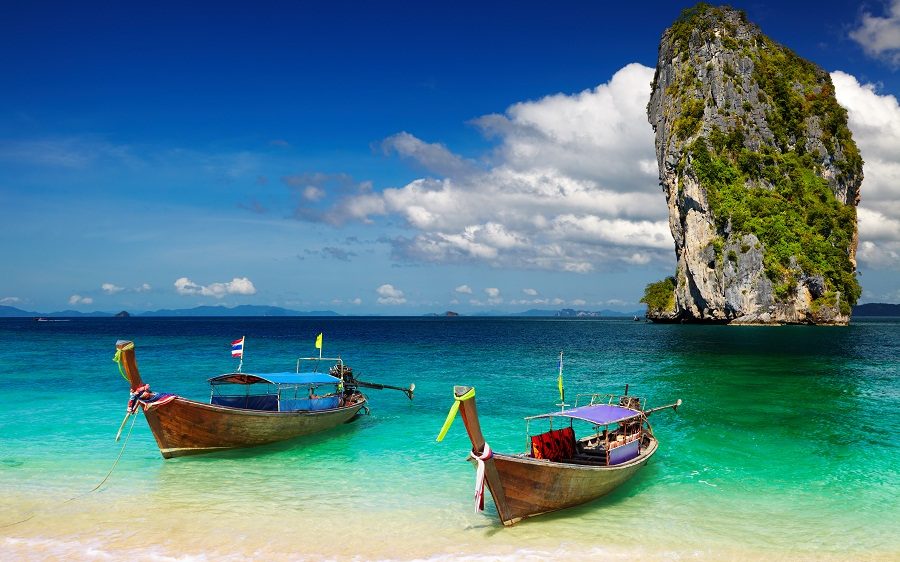
Phi Phi Island is one of the most famous tropical destinations in Southeast Asia. The small island chain in the Andaman Sea, about 45 km southeast of Phuket and 40 km west of Krabi, sits at the heart of one of the most photographed corners of Thailand. Towering limestone cliffs rise straight from turquoise water, hidden lagoons cut into the rock, white-sand beaches stretch beneath palm trees and coral reefs teem with tropical fish. This 2026 guide walks through the geography, the top things to do, the best beaches, the practical details and the tips for planning a trip to Phi Phi Island.
Where Is Phi Phi Island?
Phi Phi (pronounced “pee pee”) is a small group of six islands located in Krabi Province on the Andaman Sea coast of southwestern Thailand, about 45 km southeast of Phuket. The islands form part of the Hat Noppharat Thara – Mu Ko Phi Phi National Park, a protected marine area that was established in 1983 and covers 390 square kilometres of land and sea. Most international visitors arrive at Phi Phi by ferry from either Phuket or Krabi.
The islands were heavily devastated by the Indian Ocean tsunami on Boxing Day 2004, which killed over 4,000 people in Thailand alone. Phi Phi Don, the main inhabited island, lost most of its coastal infrastructure that day. The islands have been gradually rebuilt over the last two decades and are once again a popular day-trip and overnight destination for tourists visiting southern Thailand. A small tsunami memorial garden stands near Tonsai Pier in memory of the victims.
The Phi Phi Islands
The Phi Phi group consists of six islands, of which only the largest is inhabited:
- Koh Phi Phi Don. The largest and only inhabited island, where all the hotels, restaurants, shops and dive centres are located. The island is shaped like a butterfly, with two larger sections connected by a narrow low-lying strip of land that holds the main village and the famous Tonsai and Loh Dalum beaches.
- Koh Phi Phi Leh. The smaller, completely uninhabited island just south of Phi Phi Don, famous for the spectacular Maya Bay where the 2000 film The Beach was shot.
- Koh Yung (Mosquito Island). A tiny island known for its excellent snorkelling and small white-sand beach.
- Koh Mai Phai (Bamboo Island). A long, narrow island ringed by white sand and coral reefs, popular as a snorkelling stop.
- Koh Bida Nok and Koh Bida Nai. Two small uninhabited islets that rank among the best dive sites in the Andaman Sea.
Getting to Phi Phi Island
Phi Phi can be visited as a day trip or as a longer overnight stay. The main ways to reach the islands:
- From Phuket. Ferries depart several times a day from Rassada Pier in Phuket Town and take around 1.5 to 2 hours, with tickets running from around 350 to 700 baht one way depending on the operator and class. Speedboat services do the same trip in about 50 minutes.
- From Krabi. Ferries from Krabi Town and Ao Nang take about 1.5 to 2 hours and cost around 300 to 500 baht. Speedboats are faster and slightly more expensive.
- From Koh Lanta. Daily ferries connect Koh Lanta to Phi Phi in about 1 to 1.5 hours.
- From Railay Beach. Long-tail boats and shared transfers run from the famous climbing beach to Phi Phi during the high season.
All ferries arrive at Tonsai Pier, the main entry point on Phi Phi Don. A national park entrance fee of 400 baht for adults is charged on arrival, separate from the ferry ticket.
Top Things to Do on Phi Phi Island
Maya Bay
The famous Maya Bay on Phi Phi Leh is the most photographed spot on the islands and the location where Leonardo DiCaprio’s 2000 cult classic The Beach was filmed. The bay is enclosed by towering limestone cliffs on three sides, with a single narrow opening to the sea and a perfect crescent of white sand at its centre. Maya Bay was closed to visitors from 2018 to 2022 to allow the damaged coral reefs to recover, and it has now reopened with strict new rules: visitor numbers are capped, swimming in the bay itself is not always permitted and boats must dock at a new pier on the opposite side of the island, with visitors walking the last few hundred metres on a wooden walkway through the trees. Despite the restrictions, the bay remains one of the most spectacular sights in Thailand.
The Beaches of Phi Phi Don
Phi Phi Don holds several beautiful beaches, each with its own character:
- Tonsai Bay. The main beach on the southern side of the island and the busiest area, with most of the hotels, restaurants and bars. Tonsai is the natural starting point for most visitors.
- Loh Dalum Bay. The shallow horseshoe bay on the northern side of the narrow isthmus, known for sunbathing, water sports and the famous full moon parties.
- Long Beach (Hat Yao). A more relaxed and quieter beach about 30 minutes’ walk south of Tonsai Village, with excellent snorkelling right offshore at Shark Point.
- Laem Tong. The exclusive beach at the northern tip of the island, home to several luxury resorts and a small population of sea gypsies (Chao Lay).
- Loh Bagao. A quiet beach on the eastern side of the island, popular with travellers seeking solitude.
- Monkey Beach. A small cove home to several troops of macaques, reachable only by boat.
Phi Phi Leh and the Lagoons
Phi Phi Leh is technically a protected nature reserve which means no building is allowed on it. The island can still be visited as part of a day trip from Phi Phi Don, and the main draws are the spectacular limestone cliffs and the hidden lagoons:
- Pileh Lagoon. A breathtaking emerald-green lagoon enclosed by 100-metre cliffs, perfect for swimming and snorkelling.
- Loh Samah Bay. A small bay on the eastern side of Phi Phi Leh with excellent snorkelling and the original entry point to Maya Bay before the changes.
- Viking Cave. A large limestone cave on the eastern coast of Phi Phi Leh, named for the prehistoric paintings of boats that resemble Viking ships. The cave is also famous as the site of the dangerous business of harvesting swiftlet nests for bird’s nest soup.
Snorkelling and Scuba Diving
Phi Phi is one of the best diving and snorkelling destinations in Thailand. The crystal-clear water and rich coral reefs are home to a huge variety of marine life, including blacktip reef sharks, leopard sharks, sea turtles, moray eels, parrotfish, butterflyfish, octopus and the occasional whale shark or manta ray. The most famous dive sites include:
- Bida Nok and Bida Nai. Two small islets just south of Phi Phi Leh, considered among the best dive sites in the Andaman Sea.
- Shark Point. A reef offshore from Long Beach where blacktip reef sharks and leopard sharks gather.
- Maya Wall. A vertical underwater wall on the western side of Phi Phi Leh, rich in coral and reef fish.
- Anemone Reef and the King Cruiser Wreck. Two of the most famous dive sites in the wider Andaman Sea, reachable on day trips from Phi Phi.
Several PADI dive centres operate from Tonsai Village and offer everything from beginner discover scuba dives to full Open Water and Advanced courses.
Long-Tail Boat Tours
One of the most popular things to do on a day trip to Phi Phi Island is to hire a long-tail boat and go exploring the many coves and secluded bays that surround the islands. A typical half-day boat trip lasts three to four hours and visits Maya Bay, Pileh Lagoon, Viking Cave, Monkey Beach and several snorkelling spots. Prices for a private long-tail boat charter run from around 1,500 to 3,000 baht for the boat (which can carry up to six passengers), or you can join a shared group tour for around 800 to 1,200 baht per person. Sunset tours are particularly popular for the dramatic light on the limestone cliffs.
Kayaking
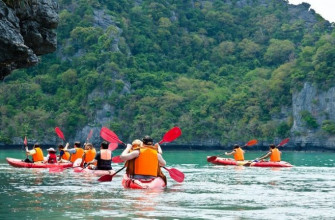
An alternative way to explore Phi Phi is to rent a kayak and paddle around the coastline yourself. Kayaks rent for around 200 to 400 baht per hour from several spots along Tonsai and Loh Dalum beaches. Kayakers can reach Monkey Beach and several quiet coves on the eastern side of the island, although you are more limited in distance than a long-tail boat.
Hiking to the Phi Phi Viewpoint
Phi Phi Don has two high hills on either side of the central isthmus, connected by a thin strip of low-lying land that holds the village and the main beaches. Hiking to the top of the eastern hill is one of the most popular activities on the island and rewards walkers with one of the most famous views in Thailand: the perfect double-bay shape of Tonsai and Loh Dalum, with the limestone cliffs of Phi Phi Leh in the distance.
The trail leads to three viewpoints at increasing elevations:
- Viewpoint 1. A short, easy walk from the village.
- Viewpoint 2. A steeper climb of about 30 minutes.
- Viewpoint 3. The highest and most rewarding viewpoint, about 45 minutes to one hour from Tonsai. Best at sunrise or sunset.
A small entrance fee of around 30 baht is charged at the start of the trail. Bring water, sturdy footwear and insect repellent.
Phi Phi Nightlife
Phi Phi is famous for its lively nightlife. Tonsai Village comes alive every evening with bars, restaurants, fire shows and beach parties along Loh Dalum Bay. The legendary Slinky Bar and Carlito’s host fire dancers, neon lights and dancing into the early hours, and the monthly full moon parties draw backpackers from across southern Thailand.
Day Trip to Bamboo Island
Bamboo Island (Koh Mai Phai), just north of Phi Phi Don, offers some of the best snorkelling in the area, with shallow coral reefs and excellent visibility. The island has a small white-sand beach perfect for relaxing between snorkel sessions, and most boat tours include it on the standard day-trip route.
Where to Stay on Phi Phi
Phi Phi Don offers accommodation for every budget. Options range from simple bamboo bungalows on Long Beach for under 800 baht a night to luxury resorts on Laem Tong for several hundred dollars. The main backpacker zone is in Tonsai Village, where hostels and budget guesthouses cluster within walking distance of the pier and the bars. For a quieter experience, head to Long Beach, Loh Bagao or Laem Tong on the northern half of the island.
Best Time to Visit Phi Phi
- November to April. The dry season and the best time to visit, with calm seas, sunny days and the most reliable boat connections. December and January are the busiest and most expensive months.
- May to October. The southwest monsoon season brings heavier rain, occasional storms and rougher seas. Some smaller islands and snorkelling spots become difficult to reach. Hotel prices drop significantly during these months.
- Shoulder season (early November and late April). Often the best balance of good weather and fewer crowds.
Practical Tips
- National park fee. Foreign visitors pay 400 baht to enter the Phi Phi National Park area on arrival.
- No cars or motorbikes. Phi Phi Don is car-free. The only way to get around is on foot or by long-tail boat.
- Bring cash. ATMs exist in Tonsai Village but can run out of cash during busy periods. Most small restaurants and bars only accept cash.
- Drinking water. Stick to bottled water and refill stations to reduce plastic waste.
- Reef-safe sunscreen. Use only reef-safe sunscreen to protect the coral reefs and the marine life.
- Health. Mosquitoes can be active in the evening. Bring repellent and consider long sleeves at sunset.
- Avoid touching marine life. Do not touch coral, sea turtles or any other animals during snorkelling and diving.
- Respect local culture. Cover shoulders and knees when entering temples or local shops.
- Travel insurance. Make sure your policy covers boat travel, scuba diving and any adventure activities you plan to do.
How to Combine Phi Phi with Other Destinations
Phi Phi works well as a stop on a longer trip through southern Thailand. Most visitors combine the islands with a few days in Phuket, Krabi, Koh Lanta, Railay Beach or the further-flung Koh Lipe near the Malaysian border. The famous Khao Sok National Park, with its ancient rainforest and floating bamboo bungalows on Cheow Lan Lake, sits within easy reach of the same region for visitors who want to combine beach and jungle.
Final Thoughts
Phi Phi Island is one of the most beautiful corners of Thailand and rewards visitors who give it more than a quick day trip. Spend a morning at Maya Bay before the crowds arrive, an afternoon snorkelling among reef sharks at Bida Nok, an evening watching the sunset from the top of the viewpoint and a long night at a beach bar with the limestone cliffs glowing under the moonlight, and you start to understand why this small Thai island has captured the imagination of travellers for more than two decades. Whether you come as a backpacker, a diver, a couple on a honeymoon or a family on holiday, Phi Phi delivers the kind of tropical paradise that the brochures promise and rarely deliver.