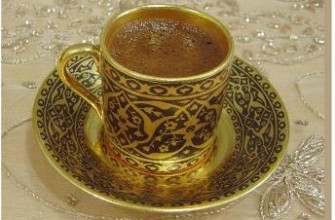
Turkish coffee is less a recipe than a method. The same beans that make espresso or filter coffee turn into something else entirely when they are ground to powder, brewed unfiltered in a small copper pot, and poured grounds and all into a tiny cup under a cap of foam. Get the grind, the heat and the foam right and you have a cup that Turks have built rituals, proverbs and a UNESCO listing around. This guide walks through what makes the coffee Turkish, the step-by-step method, and the culture that comes with the cup.
What makes coffee Turkish
Four things separate Turkish coffee from every other way of making it, and none of them is the bean.
- A powder grind. The coffee is ground far finer than espresso, to the texture of cocoa or flour. No other brewing style uses a grind this fine, and it cannot be made well in an ordinary burr grinder.
- A cold start in the cezve. Coffee, cold water and any sugar go into the small long-handled pot called a cezve together, before any heat. The brew comes up slowly from cold.
- No filter. Nothing strains the grounds. They settle in the bottom of the cup, which is why the texture is thick and the last sip is left behind.
- The foam. A good cup wears a layer of fine tan foam called köpük. Producing and sharing it is the test of whoever made the coffee.
Served in a small cup called a fincan, the coffee arrives with a glass of water to clear the palate and usually a piece of Turkish delight or a sweet on the side.
How to make Turkish coffee
Decide the sugar before you start, because you cannot stir it in later without killing the foam. The Turkish levels are sade (none), az şekerli (a little), orta (medium) and şekerli (sweet).
- Measure cold water using the cup you will serve in, one fincan per drinker, and pour it into the cezve.
- Add one heaped teaspoon of powder-fine Turkish coffee per cup. Add sugar now if you want it. Do not stir yet.
- Set the cezve over low heat. As it warms, stir once or twice to wet the coffee, then leave it alone.
- Watch for a dark foam to rise toward the rim. Before it boils over, lift the cezve off the heat.
- Spoon a little foam into each cup so every drinker gets a share, then return the pot to the heat for a few seconds to rise again.
- Pour slowly into the cups, foam first. Let the coffee rest a moment so the grounds sink, and serve with water on the side.
The cup is never stirred after pouring, and the muddy grounds at the bottom are not meant to be drunk.
The foam and the sand
The skill in Turkish coffee lives in the köpük. A barista who sends out a cup with no foam has failed the basic test, so the foam is built deliberately and divided among the cups. In cafes you will often see the showpiece method, közde kahve, where the cezve is buried to the neck in a tray of hot sand. The even, fierce heat of the sand pushes the foam up almost at once, and the maker controls the temperature by sliding the pot deeper or shallower. The same pot is lifted and returned three or four times before the coffee is poured.
A drink wrapped in ritual
Turkish coffee carries more meaning per cup than almost any other drink, which is why UNESCO added Turkish coffee culture and tradition to its list of intangible cultural heritage in 2013.
- Forty years of friendship. The proverb bir fincan kahvenin kırk yıl hatırı vardır holds that a single cup of coffee is remembered for forty years, meaning the bond formed over it lasts a lifetime.
- Reading the cup. When the cup is empty it is turned upside down on the saucer to cool, and the patterns the grounds leave are read for fortunes, a pastime called kahve falı.
- The salty test. At the kız isteme, when a groom’s family visits to ask for a bride, she makes the coffee and slips salt into the groom’s cup. He must drink it without a flicker to show he will take life’s bitterness for her sake.
- The coffeehouse. The kıraathane, the traditional coffeehouse, has been the meeting room of Turkish public life for centuries, a place for news, backgammon and argument.
From Yemen to Istanbul
Coffee reached the Ottoman capital in 1555, during the reign of Suleiman the Magnificent, carried north by Özdemir Pasha, the Ottoman governor of Yemen, who had picked up the habit while posted there. Within a year two Syrians, Hakem of Aleppo and Şamlı Şems, opened the first coffeehouses in the Tahtakale district, whose name means under the castle, and the city took to the drink at once. Coffee sellers lined the nearby Tahmis Sokak, the street of roasted and ground coffee. From Istanbul the cup and the method travelled into Europe, which is why much of the continent first met coffee through Ottoman hands.
The coffeehouse did not always have an easy time of it. Several sultans saw the gathering places as nests of gossip and sedition and tried to close them. Murad IV went furthest in the 1630s, banning coffee and tobacco outright and punishing offenders harshly, yet the habit outlasted every ban and the kıraathane became a fixture of Turkish street life.
Turkish coffee styles beyond the classic cup
The standard cup has regional cousins worth seeking out.
- Menengiç kahvesi – a caffeine-free brew from the roasted berries of the wild terebinth, creamy and nutty, a speciality of Gaziantep and the southeast.
- Dibek kahvesi – coffee pounded by hand in a large stone mortar called a dibek, sometimes with butter or mastic worked in, for a thicker cup.
- Mırra – the bitter, sugarless coffee of Şanlıurfa and Mardin, boiled down several times and passed around a group in small handleless cups with its own etiquette.
- Sütlü Türk kahvesi – made with milk in place of some of the water for a softer, rounder cup.
- Osmanlı kahvesi – an Ottoman-style cup using double-roasted beans, darker and more aromatic.
How it is served and drunk
The way the cup reaches you carries its own rules.
- The host pours. Coffee is made and served by the host or the youngest adult present, a gesture of respect to guests.
- Water first. Take a sip of the water before the coffee, and when the foam looks good, say so to the maker.
- Slow sips. The cup is small on purpose. It is meant to be nursed through a long conversation, not drained in a gulp.
- Stop at the mud. Drink until you feel the grit, then set the cup down. Turning it over onto the saucer signals you are ready to have your fortune read.
The tools and the beans
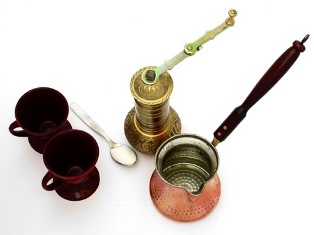
Three pieces of kit make the cup, and each has its own story.
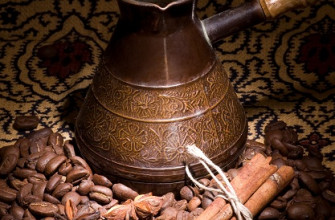
- The pot. The copper coffee pot, or cezve, with its wide base, narrow neck and long handle, is built to raise and hold the foam.
- The grinder. A Turkish coffee grinder, the tall brass hand mill, is the only common grinder that reaches the powder fineness the method needs.
- The beans. The beans and their roast matter less than the grind, but the right medium roast, ground fresh, makes the difference.
For the precise brewing steps and troubleshooting, follow the full Turkish coffee recipe. The cup also sits at the heart of the wider Turkish table and pairs by tradition with Turkish delight.
Frequently asked questions
What grind do I need for Turkish coffee?
A powder-fine grind, finer than espresso and closer to flour or cocoa. Most home grinders cannot reach it, which is why a dedicated Turkish hand mill or pre-ground Turkish coffee is used.
Do you boil Turkish coffee?
No. You bring it up slowly over low heat and lift it off the moment the foam rises, before it boils. Letting it boil over collapses the foam and scorches the coffee.
Are you supposed to drink the grounds?
No. The fine grounds settle at the bottom of the cup. You drink the coffee above them and leave the thick sludge, which is later used for fortune reading.
How much coffee per cup?
About one heaped teaspoon of Turkish coffee for each small cup of cold water, measured with the serving cup itself.
Why is Turkish coffee served with water?
The water clears the palate before the first sip so the coffee tastes its fullest, and it helps balance the strong, unfiltered brew.
Sources
- UNESCO – Turkish coffee culture and tradition
- Kurukahveci Mehmet Efendi – history of Turkish coffee
- Hurriyet Daily News – a cup remembered for 40 years
- Turkish coffee – overview