Breckenridge Ski Resort overview
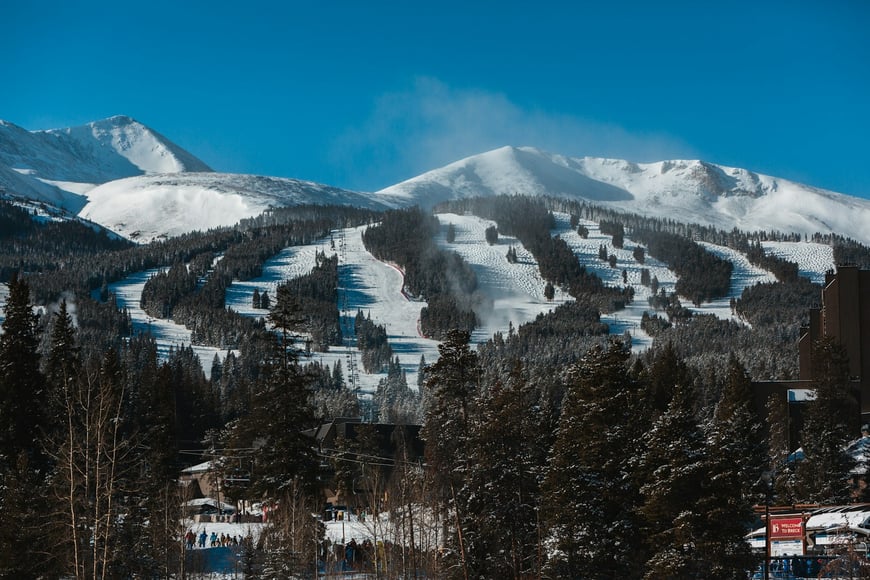
Breckenridge Ski Resort sits on the eastern side of the Tenmile Range in Summit County, Colorado. The resort spreads across five peaks (numbered 6 through 10) connected by a single lift network, with a base elevation of 9,600 feet at the town and a top lift elevation of 12,840 feet at the Imperial Express SuperChair, the highest chairlift in North America. The resort covers 2,358 skiable acres with 187 marked runs, five terrain parks, and two halfpipes.
Vail Resorts has owned Breckenridge since 1996. The Epic Pass family covers Breckenridge alongside Vail, Beaver Creek, Keystone, and Park City, which makes multi-resort trips on a single pass straightforward. Annual snowfall averages 350 inches, with snowmaking on more than 500 acres extending the season from mid-November into late April.
Most travellers stay in Breckenridge town and ride the free BreckConnect gondola or the Breckenridge Free Ride bus to the lift bases on Peaks 7, 8, and 9. Peak 6 and Peak 10 sit further out and connect via in-resort lifts only.
For trip-side context, see the Breckenridge Resorts and Lodging Guide for ski-in/ski-out properties and the Where to Eat in Breckenridge guide for apres-ski dining. For a contrasting California ski-resort overview, see Big Bear Snowboarding.
Beginner runs and learning slopes
Breckenridge runs one of the deepest beginner programs in the western US. About 14 percent of the resort’s terrain is rated green, which translates to roughly 25 marked runs covering all five peaks.
Peak 9 is the natural starting point. The base area sits closest to town, the Quicksilver SuperChair carries beginners to gentle terrain, and the lower Peak 9 runs (Cashier, Bonanza, Lower Lehman) all sit on consistent fall lines without surprise pitches. Most ski school groups meet at the Peak 9 base for the first two or three days of instruction.
Peak 8 offers the second beginner cluster. The 4 O’Clock and Springmeier runs let beginners ski back to town from the higher terrain after lunch. The Peak 8 SuperConnect provides a longer, gentler descent that builds confidence at the end of a learning day.
Peak 7 has fewer dedicated greens but the Penny Lane connector and Pioneer (lower) work for second-day learners moving to slightly steeper pitches.
For families splitting time between learning beginners and stronger skiers, the Peak 9 base remains the easiest meeting point because both groups can reconvene at the base lifts every couple of hours.
Intermediate runs and family terrain
Roughly 31 percent of Breckenridge’s terrain is rated blue, which gives intermediate skiers the largest single category of runs at the resort.
Peak 8’s Independence and Crystal trails offer wide groomed cruisers off the Independence SuperChair. The 4 O’Clock route from Peak 8 back to town runs three miles and is one of the longest groomed blues in the state.
Peak 9’s Cucumber, Volunteer, and Bonanza runs combine to give families a full day of intermediate cruising without requiring transit between peaks. The Mercury SuperChair on Peak 9 is the workhorse intermediate lift.
Peak 7’s American Express and Wirepatch trails sit higher on the mountain with wider sight lines than Peak 9 and quieter chairlift queues during peak weeks.
Peak 10’s Centennial run gives a long top-to-bottom intermediate descent off the Falcon SuperChair, with views into the Tenmile basin.
Advanced and expert terrain
About 55 percent of Breckenridge is rated black diamond or double-black, which puts the resort in the top tier of US advanced terrain.
Peak 8’s Imperial Bowl, Lake Chutes, and Whale’s Tail sit above 12,500 feet and offer steep open-bowl skiing and chute descents. The Imperial Express SuperChair (12,840 feet) accesses the highest in-bounds terrain in North America. Hike-to terrain off the top adds another tier of expert runs.
Peak 7’s Horseshoe and Contest Bowls run wide, north-facing snowfields with consistent pitches in the mid-30s degrees.
Peak 10’s Burn, Black Hawk, and Centennial Black sections combine glades, steep groomers, and bumps in a single sustained descent. The Falcon SuperChair lift line is the steepest sustained terrain on the mountain.
Peak 6’s bowls (Beyond Bowl, Serenity Bowl) opened in 2013 and added 543 acres of intermediate-to-advanced terrain on the resort’s far north end.
Backcountry access from the resort gates leads to the Tenmile Range out-of-bounds zones. Avalanche risk runs significant; CAIC forecasts and avalanche-safety gear (beacon, probe, shovel) are required, and most travellers hire a guide for first-time outings. For travellers comparing California alternatives at lower elevations, see Big Bear Luxury Properties.
Lift system and gondola
Breckenridge runs 34 lifts including four high-speed six-pack chairs, six high-speed quads, and the BreckConnect gondola.
The BreckConnect gondola is the main town-to-mountain connection. The lower terminal sits at the corner of Watson Avenue and Park Avenue near the visitor centre. The gondola runs in two stages: stage one to Peak 7 base (~9 minutes), stage two onward to Peak 8 base (~15 minutes total). The gondola is free for all riders, including non-skiers wanting summer-style scenic rides.
The Quicksilver SuperChair (Peak 9 base) is the busiest lift on the mountain because it sits closest to town and serves both beginner and intermediate terrain. Wait times can reach 15 minutes during Christmas-week mornings.
The Independence SuperChair (Peak 7) and Colorado SuperChair (Peak 8) work as the primary ski-back-to-town routes from upper terrain.
The Falcon SuperChair (Peak 10), Mercury SuperChair (Peak 9), and Imperial Express SuperChair (Peak 8 summit) handle the higher-elevation lifts.
Lift status updates run on the EpicMix mobile app and the resort’s lift map. Wind closures on Imperial Express are common in February when high-altitude winds exceed 60 mph.
Ski school and lessons
The Breckenridge Ski & Snowboard School runs out of the Peak 8 and Peak 9 base areas with separate programs for children, adults, and seniors.
Children’s lessons split into Mini Mice (3 to 4 years), Children’s Center (5 to 6), and Children’s Programs (7 to 14). Full-day lessons cost 250 to 350 USD per child during peak week and include lunch and lift access. Multi-day discounts run 10 to 15 percent for three-day or five-day bookings.
Adult group lessons run 200 to 280 USD per day and cap at six students per instructor. The lessons split into beginner, intermediate, and advanced tiers; expert clinics (steep skiing, moguls, off-piste) are private-only.
Private lessons run 700 to 1,200 USD per day depending on instructor seniority. The expert-level instructors (PSIA Level III certifications) carry the higher rate. Private bookings require 24 to 48 hour advance notice during peak weeks.
The First Time on Skis and First Time on Snowboard packages bundle a beginner lesson, beginner-area lift ticket, and rental gear for around 280 USD. This is the standard entry point for absolute beginners.
Rentals and equipment
Several rental shops operate in Breckenridge town and at the Peak 8 and Peak 9 lift bases.
Breckenridge Sports (the resort’s in-house operation) runs locations at all three lift bases plus a downtown shop. Rates run 60 to 100 USD per day for adult ski/board packages depending on tier (sport, performance, demo).
Christy Sports, Charter Sports, and Aspen Sports run independent shops on Main Street with similar pricing and a slope-side delivery option for guests at full-service resorts.
Booking online ahead of a trip saves 20 to 25 percent compared to walk-in pricing. Most shops match a Vail Resorts package rate if booked through the EpicMix app.
Helmet rentals run 10 to 15 USD per day. Outerwear (jacket, pants) rentals run 30 to 50 USD per day at most rental shops.
Lift tickets and passes
Single-day lift ticket prices vary by date and demand. Window prices run 240 to 290 USD per adult during peak weeks and drop to 160 to 200 USD off-peak.
Booking lift tickets through the resort website 7 to 14 days ahead of arrival saves 25 to 40 percent on window pricing. The EpicMix app handles most online ticket purchases and includes day-of activation.
Multi-day lift tickets bundle 3-day, 5-day, or 7-day packages at progressive savings. Five-day adult tickets typically run 800 to 1,100 USD during peak weeks, which is 25 to 30 percent below the equivalent five single-day windows.
The Epic Pass remains the strongest-value option for multi-resort or multi-week skiers. The full Epic Pass (1,000 to 1,200 USD when purchased before the September deadline) covers unlimited skiing at Breckenridge, Vail, Beaver Creek, Keystone, Crested Butte, and Park City, plus partner-resort days at Telluride and a list of Australian and European resorts. The Epic Local Pass (700 to 900 USD) trades blackout dates for a lower price.
The Keystone-Breckenridge bundled day ticket lets skiers move between the two Vail-Resorts properties on a single day’s lift access during the same season. The free Summit Stage bus connects the two resorts in 30 minutes.
Children under 5 ski free at Breckenridge with adult ticket purchase. Senior pricing (65+) runs 10 to 20 percent below adult rates.
Snowboarding and terrain parks
Breckenridge built one of the first dedicated terrain parks in the US in the early 1990s. The current terrain-park program runs across five separate parks at varying difficulty tiers.
Park Lane (Peak 8) is the showpiece park and includes a 22-foot superpipe (one of two halfpipes on the mountain) and a long jump line for advanced riders. The park has hosted Dew Tour events.
Freeway (Peak 8) runs a series of medium-sized features for intermediate park riders building toward Park Lane.
Bonanza (Peak 9) is the beginner-progression park with smaller jumps, ride-on boxes, and friendly transitions. Most first-time park riders start here.
Trygve’s (Peak 9) and Gold King (Peak 6) round out the smaller park inventory.
Quarter pipe enthusiasts find smaller-format ramps inside the regular terrain parks. The full superpipe at Park Lane is the most-recognised feature for serious riders.
Snowboarding equipment rental and lessons follow the same shops and program as skiing. The Burton-affiliated rental program at the Peak 8 base offers the deepest snowboard-specific demo fleet in town.
Beyond skiing: ice climbing, ice fishing, ice skating
Several winter sports beyond resort skiing run in and around Breckenridge.
Ice climbing. Most ice climbing in the area happens at indoor walls or at private outdoor climbing spots arranged through guide services. Beginner-level courses cover required attire, ice-tool use, crampons, helmets, harnesses, and basic mountaineering. Local guide services include Colorado Mountain School and Breckenridge Mountain Adventures. Course rates run 250 to 400 USD per person for a half-day introduction.
Ice fishing. Lake Dillon, ten minutes north of Breckenridge, is the closest ice-fishing destination. Travellers need a Colorado fishing license (around 35 USD for a non-resident annual; cheaper one-day options exist). Rental gear (auger, ice tent, line, hooks, bait) runs through Cutthroat Anglers in Silverthorne and a few outfitters in Frisco.
Outdoor ice skating. The Ice Rink at Breckenridge Gold Run Nordic Center runs free outdoor skating from 9 AM to 4 PM seasonally as conditions permit. Skate rentals on site run 8 to 12 USD per day. Stephen C. West Ice Arena (indoor) charges a daily entrance fee starting around 8 USD plus rental.
Snowshoeing and Nordic skiing. The Gold Run Nordic Center maintains 30 km of groomed cross-country trails. Day passes and equipment rentals run together for around 35 to 45 USD.
For non-skiers in a Breckenridge group, cabin-style accommodation pairs well with the slower-paced winter sports. Big Bear Cozy Cabins covers a comparable cabin-and-non-skiing setup in California’s Sierra Nevada.
Altitude and acclimatisation
At 9,600 feet, Breckenridge sits more than half a mile higher than Denver and roughly two miles above sea level. The thinner air at this elevation produces measurable effects on visitors arriving from sea-level cities.
Common altitude symptoms include headache, fatigue, nausea, sleep disruption, and mild shortness of breath. Most symptoms appear within 12 to 24 hours of arrival and resolve within 48 to 72 hours.
Prevention strategies: hydrate aggressively (3 to 4 litres of water daily). Limit or skip alcohol on the first night. Plan a shorter ski day on day one (4 hours instead of 8). Avoid heavy aerobic effort the first afternoon.
Diamox (acetazolamide) is a prescription medication that accelerates acclimatisation. A standard dose starts 24 hours before arrival and continues for the first two days. Travellers with a history of altitude sickness should ask their doctor before the trip.
Severe symptoms (persistent vomiting, confusion, ataxia, severe headache, shortness of breath at rest) require immediate descent. Summit Medical Center in Frisco operates a 24-hour emergency department.
Children and seniors run higher altitude-symptom rates. Plan accordingly with rest days built into the trip, especially for first-time visitors at this elevation. Best Palm Desert Luxury Hotels covers a low-elevation desert alternative for travellers prone to altitude symptoms.
Frequently asked questions
How many ski runs does Breckenridge have?
187 marked runs across five peaks, plus hike-to terrain off the Imperial Express summit and backcountry access from designated gates.
What is the best time of year for Breckenridge skiing?
Late January through mid-March offers the deepest powder and most reliable conditions. Christmas week and Presidents Day weekend run the highest crowds and prices. Late March through mid-April runs spring skiing with longer days, softer afternoon snow, and lower prices.
Is Breckenridge good for beginners?
Yes, especially compared to other Colorado resorts. Around 14 percent of the terrain is rated green, the Quicksilver beginner area at Peak 9 is right at the town base, and the ski school runs deep beginner-progression programs.
How much does a lift ticket cost?
Window pricing runs 240 to 290 USD per adult on peak days. Booking online 7 to 14 days ahead drops the price 25 to 40 percent. The Epic Pass at 1,000 to 1,200 USD pays back at around five to seven full ski days at Breckenridge.
Can I ski Breckenridge and Vail on the same trip?
Yes. Both resorts sit on the same Epic Pass and the drive between them runs 35 minutes via I-70. Most multi-resort trips alternate days between Vail, Beaver Creek, Keystone, and Breckenridge.
What is a warm-weather alternative for non-skiers in the family?
For winter-week trips with mixed skier and non-skier travellers, beach-resort destinations cover the second half of a split itinerary. See Best Nassau Bahamas Family Resorts or All Inclusive Family Resorts Florida for warm-weather options that pair with a Breckenridge ski week.
What about the altitude?
Plan a lighter day one, drink extra water, limit alcohol, and consider Diamox if you have a history of altitude symptoms. The town sits at 9,600 feet; the highest lift accesses 12,840 feet, so altitude management matters from day one.