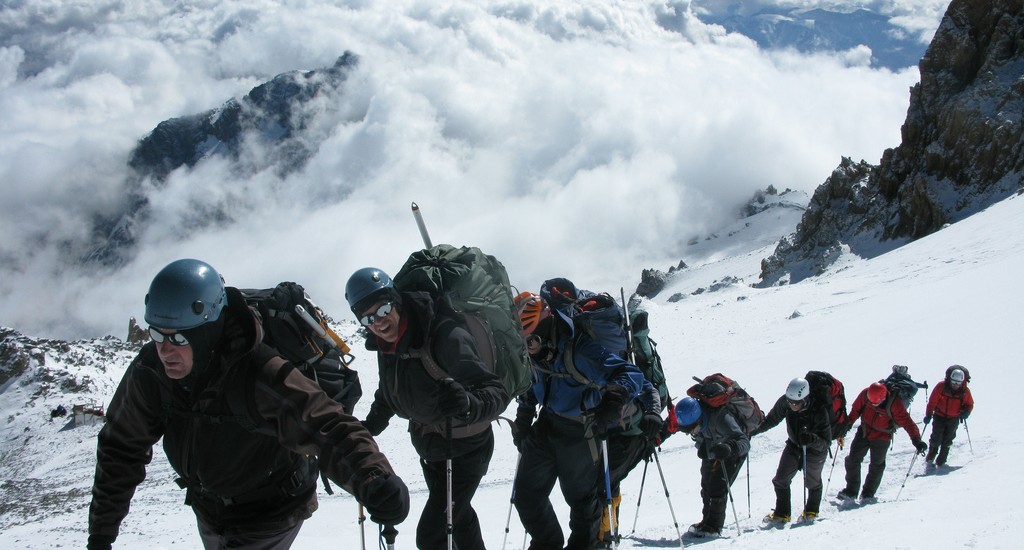
Planning an Aconcagua climbing expedition in Argentina? Aconcagua is the highest mountain in the Americas, the highest peak in both the Western and Southern Hemispheres and one of the famous Seven Summits. At 6,961 metres (22,838 feet), it draws thousands of climbers and trekkers from around the world every season. Although the standard route is technically straightforward, the altitude, the weather and the sheer size of the mountain make Aconcagua a serious undertaking that demands respect, preparation and the right guide. This 2026 guide walks through the routes, the expedition costs, the permits, the gear and the practical details for planning a safe and successful trip.
Why Climb Aconcagua?
Aconcagua sits in the Argentine province of Mendoza, in the central Andes, about 112 km northwest of the city of Mendoza and only 15 km from the Chilean border. The mountain is the highest peak outside of Asia and one of the most accessible of the Seven Summits, since the standard route does not require technical climbing skills or the use of ropes and ice tools. That accessibility makes Aconcagua a popular goal for climbers stepping up from the Alps or from peaks like Kilimanjaro, but the mountain is far from easy. The summit success rate sits at around 30 to 40 percent in most years, with altitude sickness, weather and the brutal final summit day defeating most of the climbers who turn back.
The mountain lies inside Aconcagua Provincial Park, established in 1983 to protect the surrounding 71,000 hectares of high Andean landscape. The park offers a range of options for visitors, from simple day hikes around the entrance gate to multi-week summit expeditions on the harder routes.
Aconcagua Routes: An Overview
Several routes lead to the summit, each with its own character, difficulty and cost.
The Normal Route (Northwest Ridge)
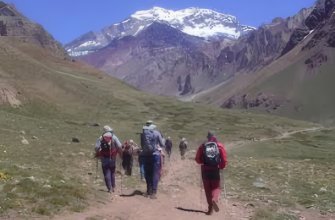
The Normal Route, also called the Northwest Ridge, is by far the most popular way up the mountain and the easiest route to the summit. The full expedition runs around 18 to 21 days from arrival in Mendoza, including acclimatisation, base camp set-up at Plaza de Mulas (4,300 m) and three high camps before the final push from Camp Colera at around 6,000 m. The route involves no technical climbing under normal conditions, only steep snow and scree slopes, and is considered ideal for fit beginners with previous high-altitude experience. The famous Canaleta, a long, loose scree gully on the final summit day, is the hardest physical challenge on the standard route.
The Polish Glacier Traverse
The Polish Glacier Traverse (sometimes called the False Polish Route) starts on the eastern side of the mountain through the wild and beautiful Vacas Valley, climbs up to Plaza Argentina base camp at around 4,200 m and traverses around the mountain to join the Normal Route for the summit day. The approach through Vacas Valley is quieter and far more scenic than the Horcones Valley used by the standard route. Climbers see far fewer people, get a better acclimatisation profile and combine two sides of the mountain in one trip. The route is slightly more demanding than the Normal Route but still requires no technical ice climbing.
The Polish Direct (Polish Glacier Route)
The Polish Direct, the original route up the Polish Glacier itself, is a serious climb that requires real ice climbing experience, ropes, ice axes and crampons. Climbers must be confident on 50 to 60-degree ice and able to handle objective hazards including crevasses and seracs. The route has become significantly more technical in recent years as climate change has reduced the snow cover and exposed more bare ice.
The South Face
The legendary South Face of Aconcagua is one of the most demanding ice and mixed climbs in the world. The 3,000-metre wall is reserved for elite alpinists and is rarely climbed.
The 360 Route
The 360 Route combines the approach through the Vacas Valley with a complete circuit around the mountain over the course of an expedition. It is the most scenic option and offers the best acclimatisation profile, with a longer total duration of around 21 days.
The Guanacos Route
The Guanacos Route was once a popular alternative on the eastern side of the mountain, but it has been closed for environmental reasons for several years and is not expected to reopen. Some older guidebooks and websites still mention it, so be sure to confirm current route availability with your operator.
Expedition Costs in 2026
Dozens of guided expedition companies operate in the Aconcagua area, and rates vary depending on the services included, the group size, the level of personal support and the route. Ascents are far more expensive than treks, and different ascents require different skill levels and equipment. The current price ranges (in US dollars):
- Normal Route group expedition. Around $5,000 to $7,500 USD per person for a 19 to 21-day expedition with experienced guides, full base camp services and high camp logistics. Group sizes typically run from 6 to 12 climbers per guide.
- Polish Glacier Traverse. Around $5,500 to $8,000 USD, slightly higher than the Normal Route because of the longer logistics and the more remote approach through Vacas Valley.
- Polish Direct (technical route). Around $7,000 to $9,500 USD, reserved for climbers with strong ice climbing experience.
- Private guided expedition. Around $10,000 to $15,000 USD for a 1-on-1 climb with a single client and a single guide.
- Personal porter. A personal porter costs roughly $1,000 to $1,500 USD for the full expedition and carries a portion of your gear between camps.
Prices have risen significantly over the past decade due to inflation, the falling Argentine peso (which has been replaced in dollar terms for almost all tourist services) and the higher cost of permits. Confirm current rates directly with your chosen operator before booking.
Trekking Expedition Rates
Visitors who only want to trek to the famous base camps without attempting the summit have several options:
- Plaza Francia trek (south face base camp). A 4 to 5-day trek to the foot of the spectacular south face, around $700 to $1,500 USD depending on group size and services.
- Plaza de Mulas trek (Normal Route base camp). A 7 to 8-day trek up the Horcones Valley to the main base camp at 4,300 m, around $1,200 to $2,500 USD per person.
- Plaza Argentina trek (Vacas Valley). A 7-day trek through the quieter eastern approach, with similar rates to Plaza de Mulas.
- Around-the-mountain trek. A handful of operators offer a complete circuit of Aconcagua over 14 to 18 days, with rates from $4,000 to $6,000 USD. This longer trek may require a special climbing permit.
The cost of expeditions does not normally include the park permits (which must be paid separately), hotel accommodations and meals in Mendoza, personal travel insurance or international flights to Argentina.
Park Permits
Anyone entering Aconcagua Provincial Park needs an official permit, and the price depends on the type of activity, the season and the nationality of the visitor. The system has changed several times in recent years, so always confirm the current cost on the official Mendoza Tourism website before you travel.
- Climbing permits for foreign visitors during the peak season can run between $800 and $1,200 USD for the Normal Route and slightly more for other routes.
- Trekking permits are significantly cheaper and range from around $100 to $300 USD depending on the duration and the entrance.
- Mid and low season permits are typically discounted by 25 to 40 percent.
Foreign nationals must usually appear in person at the official permit office in Mendoza to collect their permits, present a passport and sign a liability release. Most expedition companies will accompany clients to the office to handle the paperwork.
Climbing Seasons
The Aconcagua climbing season runs from 15 November to 31 March. Outside these dates the park is closed to climbers because of brutal winter weather, and rescue and ranger services are not available. The season is divided into three pricing categories:
- Peak season: 15 December to 31 January, the warmest and most stable weather window. The most expensive permits and the most crowded base camps.
- Mid season: 1 December to 14 December and 1 February to 20 February, slightly cooler but still good summit chances and lower crowds.
- Low season: 15 November to 30 November and 21 February to 31 March, the coldest and quietest periods, with significantly cheaper permits and fewer climbers but more challenging weather.
The best summit conditions traditionally fall in the second half of December and the first three weeks of January, although climate change has made weather windows less predictable in recent years.
Acclimatisation and Preparation
The biggest challenge on Aconcagua is the altitude. The thin air at 6,961 m holds about 40 percent of the oxygen at sea level, and altitude sickness is the leading cause of failure on the mountain. A sensible expedition follows a slow acclimatisation profile with several “climb high, sleep low” rotations between camps. Most experienced climbers also recommend at least one or two warm-up climbs at moderate altitude (4,000 to 5,000 m) in the months before the trip to assess how the body responds.
Physical preparation should include several months of cardio training (running, cycling, hiking with a heavy pack), strength training (especially for the legs, back and core) and at least a few back-to-back long days carrying weight on steep terrain. Aim to train for at least four to six months before departure.
Essential Gear
The Normal Route does not require technical climbing equipment, but it does require serious cold-weather mountaineering gear. A typical kit list includes:
- Double mountaineering boots rated for -30 degrees Celsius or colder.
- Crampons and a basic ice axe.
- A 4-season tent (provided by most operators) and a sleeping bag rated to -25 to -30 degrees Celsius.
- Insulated down or synthetic parka and pants for the summit day.
- Multiple thermal base layers, fleece mid layers, hard shell jacket and pants.
- Mittens and gloves in several weights, balaclava, neck gaiter and a warm hat.
- Glacier sunglasses and ski goggles.
- Trekking poles, a 60 to 80-litre backpack and a smaller summit pack.
- Headlamp with spare batteries, water bottles and an insulated thermos.
- Personal first aid kit, sunscreen and lip balm with high SPF.
Environmental Considerations
Some expedition companies use environmentally friendly practices for waste disposal, including portable toilets and the carry-out of all human waste from high camps, although this practice is not yet universal. Visitors with environmental concerns should ask their operator directly about waste management policies. The park rangers have introduced strict rules in recent years about waste, and climbers are now required to register all gear and food at the entrance and again on exit.
Choosing an Expedition Operator
Dozens of operators run expeditions on Aconcagua, from small Argentine guide companies based in Mendoza to large international outfits. The most reputable include IMG (International Mountain Guides), Alpine Ascents International, Mountain Madness, RMI Expeditions, Adventure Consultants, Inka Expediciones, Grajales Expediciones, Aymara Adventures, Acomara and Acongaua Trek. When choosing a company, consider:
- Guide-to-client ratio. A maximum of 4 to 6 climbers per guide is ideal on summit day.
- Itinerary length. Anything shorter than 18 days does not allow proper acclimatisation.
- Base camp services. Heated dining tents, hot meals, communications and medical support make a big difference.
- Safety record and emergency plans. Ask about the company’s history of high-altitude rescues and helicopter evacuations.
- Environmental policies. Confirm that human waste, packaging and rubbish are carried out from high camps.
Health and Safety
Altitude sickness is the most common medical issue on Aconcagua. Symptoms range from mild headache, nausea and fatigue to potentially fatal high-altitude pulmonary edema (HAPE) and high-altitude cerebral edema (HACE). Always descend immediately if symptoms worsen. Most experienced operators carry oxygen, dexamethasone, nifedipine and a portable hyperbaric chamber (Gamow bag) for emergencies.
The park maintains a medical team at Plaza de Mulas during the high season, and a helicopter rescue service is available within the park boundaries. Medical evacuation insurance is essential, and most reputable operators require proof of insurance before the climb.