Between 1947 and 1954, roughly 60,000 Polish displaced persons arrived in Australia under post-war resettlement programs. They brought suitcases, work skills, and recipes. Within a decade, Polish delis appeared in Melbourne’s inner suburbs, Sydney’s western districts, and Adelaide’s industrial corridors, selling kielbasa, rye bread, and pickled vegetables to a community rebuilding its daily life on the other side of the world. Seven decades later, the 2021 Australian census recorded over 209,000 residents of Polish descent, and the food those first arrivals carried has grown from a private kitchen tradition into a visible part of Australia’s restaurant and deli landscape.
This article traces how Polish cuisine established itself in Australia, identifies the core dishes that define it, and maps where to find Polish food in Melbourne, Sydney, and other cities today.
How Polish Food Arrived in Australia
Polish migration to Australia arrived in three distinct waves, each bringing its own relationship to food. The first and largest wave came between 1947 and 1955, when 71,721 Polish-born migrants entered Australia. Many were former soldiers, political prisoners, and refugees who had spent years in displaced persons camps across Europe. The Australian government recruited them under labor agreements that sent new arrivals to regional projects: hydroelectric dams in the Snowy Mountains, cane fields in Queensland, and factory floors in Melbourne and Sydney.
These workers brought recipes from prewar Poland but limited access to ingredients. Australian shops in the 1950s stocked no sauerkraut, no rye flour, and no smoked pork sausage of the type Polish households needed. Polish women, who carried most of the cooking knowledge, adapted by growing their own vegetables, fermenting cabbage at home, and forming buying cooperatives that imported dry goods from Europe. The Polish delis that opened in Footscray, Richmond, and Marrickville during the 1950s and 1960s served these practical needs before they became cultural landmarks.
A second wave from 1957 to 1966 and a third from 1980 to 1991, driven by political repression under martial law and the Solidarity movement, added another 40,000 Polish-born residents. The later arrivals found an established Polish food infrastructure already in place, with delis, clubs, and parish kitchens serving as community anchors. By the 1966 census, Poland-born residents peaked at 61,641, concentrated in Melbourne (Victoria held the largest share), Sydney, and Adelaide.
Core Dishes of Polish Cuisine
Pierogi
Pierogi are filled dumplings made from unleavened dough of flour, eggs, water, and salt. Cooks roll the dough thin, cut it into circles, fill each circle, fold it into a crescent, and seal the edges by pressing with a fork or fingers. Classic fillings include potato and farmer’s cheese (pierogi ruskie), sauerkraut and dried mushroom, ground meat, and sweetened cottage cheese with raisins for a dessert version. The dumplings are boiled, then optionally fried in butter until the edges crisp. A single batch can produce dozens, making pierogi a practical dish for large families and community gatherings.
Bigos
Bigos, often translated as “hunter’s stew,” combines sauerkraut, fresh cabbage, several types of meat (pork shoulder, smoked kielbasa, bacon, and sometimes game), dried mushrooms, and tomato paste, simmered for hours. The dish improves with reheating, and traditional cooks prepare it days before serving. The 19th-century epic poem Pan Tadeusz by Adam Mickiewicz devotes an entire passage to describing bigos, cementing its status as a symbol of Polish hospitality. Australian-Polish households serve it at Christmas Eve gatherings, Easter meals, and Polish community festivals.
Zurek
Zurek is a sour rye soup made from a fermented rye flour starter called zakwas. The fermentation takes three to five days and gives the soup a distinctive tangy flavor that has no equivalent in Australian or British cooking. The finished soup contains sliced white sausage (biala kielbasa), cubed potatoes, and halved hard-boiled eggs. Some restaurants serve zurek inside a hollowed-out bread loaf, a presentation style borrowed from Polish mountain regions.
Barszcz
Barszcz is beetroot soup served either as a clear, strained broth (barszcz czysty) or as a thicker version with vegetables. The clear version, a deep crimson liquid served in a cup or small bowl, appears on most Polish Christmas Eve tables alongside small dumplings called uszka (meaning “little ears”) filled with dried mushroom. The word barszcz derives from an Old Slavic name for hogweed, which was used to make sour soup before cultivated beets replaced it as the primary ingredient.
Kielbasa
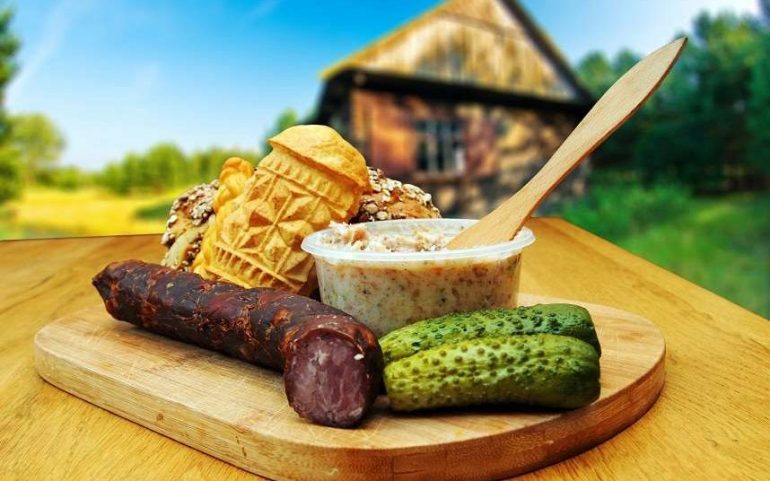
Kielbasa is a broad term for Polish sausage, covering dozens of regional varieties. The most common in Australian delis is kielbasa wiejska (country sausage), a coarsely ground pork sausage seasoned with garlic and marjoram, smoked over hardwood. Other varieties include kabanosy (thin, dry, snack-sized sticks), kielbasa krakowska (a thick sausage from Krakow with visible pieces of lean pork), and biala kielbasa (unsmoked white sausage used in zurek and at Easter).
Polish Food in Melbourne
Melbourne holds Australia’s densest concentration of Polish food businesses, reflecting Victoria’s position as the state with the largest Polish-descended population.
Borsch, Vodka and Tears on Chapel Street in Prahran combines a Polish restaurant with a vodka bar. The menu covers pierogi, bigos, beef stroganoff, and a selection of Eastern European vodkas. The restaurant has operated since the early 2000s and draws a mixed crowd of Polish Australians and diners exploring Eastern European food for the first time.
Eat Pierogi Make Love in Brunswick East focuses on handmade pierogi with fillings ranging from traditional ruskie (potato and cheese) to seasonal specials. The menu extends to bigos, pork skewers with blueberry sauce, and a deep-fried vegan pierogi option that reflects the restaurant’s willingness to adapt Polish forms to Australian dietary preferences.
Kluska, also in the inner northern suburbs, earns recommendations for its schnitzel and pyzy z miesem (large doughy dumplings filled with beef). The cooking aims for a home-kitchen quality that regular customers describe as close to what a Polish grandmother would serve.
Krakowianka in Footscray operates as a family-owned restaurant specializing in pierogi, golabki (cabbage rolls stuffed with rice and meat), and kielbasa dishes. Footscray’s history as a working-class suburb with strong Eastern European settlement made it a natural location for Polish food businesses from the 1960s onward.
For groceries, Polka Dot Polish Deli in Footscray stocks sausages, cheeses, pierogi, rye bread, and imported Polish packaged goods. Uncle’s Smallgoods, operating as an online deli, ships traditional Polish items including bigos, golabki, flaczki (tripe soup), and seven varieties of pierogi across Victoria, New South Wales, and Queensland.
Polish Food in Sydney and Other Cities
Sydney’s Polish food scene centers on the western suburbs where post-war migrants settled. Polonez Smallgoods in Chester Hill produces kielbasa, kabanosy, and other smoked meats on site. Mazurek Polish Deli in Parramatta and Polmarket Deli in Penrith carry imported Polish groceries alongside locally made sausages and pierogi.
Enklava Cafe in Miranda serves cooked pierogi and bigos alongside coffee, and sells frozen pierogi for home preparation. The cafe format, combining Polish food with Australian-style coffee culture, represents a newer model that appeals to second- and third-generation Polish Australians who want the food without the formality of a sit-down restaurant.
Adelaide’s Polish community, concentrated in suburbs like Woodville and Kilburn, maintains its food traditions through the Polish Hill River district in the Clare Valley, one of the oldest Polish rural settlements in Australia dating to the 1840s. Polish community clubs in Adelaide serve traditional meals at festivals, Easter celebrations, and Wigilia (Christmas Eve) gatherings open to members and their guests.
Polish food also appears at multicultural food markets across Australian cities. Melbourne’s Queen Victoria Market and South Melbourne Market both host stalls selling pierogi, kielbasa, and rye bread. Sydney’s weekend markets at Marrickville and Bankstown occasionally feature Polish food vendors alongside other Eastern European sellers.
How Polish Cooking Adapted to Australia
Polish cuisine in Australia changed as it crossed hemispheres. The seasonal calendar inverted: Christmas falls in summer, which means the heavy, warming dishes of a Polish winter Christmas Eve sit on Australian tables in 35-degree heat. Some families have adapted by serving cold barszcz and lighter pierogi fillings at Christmas, while others maintain the full traditional spread regardless of the temperature.
Australian ingredients substituted for unavailable Polish ones. Local pork replaced specific Polish breeds. Australian-grown potatoes, which differ in starch content from Polish varieties, changed the texture of pierogi fillings. Cooks learned which Australian mushrooms could replace dried Polish forest mushrooms in bigos and sauerkraut dishes, and which could not.
The availability of fresh vegetables year-round in Australia reduced the reliance on preserved foods that defined Polish cooking in its cold-climate homeland. Polish-Australian cooks today use fresh cabbage more often than sauerkraut in everyday cooking, reserving the fermented version for traditional dishes where the sour flavor is essential.
Second- and third-generation Polish Australians treat the cuisine selectively. Many grew up eating pierogi and bigos at family gatherings but cook lighter, Australian-influenced meals during the week. The dishes survive as celebration food and comfort food rather than daily fare, a pattern common to immigrant cuisines worldwide.
Frequently Asked Questions
Where can I find Polish food in Melbourne?
Melbourne has the widest selection of Polish food in Australia. Restaurants include Borsch, Vodka and Tears in Prahran, Eat Pierogi Make Love in Brunswick East, Kluska, and Krakowianka in Footscray. For groceries, Polka Dot Polish Deli in Footscray and Polish Rye Crust Bakery carry traditional items. Uncle’s Smallgoods delivers Polish food online across eastern Australia.
What is the most popular Polish dish in Australia?
Pierogi dominate. The dumplings appear on every Polish restaurant menu in Australia and are the most commonly sold item at Polish delis and food markets. Bigos (hunter’s stew) and kielbasa (smoked sausage) are the next most widely available. Zurek (sour rye soup) is less common but appears at restaurants that focus on traditional Polish cooking.
How many Polish people live in Australia?
The 2021 Australian census recorded 45,884 residents born in Poland and 209,281 residents who identified Polish ancestry. The Poland-born population has declined steadily since peaking at 61,641 in the 1966 census, reflecting aging, limited new arrivals, and some return migration. Victoria holds the largest share of Polish-descended Australians.
Is Polish food available outside Melbourne and Sydney?
Yes, though in smaller quantities. Adelaide maintains Polish community clubs and food traditions, particularly around the Polish Hill River district in the Clare Valley. Brisbane, Perth, and Canberra have Polish delis and occasional market stalls. Polish food also appears at multicultural festivals in most Australian capital cities.
What is Wigilia and what food is served?
Wigilia is the Polish Christmas Eve supper, traditionally a twelve-dish meatless meal served after the first star appears in the evening sky. Standard dishes include clear barszcz with uszka (mushroom-filled dumplings), fried carp, pierogi with sauerkraut, herring in oil or cream, kutia (wheat berry pudding), and poppy seed cake (makowiec). Polish-Australian families observe Wigilia on December 24, often adapting the menu to summer conditions.
Sources:
- SBS Cultural Atlas – “Polish in Australia” (culturalatlas.sbs.com.au)
- Australian National University Press – “Polish Migration to Australia” (press-files.anu.edu.au)
- SA History Hub – “Polish in South Australia” (sahistoryhub.history.sa.gov.au)
- Broadsheet Melbourne – “Eat Pierogi Make Love, Brunswick East” (broadsheet.com.au)