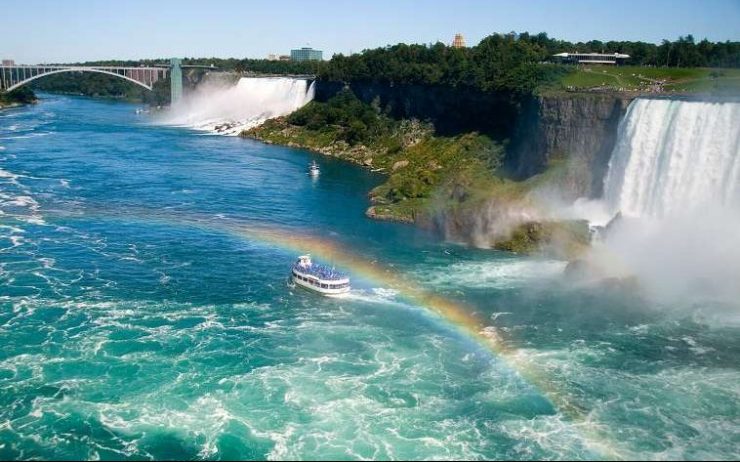
The Canadian Horseshoe Falls is a magnificent waterfall on the Niagara River and the largest of the three waterfalls that together make up the famous Niagara Falls. Most of the falls sit on the Canadian side of the border between Canada and the United States, between Terrapin Point on Goat Island in New York State and Table Rock in Ontario. The Horseshoe Falls draw millions of visitors every year, drive a major hydroelectric industry and rank among the most photographed natural sights in North America. This 2026 guide walks through the geography, the history, the most popular attractions and the practical details for planning a visit.
The Falls
The Canadian Horseshoe Falls are also known simply as the Horseshoe Falls or the Canadian Falls. The river first started flowing over the cliff edge more than 12,000 years ago, when the retreating glaciers of the last Ice Age carved out the present-day Niagara escarpment. A French missionary named Father Louis Hennepin was the first European to describe the falls in detail in 1678, and the curving horseshoe outline gave the falls its modern name in the early 18th century.
The dimensions of the Canadian Horseshoe Falls are impressive. The crest measures around 670 metres wide and the falls drop about 57 metres from the brink to the river below. The water flowing over the centre of the crest is roughly 3 metres deep at peak flow, and around 90 percent of the entire Niagara River passes over the Canadian Horseshoe Falls (the rest flows over the smaller American and Bridal Veil Falls on the United States side). The water travels at speeds of around 32 km per hour as it approaches the brink, and around 2,800 cubic metres of water cascade over the edge every second during peak summer flow.
The falls are constantly retreating as the powerful water erodes the limestone and shale of the cliff face. Historical records suggest that the falls have moved about 11 km upstream over the past 12,500 years. Modern engineering and water diversion have slowed the erosion to an estimated 30 cm per year, far less than the historical rate.
The huge volume of water generates an enormous cloud of mist that hangs above the falls year-round, and on a sunny day you are almost guaranteed to see a rainbow somewhere in the spray. After dark, the falls are illuminated every night of the year by powerful coloured lights from the Canadian shore, and special light shows mark Canadian and American holidays throughout the year.
A Common Misconception
The Canadian Horseshoe Falls are often mistakenly described as one of the Seven Wonders of the World, but the falls do not appear on either the classical or the modern lists. The mistake is understandable, since the sheer scale and beauty of the falls easily match the famous wonders.
The Economic Importance of the Falls
The Canadian Horseshoe Falls are not only beautiful. The site also contributes massive economic activity to both sides of the border. Niagara Falls, the Canadian city of about 90,000 people that grew up around the falls, has long been known as a honeymoon retreat and as one of the leading tourist destinations in North America. Tens of millions of visitors come every year, and the industry supports hotels, restaurants, museums and an enormous range of attractions in the surrounding area.
The falls also generate huge amounts of clean hydroelectric power. Around half of the water from the Niagara River is diverted into the hydroelectric stations at night and during the winter off-season, when the lower flow over the falls allows the turbines on both sides of the border to produce electricity for millions of homes in Ontario and New York State.
The Best Ways to Experience the Horseshoe Falls
Niagara City Cruises (Maid of the Mist)
The most famous boat tour at Niagara Falls runs on the Canadian side as Niagara City Cruises (the historic Maid of the Mist name continues on the American side). The boat takes visitors right into the basin at the foot of the Canadian Horseshoe Falls, where the spray and the noise of the falling water are unforgettable. Disposable rain ponchos are provided, but expect to get soaked anyway. The boats run from spring to late autumn, depending on the river ice.
Journey Behind the Falls
The Journey Behind the Falls tour gives visitors a completely different perspective on the Canadian Horseshoe Falls. Elevators carry visitors 38 metres down through the rock to a series of tunnels that lead to two viewing portals directly behind the wall of falling water. A separate observation deck at the foot of the falls offers a thunderous view of the cascade from below. The attraction operates year-round and is especially atmospheric in winter, when ice forms around the platforms.
Skylon Tower
For a panoramic view of the falls from above, the Skylon Tower rises 236 metres above the Canadian side and offers indoor and outdoor observation decks plus a revolving restaurant. The view stretches across the entire falls, the Niagara River and far into both Canada and the United States.
Niagara SkyWheel
The Niagara SkyWheel, a 53-metre-tall observation wheel on Clifton Hill, offers a more relaxed alternative for visitors who want a panoramic view without the crowds at the top of Skylon Tower.
Horseshoe Falls Viewpoints from Land
The Canadian Horseshoe Falls can easily be viewed from land on both sides of the border. On the Canadian side, the railing at Table Rock places you within metres of the brink, where you can feel the spray and watch the river roar over the edge. The promenade along Niagara Parkway runs for several kilometres and offers superb views from a series of overlooks. On the American side, Goat Island and Terrapin Point give visitors a different perspective on the curving crest.
WildPlay Mistrider Zipline
For thrill-seekers, the Mistrider Zipline on the Canadian side launches riders 670 metres along the gorge, ending in a viewing platform right next to the Horseshoe Falls. The zipline runs from spring to late autumn.
People Who Have Gone Over the Falls
Every year millions of visitors travel to the Canadian Horseshoe Falls, and in the long history of the falls a small number of people have intentionally ventured over the brink. As of recent counts, about 16 people have gone over the Horseshoe Falls in a barrel, a boat, a ball or another improvised vessel, and several of them have died in the attempt.
The first person to survive the plunge was Annie Edson Taylor, a 63-year-old American school teacher who went over the falls in a wooden barrel on her birthday in 1901 and emerged shaken but alive. Despite her stunt, she never made the fortune she hoped for and died in poverty.
One of the most extraordinary stories happened in 1960, when a seven-year-old boy named Roger Woodward was accidentally swept over the Canadian Horseshoe Falls after the small boat he was riding in capsized upstream. He was wearing only a life jacket and yet survived the fall completely unharmed. He was rescued from the basin below by the Maid of the Mist and remains the only person ever known to have survived an unprotected plunge over the falls.
The Niagara Parks Police strictly forbid stunts at the falls today, and anyone who attempts to go over faces criminal charges and heavy fines.
Best Time to Visit Niagara Falls
The Canadian Horseshoe Falls are spectacular year-round, but each season offers a different experience:
- Summer (June to August). Peak season with the warmest weather, longest daylight and the largest crowds. All boat tours and outdoor attractions are open.
- Autumn (September to October). Smaller crowds and stunning fall colours along the Niagara Parkway and the surrounding wine region.
- Winter (November to March). Quiet, dramatic and often beautiful, with ice formations along the gorge and the famous Winter Festival of Lights illuminating the falls every night. The Maid of the Mist boats do not run, but the Journey Behind the Falls and the viewpoints stay open.
- Spring (April to May). Strong water flow, mild temperatures and fewer visitors before the summer rush.
How to Get to Niagara Falls
The Canadian city of Niagara Falls sits about 130 km southwest of Toronto and is easily reached by car (about 90 minutes), bus (around 2 hours) or the GO Train, which runs regular service throughout the year. The closest international airport is Toronto Pearson International Airport (YYZ), with regular shuttle services to the falls. From the United States, the falls are reached via the city of Niagara Falls, New York, with the closest major airport at Buffalo Niagara International Airport (BUF).
Crossing the border between Canada and the United States is straightforward but requires a valid passport. The famous Rainbow Bridge connects the two cities and offers pedestrian and vehicle access with stunning views of all three waterfalls along the way.
Where to Stay
The Canadian side of Niagara Falls offers the widest range of accommodation, from luxury high-rise hotels with rooms overlooking the falls to budget motels and family-friendly resorts. The most famous hotels with falls views include the Marriott Fallsview, the Sheraton on the Falls and the Embassy Suites. Booking a higher floor with a falls view is well worth the extra cost, especially for the night-time illumination shows.
Practical Tips
- Currency. Canadian dollar (CAD) on the Canadian side, US dollar (USD) on the American side. Most attractions accept both.
- Wear waterproof gear. The mist from the falls is unavoidable. A waterproof jacket and shoes save you from getting completely soaked.
- Buy a Niagara Falls Adventure Pass. The combo ticket covers Niagara City Cruises, Journey Behind the Falls and several other attractions at a discount.
- Stay overnight. The falls are far more magical at night, when the illumination shows and the smaller evening crowds transform the experience.
- Combine with the wine region. The famous Niagara wine region, including the picturesque town of Niagara-on-the-Lake, sits just 30 minutes north and is well worth a half-day trip.
Final Thoughts
The Canadian Horseshoe Falls are one of the great natural sights of North America. Stand at Table Rock as the river thunders over the brink, ride a boat into the spray at the foot of the cascade, walk through the tunnels of the Journey Behind the Falls and watch the entire falls light up in colour after dark, and you start to understand why visitors have travelled to this corner of Ontario for more than 300 years. Few places combine raw natural power, scientific fascination and tourist convenience the way Niagara Falls does, and the Canadian Horseshoe Falls remain the unforgettable centrepiece of the experience.