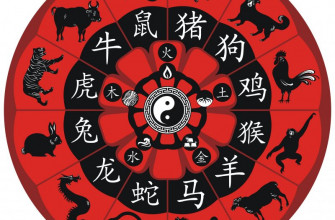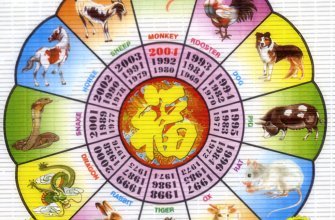
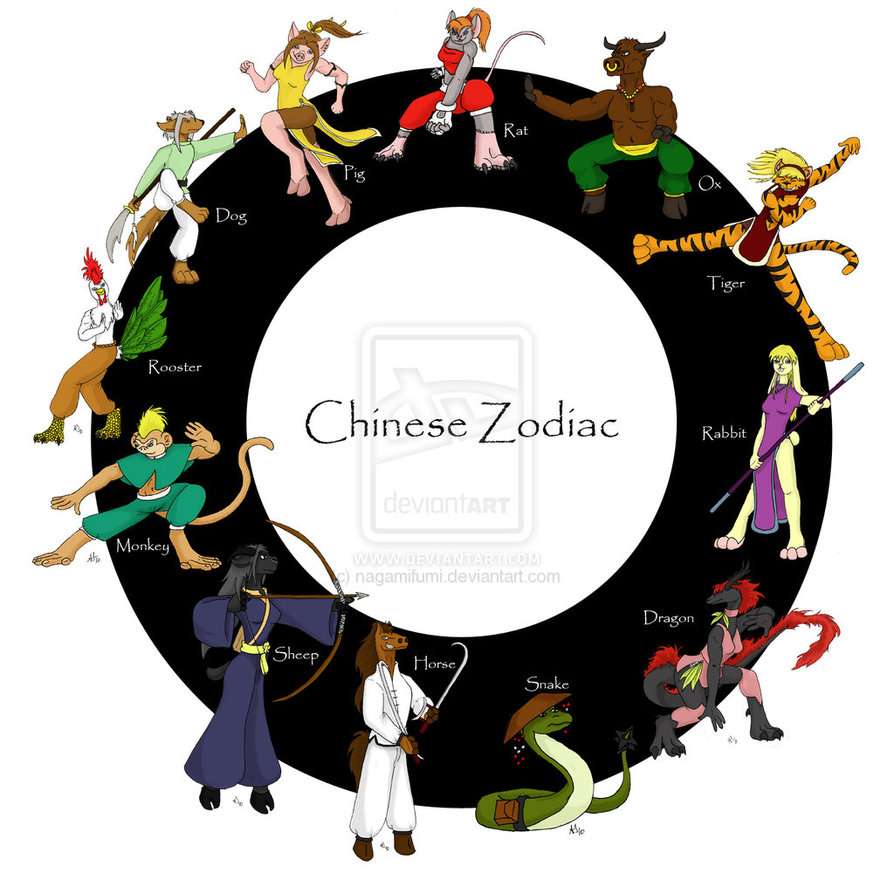
Chinese zodiac signs place every person born on Earth into a 12-year rotation of animals: rat, ox, tiger, rabbit, dragon, snake, horse, sheep, monkey, rooster, dog, and pig. The Chinese call this cycle shengxiao (生肖, “born resemblance”), and unlike Western astrology with its month-based sun signs, the zodiac assigns one animal to every lunar year. A person born in February 2012 falls under the Dragon; someone born in February 2013 is a Snake. Beyond birth-year identification, the system threads through marriage planning, baby-naming traditions, Lunar New Year decoration, traditional medicine clocks, and business-partner selection across China, Vietnam, Korea, Japan, and much of Southeast Asia.
This guide covers every layer of the zodiac: the 12 animals with their birth-year tables and personality profiles, the five elements that modify each sign on a 60-year cycle, the 12 two-hour periods that divide the day, the compatibility matrix for marriage and business, the Han-dynasty origins of the myth, and practical steps to identify your own sign correctly when your birthday falls near Lunar New Year.
The 12 Chinese Zodiac Animals
Each animal below includes a partial year list (complete tables run through 2043) and a short behavioural sketch. Element-modified variants (Wood Rat, Metal Tiger and so on) are covered in the Five Elements section further down.
Rat (鼠 shǔ)
Years: 1924, 1936, 1948, 1960, 1972, 1984, 1996, 2008, 2020, 2032. Rats lead the cycle, a position the Great Race myth explains later on this page. People born under the Rat sign are described as quick-witted, resourceful, and observant, often saving money and planning years ahead. They work well in research, journalism, law, and accounting. Rats pair most comfortably with Ox, Dragon, and Monkey; tense matches include Horse and Sheep. The element rotation gives Wood Rat, Fire Rat, Earth Rat, Metal Rat in 2020 for example, and Water Rat in 1972. Read the full personality breakdown on our Year of the Rat page.
Ox (牛 niú)
Years: 1925, 1937, 1949, 1961, 1973, 1985, 1997, 2009, 2021, 2033. The Ox stands for patience, methodical work, and loyalty. Ox people are the ones who finish long projects others abandon, the colleagues who show up early, and the spouses who stay through rough decades. They do well in farming, medicine, finance, and engineering. Good matches are Rat, Snake, and Rooster; they often clash with Sheep and Horse. The 1985 Wood Ox generation and the 2021 Metal Ox generation sit at the edges of recent memory. More detail on our Year of the Ox page.
Tiger (虎 hǔ)
Years: 1926, 1938, 1950, 1962, 1974, 1986, 1998, 2010, 2022, 2034. Tigers carry the energy of the Chinese New Year celebrations that feature lion and tiger dances across temple courtyards. Personality traits include courage, authority, and a taste for competition. Tiger-born people take the lead in business, politics, military careers, and sports. They match well with Horse, Dog, and Pig; friction tends to arise with Monkey. Mao Zedong, born 1893, was a Water Tiger. Further reading on the Year of the Tiger.
Rabbit (兔 tù)
Years: 1927, 1939, 1951, 1963, 1975, 1987, 1999, 2011, 2023, 2035. The Rabbit sign, known in Vietnam as the Cat, represents gentleness, diplomacy, and good taste. Rabbit people excel as teachers, therapists, designers, and diplomats because they read emotional temperature before speaking. They match warmly with Sheep, Pig, and Dog; Rooster tends to be a difficult pair. Einstein, born 1879, was a Water Rabbit; actor Brad Pitt, born 1963, is a Water Rabbit too. See the Year of the Rabbit page.
Dragon (龙 lóng)
Years: 1928, 1940, 1952, 1964, 1976, 1988, 2000, 2012, 2024, 2036. Dragon is the only mythical animal in the cycle and the most prized birth year for Chinese parents: birth rates rise measurably in every Dragon year, particularly 2012. Dragon-born people are seen as charismatic, ambitious, and dominant, with a tendency to attract either devoted followers or strong rivals. Good matches are Rat, Monkey, and Rooster. Bruce Lee, born 1940, was a Metal Dragon. John Lennon, born 1940, also a Metal Dragon. More on the Year of the Dragon.
Snake (蛇 shé)
Years: 1929, 1941, 1953, 1965, 1977, 1989, 2001, 2013, 2025, 2037. Snake carries wisdom, introspection, and quiet analytical skill, a reputation that dates back to Han-era oracle texts. Snake people tend toward philosophy, academia, psychology, and strategic business roles. They pair well with Ox, Rooster, and Monkey; Tiger and Pig tend to be harder. Mahatma Gandhi, born 1869, was an Earth Snake. Film director Martin Scorsese, born 1942, is a Water Snake. See the Year of the Snake for a full profile.
Horse (马 mǎ)
Years: 1930, 1942, 1954, 1966, 1978, 1990, 2002, 2014, 2026, 2038. Horse people value independence, travel, and open-ended adventure. The sign is associated with restlessness, social energy, and dislike of routine. Strong matches are Tiger, Sheep, and Dog; Rat and Ox tend to clash. Paul McCartney, born 1942, is a Water Horse. Nelson Mandela, born 1918, was an Earth Horse. Details on the Year of the Horse page.
Sheep (羊 yáng)
Years: 1931, 1943, 1955, 1967, 1979, 1991, 2003, 2015, 2027, 2039. Sheep, sometimes translated as Goat or Ram, stands for gentleness, artistic sensitivity, and a preference for group harmony. Sheep-born people shine as artists, musicians, caregivers, and hospitality professionals. Rabbit, Horse, and Pig are warm matches; Ox and Dog can strain the relationship. Julia Roberts, born 1967, is a Fire Sheep. Read more on the Year of the Sheep.
Monkey (猴 hóu)
Years: 1932, 1944, 1956, 1968, 1980, 1992, 2004, 2016, 2028, 2040. Monkey people earn a reputation for cleverness, humour, and a restless appetite for problem-solving. The legendary Monkey King, Sun Wukong from the Ming-era novel Journey to the West, cemented the animal in popular culture. Monkey pairs well with Rat, Dragon, and Snake; Tiger tends to be the rockiest match. Leonardo da Vinci, born 1452, was a Water Monkey. The Year of the Monkey page has the full personality profile.
Rooster (鸡 jī)
Years: 1933, 1945, 1957, 1969, 1981, 1993, 2005, 2017, 2029, 2041. Rooster stands for punctuality, honesty, and a tendency to speak first and smooth things over later. Rooster people organise their lives in checklists and calendars, which makes them reliable colleagues and slightly demanding partners. Good matches are Ox, Snake, and Dragon; Rabbit and Dog tend to struggle. Beyoncé, born 1981, is a Metal Rooster. Open the Year of the Rooster page for the details.
Dog (狗 gǒu)
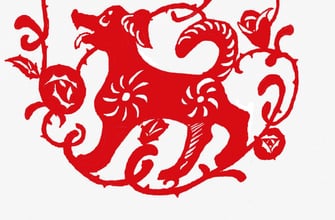
Years: 1934, 1946, 1958, 1970, 1982, 1994, 2006, 2018, 2030, 2042. Dog carries loyalty, honesty, and a strong sense of justice. Dog-born people are the ones who defend their family publicly, volunteer for community projects, and remember every kind gesture. They match well with Tiger, Rabbit, and Horse; Dragon is the classic difficult pair. Winston Churchill, born 1874, was a Wood Dog. Michael Jackson, born 1958, was an Earth Dog. More on the Year of the Dog.
Pig (猪 zhū)
Years: 1935, 1947, 1959, 1971, 1983, 1995, 2007, 2019, 2031, 2043. Pig, also translated as Boar (and replaced by the wild boar in Japanese tradition), ends the zodiac cycle. Pig people are generous, sincere, and happiest when surrounded by family and good food. They work well in culinary, medical, and charitable professions. Strong pairings are Sheep, Rabbit, and Tiger; Snake and Monkey can be harder. Ernest Hemingway, born 1899, was an Earth Pig. See the Year of the Pig page for the personality profile.
Five Elements and the 60-Year Cycle
Every zodiac year also carries one of five elements from the Wu Xing (五行) system: Wood (木), Fire (火), Earth (土), Metal (金), and Water (水). An animal sign repeats every 12 years, but the animal-element pair only repeats every 60 years. That produces combinations like 1984 Wood Rat, 1996 Fire Rat, 2008 Earth Rat, 2020 Metal Rat, and 1972 Water Rat.
The five elements interact through two traditional cycles. In the productive cycle, Wood feeds Fire, Fire makes Earth, Earth bears Metal, Metal holds Water, and Water grows Wood. In the destructive cycle, Wood drains Earth, Earth blocks Water, Water douses Fire, Fire melts Metal, and Metal cuts Wood. Traditional Chinese practitioners use these cycles to read compatibility between two people, balance a child’s birth chart, and plan auspicious dates.
The 60-year sexagenary cycle (干支 ganzhi) behind all of this combines 10 Heavenly Stems with 12 Earthly Branches. Historical Chinese calendars date events by this cycle, which is why you may read that a ruler died in “the year of jiǎxū” rather than a numbered year. A deeper dive lives on our Chinese Zodiac Elements page.
A quick element lookup by birth year last digit:
- Years ending 4 or 5: Wood (木 mù), associated with growth, spring, the colour green
- Years ending 6 or 7: Fire (火 huǒ), associated with energy, summer, red
- Years ending 8 or 9: Earth (土 tǔ), associated with stability, late summer, yellow
- Years ending 0 or 1: Metal (金 jīn), associated with precision, autumn, white
- Years ending 2 or 3: Water (水 shuǐ), associated with depth, winter, black or blue
So somebody born in 1985 is a Wood Ox, 1991 a Metal Sheep, 2004 a Wood Monkey, 2013 a Water Snake.
The 12 Hours System (Shichen)
Traditional Chinese timekeeping divides the day into 12 two-hour periods called shichen (时辰), each named after one zodiac animal. The Rat hour, or zǐ shí, runs 11 pm to 1 am. The Horse hour, wǔ shí, covers 11 am to 1 pm, which is why the Chinese word for noon, 中午 (zhōngwǔ), contains the Horse character.
Traditional Chinese medicine maps these hours onto the body’s meridians. The Lung meridian peaks during Tiger hours (3 am to 5 am); the Heart meridian during Horse hours; the Liver during Ox hours (1 am to 3 am). Practitioners still time herbal preparations, acupuncture, and fasting by this clock.
Birth-hour analysis matters in traditional astrology just as much as birth-year. A Dragon born during Tiger hour reads differently than a Dragon born during Monkey hour, a distinction covered in detail on our Chinese Zodiac Hours page.
Compatibility Basics
Zodiac compatibility organises all 12 animals into four triangles of affinity (三合 sānhé) and six pairs of opposition (六冲 liùchōng). The four triangles are Rat-Dragon-Monkey (power trine), Ox-Snake-Rooster (steady trine), Tiger-Horse-Dog (adventurous trine), and Rabbit-Sheep-Pig (gentle trine). Animals inside a triangle match well for marriage, business, and friendship.
The six opposition pairs, spaced exactly six animals apart on the wheel, are Rat-Horse, Ox-Sheep, Tiger-Monkey, Rabbit-Rooster, Dragon-Dog, and Snake-Pig. Chinese families often check these pairs before approving a wedding, though modern couples treat the results as guidance rather than law.
Business compatibility adds extra factors: the two partners’ birth elements, their birth-month animal, and the element of the proposed venture itself. The full compatibility matrix, plus famous historical couples broken down by sign, sits on our Chinese Zodiac Compatibility page.
Historical Origins and the Great Race
Written references to 12 animal symbols appear on Shang dynasty oracle bones (c. 1600-1046 BCE), though the full zodiac as known today was codified during the Han dynasty (206 BCE-220 CE). Wang Chong’s Lunheng, written around 80 CE, lists the 12 animals in the modern order. The astronomical framework behind the zodiac, including the Han Taichu calendar that codified it, is traced in our ancient Chinese calendar history.
The popular Great Race myth explains that order. The Jade Emperor invited all animals to a race across a river; the first 12 to finish would earn zodiac positions. The clever Rat hitched a ride on the strong Ox, then jumped off at the last second to win. The Pig stopped to eat and arrived last. The Cat, tricked by the Rat into missing the race entirely, swore eternal enmity against rats, which Chinese folklore uses to explain why cats hunt rodents.
The system spread across East Asia with Buddhist missionaries and merchant networks. Vietnam replaced the Rabbit with the Cat and the Ox with the Water Buffalo. Japan kept all 12 animals but replaced the domestic Pig with the Wild Boar. More detail, including the Korean and Thai variants, lives on our Chinese Zodiac History page.
How to Find Your Chinese Zodiac Sign
Most people can identify their sign from the year tables above, with one major caveat: the Chinese zodiac year begins on Lunar New Year, not January 1. Lunar New Year falls between January 21 and February 20 each year. Somebody born on January 28, 2017 is a Monkey (the 2016 year had not ended), while somebody born on February 1, 2017 is a Rooster.
To check your sign correctly:
- Find your Gregorian birth year in the table above.
- If your birthday falls between January 1 and February 20, check that year’s exact Lunar New Year date against your birthday.
- If you were born before Lunar New Year, use the previous zodiac year.
- If you were born after Lunar New Year, use the year of birth as listed.
Our Chinese Lunar Calendar page lists recent and upcoming Lunar New Year dates with stem-branch designation and any leap month.
Ben Ming Nian: The Year of Your Own Sign
Ben ming nian, the year in which your own zodiac animal returns, is treated in Chinese folk belief as a year of heightened risk. The cycle returns every twelve years, so most people pass through their ben ming nian at ages 12, 24, 36, 48, 60, and 72. The Daoist explanation is that the person in their ben ming nian offends Tai Sui, the deity of the current year, and faces obstacles in health, finances, relationships, and travel until the year ends with the next Lunar New Year.
The standard countermeasure is the colour red, considered the strongest folk protection against misfortune. People entering their ben ming nian wear red underwear, red socks, red waist belts, and red string bracelets across the entire year. The items must be a gift, not self-purchased, and they are usually given by a spouse, parent, or close elder. First wear is reserved for the eve of Lunar New Year. Wearing red gifted by a stranger or buying the items yourself voids the protective effect in folk belief.
Modern Chinese commerce treats ben ming nian as a marketing window. Department stores stock red sock racks each Lunar New Year, and online retailers run pre-Spring-Festival sales on red lingerie, red shirts, and zodiac-themed jade pendants. The 2024 Year of the Dragon and the 2025 Year of the Snake both produced visible sales spikes for these items in cities including Beijing, Shanghai, and Guangzhou.
Patron Bodhisattvas of the Twelve Signs
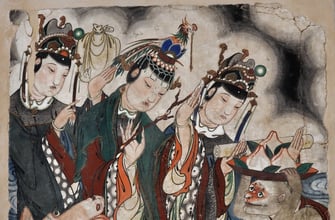
Chinese Mahayana Buddhism layered a patron-deity system onto the twelve zodiac signs through the Esoteric Buddhist concept of ben ming fo, the birth-year Buddha. Eight Bodhisattvas and Buddhas, called the Eight Great Protectors, divide guardianship of the twelve signs. The system is widely observed in mainland China, Taiwan, Hong Kong, Singapore, and Chinese Buddhist communities across Southeast Asia, and is largely absent from English-language summaries of the zodiac.
The standard mapping of zodiac sign to patron deity:
- Rat: Thousand-Armed Avalokitesvara, the Bodhisattva of compassion who hears all suffering
- Ox and Tiger: Akasagarbha, the Bodhisattva of the Limitless Void, associated with wisdom and memory
- Rabbit: Manjushri, the Bodhisattva of transcendent wisdom, often shown holding a sword and a lotus
- Dragon and Snake: Samantabhadra, the Bodhisattva of universal virtue, paired with Manjushri at Mount Emei
- Horse: Mahasthamaprapta, the Bodhisattva of strength and wisdom
- Goat and Monkey: Vairocana, the Cosmic Buddha at the centre of the Five Dhyani Buddhas
- Rooster: Acala, the Immovable Wisdom King who burns away ignorance
- Dog and Pig: Amitabha, the Buddha of Infinite Light who presides over the Western Pure Land
Practitioners commission jade or sandalwood pendants of their patron deity, hang them on the home altar, or carry them as travel amulets. Visits to temples on the deity’s commemoration day are believed to compound the protection. The four sacred Buddhist mountains of China each correspond to one of the Four Great Bodhisattvas in the list above: Mount Putuo for Avalokitesvara, Mount Wutai for Manjushri, Mount Emei for Samantabhadra, and Mount Jiuhua for Ksitigarbha, who oversees the underworld but is not in the standard zodiac mapping.
Zodiac Variants Across East and Southeast Asia
The Chinese zodiac travelled with Buddhist missionaries, merchants, and diplomatic envoys across East and Southeast Asia between the sixth and ninth centuries. Each receiving culture kept most of the original twelve animals but adjusted one or two to fit local fauna or homophones.
Vietnam replaces the Rabbit (mao) with the Cat (meo), a substitution explained both by linguistic confusion between the two Chinese characters and by the absence of native wild rabbits in the Red River Delta. Vietnam also replaces the Ox (suu) with the Water Buffalo (trau), the actual draft animal across the Mekong region. The other ten signs match the Chinese sequence.
Japan kept the full Chinese sequence but switched the domestic Pig (i in Japanese) for the Wild Boar (inoshishi), the only wild relative still common in the Japanese archipelago. The Japanese names of the twelve are ne, ushi, tora, u, tatsu, mi, uma, hitsuji, saru, tori, inu, and i. The Japanese government adopted the Gregorian calendar in 1873, but greeting cards and shrine new-year displays still mark the year by zodiac animal.
Korea retains the full Chinese sequence and applies it to Korean New Year, which falls on the same day as Lunar New Year. The Korean names are ja, chuk, in, myo, jin, sa, oh, mi, shin, yu, sul, and hae. Korean shamanism overlays the zodiac onto fortune-telling and matchmaking practices that survive in modern South Korea.
Tibet uses the same twelve animals but starts its calendar cycle differently and combines the twelve animals with five elements (Wood, Fire, Earth, Iron, Water) in a 60-year cycle aligned to the Tibetan Buddhist Kalachakra system. The Tibetan New Year, Losar, often falls a day or two after Chinese New Year because of differing astronomical bases.
Thailand and Cambodia use the full twelve-animal sequence inherited from earlier Sino-Indian contact, but combine it with an eight-animal day-of-week guardian system from Indian astrology. A Thai person identifies with both their year animal and their day-of-birth guardian, producing a richer 96-combination personal-sign system.
Frequently Asked Questions
What are the 12 Chinese zodiac signs in order?
Rat, Ox, Tiger, Rabbit, Dragon, Snake, Horse, Sheep, Monkey, Rooster, Dog, Pig. The cycle repeats every 12 years starting from a Rat year.
How do I know my Chinese zodiac sign?
Find your birth year in the year lists above, then confirm the exact Lunar New Year date for that year. If your birthday falls before Lunar New Year, your sign is from the previous year.
Which is the best Chinese zodiac sign?
No sign is objectively “best,” though Dragon is the most socially prized in Chinese culture and Dragon years see measurable birth-rate spikes. Each animal carries its own advantages.
What is my element in Chinese zodiac?
Element depends on birth year’s last digit pair: 4-5 Wood, 6-7 Fire, 8-9 Earth, 0-1 Metal, 2-3 Water. A person born in 1988 is an Earth Dragon; somebody born in 1990 is a Metal Horse.
Are Chinese zodiac signs based on birth year or birth month?
Birth year. Western astrology uses birth month for the sun sign; Chinese zodiac assigns one animal per full lunar year. Birth month, day, and hour form secondary modifiers rather than the primary sign.
Is the Chinese zodiac the same across Asia?
No. Vietnam uses a Cat instead of Rabbit and Water Buffalo instead of Ox. Japan uses Wild Boar instead of Pig. Korea, Mongolia, Thailand, and Tibet each adapted the system with small variations.
Sources and Further Reading
- Wang Chong, Lunheng (Balanced Discussions), first-century Han dynasty text listing the zodiac – classics.mit.edu
- Chinese Zodiac Animals – China Highlights chinahighlights.com/travelguide/chinese-zodiac
- The Chinese Zodiac – Asian Art Museum, San Francisco – asianart.org
- Lunar New Year collection – Smithsonian Folklife Festival – folklife.si.edu
- Chinese calendar dates 1900-2100 – Hong Kong Observatory – hko.gov.hk