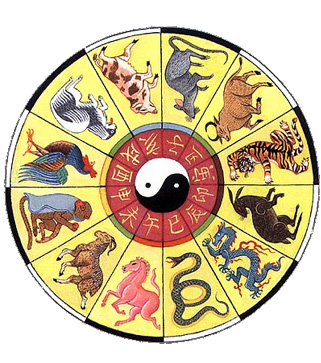
Around 104 BCE, Han astronomer Luoxia Hong and the team led by Sima Qian finalised the Taichu calendar, the first systematic version of the Chinese lunisolar framework that still governs Lunar New Year and the zodiac year today. The calendar pairs lunar months that begin on each astronomical new moon with 24 solar terms tracking the sun’s seasonal position, and uses a sexagenary cycle of 60 stem-branch combinations to label years, months, days, and hours.
This guide explains the lunisolar mechanics, walks through the zodiac animals and the 60-year cycle with a worked stem-branch example, lists and translates the 24 solar terms with the folk poem that teaches them to Chinese schoolchildren, traces the calendar through four major dynastic reforms and the national standard that codified it in 2017, and gives Lunar New Year dates for the years where most readers actually need them.
How the Chinese Lunisolar Calendar Works
The Chinese calendar is a lunisolar system, not a pure lunar one. The Islamic Hijri calendar runs twelve lunar months of 29 or 30 days each and drifts roughly 11 days per year against the solar seasons. The Chinese system avoids that drift by inserting an extra lunar month, called run yue, every two or three years to keep the calendar aligned with the agricultural year.
Each month begins on the day of the astronomical new moon, called shuori. Months alternate between 29 and 30 days according to the actual moon, giving a standard twelve-month lunar year of 353 to 355 days. A thirteenth leap month brings the total to 383 to 385 days for years that contain run yue.
One rule anchors the entire system: the winter solstice always falls in the eleventh lunar month. That single constraint keeps the calendar synchronised with the solar year and explains why the spring equinox sits close to the second month and why Lunar New Year drifts within a 30-day window between 21 January and 20 February Gregorian.
The dual structure tracks both moon phases, important for tidal and fishing schedules, and the sun’s seasonal position, which governs planting and harvest timing across China’s agricultural regions. The same calendar serves farming, religious observance, and household record-keeping without any one domain losing its proper anchor.
The 12 Zodiac Animals
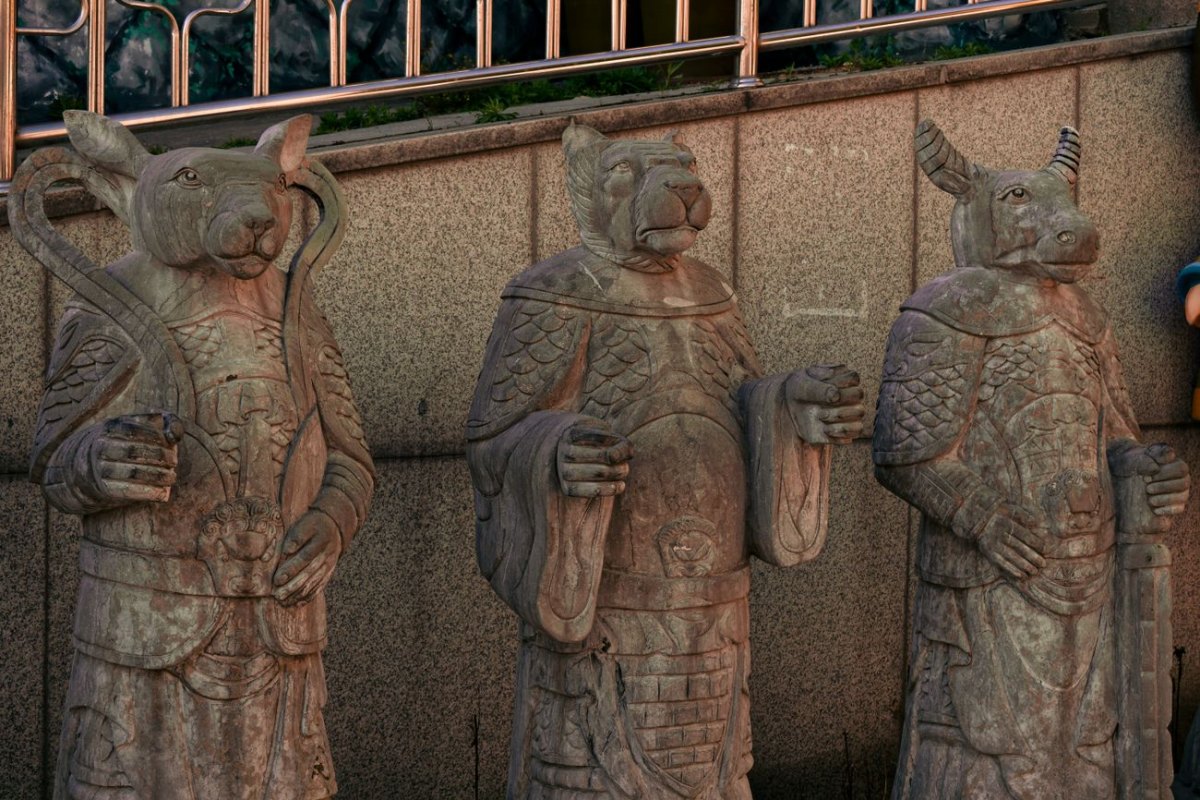
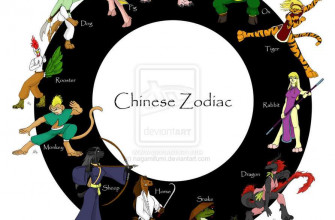
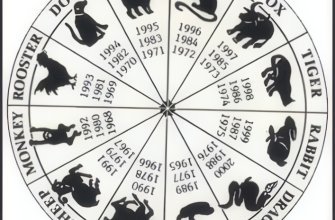
The Chinese zodiac, called shengxiao, assigns one of twelve animals to each year in a repeating cycle: Rat, Ox, Tiger, Rabbit, Dragon, Snake, Horse, Goat, Monkey, Rooster, Dog, and Pig. Each animal carries personality traits, compatibility patterns, and birth-year associations that Chinese families consult when planning marriages, business partnerships, and the timing of children.
The zodiac year begins on Lunar New Year rather than 1 January. Anyone born in January or early February has to check whether their birth date fell before or after that year’s Lunar New Year to identify their correct animal. A baby born on 28 January 2025 belongs to the previous Dragon year, while a baby born on 30 January 2025 starts the Snake year.
The zodiac interacts with the five Wu Xing elements, Wood, Fire, Earth, Metal, and Water, to produce a 60-year super-cycle in which each animal-element pair appears once. Our Chinese zodiac elements guide covers the pairings in detail, and the zodiac history page traces the Great Race myth that explains the animal order. A separate piece on the Chinese pregnancy calendar covers the traditional birth-prediction system that uses the same zodiac assignments.
Heavenly Stems, Earthly Branches, and the 60-Year Cycle
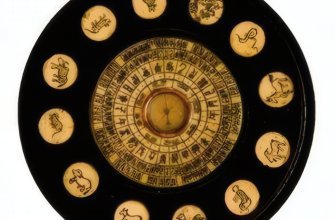
Behind the visible zodiac sits the older sexagenary cycle, called ganzhi, built from ten Heavenly Stems (tiangan) and twelve Earthly Branches (dizhi). The ten stems pair with the five Wu Xing elements: Jia and Yi are wood, Bing and Ding are fire, Wu and Ji are earth, Geng and Xin are metal, Ren and Gui are water. The twelve branches correspond to the twelve zodiac animals, with Zi as Rat, Chou as Ox, Yin as Tiger, and so on through Hai as Pig.
A stem and a branch combine to label one year. Because 10 and 12 share a common factor of 2, only 60 distinct combinations exist before the cycle repeats. The full sequence runs Jia Zi, Yi Chou, Bing Yin, Ding Mao, and so on to Gui Hai, then returns to Jia Zi for the next 60 years. Classical Chinese chronology dates events by this cycle, which is why imperial records may name a year Ji Hai rather than as a numbered year.
How to compute a stem-branch year
The arithmetic is direct. Subtract 3 from the Gregorian year, take the result modulo 10 for the stem index and modulo 12 for the branch index, with both indices counted from 1.
For 2025: 2025 minus 3 equals 2022. 2022 mod 10 gives 2, which points to Yi, the second stem (wood). 2022 mod 12 gives 6, which points to Si, the sixth branch (Snake). The year is Yi Si, a Wood Snake. The same arithmetic confirms 1949 as Ji Chou (Earth Ox), 1976 as Bing Chen (Fire Dragon), and 2008 as Wu Zi (Earth Rat).
The sexagenary cycle appears in the oracle bone inscriptions of the Shang dynasty around 1200 BCE, making it one of the oldest continuous numbering systems in active use. The same ten-by-twelve framework labels months, days, and two-hour periods called shichen; the Chinese zodiac hours page covers the day-time branches in detail.
The 24 Solar Terms and Their Mnemonic
The 24 solar terms, called jieqi, divide the solar year into segments of about 15 days each and track the sun’s ecliptic longitude rather than the moon’s phase. Each term corresponds to a 15-degree movement of the apparent sun, beginning with Lichun (Start of Spring) when the sun reaches 315 degrees of ecliptic longitude. UNESCO inscribed the 24 solar terms on the Representative List of the Intangible Cultural Heritage of Humanity in 2016.
Chinese schoolchildren still memorise the terms through a four-line mnemonic poem, the Twenty-Four Solar Terms Song. Each character in the poem is the first syllable of one term:
春雨惊春清谷天 – Spring rain, awakening, spring equinox, pure brightness, grain rain, the sky
夏满芒夏暑相连 – Summer, grain full, grain in ear, summer solstice, heat connects
秋处露秋寒霜降 – Autumn, end of heat, dew, autumn equinox, cold dew, frost descends
冬雪雪冬小大寒 – Winter, light snow, heavy snow, winter solstice, minor cold, major cold
The 24 terms with their approximate Gregorian dates:
- Spring: Lichun (3-5 Feb), Yushui (18-20 Feb), Jingzhe (5-7 Mar), Chunfen (20-22 Mar), Qingming (4-6 Apr), Guyu (19-21 Apr)
- Summer: Lixia (5-7 May), Xiaoman (20-22 May), Mangzhong (5-7 Jun), Xiazhi (21-22 Jun), Xiaoshu (6-8 Jul), Dashu (22-24 Jul)
- Autumn: Liqiu (7-9 Aug), Chushu (22-24 Aug), Bailu (7-9 Sep), Qiufen (22-24 Sep), Hanlu (8-9 Oct), Shuangjiang (23-24 Oct)
- Winter: Lidong (7-8 Nov), Xiaoxue (22-23 Nov), Daxue (6-8 Dec), Dongzhi (21-23 Dec), Xiaohan (5-7 Jan), Dahan (20-21 Jan)
The solar terms shape Chinese agricultural sayings still quoted in rural districts. One Hubei proverb runs Qing ming qian hou, zhong gua dian dou (around Qingming, plant melons and sow beans). Another from Shandong runs Bai lu zao, han lu chi, qiu fen zhong mai zheng dang shi, advising that Bailu is too early and Hanlu too late, with Qiufen the right time to sow wheat. Practitioners of traditional Chinese medicine also adjust herbal prescriptions and acupuncture timing to the seasonal qi each term marks.
Leap Months: When the Calendar Adds an Extra Month
A standard Chinese lunar year of twelve months runs 353 to 355 days, about 11 days shorter than the solar year. Without correction, the calendar would drift through the seasons as the Islamic Hijri calendar does, with Lunar New Year cycling through summer and winter every 33 years. The leap month, called run yue, prevents that drift.
The rule for inserting a leap month: identify the first lunar month after the winter solstice that does not contain a zhongqi, one of the twelve major solar terms (Yushui, Chunfen, Guyu, Xiaoman, Xiazhi, Dashu, Chushu, Qiufen, Shuangjiang, Xiaoxue, Dongzhi, Dahan). The month that fails this test is duplicated and labelled with run plus the previous month’s number.
Recent leap months show the rule in practice:
- 2020: Run Si Yue, an intercalary fourth month, falling between mid-May and mid-June Gregorian
- 2023: Run Er Yue, an intercalary second month, falling in March Gregorian
- 2025: Run Liu Yue, an intercalary sixth month, falling in July Gregorian
- 2028: Run Wu Yue, an intercalary fifth month
- 2031: Run San Yue, an intercalary third month
- 2033: Run Shi Yi Yue, an intercalary eleventh month, an unusual case where the leap follows the solstice month
The 19-year Metonic cycle produces seven leap months across every nineteen years on average. The Chinese system applies that average with an extra refinement: instead of fixing which seven years carry the extra month, the zhongqi rule picks them year by year from astronomical observation. Leap years therefore cluster irregularly, with two leap years in 2023 and 2025 followed by three plain years before 2028 brings the next.
Major Festivals Set by the Lunar Calendar
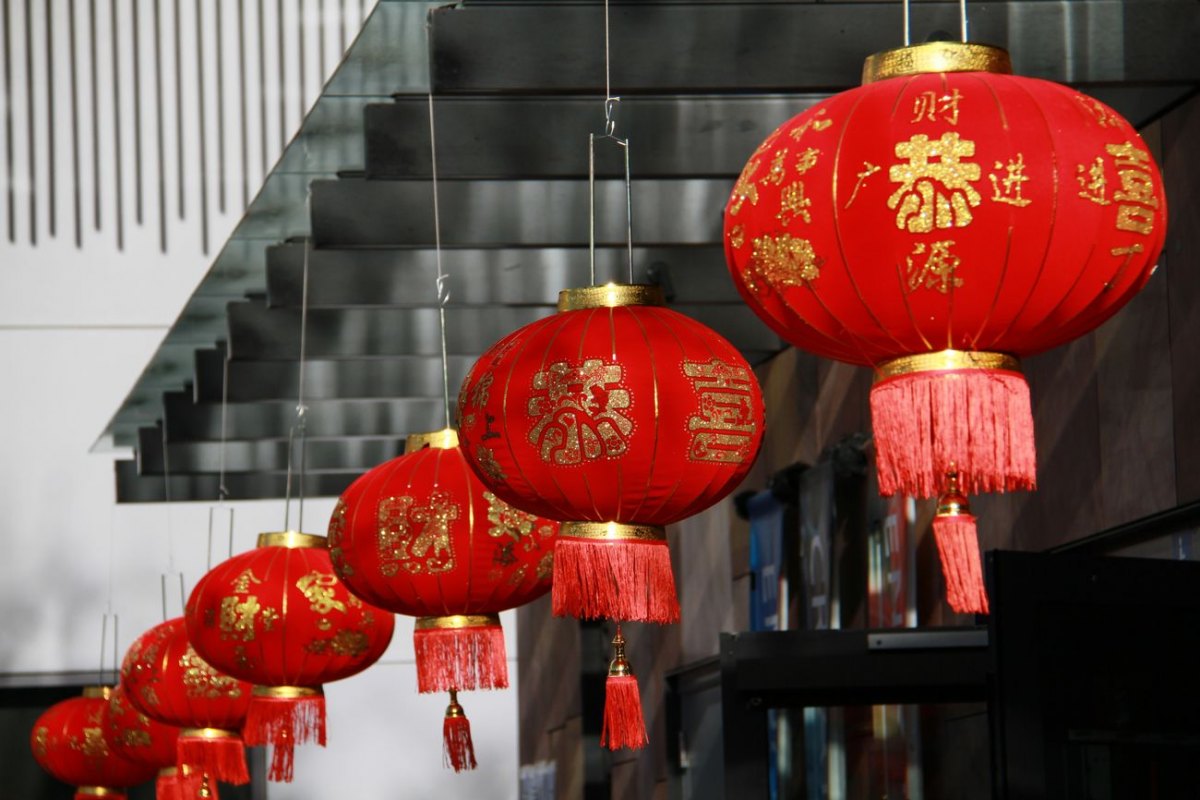
Traditional Chinese festivals follow the lunisolar calendar, which is why their Gregorian dates shift each year. The key dates are:
- Chinese New Year (Spring Festival, chunjie): 1st day of the 1st lunar month, falling between 21 January and 20 February Gregorian
- Lantern Festival (yuanxiao jie): 15th day of the 1st lunar month, closing the New Year holiday with red lanterns and sweet rice dumplings
- Qingming Festival (qingming jie): tied directly to the Qingming solar term, around 4-6 April, when families sweep ancestral tombs
- Dragon Boat Festival (duanwu jie): 5th day of the 5th lunar month, marked by dragon boat races and zongzi rice parcels
- Mid-Autumn Festival (zhongqiu jie): 15th day of the 8th lunar month, the second-largest family gathering after the New Year, with mooncakes
- Double Ninth Festival (chongyang jie): 9th day of the 9th lunar month, dedicated to elderly relatives and high-altitude hiking
UNESCO inscribed the Spring Festival on the Representative List of the Intangible Cultural Heritage of Humanity on 4 December 2024 during the 19th session of the Intergovernmental Committee held in Asuncion, Paraguay. The Spring Festival joined the 24 solar terms (inscribed 2016) as one of 44 Chinese cultural elements on the UNESCO list at that point.
Beyond the public holidays, families consult the traditional calendar to pick auspicious dates for weddings, funerals, business openings, and the laying of foundation stones. The Tung Shing almanac, sold annually in mainland China, Hong Kong, and Taiwan, lists for each day a Yi list of recommended activities and a Ji list of activities to avoid, derived from the day’s stem-branch and the position of various star spirits called shensha.
Calendar Reforms Through Chinese History
The lunisolar framework has been reformed dozens of times across two thousand years of imperial astronomy. Four reforms shaped the modern system, and a fifth episode tested whether the most accurate one would survive. Our piece on the ancient Chinese calendar traces every dynasty’s reform in greater detail.
The Taichu calendar, issued in 104 BCE under Emperor Wu of Han, was built by a committee that included the astronomer Luoxia Hong and the historian Sima Qian. The reform fixed the start of the year at the winter solstice month, formalised the 19-year Metonic cycle, and consolidated regional variants into a single imperial standard.
The Daming calendar of 462 CE was the work of the Liu Song mathematician Zu Chongzhi, who measured the tropical year as 365.2428 days, within 50 seconds of the modern value. Zu Chongzhi also introduced precession of the equinoxes into Chinese astronomy. Court politics delayed his calendar’s adoption until 510 CE, after his death.
The Shoushi calendar of 1281 CE was compiled by the Yuan dynasty astronomer Guo Shoujing under Kublai Khan. Guo measured the tropical year as 365.2425 days, identical to the value the Gregorian calendar would adopt three centuries later. The Shoushi system held a position error under 26 seconds per year, the most accurate calendar produced anywhere before the European Enlightenment.
The Shixian calendar of 1645 CE, issued at the start of the Qing dynasty under the Shunzhi Emperor, replaced the mean solar terms (pingqi) of earlier systems with true solar terms (dingqi) calculated from the sun’s actual position on its elliptical orbit. The Jesuit astronomer Adam Schall von Bell led the reform team.
That reform sparked the Kangxi Calendar Case of 1664 to 1669. Yang Guangxian, a Chinese official, accused Schall of treason for using foreign methods, and the regents sentenced Schall to death. The young Kangxi Emperor reversed the verdict in 1669 after a public astronomical test in which Schall’s Jesuit successor Ferdinand Verbiest predicted a meridian transit correctly while Yang’s team failed by twenty minutes.
The Modern Standard: GB/T 33661-2017
In May 2017, the Standardisation Administration of China issued GB/T 33661-2017, titled Calculation and Promulgation of the Chinese Calendar. The standard came into force on 1 September 2017 and is the first time the lunisolar calendar has been codified as a national technical standard rather than left to astronomical convention.
The Purple Mountain Observatory in Nanjing drafted the standard. The observatory has independently calculated the Chinese Astronomical Yearbook (Zhongguo Tianwen Nianli) since 1966 and remains the sole official publisher of the calendar. Its perpetual-calendar reference book covers conversions from 1840 to 2050.
GB/T 33661-2017 fixes the calculation rules at modern astronomical precision. The standard requires that the times of the 24 solar terms and lunar conjunctions be computed to about one second, following IERS conventions for time scales. It mandates true solar terms (dingqi) and true new moons rather than mean values, codifying in national law the same dingqi reform that Adam Schall introduced in 1645.
The standard ties the modern calendar to a 372-year line of astronomical thought: the same true-position method, now backed by laser ranging and modern ephemeris tables, with the same anchor at the winter solstice that the Taichu calendar used in 104 BCE.
Recent and Upcoming Lunar New Year Dates
The table below lists Lunar New Year dates from 2022 through 2034, with the stem-branch designation, zodiac animal, element, and any leap month in the year. Years carrying a leap month run 383 to 385 days.
| Year | Lunar New Year | Stem-Branch | Animal | Element | Leap Month |
|---|---|---|---|---|---|
| 2022 | 1 Feb | Ren Yin | Tiger | Water | – |
| 2023 | 22 Jan | Gui Mao | Rabbit | Water | Run Er Yue |
| 2024 | 10 Feb | Jia Chen | Dragon | Wood | – |
| 2025 | 29 Jan | Yi Si | Snake | Wood | Run Liu Yue |
| 2026 | 17 Feb | Bing Wu | Horse | Fire | – |
| 2027 | 6 Feb | Ding Wei | Goat | Fire | – |
| 2028 | 26 Jan | Wu Shen | Monkey | Earth | Run Wu Yue |
| 2029 | 13 Feb | Ji You | Rooster | Earth | – |
| 2030 | 3 Feb | Geng Xu | Dog | Metal | – |
| 2031 | 23 Jan | Xin Hai | Pig | Metal | Run San Yue |
| 2032 | 11 Feb | Ren Zi | Rat | Water | – |
| 2033 | 31 Jan | Gui Chou | Ox | Water | Run Shi Yi Yue |
| 2034 | 19 Feb | Jia Yin | Tiger | Wood | – |
The Hong Kong Observatory and the Purple Mountain Observatory publish authoritative conversion tables for years outside this range, including the full 1840 to 2050 span covered in the Purple Mountain Observatory’s New Perpetual Calendar.
Frequently Asked Questions
What is the Chinese lunar calendar?
The Chinese lunar calendar is a lunisolar system that combines lunar months beginning on each new moon with 24 solar terms that track the sun’s seasonal position. It has been in continuous use for more than two thousand years and governs the dates of Chinese New Year, the Mid-Autumn Festival, the Dragon Boat Festival, and the zodiac animal assigned to each year. The Purple Mountain Observatory in Nanjing publishes the official annual version under national standard GB/T 33661-2017.
How is Chinese New Year’s date determined?
Chinese New Year falls on the first day of the first month of the lunisolar calendar, which corresponds to the second new moon after the winter solstice. This places it between 21 January and 20 February Gregorian. The exact date shifts each year because the lunar months do not align with Gregorian months. The 2025 date was 29 January, and the 2027 date will be 6 February.
What is a leap month in the Chinese calendar?
A leap month, called run yue, is an extra thirteenth lunar month inserted approximately every three years to keep the lunar calendar aligned with the solar year. The rule selects the first lunar month after the winter solstice that does not contain a major solar term (zhongqi) and duplicates it. The 2023 calendar had Run Er Yue (intercalary second month) and the 2025 calendar has Run Liu Yue (intercalary sixth month).
What are the Heavenly Stems and Earthly Branches?
The Heavenly Stems (tiangan) are ten characters paired with the five Wu Xing elements: Jia and Yi (wood), Bing and Ding (fire), Wu and Ji (earth), Geng and Xin (metal), Ren and Gui (water). The Earthly Branches (dizhi) are twelve characters paired with the twelve zodiac animals. Combining one stem with one branch produces 60 distinct labels that cycle through years, months, days, and two-hour periods called shichen.
Is the Chinese calendar still used today?
Modern China uses the Gregorian calendar for government, business, and education. The traditional lunisolar calendar runs alongside it and sets festival dates, zodiac designations, and the selection of auspicious days for weddings, funerals, and business openings. Printed calendars and phone apps across the Chinese-speaking world display both systems side by side, and the Purple Mountain Observatory publishes the authoritative annual version.
Sources and Further Reading
- GB/T 33661-2017, Calculation and Promulgation of the Chinese Calendar, Standardisation Administration of China
- Purple Mountain Observatory, Chinese Academy of Sciences, annual lunisolar calendar publication
- Hong Kong Observatory, Gregorian-Lunar Calendar Conversion Table
- UNESCO, The Twenty-Four Solar Terms, Representative List of the Intangible Cultural Heritage of Humanity, 2016
- UNESCO, Spring Festival inscription, Representative List of the Intangible Cultural Heritage of Humanity, 4 December 2024