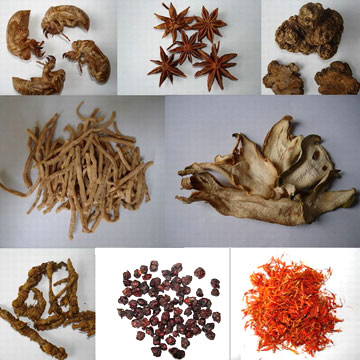
Chinese herbal medicine treats fertility through formula combinations, not single-herb supplements. The standard fertility prescription contains five to twelve herbs balanced against each other, with the mix shifting across the menstrual cycle and adjusted to the specific TCM pattern the patient presents. This article catalogs the ten most-cited fertility herbs by hanzi name, pinyin, Latin botanical name, TCM function, classical formula context, working dosage range, and the safety facts a Western reader needs before considering any of them.
The herb selection follows the framework set out in 妇人大全良方 Fùrén Dàquán Liángfāng, the 1237 gynecology compendium by Chen Ziming, and elaborated in Ming and Qing dynasty texts. For the cycle-phase context of when each herb category belongs in the month, see the companion piece on the Chinese fertility calendar and its TCM four-phase model. The dating conventions used throughout this article follow the lunisolar system explained in the Chinese lunar calendar guide.
How TCM Categorizes Fertility Herbs
TCM gynecology assigns every herb to one or more of five reproductive-axis categories. The categories map onto Western physiology only loosely, since TCM treats the cycle as Blood, Yin, Yang, Qi, and Essence rather than as estrogen, progesterone, FSH, and LH.
- Blood tonics 补血药 bǔxuèyào. Build the menstrual substance. Used in the follicular phase to support endometrial growth and follicular maturation. Examples below: 当归, 熟地黄, 红枣.
- Yin tonics 滋阴药 zīyīnyào. Nourish the cooling, moistening, fluid-replacing aspect. Support cervical mucus quality and follicular fluid. Examples: 熟地黄, 枸杞.
- Yang tonics 补阳药 bǔyángyào. Warm the womb, support the luteal phase, treat short luteal pattern and cold-womb infertility. Examples: 鹿茸, 杜仲, 菟丝子.
- Qi tonics 补气药 bǔqìyào. Strengthen Spleen and Lung energy that underlies the whole reproductive function. Example: 黄芪.
- Essence tonics 补精药 bǔjīngyào. Replenish Kidney essence 肾精, the deep reproductive substrate that governs egg quality and gametogenesis in TCM terms. Examples: 菟丝子, 续断, 鹿茸.
Most fertility formulas blend at least three of these five categories, with the dominant category shifting by cycle phase and TCM pattern diagnosis. Single-herb supplementation is rare in classical practice and uncommon in modern TCM clinics for fertility cases.
The Ten Most-Cited Chinese Fertility Herbs
Dosage ranges below reflect adult oral decoction doses in modern Chinese clinical practice as documented in the Chinese Pharmacopoeia 2020 edition and in standard TCM gynecology textbooks. Granular extract and tablet forms use lower equivalent doses set by the manufacturer. None of these herbs should be self-prescribed.
1. 当归 Dāngguī, Angelica sinensis root. The single most-cited fertility herb in Chinese medicine. Categorized as a Blood tonic that also moves Blood. Tonifies and harmonizes Blood, regulates menstruation, alleviates pain from Blood stasis. Headlines the formulas 四物汤 Sì Wù Tāng and 当归芍药散 Dāngguī Sháoyào Sǎn, and appears in 当归补血汤 Dāngguī Bǔxuè Tāng with Astragalus at a fixed 1:5 ratio. Working dose: 6 to 12 grams in decoction. Safety: contains coumarin-like compounds and ferulic acid with mild anticoagulant action. A 1995 rabbit study by Lo and colleagues showed Dang Gui prolongs prothrombin time at steady state in rabbits on warfarin without changing warfarin blood levels, a pharmacodynamic interaction. Contraindicated in pregnancy, in patients on warfarin or DOACs, and in patients with active bleeding.
2. 熟地黄 Shúdìhuáng, prepared Rehmannia glutinosa root. Yin and Blood tonic; the deepest substance-building herb in the materia medica. The “shu” prefix means prepared, specifically nine-times steamed in yellow rice wine, which converts the cooling raw 生地黄 shēngdìhuáng into a warming-tonic form. Lead ingredient in 六味地黄丸 Liù Wèi Dì Huáng Wán and 右归丸 Yòu Guī Wán. Working dose: 9 to 30 grams in decoction. Safety: heavy and cloying for the digestive system, contraindicated in patients with phlegm-damp constitution and weak digestion. Often combined with 砂仁 shārén to offset the digestive load.
3. 枸杞 Gǒuqǐ, Lycium barbarum fruit, goji berry. Liver and Kidney tonic that nourishes Blood and essence, classed mild and safe. Used long-term in tea, congee, and soup as a daily food-grade tonic. In fertility formulas it appears in 右归丸 Yòu Guī Wán and 杞菊地黄丸 Qǐ Jú Dì Huáng Wán. Working dose: 6 to 12 grams in decoction, more as food. Safety: very safe; rare interactions with warfarin reported, so caution applies on anticoagulants. Compatible with pregnancy in moderate food-level doses.
4. 黄芪 Huángqí, Astragalus membranaceus root. Premier Qi tonic. Strengthens Spleen Qi, raises Yang, supports Wei Qi defense, and in modern research demonstrates immunomodulatory activity through astragalus polysaccharides (APS), saponins, and flavonoids. Paired with 当归 in 当归补血汤 to build Blood through Qi. Working dose: 9 to 30 grams in decoction, up to 60 grams in some classical large-dose protocols. Safety: generally well tolerated; theoretical interaction with immunosuppressants in transplant patients given the immunomodulatory effect. Avoid in active acute infection per TCM contraindication for tonifying herbs.
5. 菟丝子 Tùsīzǐ, Cuscuta chinensis seed, Chinese dodder seed. Kidney essence and Yang tonic, classed as gentle and non-greasy, suitable for long-term use. Secures Kidney essence and stabilizes the uterus, hence its role in the miscarriage-prevention formula 寿胎丸 Shòutāi Wán. Also in 右归丸. Working dose: 6 to 12 grams in decoction. Safety: very few contraindications; not recommended in cases of Yin-deficiency heat patterns with strong dryness.
6. 益母草 Yìmǔcǎo, Leonurus japonicus aerial parts, Chinese motherwort. Name translates as “mother-benefit herb”. Blood-moving and Blood-tonifying, regulates menstruation, reduces edema, promotes uterine contraction. Used in 益母草膏 Yìmǔcǎo Gāo, a concentrated paste, and as a single ingredient in postpartum and pre-conception cycle regulation. Working dose: 9 to 30 grams fresh, 4.5 to 9 grams as paste. Safety: contraindicated in pregnancy because it promotes uterine contraction. Recent research on the Danggui-Yimucao herb pair has examined immune effects in medical abortion contexts, which reinforces the pregnancy contraindication.
7. 红枣 Hóngzǎo, Ziziphus jujuba fruit, Chinese jujube. Spleen Qi tonic that nourishes Blood and calms Spirit. The gentlest entry on this list and the only one with a thousand-year history as a daily food. Three to five jujubes per day in tea or congee is a standard women’s-health practice across China. Working dose: 6 to 15 grams in decoction, freely as food. Safety: very safe; high natural sugar content means caution in diabetes management. Compatible with pregnancy.
8. 鹿茸 Lùróng, Cervus nippon young deer antler velvet. The strongest Yang and essence tonic in classical materia medica, reserved historically for Kidney-Yang deficiency infertility, severe cold-womb pattern, and chronic essence depletion. Featured in 鹿茸丸 Lùróng Wán and 龟鹿二仙胶 Guī Lù Èr Xiān Jiāo. Working dose: 1 to 2 grams powdered, taken separately from the main decoction. Safety: strongly warming, contraindicated in Yin deficiency with heat signs, hypertension, and acute infection. Sustainability and animal-welfare concerns affect modern supply chains and the choice to use this herb at all; many modern formulas substitute 鹿角胶 lùjiǎojiāo (deer antler gelatin) or omit it entirely.
9. 杜仲 Dùzhòng, Eucommia ulmoides bark. Liver and Kidney tonic that strengthens bones and sinews and secures the fetus, the classical 安胎 ān tāi action. Used in 杜仲丸 Dùzhòng Wán and in 寿胎丸 alongside Cuscuta for threatened miscarriage. Working dose: 6 to 15 grams in decoction. Safety: well tolerated; some Chinese trials suggest mild antihypertensive effect, so caution with antihypertensive medications. Compatible with pregnancy under TCM supervision; this is one of the few fertility-context herbs that continues into early pregnancy in classical practice.
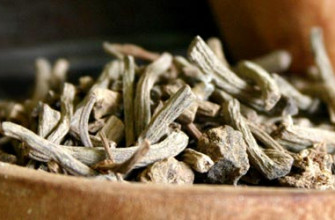
10. 续断 Xùduàn, Dipsacus asperoides root. Liver and Kidney tonic that mends sinew and bone (the name means “continued-break”), secures Chong and Ren channels, and prevents miscarriage. Pairs with 杜仲 and 菟丝子 in 寿胎丸. Working dose: 9 to 15 grams in decoction. Safety: well tolerated; theoretical caution with blood-thinning medications has been reported. Compatible with pregnancy in the appropriate fetal-securing formulas.
Four Classical Formulas Used in Chinese Fertility Practice
Classical formulas remain the dominant tools in Chinese gynecology practice. Each of the four below has more than three hundred years of continuous clinical use and a stable composition documented in named source texts.
四物汤 Sì Wù Tāng, Four Substances Decoction. The foundational Blood tonic in Chinese gynecology. First recorded in the Tang dynasty 仙授理伤续断秘方 Xiānshòu Lǐshāng Xùduàn Mìfāng (Secret Methods for Treating Traumas and Fractures, attributed to Master Lin), then formalized for menstrual disorders in the Song dynasty 太平惠民和剂局方 Tàipíng Huìmín Héjì Júfāng (Imperial Pharmacy formulary, 1107 to 1110). Composition: 当归 dāngguī, 川芎 chuānxiōng, 白芍 báisháo, 熟地黄 shúdìhuáng. The Qing-era commentary 成方便读 Chéngfāng Biàndú reads the four herbs as the four seasons: Dang Gui as spring’s generation, Chuan Xiong as summer’s expansion, Bai Shao as autumn’s gathering, Shu Di Huang as winter’s storage. Indications: Blood-deficiency menstrual irregularity, scant or absent periods, pale complexion, dizziness, postpartum recovery. The base of many compound fertility formulas.
右归丸 Yòu Guī Wán, Restore the Right Kidney Pill. Composed by Zhang Jiebin 张介宾 in his 1624 medical encyclopedia 景岳全书 Jǐng Yuè Quán Shū. The “right Kidney” refers to the Kidney-Yang side in classical Chinese anatomy. Composition (ten herbs): 熟地黄, 山药 shānyào, 山茱萸 shānzhūyú, 枸杞, 鹿角胶 lùjiǎojiāo, 菟丝子, 杜仲, 当归, 肉桂 ròuguì, 制附子 zhì fùzǐ. Indications: Kidney-Yang deficiency presenting as cold extremities, fatigue, weak and aching lower back and knees, low libido, female infertility with cold-womb pattern, male impotence, and incontinence. The processed aconite (制附子 zhì fùzǐ) makes this a formula for professional dispensing only.
当归芍药散 Dāngguī Sháoyào Sǎn, Tangkuei and Peony Powder. From Zhang Zhongjing’s 张仲景 Han dynasty 金匮要略 Jīnguì Yàolüè (Essentials from the Golden Cabinet, around 220 CE). Composition: 当归, 白芍 (or 赤芍), 川芎, 茯苓 fúlíng, 白术 báizhú, 泽泻 zéxiè. Indications: Liver-Blood deficiency with Spleen-damp pattern; abdominal pain in pregnancy, scant urination with edema, infertility with luteal-phase dysfunction. One of the few classical formulas explicitly indicated for symptoms during pregnancy, though the formulation must be matched to the pattern by a qualified practitioner.
温经汤 Wēn Jīng Tāng, Warming the Menses Decoction. Also from Zhang Zhongjing’s 金匮要略. Twelve herbs, including chiefs 吴茱萸 wúzhūyú and 桂枝 guìzhī to warm and dispel cold, deputies 当归, 川芎, 白芍 to nourish and move Blood, and assistants 阿胶 ējiāo, 麦门冬 màiméndōng, 牡丹皮 mǔdānpí, 人参 rénshēn, 制半夏 zhì bànxià, 甘草 gāncǎo, 生姜 shēngjiāng. Indications: cold obstruction of the Chong and Ren channels with Blood deficiency and Blood stasis. Presents as irregular and painful menses, scant dark-purple flow with clots, cold lower abdomen, pale complexion, infertility with cold-womb pattern. The classical formula contains structural echoes of 四物汤 inside it, which is why the two are often discussed together.
When in the Cycle Each Herb Type Belongs
Chinese herbal fertility practice maps the five herb categories above onto the four phases of the menstrual cycle, with each phase getting its own herb emphasis. The mapping comes from the same TCM gynecology tradition that produced the formulas above and is detailed in the cycle-phase section of the Chinese fertility calendar.
The menstrual phase, days 1 to 5, favors mildly Blood-moving herbs to support full shedding and avoids heavy tonics that would obstruct discharge. The follicular phase, days 6 to 13, is the Yin-and-Blood building window for 当归, 熟地黄, 枸杞, and 红枣. The ovulation window, around day 14, calls for Qi-moving herbs and pauses heavy tonification. The luteal phase, days 15 to 28, is the Yang-tonifying window for 菟丝子, 杜仲, 续断, and the formula 右归丸 if Yang deficiency is the pattern. Blood-moving herbs including 益母草 are stopped immediately if conception is suspected.
Safety and Drug Interactions
Chinese fertility herbs interact with prescription medications more often than the herbal-supplement marketing suggests. The four concrete interactions to flag for any Western patient considering these herbs:
- Anticoagulants and antiplatelet drugs. 当归 dāngguī potentiates warfarin (Lo and colleagues, Eur J Drug Metab Pharmacokinet 1995). Theoretical concerns extend to 红花 hónghuā, 桃仁 táorén, and other Blood-moving herbs in fertility formulas. Patients on warfarin, apixaban, rivaroxaban, dabigatran, aspirin, or clopidogrel should disclose any TCM herb use to their prescribing physician and have INR monitored if Dang Gui is used.
- Hormonal medications. Several fertility herbs have weak phytoestrogenic activity. Concurrent use with hormonal contraception, hormone replacement therapy, or controlled ovarian stimulation drugs should be coordinated between the TCM practitioner and the prescribing fertility specialist.
- Immunosuppressants. 黄芪 huángqí is an immune modulator. Concurrent use with cyclosporine, tacrolimus, or other immunosuppressants in transplant recipients or autoimmune patients requires medical supervision.
- Pregnancy. Once conception is suspected or confirmed, Blood-moving herbs (当归 above food doses, 益母草, 红花, 桃仁) are stopped immediately. Fetus-securing herbs (杜仲, 续断, 菟丝子) and Spleen-Qi tonics may continue under supervision. Aconite-containing formulas including 右归丸 require professional dispensing and have specific pregnancy restrictions. Couples using the gender-prediction Chinese pregnancy calendar alongside herbal support should also note that the prediction chart is for cultural interest only and is unrelated to herbal selection.
Sourcing is a second layer of safety. The Chinese Pharmacopoeia 2020 sets identity and pesticide-residue standards, but only herbs sold through licensed pharmacy channels are reliably to that standard. Bulk online purchases from non-pharmacy sellers have documented adulteration histories.
Frequently Asked Questions
How long does it take Chinese herbs to affect fertility?
Classical practice assesses results after three full menstrual cycles, around 100 days, because one full follicular maturation cycle takes that long. Six months is the standard treatment window in modern TCM gynecology clinics for couples without diagnosed infertility. Chen Ziming’s 1237 妇人大全良方 describes courses of three to nine months for subfertility patterns. Couples timing conception with cultural considerations (auspicious zodiac year, family-reunion timing) often combine herbal cycle support with the planning approach covered in the Chinese conception calendar guide.
Can I take 当归 dāngguī as a standalone supplement?
Standalone Dang Gui is sold widely in Western supplement channels, but classical Chinese practice does not use it alone. The herb is paired with Astragalus in 当归补血汤 at a 1:5 ratio for Blood building, with Bai Shao in 四物汤 for menstrual regulation, and with Cinnamon in 当归四逆汤 for cold extremities. Single-herb dosing also raises the warfarin-interaction risk because the dose runs higher than the proportion in a balanced formula.
Are deer antler velvet and other animal products required in TCM fertility treatment?
No. Modern Chinese herbal practice has substantially shifted away from animal-derived ingredients because of sustainability and welfare concerns. 鹿茸 can be replaced with 鹿角胶 deer antler gelatin or with plant-based Yang tonics such as 巴戟天 bājǐtiān (Morinda root) and 仙茅 xiānmáo (Curculigo rhizome). Most modern TCM gynecology clinics will compose effective formulas without 鹿茸 on request.
What is the difference between Chinese fertility herbs and Ayurvedic fertility herbs?
The two systems share some compounds (ginger, cinnamon, dates appear in both) but use different diagnostic frameworks. Ayurveda groups herbs by dosha effect on vata, pitta, and kapha. TCM groups them by their effect on Blood, Yin, Yang, Qi, and Essence. The diagnostic logic, dosage conventions, and formula structure are not interchangeable. A patient cannot translate an Ayurvedic prescription into a TCM equivalent or vice versa.
Where do TCM herbs fit alongside IVF or other Western fertility treatment?
The 2019 meta-analysis by Xie and colleagues found acupuncture significantly raised clinical pregnancy rates in IVF protocols, with the strongest effect in patients with prior failed cycles. Equivalent meta-analyses for herbal medicine alongside IVF are smaller and more methodologically variable, but co-management between a TCM practitioner and the IVF team is now standard in many fertility centers in major cities. The key requirement is full disclosure of all herbs to the IVF clinician so dosing of stimulation drugs can be adjusted if needed.
Sources and Further Reading
- Chen Ziming. 妇人大全良方 Fùrén Dàquán Liángfāng (Complete Effective Prescriptions for Diseases of Women), 1237 CE. Reference at the Chinese Text Project.
- Lo AC, Chan K, Yeung JH, Woo KS. “Danggui (Angelica sinensis) affects the pharmacodynamics but not the pharmacokinetics of warfarin in rabbits”. Eur J Drug Metab Pharmacokinet, 1995. PubMed 7588995
- “Chemistry Behind the Immunomodulatory Activity of Astragalus membranaceus”. Chinese Medicine and Culture, 2021. CMC journal full text
- Mayway Herbs. “Four Substances Decoction (Si Wu Tang): A Brief Historical and Literary Discussion”. Mayway historical discussion
- Chinese Pharmacopoeia Commission. Pharmacopoeia of the People’s Republic of China, 2020 edition. Reference standard for identity, dosage ranges, and contamination limits cited above.
- Xie ZY, Peng ZH, Yao B, et al. “The effects of acupuncture on pregnancy outcomes of in vitro fertilization: a systematic review and meta-analysis”. BMC Complementary Medicine and Therapies, 2019. PubMed Central PMC6570865