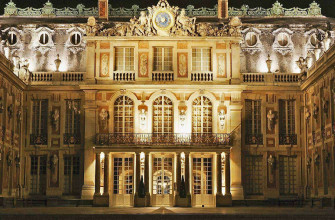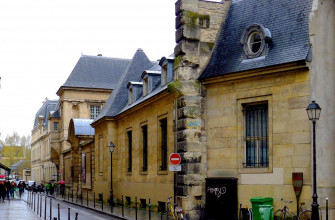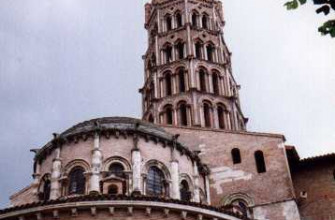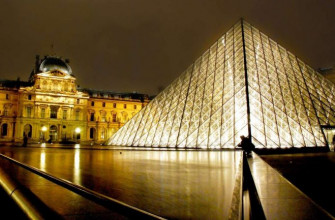
France gave the world two of its greatest architectural traditions back to back. Gothic was born in a single abbey north of Paris in the 1140s and within 200 years had reshaped the skyline of every major city in Europe. The Renaissance arrived from Italy in the late 1400s and turned the chateaux of the Loire Valley into some of the most photographed buildings on the planet. This article walks the ground where both styles began, names the buildings still worth crossing a country for, and tells you when to go and what to look for once you are inside.
The Birth of Gothic Architecture in France
The Gothic style was born in northern France in the mid-12th century. Most historians point to one specific building: the choir of the Basilica of Saint-Denis, just north of Paris, rebuilt between 1135 and 1144 under Abbot Suger. Suger wanted a church flooded with light, height and colour as a physical expression of divine presence. The team of master builders he gathered developed a structural system that made his vision possible, and within a generation the new style had spread across the Ile-de-France.
The region had the money to pay for it. The Norman dukes who ruled much of northern France were wealthy traders with strong links across the Channel and the North Sea, and they could attract the best architects, engineers, sculptors and stained glass artists from across Europe. The Catholic Church poured similar sums into the great cathedral campaigns of the period, and the rivalry between French bishoprics turned cathedral construction into something close to an arms race. Each new bishop wanted his church taller, wider and more luminous than the one in the next diocese.
Key Features of French Gothic Architecture
French Gothic rests on a small set of structural and decorative innovations that worked together to push buildings higher than anything seen since the Roman Empire.
- Pointed arches. The pointed arch directs weight more efficiently downwards than the rounded Roman arch, which allows much taller and slimmer structures.
- Ribbed vaults. Stone ribs concentrate the weight of the ceiling onto a few key points, freeing the walls from much of their structural role.
- Flying buttresses. External stone supports brace the upper walls from outside and transfer the outward thrust away from the interior. Flying buttresses are the secret behind the soaring height and the enormous windows of French Gothic cathedrals.
- Large stained glass windows. Once the walls no longer carried the weight of the roof, builders filled them with vast windows of coloured glass. Chartres alone holds 176 original 13th-century windows covering more than 2,600 square metres.
- Carved portals and chapels. French Gothic cathedrals carry hundreds of stone sculptures across their facades, from biblical scenes and saints to kings, prophets and grotesque creatures.
- Rose windows. The circular stained glass windows above the main entrance and the transepts became the signature of the style.
By the mid-1300s the combination of structural daring and visual beauty had made Gothic the dominant style of Europe. The fashion spread to Germany, Italy, Spain and England, and every major European city aspired to its own Gothic cathedral.
The Phases of French Gothic
Gothic architecture prevailed in France for almost four centuries and developed through several recognisable phases.
- Early Gothic (1140-1200). The first experiments at Saint-Denis, Sens and Laon. Walls were still relatively thick and windows still modest in size.
- High Gothic, also called Classic Gothic (1200-1280). The mature style of Chartres, Reims, Amiens and Bourges. Builders pushed vaults higher, walls thinner and windows larger than ever before.
- Rayonnant or Radiant Gothic (1240-1350). This phase reduced walls almost to skeletons of stone holding immense panels of stained glass. The Sainte-Chapelle in Paris is the masterpiece.
- Flamboyant Gothic (1350-1500). The final phase, named for the wavy flame-like patterns carved into the stone tracery. Decorative complexity reached its peak, sometimes at the expense of structural innovation.
The Best Examples of French Gothic Architecture Today
Basilica of Saint-Denis
The Basilica of Saint-Denis, on the northern edge of Paris, is the first true Gothic building in the world and the burial place of nearly every French king from the 10th century to the 18th. The choir built under Abbot Suger in the 1140s remains the founding monument of the entire style. A long restoration of the north tower and spire, dismantled after a storm in 1846, is now under way and is expected to give the basilica back its medieval silhouette by the early 2030s.
Chartres Cathedral
Chartres Cathedral, southwest of Paris, is widely regarded as the most complete and best-preserved example of High Gothic architecture in France. Built between 1194 and 1250 after a fire destroyed its predecessor, it still holds nearly all of its original medieval stained glass, the famous “Chartres blue”. The two mismatched spires, one Romanesque and one Flamboyant Gothic, make it one of the most recognised silhouettes in Europe. UNESCO inscribed Chartres on the World Heritage list in 1979.
Reims Cathedral
Notre-Dame de Reims, in the Champagne region, served as the coronation church of the kings of France for more than 800 years. Built between 1211 and 1275, the cathedral holds more than 2,300 statues across its facade and ranks among the most ambitious sculpted programmes ever attempted in stone. Like Chartres, it sits on the UNESCO list.
Amiens Cathedral
Amiens Cathedral, north of Paris, is the largest Gothic cathedral in France by interior volume and a textbook example of High Gothic design. The interior reaches 42.3 metres in height and the labyrinth on the floor of the nave still draws pilgrims today. Through summer evenings the facade hosts the free Chroma light show, which projects the original medieval colours of the carved portals onto the stone for about 45 minutes after dark. UNESCO inscribed it in 1981.
Notre-Dame de Paris
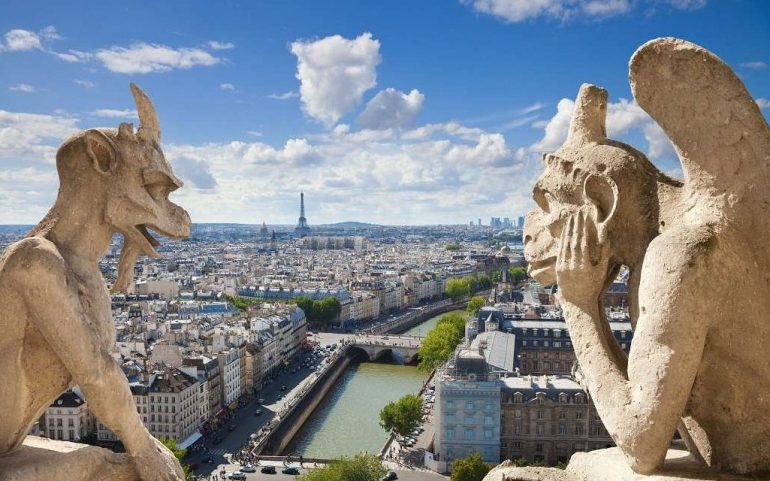
Notre-Dame de Paris, on the Ile de la Cite in the heart of the capital, was built between 1163 and 1345 and remains one of the most famous cathedrals in the world. The April 2019 fire devastated the roof and brought down the central spire, and the painstaking restoration was completed in time for the cathedral to reopen for public worship on 8 December 2024. More than 250 companies and 2,000 craftspeople worked on the rebuild, hailed as one of the greatest heritage projects of the 21st century. Entry remains free, although timed reservations through the official site or app are strongly recommended to avoid the queues that now form along the parvis from early morning.
Sainte-Chapelle
The finest example of Rayonnant Gothic in France is the Sainte-Chapelle in Paris, built by King Louis IX between 1242 and 1248 to house the Crown of Thorns and other relics of the Passion. The upper chapel holds more than 1,100 square metres of original stained glass across 15 enormous windows that turn the interior into something close to the inside of a jewel. Visit on a sunny morning to see the colours at their best.
Other Standout Examples
- Bourges Cathedral, with its unique five-portal facade and unbroken interior space.
- Strasbourg Cathedral, whose 142-metre spire was the tallest building in the world from 1647 to 1874.
- Mont Saint-Michel, the abbey on the tidal island in Normandy, with its soaring Gothic choir.
- Eglise Saint-Maclou in Rouen, one of the finest small Flamboyant Gothic churches in the country.
- Beauvais Cathedral, whose choir reaches 48 metres, the highest Gothic vault ever attempted, although the structure partially collapsed twice during construction and remains propped by a forest of internal scaffolding to this day.
- Albi Cathedral in the south, the largest brick building in the world and a striking southern variant of the Gothic style.
The Arrival of the Renaissance in France
Renaissance architecture first appeared in France towards the end of the 15th century, when King Charles VIII launched a series of military invasions of northern Italy from 1494. Italian cities like Florence, Rome and Milan had already embraced the new style, and the French nobles and architects who travelled south with the army returned home dazzled by what they had seen. They brought Italian masons, sculptors and gardeners back with them, and the new style gradually replaced the late Flamboyant Gothic over the following decades.
The Two Phases of French Renaissance Architecture
Early Renaissance (1495-1530)
The early French Renaissance blends round arches, domes, tunnel vaults and classical columns with the lingering traces of Flamboyant Gothic to create a fascinating hybrid. The most famous examples are the chateaux of the Loire Valley, built or remodelled during the reigns of Louis XII and Francis I.
- Chateau de Blois. The east wing built by Louis XII still shows late Gothic features, while the famous octagonal spiral staircase and the Francis I wing belong to the early French Renaissance. The two styles stand side by side in the same courtyard, which makes Blois the single best place in France to see the transition with your own eyes.
- Chateau d’Amboise. The royal residence where Leonardo da Vinci spent his final three years and where he is buried, in the chapel of Saint-Hubert overlooking the Loire.
- Chateau d’Azay-le-Rideau. A graceful early Renaissance chateau set on an island in the river Indre, fully restored between 2014 and 2017.
Mannerism and the School of Fontainebleau (1530-1600)
The Mannerist phase began in the 1530s when King Francis I employed Italian artists and architects, among them Rosso Fiorentino, Francesco Primaticcio and the architect Sebastiano Serlio, to design and decorate his palace at Fontainebleau. The result was the School of Fontainebleau, a distinctively French interpretation of Italian Mannerism that shaped French art and design for the rest of the century.
The style developed further as French architects who had trained in Italy returned home and began to design buildings entirely in the new manner. Other landmark Renaissance buildings of this period include:
- Chateau de Chambord. The largest of the Loire chateaux, begun for Francis I in 1519. The famous double-helix central staircase has long been linked, although never proven, to Leonardo da Vinci, who lived nearby in his final years. Chambord celebrated its 500th anniversary in 2019 with a major restoration of the roof terraces and the formal French gardens.
- Chateau de Chenonceau. The “ladies’ chateau” that spans the river Cher on a series of arches and remains one of the most visited monuments in France outside Paris.
- The Louvre Palace. The original royal palace in central Paris was rebuilt in Renaissance style under Francis I and his successors. Pierre Lescot designed the famous Cour Carree wing in the 1540s, and parts of his work survive at the heart of the modern museum.
- Chateau d’Anet. Built by Philibert Delorme in the late 1540s for Diane de Poitiers, mistress of King Henry II, and one of the finest examples of mature French Renaissance architecture. Only a fragment of the original chateau survives today, but the entrance gate and the funerary chapel are masterpieces.
How French Renaissance Differs From the Italian Original
The French style borrowed heavily from Italian models but developed its own personality. French Renaissance buildings keep the steep roofs, tall chimneys and corner turrets inherited from the medieval chateau tradition, while Italian buildings of the same period sit lower under flatter, tiled roofs. The result is a distinctively French silhouette that combines classical symmetry with the romantic skyline of medieval France. Stand in front of Chambord and you see a Roman temple plan crowned with the rooflines of a fairy-tale castle.
Where to See French Gothic and Renaissance Architecture Today
Three regions of France hold the richest concentration of medieval and Renaissance buildings for visitors.
- Ile-de-France. Paris and the surrounding region hold Notre-Dame, the Sainte-Chapelle, the Basilica of Saint-Denis, the Louvre and the chateaux of Fontainebleau and Vincennes, all reachable by RER or short train rides from the capital.
- Picardy and Champagne. Amiens, Reims, Beauvais, Laon and Soissons hold some of the greatest Gothic cathedrals in Europe within a short driving distance of each other. A two-day cathedral road trip from Paris through this region is one of the most rewarding architectural journeys in France.
- The Loire Valley. The 280 km stretch of the river between Sully-sur-Loire and Chalonnes is a UNESCO World Heritage cultural landscape and home to more than 300 chateaux, including Chambord, Chenonceau, Amboise, Blois, Azay-le-Rideau, Villandry and Cheverny.
Practical Tips for Visiting Architectural Sites in France
- Use the Paris Museum Pass if you plan to visit several historic sites in the capital. The pass covers the Sainte-Chapelle, the Conciergerie, the Louvre, the Basilica of Saint-Denis and the Pantheon, among others, and almost always pays for itself within two days.
- Book popular sites in advance. Notre-Dame de Paris, Mont Saint-Michel, the Sainte-Chapelle and Chambord all sell out at peak times. Notre-Dame in particular now requires a free timed reservation through its app on busy days.
- Visit cathedrals in the morning or late afternoon. The light through the stained glass is at its most beautiful when the sun strikes the windows at an angle, especially at Chartres and the Sainte-Chapelle.
- Combine the Loire chateaux with a bike tour. The Loire a Velo cycle route runs along the river for more than 900 km on a flat, well-signposted path and connects most of the major chateaux. You can rent bikes in Tours, Blois or Saumur and ride between sites in a few hours.
- Check restoration schedules. Many medieval and Renaissance buildings undergo periodic restoration, and parts may be covered in scaffolding when you visit. Confirm before booking a long trip just to see one site.
- Look up at night. Several major cathedrals, including Amiens, Reims and Strasbourg, host free summer light shows that project medieval colours back onto the stone facades. Check the local tourist office for dates.
Final Thoughts
French Gothic and Renaissance architecture together shaped the look of Europe for almost five centuries. The Gothic cathedrals took stone, glass and faith to a height that nothing in Europe had reached since the Romans, and the Renaissance chateaux of the Loire Valley brought the elegance of Italy into a landscape of steep roofs and forested river valleys. Walk through the nave of Chartres on a sunny morning, climb the spiral staircase at Chambord or watch the sun set behind the rebuilt towers of Notre-Dame and you stand inside one of the great architectural traditions of the world. Few countries can match the depth and the beauty of what France has preserved.