The Louvre Museum in Paris is one of the most famous museums in the world and home to an incredibly vast collection of art from civilisations spanning thousands of years. With more than 35,000 works on display across roughly 73,000 square metres of gallery space, the Louvre is the largest and most visited art museum on the planet, with over 8 million visitors a year. Even seasoned art lovers find it impossible to see everything in a single visit, and first-time visitors often come away overwhelmed. This 2026 guide explains how to make the most of a trip to the Louvre, from guided and audio tours to opening times, ticket types and the best strategies for beating the crowds.
A Short History of the Louvre
The Louvre began life as a medieval fortress built by King Philip II in 1190 to defend Paris against Viking raids along the Seine. It was rebuilt as a royal palace by Charles V in the 14th century, expanded by King Francis I in the 16th century and finally opened as a public museum in 1793, during the French Revolution, with a starting collection of 537 paintings. Today the museum holds more than 480,000 works in its full collection, including paintings, sculptures, antiquities, prints, drawings and decorative arts, of which around 35,000 are on permanent display.
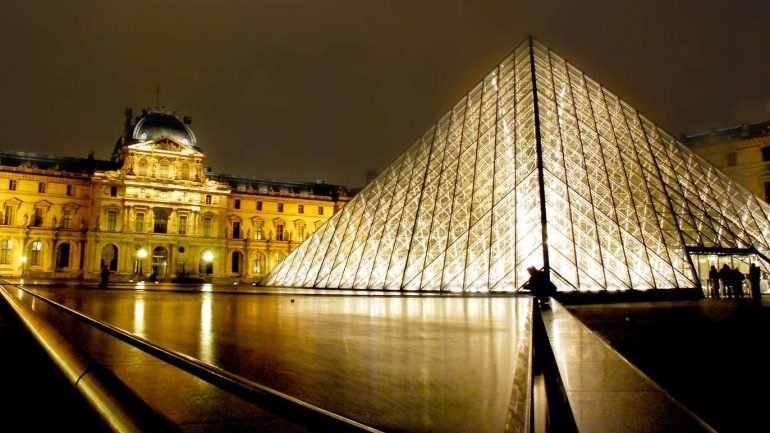
The famous glass pyramid in the central courtyard was designed by the Chinese-American architect I. M. Pei and opened in 1989. The pyramid was controversial at the time but has since become one of the most recognised symbols of modern Paris.
Guided Tours of the Louvre
If you are not an art aficionado but want a deeper understanding of the works on display, the easiest way is to take one of the guided tours offered by the museum. Guided tours in English run daily and last about 90 minutes. The tour walks you through some of the most famous pieces in the collection, including the Mona Lisa, the Venus de Milo, the Winged Victory of Samothrace and a selection of works from the Italian Renaissance and the Egyptian antiquities.
Tours typically run between three and five times a day depending on seasonal demand, with the highest frequency in spring and summer. Each tour starts underneath the famous glass pyramid in the central courtyard. There is a fee for joining the official guided tour, but children under 13 are free, and those under 18 receive a discount. Group sizes are limited to 30 people and places are allocated on a first-come, first-served basis, so it is wise to arrive at the meeting point at least 30 minutes before the tour begins to register.
For travellers who want a more personal experience, several private guides and small-group tour companies operate independently of the museum and can be booked online in advance. These tours often skip the main ticket queue and run for two to three hours.
Audio Guides at the Louvre
The Louvre offers a multimedia audio guide available in several languages, which covers more or less the same key works as the human tour guide along with hundreds of optional commentaries on individual artworks. The audio guide is loaded onto a Nintendo handheld console and uses GPS-style positioning to help you navigate the vast galleries. Audio guides last around 90 minutes for the headline tour and can be rented from a desk near the main information point at the entrance.
For visitors who prefer to use their own device, the official Louvre app is free to download and includes interactive maps, suggested itineraries and audio commentary on the highlights of each wing.
Louvre Museum Opening Times
The Louvre Museum is closed on Tuesdays and on selected public holidays, including 1 January, 1 May and 25 December. From Wednesday to Monday the museum opens from 09:00 to 18:00. On Wednesdays and Fridays, the museum stays open late, with some wings remaining open until 21:45 and far fewer visitors than during the day.
Tickets stop selling 45 minutes before closing time, and museum guards begin clearing the galleries 30 minutes before closing. A standard ticket lets you enter the museum as many times as you like within a single day, which means you can leave for lunch or a rest and return refreshed in the afternoon. Standard tickets cover all permanent exhibits, although temporary exhibitions sometimes carry an additional fee.
Free Entry Days and Discounts
- Free for all visitors: the first Friday of every month after 18:00 (except in July and August), and on Bastille Day (14 July).
- Free for visitors under 18: all year round.
- Free for visitors under 26 from the EU: all year round.
- Discounted tickets: available for educators, large families and certain other categories.
If you plan to visit several museums during your stay in Paris, consider investing in a Paris Museum Pass, which gives entry to more than 50 museums and monuments across the city, including the Louvre, the Musee d’Orsay, the Centre Pompidou, Versailles and the Sainte-Chapelle. The pass also lets holders skip most of the ticket queues, which alone justifies the cost during the busy season.
Tips for Visiting the Louvre
- Book online in advance. Since 2019 the Louvre has required a timed-entry reservation, even for visitors with a museum pass or free entry. Booking online through the official Louvre website is the only way to guarantee entry on the day you want.
- Arrive early or come late. The first hour after opening and the last two hours before closing are by far the quietest. The Wednesday and Friday late openings are even calmer, with the famous galleries surprisingly empty after 19:00.
- Use the alternative entrances. The main pyramid entrance has the longest queues. The entrances at the Carrousel du Louvre (a shopping mall under the museum) and the Porte des Lions are usually much faster.
- Pick a few highlights. Trying to see everything in a single visit is impossible. Pick three or four wings or themes that interest you most and ignore the rest. The most famous masterpieces are concentrated in the Denon wing, including the Mona Lisa, the Winged Victory and the major Italian paintings.
- The Mona Lisa is always crowded. See her early in the morning, late in the day, or simply accept the crowd and move on. A new dedicated room for the Mona Lisa is part of the major reorganisation of the museum announced in 2025.
- Wear comfortable shoes. The Louvre covers more than 14 km of corridors. Even a “short” visit usually involves several kilometres of walking.
- Eat outside the museum. The cafes inside the Louvre are convenient but expensive. The Carrousel du Louvre food court underneath the museum offers cheaper alternatives, and the streets around the Palais Royal hold dozens of good lunch options.
- Visit the surrounding sights. The Tuileries Garden, the Palais Royal, the Pont des Arts and the Musee de l’Orangerie are all within a 15-minute walk and worth combining with your Louvre visit.
Highlights to See at the Louvre
If you only have a few hours, focus on the key works that have made the Louvre famous around the world:
- Mona Lisa (La Joconde) by Leonardo da Vinci, the most famous painting on the planet.
- Venus de Milo, the ancient Greek statue of Aphrodite from around 100 BC.
- Winged Victory of Samothrace, the soaring marble figure of Nike at the top of the Daru staircase.
- Liberty Leading the People by Eugene Delacroix.
- The Coronation of Napoleon by Jacques-Louis David.
- The Wedding at Cana by Paolo Veronese, the largest painting in the museum.
- The Code of Hammurabi, one of the oldest written law codes in human history.
- The Great Sphinx of Tanis in the Egyptian antiquities wing.
- The Lamassu, the giant winged bull statues from ancient Assyria.
- Michelangelo’s Slaves, two unfinished marble sculptures by the Renaissance master.
How to Get to the Louvre
The Louvre sits in the centre of Paris on the Right Bank of the Seine, between the Palais Royal and the Tuileries Garden. The most convenient metro stop is Palais Royal – Musee du Louvre (lines 1 and 7), which connects directly to the underground entrance through the Carrousel du Louvre. Several bus routes also stop nearby, and the closest RER station is Chatelet-Les Halles, about a 10-minute walk away.
Final Thoughts
The Louvre is more than a museum. It is a vast cultural experience that traces the artistic heritage of humanity from the dawn of civilisation in Mesopotamia and Egypt to the great masterpieces of European painting. Plan ahead, book your timed entry in advance, pick a few wings to focus on and give yourself permission to come back another day for the rest. Whether you join a guided tour, follow the audio guide or simply wander on your own, the Louvre rewards every level of curiosity and remains one of the essential stops on any trip to Paris.