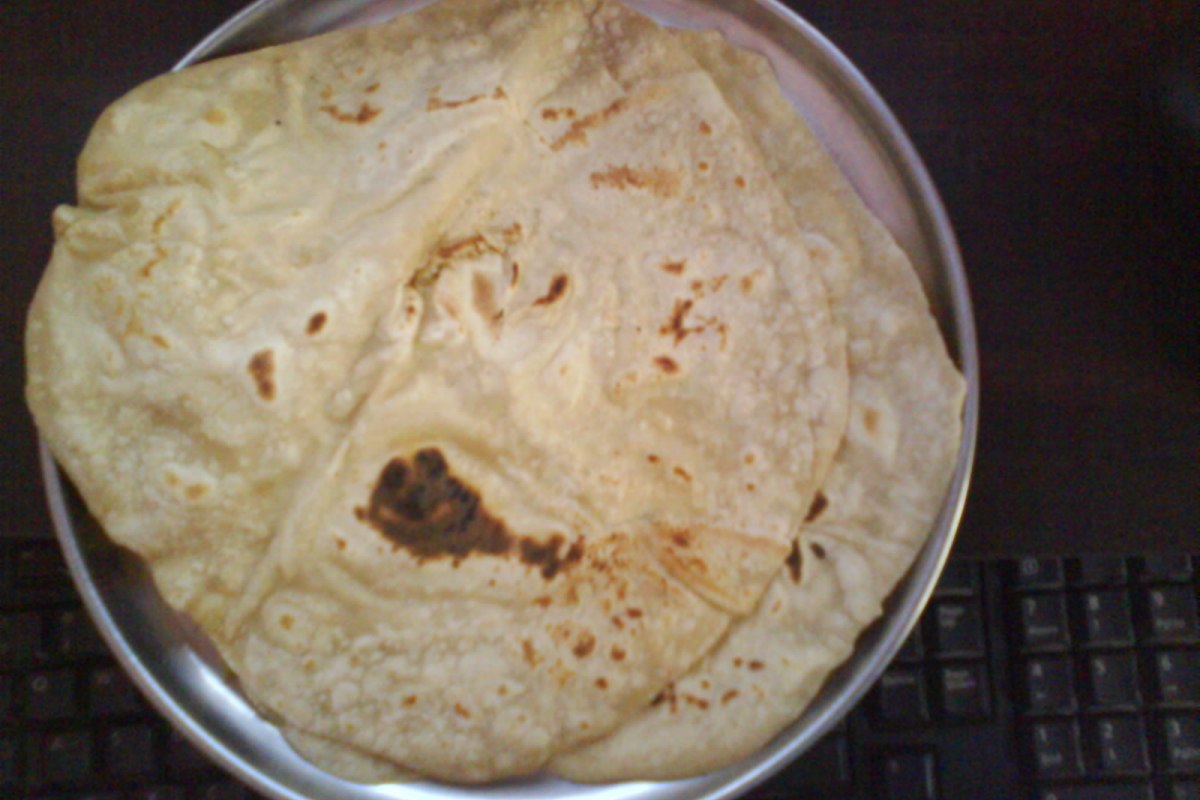
The everyday bread of India is not naan. It is roti, a thin disc of nothing but whole-wheat flour and water, cooked fresh on a griddle at almost every meal in most of the country, while naan is a restaurant and festival bread few families bake at home. This roti recipe is about that daily bread and the one thing that turns a flat, leathery disc into a soft, ballooning one: the puff. Get the flour, the rest and the heat right and a roti inflates into a hot pillow on the flame. Get them wrong and it stays a sad, stiff cracker.
Roti is the daily bread, not naan
Foreign menus tend to get this backwards, treating naan as the default Indian bread. In India it is the other way round. Roti, also called chapati, is what most people eat day in and day out: unleavened, made from wholemeal atta, rolled thin and cooked dry on a flat pan. Naan is leavened with yeast, made from refined white flour, baked in a tandoor, and eaten mainly when you go out. One is the bread of the home kitchen, the other of the restaurant.
The difference is more than habit. Roti is whole wheat, so it carries the bran and germ and the fibre and nutrients that go with them, and it is cooked without fat, which is why it is the bread an Indian family eats three times a day without a thought. Naan, white and enriched and tandoor-baked, is a treat. Asking which is healthier misses the point: roti is the staple precisely because it is plain, quick and wholesome enough to eat at every meal.
Roti, chapati, phulka: one bread, many names
The same flatbread answers to a row of names, and the differences are small but real.
| Name | What it means |
|---|---|
| Roti | The general word for bread, used across India |
| Chapati | The thin tawa-roasted roti, the everyday version |
| Phulka | The same roti puffed on a direct flame until it balloons |
| Poli (Marathi) | The Maharashtrian name, from chapat, to slap |
| Ruti (Bengali), chapathi (Tamil) | The regional spellings of the same bread |
The Marathi name is the most telling. Poli comes from chapat, meaning to slap or flatten, a memory of the old way of shaping the dough by slapping it between wet palms rather than rolling it with a pin. Across the south it becomes chapathi, in Bengal ruti, in Sindhi maani. The bread is the one constant of the Indian table from Kashmir to Kanyakumari, under a dozen names.
The flour is the secret: chakki versus roller-mill atta
More than any technique, the flour decides a roti, and here Indian atta differs from Western wholemeal in a way that matters. Traditional Indian atta is chakki-ground, milled between slow-turning stone wheels that crush the whole wheat kernel, bran, germ and endosperm together, at a low temperature. Roller mills, by contrast, separate the parts at high speed and heat, often removing the germ to stop it going rancid, then add some bran back.
That difference shows up in the bread. Stone grinding generates friction heat that damages more of the starch, eleven to thirteen percent against five or six for roller milling, and that higher starch damage is exactly what makes a soft, pliable roti that puffs well. Chakki atta also keeps the germ’s oils spread through the flour, which gives the roti its nutty aroma and its nutrition. A roti made from fresh chakki atta is softer and more fragrant than one made from generic wholemeal, which is why Indian households are particular about their flour and many still grind it, or buy it freshly ground, rather than taking it off a supermarket shelf.
Ingredients and the dough
| Ingredient | Amount |
|---|---|
| Whole-wheat atta (chakki if you can) | 2 cups |
| Water, lukewarm | about three-quarters of a cup |
| Salt | optional, a pinch |
| Ghee or oil | a teaspoon in the dough, optional, for softness |
That is the whole list. Roti is two ingredients, flour and water, and everything else is technique. Knead to a soft, smooth, pliable dough, neither sticky nor stiff, then cover it and let it rest for twenty to thirty minutes. The rest is not optional: it lets the flour hydrate fully and the gluten relax, which is what makes the dough roll out evenly and the roti turn out soft rather than tough.
How to make roti step by step
Knead and rest
Add the water to the flour gradually and knead for a few minutes into a soft dough that springs back gently. A teaspoon of oil worked in keeps it supple. Cover and rest it half an hour, then knead once more briefly and divide into balls.
Roll, roast and puff
- Roll each ball into a thin, even round, dusting lightly with flour. Even thickness is everything; a roti thick in one spot and thin in another will not puff.
- Heat a tawa until hot. Lay the roti on and cook ten to fifteen seconds until the top just changes colour, then flip.
- Cook the second side until small bubbles rise, then lift the roti with tongs and place it directly on the open flame.
- It balloons into a full puff in seconds as the trapped steam inflates it. Turn it on the flame to catch the other side, then take it off.
- Smear with a little ghee if you like, and keep warm under a cloth.
If you have an electric stove, press the roti gently with a folded cloth on the hot tawa to coax the puff, since there is no flame to balloon it. The direct-flame puff is the step that separates a phulka from a flat chapati, and it is the one most recipes outside India never mention.
Why the puff matters, and why it fails
The puff is functional, not decoration. When a roti balloons, the layer splits into two thin sheets with steam between them, which cooks the bread through evenly and leaves it soft. A roti that never puffs cooks unevenly and goes leathery. Three things stop the puff, and each is fixable.
- Uneven rolling. A roti of uneven thickness cannot trap steam evenly. Roll it to a consistent thinness.
- A cool tawa. The pan must be properly hot so the surface sets fast and the steam builds. A lukewarm tawa steams the roti limp.
- A dry or under-rested dough. Too little water or no rest gives a stiff dough that will not balloon. Keep it soft and give it the half-hour.
The mistakes that make a tough roti
- Tough, leathery roti. Usually a stiff dough, too much dry flour while rolling, or no rest. Knead soft and rest the dough.
- Brittle, cracking roti. The dough was too dry. Add water until it is soft and pliable.
- No puff. Uneven rolling, a cool tawa, or a dry dough, as above.
- Hard once cool. Cooked too long or too slow. Roti should cook fast on a hot pan and be eaten warm; stack and cover them to keep them soft.
The home-cook secrets to roti that stays soft
The recipe makes a roti that puffs. Keeping it soft for hours, the way a packed lunch needs, is a separate skill, and here the home cooks and the Indian food press agree on a few tricks the recipe sites rarely spell out.
- Knead with warm water, not cold. The consistent claim across home-cook discussions and Hindi recipe columns is that lukewarm or even hot water hydrates the flour better, and a dough kneaded warm gives rotis that stay soft hours after cooking rather than stiffening as they cool.
- Work fat and a little ajwain into the dough. The widely repeated grandmother method in the Hindi food press is to knead a teaspoon of ghee and a pinch of ground ajwain, carom seed, straight into the atta. The fat keeps the roti, and especially a paratha, soft and pliable all day, and the ajwain adds aroma and aids digestion.
- Knead longer and wetter than feels right. The grandmother habit is to knead by hand for a good twenty to thirty minutes, adding water in small splashes rather than all at once, then rest. More kneading, not less, is what every soft-roti answer comes back to.
- Trap the steam after cooking. The single most repeated storage tip is to stack the hot rotis the moment they come off the heat into a cloth-lined box or an insulated casserole with a lid. The trapped steam keeps them pliable; left open on a plate they dry and harden within minutes.
None of these change the basic recipe. They are the difference between a roti eaten hot at the table and one that is still soft in a tiffin at lunchtime, which is the test most Indian home cooks actually care about.
The breads beyond the everyday roti
The plain wholemeal roti is the base, but India bakes a whole family of related flatbreads, each suited to a region or a grain.
- Tandoori roti, the same wholemeal dough slapped onto a tandoor wall instead of a tawa, thicker and charred, the roti of restaurants and dhabas.
- Rumali roti, a handkerchief-thin bread stretched and flipped over an inverted dome, so fine it is folded like cloth.
- Makki di roti, the Punjabi cornbread of winter, made from maize flour and eaten with mustard greens and white butter.
- Missi roti, wholemeal blended with gram flour and spices for a savoury, sturdier bread.
- Jowar and bajra bhakri, the rustic millet breads of Maharashtra, Gujarat and the dry interior, gluten-free and patted by hand.
The millet breads are worth singling out. In the drier states where wheat struggles, sorghum (jowar) and pearl millet (bajra) make a denser, earthier bhakri, patted out by hand rather than rolled because the gluten-free dough will not stretch under a pin. They are a reminder that the wheat roti is a northern and central staple, not a truly national one, and that the Indian bread basket follows the grain the land can grow.
The roti maker debate
Roti is so central to daily life that the question of how to make it has become a small domestic argument. Automatic machines now exist that knead, roll and cook a roti at the press of a button, and they have their defenders among busy households. Traditionalists insist that a hand-rolled roti, pressed and turned by a practised hand, is softer and tastes better, and that the rhythm of rolling rotis is part of home cooking itself. Both sides have a point: a machine guarantees a consistent roti and saves real labour, while a good cook’s hand still makes a better one. It is the kind of debate only a bread eaten three times a day could generate.
Not to be confused with fry bread
A word on a common mix-up. Search for “Indian fry bread” in much of the English-speaking world and you will find Native American frybread, a deep-fried dough of the Navajo and other Indigenous peoples of North America, which has nothing to do with Indian roti. Roti is dry-cooked on a griddle, never fried. The Indian bread that comes closest to a fried dough is bhatura or puri, the puffed deep-fried breads of the north, not the everyday roti. If a recipe for “Indian fry bread” calls for deep-frying in lard or oil, it is the Native American dish, a different bread from a different continent that shares only an unfortunate name.
What to serve with roti
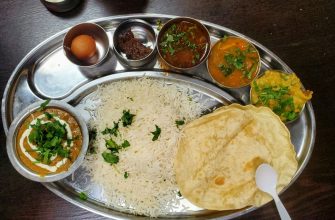
Roti is the plate, the spoon and the bread of an Indian meal all at once, torn to scoop up almost anything.
- Dal, the everyday pairing, from a simple tadka dal to a rich dal makhani.
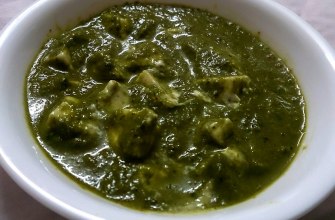
- Any sabzi or gravy, from palak paneer to a dry potato dish.
- Yogurt and pickle, for the simplest meal of all, a hot roti with curd and achar.
It is the daily anchor of the table mapped in the guide to Indian cuisine and spices, the bread that more Indians eat, more often, than any other. A stack of fresh phulkas with a dal and a sabzi is the quiet everyday meal behind all the famous restaurant dishes, the one most Indian kitchens actually cook night after night.
Frequently asked questions
What is the difference between roti, chapati and phulka?
Roti is the general word for the bread. Chapati is the thin roti roasted on a tawa. Phulka is the same roti finished on a direct flame so it puffs up into a full balloon. They are versions of one unleavened wholemeal flatbread.
Why is my roti hard, not soft?
Usually a stiff dough, too much dry flour, or no resting time. Knead the dough soft and pliable, rest it for twenty to thirty minutes, cook it fast on a hot tawa, and keep the finished rotis covered.
Why won’t my roti puff up?
The three usual causes are uneven rolling, a tawa that is not hot enough, and a dry dough. Roll evenly thin, heat the pan well, keep the dough soft, and finish the roti on a direct flame to balloon it.
Is chakki atta really better for roti?
Yes. Stone-ground chakki atta keeps the whole kernel and damages more of the starch, which makes a softer, more fragrant roti that puffs better than one from roller-milled flour. It is why Indian households are particular about their atta.
Is “Indian fry bread” the same as roti?
No. Native American frybread is a deep-fried dough from North America. Indian roti is a dry-cooked griddle bread. They share a name by accident only. The Indian fried breads are puri and bhatura, not roti.
Can I make roti dough ahead and store it?
Yes. The dough keeps in the fridge for a day or two, covered or wrapped so it does not dry out, and many cooks find a rested, chilled dough rolls even better. Bring it back to room temperature before rolling. Cooked rotis are best fresh and warm, but they reheat on a hot tawa or wrapped in a cloth.
Why do Caribbean and East African rotis taste different?
The roti travelled with the Indian diaspora to the Caribbean, East Africa, Fiji and beyond, and adapted along the way. Trinidad’s dhalpuri roti is stuffed with ground split peas, and many diaspora rotis are larger, softer and oilier than the plain Indian chapati, shaped by local tastes and the breads they grew up beside.
Sources
- Chapati, names and regional spread
- Roti, the unleavened flatbread
- Frybread, the Native American dish, for contrast
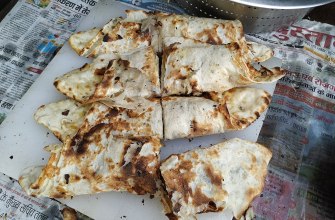
- Image: Chapati, Wikimedia Commons, public domain, by Randhirreddy