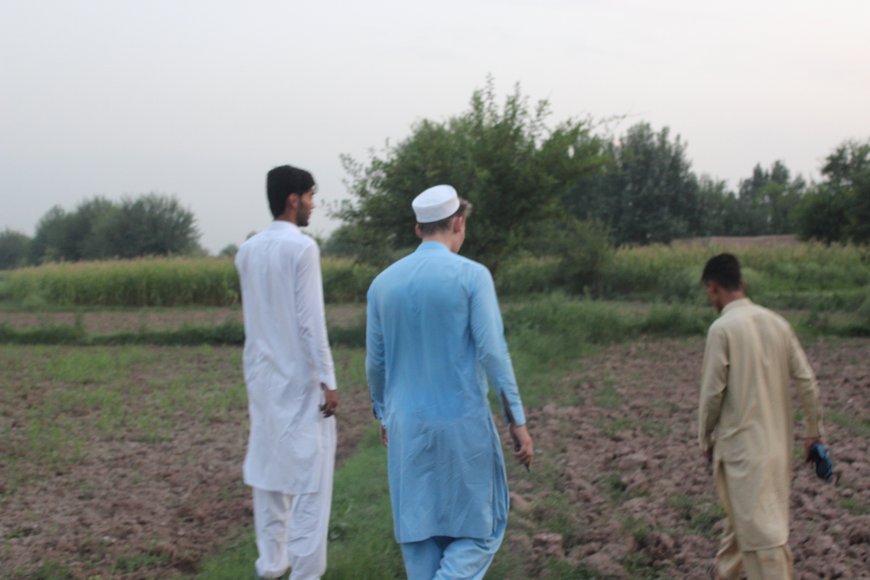
The salwar suit is a three-piece garment combining loose trousers (salwar), a tunic top (kameez), and a long scarf (dupatta), worn by women across India, Pakistan, Bangladesh, and the South Asian diaspora. The form developed from Mughal-era court dress during the 16th and 17th centuries and became the standard women’s daily wear across Punjab, Haryana, Delhi, Kashmir, Himachal Pradesh, and northern India through the 20th century. Regional variants shape the silhouette from the gathered Punjabi salwar to the wide-legged Patiala, the tight-fit churidar, the straight Pakistani style, and the contemporary pant-cut Indo-Western adaptations. This guide covers the history, regional styles, fabric traditions, wedding and festival use, modern fashion adaptations, care and storage, and practical buying advice for the salwar suit.
The Three Garment Components
A complete salwar suit consists of three distinct pieces designed to be worn together. Understanding each component and how they combine helps the wearer coordinate colours, fabrics, and formality.
The salwar (also spelled shalwar) is the lower garment. It runs from waist to ankle with a drawstring or elastic waistband, gathered fabric along the legs, and tapered cuffs at the ankle. The traditional Punjabi salwar uses several metres of fabric gathered into deep pleats, producing a full billowing shape. Pakistani-cut and contemporary variants use less fabric and produce a straighter silhouette.
The kameez is the tunic top. Standard kameez lengths reach mid-thigh to just below the knee, with side slits (chaak) that allow walking freedom. Sleeve length ranges from sleeveless (rare in traditional contexts) through three-quarter to full long-sleeved versions. Necklines vary widely including round, V, square, boat, and sweetheart patterns.
The dupatta is the accompanying scarf, typically 2.25 metres long by 1 metre wide. The dupatta can be draped across both shoulders, wrapped around the neck, or carried over one shoulder depending on occasion and regional style. Wedding-grade dupattas carry heavy embroidery and often weigh more than the kameez itself.
Regional Variants Across the Subcontinent
The salwar suit takes multiple forms across South Asia, each tied to a specific region and historical context. Traveller and buyers who understand the variants can choose appropriately for occasion and body type.
- Punjabi salwar: the traditional full-gathered form with deep pleats, common across Punjab state on both sides of the India-Pakistan border
- Patiala salwar: the widest variant with extensive gathering at the waist creating a dramatic flared silhouette, traditionally associated with Patiala princely state
- Churidar: the tight-fit variant with fabric bunched at the ankle creating bangle-like folds, popular for formal occasions and dance performance
- Pakistani straight salwar: a slimmer cut with less fabric than the Punjabi form, increasingly common in modern urban wear
- Dhoti salwar: an Indo-Western fusion with draped folds in front resembling dhoti drapery, a recent 2010s development
- Pant-cut: essentially straight trousers with salwar styling, worn with kameez for a more Western silhouette
- Afghani salwar: very wide-legged with extensive gathering, used in ethnic Central Asian and diaspora contexts
The anarkali kameez pattern, named after the legendary Mughal court dancer, features a fitted bodice that flares dramatically below the bustline to create a frock-like silhouette. Anarkali suits pair with churidar or straight-cut salwar for a distinctive formal appearance.
Historical Origins
The salwar suit’s origin traces to Mughal court dress during the 16th and 17th centuries, when Central Asian Islamic clothing traditions entered the Indian subcontinent through the Mughal imperial court. The garment combined with local Indian textile traditions and decorative elements, producing the distinctive South Asian form.
Pre-Mughal Indian women’s clothing centred on draped garments including the sari and its regional variants. The two traditions coexisted for centuries, with the sari dominating the southern and eastern regions while the salwar suit gained ground in the northern Mughal territories.
The British colonial period (1858 to 1947) did not displace either tradition but did introduce cotton mill production that made ready-made salwar suits affordable for middle-class households. Previously, most suits were made by local tailors from fabric purchased at bazaars, a model that continued alongside factory production.
Post-independence India saw the salwar suit adopted beyond its original Punjab and Delhi heartland, spreading into Maharashtra, Gujarat, and southern states as office attire and college uniform. The garment carried an association with modernity and movement-freedom compared to the traditional sari, which suited post-independence women’s participation in workforce and education.
Fabric and Embellishment Traditions
Salwar suit fabrics range from daily cotton to heavy silk brocade for wedding wear. Fabric choice is driven by occasion, season, regional custom, and budget.
Daily wear fabrics include cotton, cotton-lawn, cotton-silk blends, and rayon. These produce comfortable all-day garments suitable for work and informal social contexts. Prices run 500 to 3,000 Indian rupees for a finished three-piece suit in 2024 market terms, with regional variation.
Formal wear fabrics include silk, silk-chiffon, crepe, georgette, velvet (for winter), and net. The net dupatta with heavy embroidery has become a staple of formal Indian women’s wear since the 2000s. Prices for good-quality formal suits run 5,000 to 25,000 rupees, with designer versions reaching substantially higher.
Wedding-grade fabrics use brocade, banarasi silk, kanjeevaram silk, tissue, and hand-embroidered materials. These carry generational heirloom status in many families. Pricing for bridal suits runs 30,000 rupees to several lakhs, with antique banarasi pieces reaching collectible prices for vintage examples.
Embellishment traditions include:
- Chikankari: delicate white-on-white embroidery from Lucknow, Uttar Pradesh
- Phulkari: floral thread embroidery from Punjab
- Zardozi: gold and silver metallic thread embroidery from the Mughal tradition
- Mirror work (shisha): small mirrors stitched into fabric, traditional in Gujarat and Rajasthan
- Kantha: running-stitch embroidery from West Bengal and Bangladesh
- Kashmiri embroidery: fine pashmina and crewel work from Kashmir
Wedding and Festival Wear
Wedding-grade salwar suits occupy a specific category within South Asian wedding traditions. The bride typically wears a lehenga (a fuller skirt version) for the main wedding ceremony, while salwar suits appear in related functions including the mehndi (henna ceremony), sangeet (music and dance evening), and post-wedding receptions.
Specific colour conventions apply for brides and wedding guests. Red and maroon traditionally dominate bridal wear across northern India. Pink, orange, yellow, and green appear for wedding guests depending on the specific function. Black and white, both associated with mourning in traditional context, are rarely worn to weddings except in specifically modern or fusion interpretations.
Festival wear connects to specific religious and cultural occasions. Diwali (festival of lights) traditionally sees richly embellished silks and brocades in jewel tones. Eid (Muslim festival marking end of Ramadan) favours green, pink, and pastels. Karwa Chauth (married women’s festival) emphasises red. Baisakhi (Punjabi harvest festival) calls for bright yellows and oranges.
Regional religious communities also maintain specific traditions. Sikh women wear salwar suits for gurdwara (temple) visits, with preference for simpler elegant styles over heavy embellishment. Muslim women in much of Pakistan and northern India similarly favour modest cuts with full sleeves and longer kameez lengths for religious observance.
Modern Fashion and Indo-Western Fusion
The salwar suit has evolved substantially since the 2000s through fusion design that combines traditional cuts with contemporary Western elements. These adaptations make the garment more accessible to younger wearers and diaspora communities.
Indo-Western adaptations include:
- Short kameez: tunics cut to upper-thigh length for a more Western silhouette
- Pant-cut salwar: straight trouser cut replacing the gathered lower garment
- Crop-top style kameez: extreme short-top with high-waisted salwar
- Asymmetric hem: kameez with varying length around the body
- Jacket-style kameez: buttoned front opening replacing the traditional pullover
- Palazzo pant: wide-legged flowing trousers replacing the gathered salwar
Designer labels including Sabyasachi, Manish Malhotra, Anita Dongre, and Ritu Kumar have driven high-end salwar suit innovation across the 2010s and 2020s. Their collections combine traditional Indian embroidery techniques with contemporary silhouettes and occasionally Western design elements, producing fusion pieces that suit both Indian and international contexts.
The diaspora market in the UK, US, Canada, and Gulf states supports substantial salwar suit retail beyond the Indian subcontinent. London’s Southall, Toronto’s Little India, and New Jersey’s Edison area all host specialist South Asian fashion districts with dedicated salwar suit retailers.
Fit and Measurement
A well-fitted salwar suit requires specific measurements to complement the wearer’s body. Off-the-rack sizing varies widely between manufacturers and does not map cleanly to Western sizing conventions.
Key measurements for a custom or tailored suit:
- Bust circumference: measured at the fullest point
- Waist circumference: at the natural waistline
- Hip circumference: at the fullest point
- Shoulder width: from edge to edge across the back
- Kameez length: from shoulder to desired hem
- Sleeve length: from shoulder to wrist or elbow depending on style
- Armhole depth: for comfortable sleeve movement
- Salwar length: from waist to ankle
- Thigh and knee circumference: for fitted churidar styles
Tailors in India typically offer bespoke suits with 3 to 7 day turnaround for standard orders. Prices range from 500 to 3,000 rupees for tailoring alone (fabric extra), with premium tailors in Delhi, Mumbai, and Bangalore charging substantially more.
Care and Storage
Salwar suit care depends heavily on fabric and embellishment. Cotton daily wear tolerates machine washing and regular wear. Silk and embroidered pieces require careful hand wash or dry cleaning to preserve both the fabric and the surface decoration.
Storage considerations:
Fold traditional silks with acid-free tissue paper between layers to prevent crushing and fabric interaction. Store away from direct sunlight to prevent fading of vegetable-dyed silks. Hanging long-term is not recommended for heavily embellished pieces because the weight of embroidery can distort the shape over time.
Humidity control matters more in coastal regions. Cedar or neem wood sachets in the storage area repel moths without damaging silk or cotton fibres. Avoid moth balls containing naphthalene, which can discolour silver zardozi threads over time.
For archival storage of bridal or heirloom pieces, acid-free cardboard boxes with internal tissue support preserve the garment’s form across generations. Many Indian families pass down bridal salwar suits through multiple generations with proper storage.
Buying a Salwar Suit
Quality salwar suits are available from multiple retail channels, each with its own advantages and trade-offs.
Bespoke tailors offer the best fit and fabric choice but require physical presence for measurements and multiple fittings. This option suits residents of India or travellers with extended time.
Ready-made retail through brands like FabIndia, W, Biba, and regional chains provides standardised sizing and modern designs at mid-market prices. This option suits quick purchases without time for custom tailoring.
Designer boutiques provide exceptional craftsmanship and unique designs at premium prices. Labels like Sabyasachi, Manish Malhotra, and smaller regional designers offer pieces that approach art-object status.
Online retail through Myntra, Ajio, and brand-specific websites has grown substantially since 2015. Sizing remains less reliable than in-person fit, but measurement guides and return policies make online purchases workable for casual wear. Wedding-grade and designer purchases still benefit from in-person selection.
Diaspora markets in UK, US, Canada, and Gulf states charge premium prices relative to Indian market rates. Travelers visiting India often purchase larger quantities during trips specifically to take advantage of lower prices on comparable quality goods.
Frequently Asked Questions
Can non-Indian women wear salwar suits?
Yes, with no cultural objection. Salwar suits function as everyday and formal clothing across multiple South Asian countries and diaspora communities, and international visitors often wear them without issue. Cultural borrowing is generally welcomed, particularly for formal occasions and cultural events.
What is the difference between a salwar kameez and a shalwar kameez?
Spelling variation reflecting Hindi or Urdu transliteration rather than garment difference. Both refer to the same three-piece garment. Pakistani and Urdu-speaking contexts typically use shalwar kameez, while Indian Hindi contexts use salwar suit or salwar kameez.
How should the dupatta be worn?
Several regional conventions exist. Draped across both shoulders with ends falling to the front or back. Wrapped around the neck like a scarf. Carried over one shoulder. Covering the head during religious observance. Choice depends on occasion, regional custom, and personal preference.
What fabric is best for summer?
Cotton, cotton-lawn, and cotton-silk blends handle Indian summer heat well. Chiffon and georgette work for formal summer events but trap heat more than pure cotton. Avoid heavy silk and velvet during peak summer months.
How long does a custom-tailored suit take?
Standard cotton and daily-wear suits typically take 3 to 7 days at a local tailor. Embroidered silk pieces can take 2 to 4 weeks depending on the complexity of the embellishment. Bridal commissions with extensive handwork may require 2 to 6 months of advance booking.
What makes a wedding salwar suit different from daily wear?
Fabric quality (pure silk or heavy brocade rather than cotton), embellishment extent (full embroidery versus plain or minimal), dupatta weight (heavy bridal dupatta with extensive work), and colour selection (jewel tones for weddings versus everyday pastels). Tailoring also tends more meticulous with multiple fittings.
For related Indian fashion topics, see our traditional Indian clothing guide, our Indian wedding traditions overview, and our modern Indian fashion.
Sources and Further Reading
- Ritu Kumar, Costumes and Textiles of Royal India
- Rta Kapur Chishti, Saris of India: Tradition and Beyond
- Victoria and Albert Museum, South Asian textile collection records
- Crafts Council of India, regional embroidery documentation
- FICCI Textile Committee, handloom and handicraft industry reports