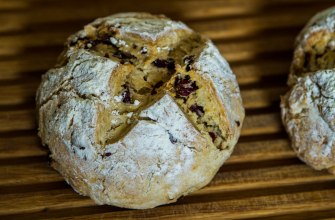
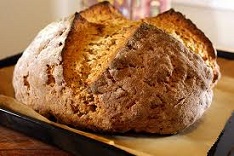
The most famous loaf in Ireland is a brown one. The brown yeast bread served at Ballymaloe House in east Cork, a dense, nutty wholemeal loaf with a hint of treacle, helped build the reputation of Irish home cooking and has been baked there to the same recipe for more than sixty years. Irish brown bread comes in two distinct forms, a yeast version and a soda version, and both rely on stone-ground wholemeal flour for the deep, wheaty flavour that makes it the perfect partner to butter, smoked salmon and a bowl of soup. This guide covers both and the recipe worth keeping.
The two kinds of Irish brown bread
Outsiders lump it together, but Ireland makes brown bread two different ways, and the difference is the rising agent.
- Brown yeast bread is leavened with a little fresh yeast and baked as a wet batter in a tin. The Ballymaloe loaf is the classic, soft-crumbed and moist, ideal for toast and sandwiches.
- Brown soda bread, called wheaten bread in the north, uses bicarbonate of soda and buttermilk like white soda bread but with wholemeal flour. It is denser, quicker and more rustic.
Both are honest everyday breads, and most Irish kitchens make one or the other depending on whether there is yeast or buttermilk to hand. The yeast loaf keeps a day longer; the soda loaf is faster and needs no proving.
The Ballymaloe loaf and its lineage
The brown yeast bread is tied to one name. Myrtle Allen, who ran the dining room at Ballymaloe House from the 1960s and won a Michelin star there, made this loaf the signature of the house, and it has been baked to the same method ever since. She adapted it from the no-knead Grant loaf created by the writer Doris Grant, a bread designed to skip the kneading and the long proving that put people off baking. The genius of it is the lack of fuss: there is no starter to keep, no kneading, no knocking back and shaping, just a wet batter mixed in minutes, a short rise in the tin and into the oven. It is the loaf that proves good Irish bread was always about the flour and the method, not technique.
Why the flour matters
Brown bread lives and dies on the flour. The right choice is coarse stone-ground wholemeal, milled to keep the bran and wheatgerm that give the loaf its nutty taste, its rough texture and its keeping quality. Stone-ground flour from the old Irish mills carries more character than the fine, roller-milled wholemeal sold in supermarkets, and bakers who care seek it out. Soft Irish wheat, low in gluten, suits the no-knead method because there is no need to develop a strong, elastic dough. A spoon of black treacle or molasses, used at Ballymaloe, deepens the colour and adds a faint bitterness that balances the sweetness of the wheat. Some bakers scatter the top with oat flakes, sesame or sunflower seeds for crunch.
The Irish mills behind the loaf
Good brown bread starts at the mill, and Ireland still runs a handful of working stone mills that bakers prize. Stone grinding crushes the whole grain slowly between heavy wheels, keeping the oily wheatgerm and the bran in the flour rather than sieving them out, which is what gives the loaf its colour, its nutty depth and its keeping quality. Roller-milled supermarket wholemeal strips and recombines the grain, producing a finer, blander flour that bakes a flatter-tasting loaf. The difference is easy to taste side by side. Old water mills and family mills around the country supply stone-ground wholemeal to home bakers and restaurants, and many a famous brown loaf names its flour with the same pride a stew names its lamb. If you can find a coarse, dark, gritty stone-ground wholemeal, the bread will be better for it before you have done anything at all.
An Irish brown yeast bread recipe
This is the Ballymaloe-style loaf, made in a tin with no kneading. It makes one large loaf.
Ingredients
- 450 g coarse stone-ground wholemeal flour
- 1 teaspoon salt
- 1 teaspoon black treacle or molasses
- About 400 ml tepid water
- 20 g fresh yeast, or 1 sachet of dried yeast
- A handful of oat flakes or seeds for the top, optional
Method
- Heat the oven to 230C and oil a loaf tin well.
- Mix the flour and salt in a bowl. In a jug, dissolve the treacle in some of the tepid water, crumble in the fresh yeast and leave it a few minutes until it froths.
- Pour the yeast liquid and the rest of the water into the flour and mix to a wet, sloppy batter, far wetter than a normal dough. Do not knead it.
- Spoon the batter into the tin, scatter the top with oats or seeds, and leave it somewhere warm for about 20 minutes, until it rises near the top of the tin.
- Bake for 20 minutes at 230C, then turn the oven down to 200C for another 20 to 25 minutes.
- Tip the loaf out and tap the base. A hollow sound means it is done. Return it to the oven without the tin for a few minutes for a crisper crust.
- Cool fully on a wire rack before slicing, or the crumb tears.
For a brown soda version, replace the yeast and water with 1 teaspoon of bicarbonate of soda and about 400 ml of buttermilk, bring it together without kneading, and bake the same way.
Tips for a better brown loaf
- Keep the batter wet. The yeast loaf should be a sloppy, pourable batter, not a firm dough. Too dry and it bakes heavy and dense.
- Check your yeast is alive. Let the yeast froth in the warm treacle water before mixing. If it does not foam, it is dead and the loaf will not rise.
- Do not over-prove. The tin loaf needs only a short rise to the top of the tin. Left too long it collapses in the oven.
- Bake it hot, then lower. A high initial heat sets the crust and drives the rise, then a lower heat cooks the centre through without burning the top.
- Cool before cutting. Warm brown bread tears and turns gummy under the knife. Wait until it is cold for clean slices.
How to eat Irish brown bread
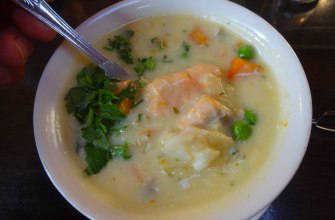
Brown bread is the workhorse of the Irish table. A thick slice with cold butter is the standard partner to a bowl of seafood chowder or soup. It is the classic base under smoked salmon with a squeeze of lemon, and it stands up to strong cheese and chutney. At breakfast it toasts well and takes butter and marmalade. Its most celebrated turn is in brown bread ice cream, where toasted, caramelised crumbs of the loaf are folded through vanilla ice cream, the dessert that appears on more Irish menus than any other. Day-old brown bread never goes to waste, and many cooks deliberately bake an extra loaf so there is always some on the turn for toasting or for the ice cream churn.
Common questions
What is the difference between brown bread and soda bread?
Brown bread is made with wholemeal flour and can be raised with either yeast, as in the Ballymaloe loaf, or bicarbonate of soda. White soda bread uses plain flour. The colour and flavour come from the wholemeal, not the rising agent.
What flour is best for Irish brown bread?
Coarse stone-ground wholemeal flour, which keeps the bran and wheatgerm for a nutty taste and rough texture. Soft, low-gluten Irish wheat suits the no-knead method.
Why does Irish brown bread have treacle in it?
A spoon of black treacle or molasses deepens the colour and adds a faint bitterness that balances the natural sweetness of the wheat. It is a small touch but a traditional one, used at Ballymaloe.
Do you knead Irish brown bread?
No. The yeast version is a wet batter mixed in minutes, and the soda version is brought together by hand. Kneading develops gluten and toughens the loaf, which is the opposite of what you want.
How long does Irish brown bread keep?
The yeast loaf stays good for two or three days wrapped in a cloth, longer than soda bread because the small amount of yeast and the dense wholemeal crumb hold moisture. The brown soda version is best within a day or two. Either one toasts well once it begins to firm up, and stale slices are the classic base for brown bread ice cream.
Related recipes
For the white loaf and the sweet spotted dog, see Irish soda bread. For more baking, see Irish scones and the guide to Irish desserts.
Sources
- Bord Bia, the Irish Food Board
- RTE Lifestyle Food, Irish baking
- Teagasc, Agriculture and Food Development Authority
- Dúchas, the National Folklore Collection of Ireland
- Fáilte Ireland, National Tourism Development Authority
- Good Food Ireland