Real Irish soda bread has four ingredients and no yeast: soft flour, bicarbonate of soda, buttermilk and salt. Add sultanas, an egg and a spoon of sugar and you have spotted dog, the sweet fruited loaf eaten in buttered slices with tea. Purists in Ireland will tell you the sweet version is not soda bread at all but a tea cake, and the argument is older than it sounds. This guide covers both: the plain daily bread and the spotted dog, the chemistry that makes them rise, and why there is a cross cut into the top.
What makes it soda bread
Soda bread is a quick bread, leavened by a chemical reaction rather than yeast. When bicarbonate of soda meets the lactic acid in buttermilk, it releases carbon dioxide that lifts the dough, and the reaction starts the moment the wet and dry meet. That single fact governs everything about the bread. There is no proving, no waiting, and the loaf must go into a hot oven within minutes before the fizz dies. It is the bread of a kitchen with no time and no yeast, which is exactly what most Irish cottages were.
The bread only appeared once bicarbonate of soda became available in the early nineteenth century. Before that, Irish bread was unleavened oat bread or a yeasted barley loaf. Soft Irish wheat, low in the protein that builds chewy gluten, suited the method perfectly, which is why soda bread took hold in Ireland in a way it never did in countries with hard, strong flour.
The four-ingredient rule and the spotted dog
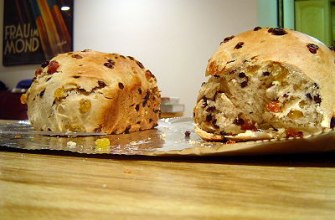
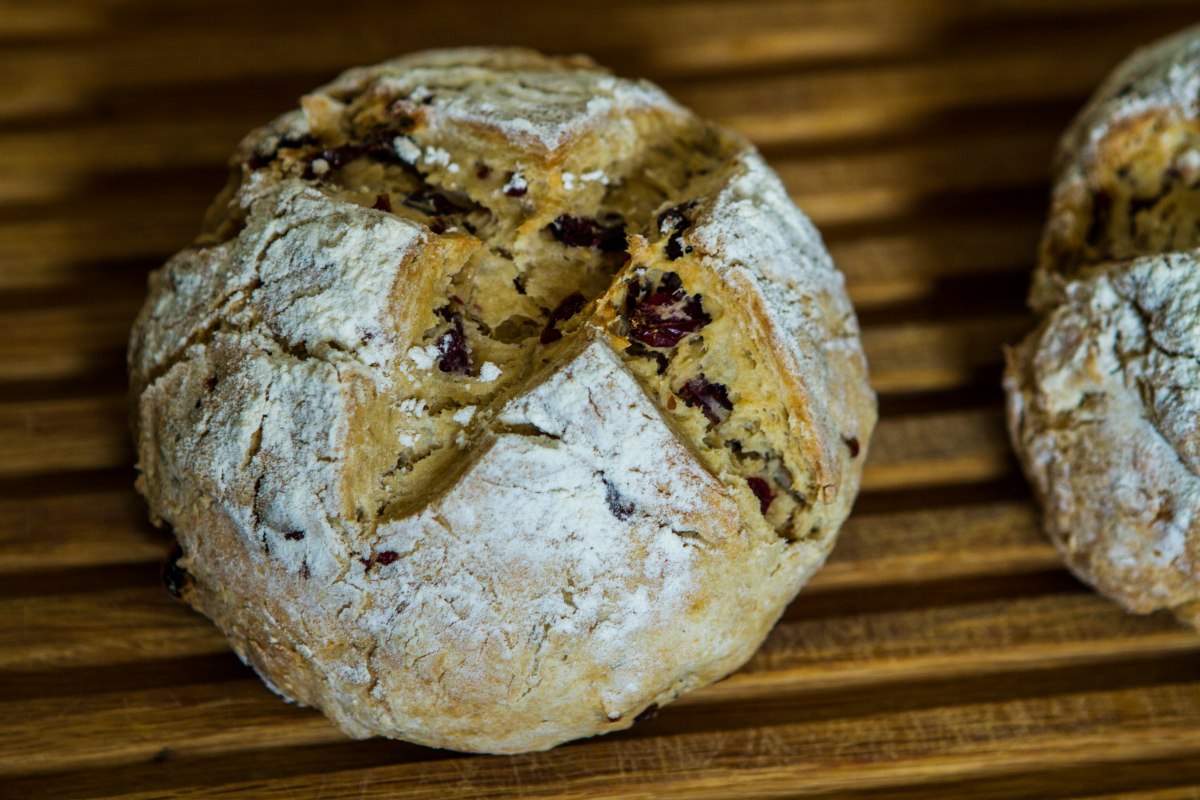
The Society for the Preservation of Irish Soda Bread keeps a strict line: flour, baking soda, salt and buttermilk, and anything else makes it a tea cake. By that rule the much-loved sweet version is an impostor, and it has the names to match. Spotted dog, sometimes spotted dick, is the plain dough with sultanas folded through, usually enriched with a little butter, an egg and sugar. The other old name, railway cake, comes from the middle of the nineteenth century, when Ireland’s spreading railways created a market for a loaf sturdier than sponge but richer than daily bread, an egg-enriched cake that travelled well in a tin or a parcel.
So the distinction is simple. Plain soda bread is the savoury everyday loaf for the dinner table. Spotted dog is the sweet treat for tea. Both share the same chemistry and the same speed.
White, brown and the griddle farl
The bread takes several forms across the island, and the names are worth knowing.
- White soda uses plain white flour for a soft, cake-like crumb, the base for spotted dog.
- Brown or wheaten soda uses wholemeal flour for a dense, nutty loaf, closer to Irish brown bread.
- Soda farl is the same dough patted flat and cooked on a griddle rather than baked, then cut into four. Farl means a fourth, and the griddle farl is a cornerstone of the Ulster fry.
- Caraway versions turn up in Donegal, where the seeds were traditionally worked into the bread, and in the American diaspora loaf that pairs caraway with raisins.
Why there is a cross on top
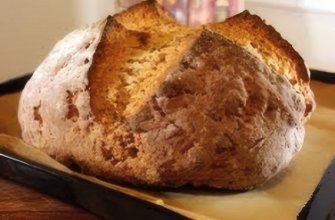
Every round soda loaf is cut with a deep cross before it goes in the oven. The folklore says the cross lets the devil or the fairies out of the bread and wards off bad luck, and cooks still say it as they score the dough. The practical reason is just as real: the cross lets heat drive into the centre of a dense loaf so it bakes through evenly, and it opens the bread into four soft farls that pull apart at the table. Some bakers also prick the four quarters to, as the saying goes, let the fairies escape.
A bread tied to its century
Soda bread is younger than people assume. It could not exist before bicarbonate of soda reached Irish shops in the 1830s, which makes it a nineteenth-century arrival rather than an ancient dish. It spread fast because it asked for so little: no yeast to buy or keep alive, no oven needed if you owned a griddle and a pot, and only the buttermilk left over from churning butter. For a poor rural household that churned its own milk, the bread was almost free. Each region bent it to local habit, the north favouring the griddle farl and the wheaten brown loaf, the south leaning to the round oven-baked white cake. The chef JP McMahon, who has written a short history of the bread, places it firmly in this practical tradition rather than any romantic past, a clever answer to scarce ingredients that happened to taste good enough to outlast the hardship that created it.
How to make Irish soda bread and spotted dog
This makes one round loaf. The plain method is the base; the spotted dog additions are noted. The whole thing takes minutes to mix and under an hour to bake.
Ingredients
- 450 g plain flour, or wholemeal for a brown loaf
- 1 teaspoon bicarbonate of soda
- 1 teaspoon salt
- About 400 ml buttermilk
- For spotted dog: add 100 g sultanas or raisins, 1 tablespoon sugar, 1 egg and 25 g butter rubbed into the flour
Method
- Heat the oven to 220C and dust a tray with flour. Have everything ready, because once the buttermilk goes in you must move quickly.
- Sift the flour, bicarbonate of soda and salt into a wide bowl. For spotted dog, rub in the butter, then stir through the sugar and sultanas.
- Make a well, pour in the buttermilk, adding the beaten egg here for spotted dog, and bring it together with a light hand into a soft, slightly sticky dough.
- Do not knead it. Working the dough builds gluten and makes the bread tough. Just gather it into a round and turn it onto the floured tray.
- Cut a deep cross across the top, almost to the base, and prick the four quarters.
- Bake for about 40 to 45 minutes, until the loaf is well risen and sounds hollow when tapped underneath.
- Cool it on a wire rack under a clean tea towel for a soft crust, and eat it the same day with butter.
Soda bread stales fast because it has no fat or yeast to keep it, so it is at its best within a day. Day-old soda bread toasts beautifully or goes into a pudding.
How to eat it
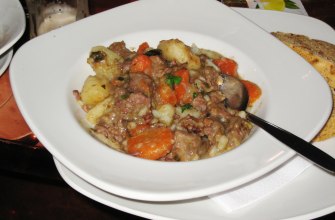
Plain soda bread is the partner to almost everything on the Irish table. It mops the broth of an Irish stew, holds smoked salmon and butter, and turns up beside soup at lunch. A thick slice with cold butter and a wedge of Irish cheddar is a meal on its own. Spotted dog goes the sweet way, sliced and buttered with a pot of strong tea, or spread with butter and jam for an afternoon treat. Toasted the next day, either version takes butter and honey well, and the brown wheaten loaf is the classic base for brown bread ice cream. However you serve it, butter is not optional.
Common mistakes
- Kneading the dough. The single most common error. Bring it together and stop the moment it holds.
- Waiting before baking. The raising reaction fades within minutes. Get the loaf into a hot oven at once.
- Using milk instead of buttermilk. Without the acid in buttermilk the soda has nothing to react with. At a pinch, sour ordinary milk with a spoon of lemon juice or vinegar.
- A shallow cross. Cut it deep, or the centre stays dense while the outside browns.
Common questions
What is the difference between soda bread and spotted dog?
Plain soda bread is the four-ingredient savoury loaf. Spotted dog, also called railway cake, adds sultanas, sugar, butter and egg for a sweet tea bread. Purists count only the plain version as true soda bread.
Why do you put a cross in soda bread?
Folklore says it lets the fairies or the devil out of the loaf. In practice the deep cross helps the heat reach the centre of a dense bread and splits it into four soft farls.
Can I use milk instead of buttermilk?
Buttermilk is essential, because its acid reacts with the bicarbonate of soda to raise the bread. If you have none, sour ordinary milk with a tablespoon of lemon juice or vinegar and leave it ten minutes.
Why is my soda bread heavy?
Usually too much handling or a delay before baking. Mix it lightly, never knead it, and get it into a hot oven straight away while the reaction is still active.
Related recipes
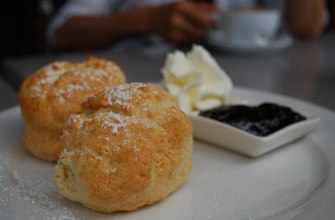
For the wholemeal loaf, see Irish brown bread. For more on the sweet bakes, see the guide to Irish desserts and Irish scones.
Sources
- Society for the Preservation of Irish Soda Bread
- Bord Bia, the Irish Food Board
- Teagasc, Agriculture and Food Development Authority
- Dúchas, the National Folklore Collection of Ireland
- The Irish Times, food and drink
- Fáilte Ireland, National Tourism Development Authority
- Jim Lukach, Irish soda bread photograph, Wikimedia Commons, licensed CC BY 2.0
- Ask About Ireland, cultural heritage