Traditional Irish food is not corned beef, green beer or anything dyed the colour of a shamrock. It is the cooking of a damp, green island where dairy, potatoes, oats and the family pig fed people for centuries, and where a handful of regional dishes carry real history in every spoonful. Strip away the Saint Patrick’s Day clichés and you find a frank, ingredient-led cuisine built on some of the best butter, beef, lamb and seafood in Europe. This guide maps the staples, the regional specialties, the protected foods and the dishes worth cooking, with links to full recipes for each.
The staples that built Irish cooking
Four foods carried the Irish diet, and understanding them explains almost every traditional dish.
- Dairy. Long before the potato, milk, butter, curds and cheese were the backbone of the diet, known in old Irish as bánbia, the white foods. Dairy was the main source of protein, and Irish butter remains a national point of pride, made from the milk of grass-fed herds that graze outdoors for most of the year.
- The potato. Arriving in the sixteenth century, it became the calorie engine of the rural poor, so central that its failure in the 1840s caused the Great Famine. Floury varieties like Rooster and Kerr’s Pink still define Irish mashing, boiling and stewing.
- Oats and grains. Before the potato, oats, barley and wheat cooked as porridge or flatbread were the staple. Oats grew where wheat would not, which is why oatcakes and stirabout porridge run deep in the tradition.
- The pig. Pork, not beef, was the everyday meat. A family pig was known as the gentleman that pays the rent, fattened on scraps and turned into bacon, the meat behind the real national dish of bacon and cabbage.
The myth of corned beef
The dish the world thinks of as Irish was rarely eaten in Ireland. Cattle there were wealth and working animals, killed for meat only when old, so beef sat on the tables of the rich and almost nowhere else. The everyday pairing with cabbage used bacon. Corned beef became Irish in the tenements of New York, where famine emigrants bought cheap cured brisket from Jewish butchers and made it the holiday meal of Irish America. It never travelled back. The full story sits in the corned beef Irish stew guide, and the dish the Irish actually eat on the feast day is closer to lamb stew or bacon and cabbage.
Irish stew and the one-pot tradition
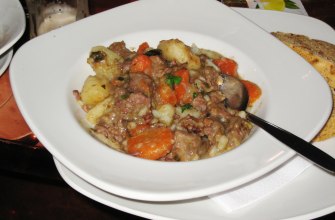
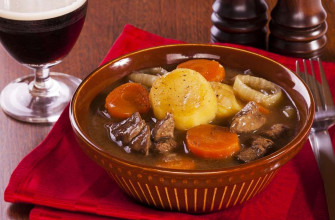
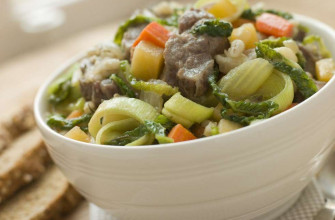
If one dish represents the cottage kitchen, it is the stew: cheap cuts, potatoes, onions and time in a single pot over the fire. The strict traditional version is a pale lamb or mutton stew with no browning and no stout, while modern kitchens have spun off a whole family of variations.
- Irish stew is the full guide to the dish, its history and every variation.
- Traditional Irish stew is the strict, three-ingredient authentic version the purists defend.
- Irish lamb stew is the everyday modern default with spring lamb and leeks.
- Irish beef stew is the browned, stout-rich pub dish where Guinness belongs.
- Irish seafood stew is the creamy Atlantic chowder of the coast.
- Vegetarian Irish stew brings back the meatless everyday pot of the poor.
- Crockpot Irish stew adapts the method for a slow cooker.
Irish bread and baking
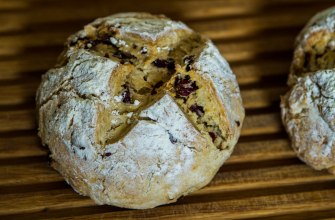
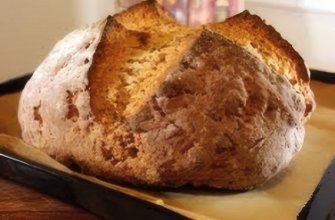
Irish bread is quick bread. Soda bread emerged in the early nineteenth century once bicarbonate of soda became available, and it needs no yeast and no proving. Instead it relies on a chemical reaction between the bicarbonate and the lactic acid in buttermilk, which means it goes from bowl to oven in minutes and must be baked at once before the reaction fades. The dough is barely brought together, never kneaded, because working it turns the loaf tough. A cross cut in the top lets the heat through, and country lore says it lets the fairies out.
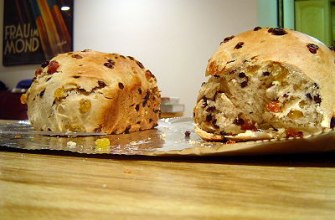
- Irish raisin soda bread, the sweet spotted dog studded with sultanas.
- Irish brown bread, the dense wholemeal loaf served with everything from stew to smoked salmon.
- Irish scones, the teatime staple eaten warm with butter and jam.
Ireland’s protected foods
The clearest proof that Irish food has real regional depth is the list of names protected under European law, each tied to a specific place and method. Ireland holds nine registered protected food names, a roll-call of provenance worth knowing.
- Waterford Blaa, a soft white bread roll of the south east, protected since the trade was documented there for generations.
- Connemara Hill Lamb, hill lamb raised on the wild uplands of County Galway, registered in 2007.
- Imokilly Regato, a hard cheese from east Cork.
- Timoleague Brown Pudding and Sneem Black Pudding, two protected puddings from west Cork and Kerry.
- Clare Island Salmon, farmed in the exposed Atlantic off Mayo.
- Oriel Sea Salt, Oriel Sea Minerals and Achill Island Sea Salt, harvested from Irish coastal water.
Alongside the foods sit three protected Irish spirits, Irish whiskey, Irish cream and Irish poitín, the last a once-illicit pot-still spirit now made legally again.
Regional Irish specialties
The provinces each kept their own dishes, and the differences are sharper than outsiders expect.
- Ulster gave the north its potato breads, boxty and champ, and the towering Ulster fry, a fried breakfast that adds soda farl and potato bread to the usual plate.
- Dublin claims coddle, a pale Saturday stew of sausage, bacon and potato that the city’s writers put into their books.
- Cork holds the strongest offal and curing tradition, with drisheen, crubeens, spiced beef at Christmas and the protected puddings of the west of the county.
- The west and the coast live on seafood, oysters from Galway, mussels from Killary, smoked salmon from the Burren, and the hill lamb of Connemara and Mayo.
Soups, potatoes and the everyday table
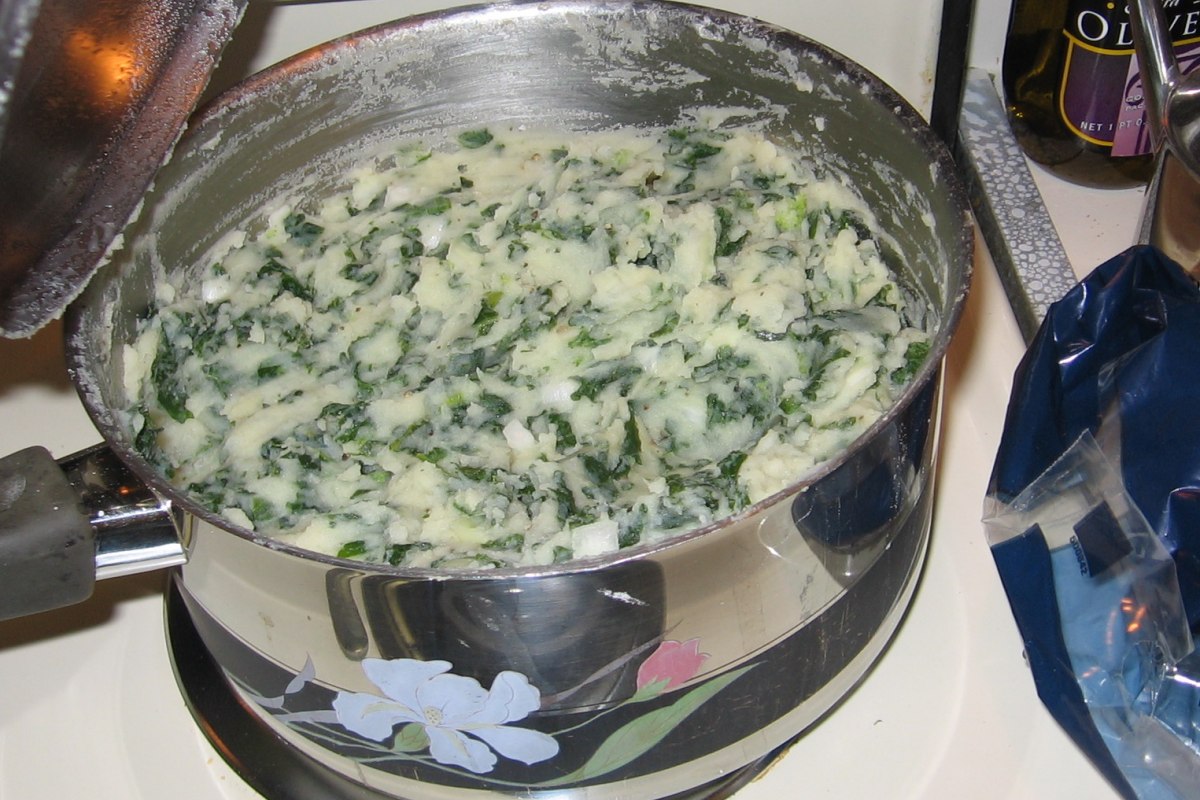
Below the famous dishes sits the plain daily cooking that most defines the cuisine. Potato soup, thickened with nothing but floury spuds and stock, was a frugal staple. Champ and colcannon turned the potato into a meal with scallions or cabbage and a well of melted butter. A bowl of buttery mash sat beside almost everything.
- Irish potato soup, the simplest and most economical of Irish soups.
- Irish desserts, from apple cake to bread-and-butter pudding and the Halloween barmbrack.
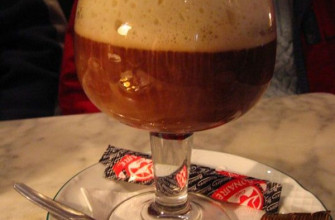
- Irish coffee, the hot whiskey and cream drink invented at Foynes in County Limerick.
The full Irish breakfast
The full Irish breakfast is one of Ireland’s most recognisable meals, a plate built to fuel a morning of farm work. The core is bacon rashers, sausages, fried or grilled tomato, eggs and toast, but the pieces that make it Irish are the puddings. Black pudding, made with pork, oats and blood, and white pudding, the same without the blood, are the heart of the plate, and the best of them carry protected status like Sneem and Timoleague in the south west. In the north the meal becomes the Ulster fry, which adds soda farl and fried potato bread to soak up the fat. Cooked properly, everything meets in one pan so the flavours run together, and it is served with strong tea and more bread and butter than seems wise.
Drinks: stout, whiskey and tea
Irish drinking traditions are as old as the food. Stout, led by Guinness brewed at St James’s Gate in Dublin since 1759, is both a drink and a cooking ingredient, lending its roasted depth to beef stews and pies. Irish whiskey, triple-distilled and smooth, is one of the three protected Irish spirits and the base of Irish coffee, the hot drink invented at the Foynes flying-boat terminal in County Limerick. Poitin, the fierce pot-still spirit once made illegally in the hills, has been legal and protected for years now.
Tea, though, is the real national drink. The Irish are among the heaviest tea drinkers in the world, and the country splits on brand with genuine loyalty, Cork standing firmly behind Barry’s while Lyons holds Dublin and much of the rest. It is taken strong, with milk, and poured all day.
The Irish food calendar
Several traditional foods belong to specific days of the year, and they carry old customs with them.
- Halloween brings barmbrack, a fruited tea loaf baked with hidden charms, a ring for marriage and a coin for wealth, and colcannon, the mashed potato and cabbage dish that once hid the same fortune-telling tokens.
- Christmas in Cork means spiced beef, a cut cured for days in spices and saltpetre, then slowly cooked and sliced cold over the holidays.
- Saint Patrick’s Day calls for spring lamb stew or bacon and cabbage at home, whatever the diaspora eats abroad.
- Easter after the long Lenten fast returned meat and eggs to the table, and simnel cake marked the season.
The new Irish food revival
For decades Irish cooking carried a poor reputation abroad, unfairly, since the raw materials were always world class. That changed through a generation of cooks who built a modern Irish cuisine on the country’s own larder. Darina Allen and the Ballymaloe Cookery School in east Cork led the revival of regional skills from the 1980s. JP McMahon, whose Galway restaurant Aniar holds a Michelin star, has put foraged Atlantic ingredients and old techniques at the centre of fine dining. The result is a confident food culture that treats Irish butter, grass-fed beef, hill lamb and wild seafood as the luxuries they always were.
Frequently asked questions
What is the national dish of Ireland?
Bacon and cabbage is the strongest claim, the everyday meal of cured pork and cabbage. Irish stew runs a close second. Corned beef and cabbage, despite its fame abroad, is Irish-American rather than Irish.
What did Irish people eat before the potato?
Dairy, oats and barley. Milk, butter, curds and cheese, the white foods, were the main protein, and grains cooked as porridge or oat flatbread were the staple before the potato arrived in the sixteenth century.
Why is Irish butter so good?
Irish herds graze outdoors on grass for most of the year, which gives the milk and butter a deeper colour and flavour than grain-fed dairy. Butter has been central to the Irish diet for over a thousand years.
What is the most traditional Irish meal?
A pot of lamb or mutton stew, or bacon and cabbage, served with floury potatoes and brown soda bread. Both are humble, one-pot or one-pan meals built from the staples of the cottage kitchen.
Sources
- Department of Agriculture, Food and the Marine, protected food names
- Bord Bia, the Irish Food Board
- Teagasc, Agriculture and Food Development Authority
- Dúchas, the National Folklore Collection of Ireland
- Fáilte Ireland, National Tourism Development Authority
- The Irish Times, food and drink
- Alison Cassidy, colcannon photograph, Wikimedia Commons, public domain