Spanish ranks as the fourth most spoken language on Earth, with over 500 million native speakers spread across 20 countries on four continents. That global reach has produced actors, musicians, athletes, writers, and artists whose work crosses language barriers and reshapes entire industries. Some grew up in Madrid or Barcelona; others come from Mexico City, Buenos Aires, Bogota, or Santiago. Their common thread is the Spanish language and the cultural weight it carries in their public lives and creative output. Spain alone has produced centuries of cultural traditions that shaped how its artists, athletes, and public figures present themselves to the world.
Actors and Filmmakers from Spain
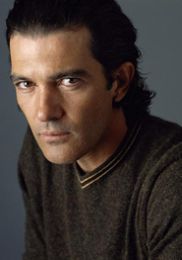
Antonio Banderas, born in Malaga in 1960, became the first Spanish-born actor to build a sustained Hollywood career. His early work with director Pedro Almodovar in films like Women on the Verge of a Nervous Breakdown in 1988 and Tie Me Up, Tie Me Down in 1990 earned him a reputation in European cinema before he crossed over to English-language roles. The Mask of Zorro in 1998 and his voice performance as Puss in Boots in the Shrek franchise turned him into a household name in the U.S. He received an Academy Award nomination for Best Actor for Pain and Glory in 2019.
Javier Bardem became the first Spanish actor to win an Oscar when he took home Best Supporting Actor for his role as Anton Chigurh in the Coen Brothers’ No Country for Old Men in 2007. Born in Las Palmas de Gran Canaria in 1969 to a family of actors, Bardem has earned four Academy Award nominations across his career, including recognition for Before Night Falls in 2000, Biutiful in 2010, and Being the Ricardos in 2021.
Penelope Cruz followed Bardem by one year, winning Best Supporting Actress for Vicky Cristina Barcelona in 2009. She became the first Spanish actress to receive an Oscar. Cruz speaks four languages – Spanish, Italian, French, and English – and has earned four Academy Award nominations total, including one for Parallel Mothers in 2021, directed by Almodovar.
Latin American Actors on the Global Stage
Pedro Pascal, born in Santiago, Chile in 1975, fled to Denmark and then the United States with his family after his parents opposed the Pinochet regime. His breakthrough came as Oberyn Martell in HBO’s Game of Thrones in 2014, followed by lead roles in Narcos, The Mandalorian, and The Last of Us. In 2023, he became the first Latino nominated for a lead actor Emmy in 25 years. By 2025, Pascal had collected 22 awards across film and television.
Salma Hayek, born in Coatzacoalcos, Mexico in 1966, established herself in Mexican telenovelas before moving to Hollywood. Her portrayal of Frida Kahlo in Frida in 2002 earned her an Academy Award nomination for Best Actress, making her the first Mexican woman nominated in that category and only the second Latin American after Brazil’s Fernanda Montenegro. Hayek has since appeared in more than 30 Hollywood productions and uses her platform to campaign against domestic violence and immigration prejudice.
Diego Luna, also from Mexico City, gained recognition through Y Tu Mama Tambien in 2001 alongside Gael Garcia Bernal. His portrayal of Cassian Andor in the Star Wars franchise brought him to mainstream audiences worldwide. TIME included Luna in its 2025 list of the 100 most influential people, noting his efforts to bring depth and complexity to Latin American characters in Hollywood.
Musicians Who Shaped Global Pop and Latin Genres
Shakira Isabel Mebarak Ripoll, born in Barranquilla, Colombia in 1977, has sold over 80 million albums worldwide. She broke into the English-language market with Laundry Service in 2001, which sold over 15 million copies globally. Her awards include three Grammy Awards, seven Latin Grammys, and fifteen Billboard Music Awards. Her 2020 Super Bowl halftime performance, shared with Jennifer Lopez, drew 103 million viewers.
Julio Iglesias, born in Madrid in 1943, holds a Guinness World Record as the best-selling male Latin artist, with over 300 million records sold. He ranks among the most commercially successful Spanish singers in recorded music history. Before music, he played as a goalkeeper for Real Madrid’s youth team until a car accident at 20 ended his football career. His son Enrique Iglesias followed the same path and has sold over 180 million records independently.
- Bad Bunny (Benito Antonio Martinez Ocasio, born 1994, Puerto Rico) – topped Billboard’s Global 200 chart multiple times; became the most-streamed artist on Spotify in 2020, 2021, and 2022
- Ricky Martin (born 1971, San Juan, Puerto Rico) – his 1999 hit “Livin’ la Vida Loca” helped launch the Latin pop crossover movement in the U.S.
- Celia Cruz (1925-2003, Havana, Cuba) – known as the “Queen of Salsa,” she recorded over 70 albums and won five Grammy Awards across a six-decade career
- Carlos Santana (born 1947, Autlan de Navarro, Mexico) – his 1999 album Supernatural won eight Grammy Awards in a single ceremony, tying Michael Jackson’s record
Athletes Who Compete in Spanish
Lionel Messi, born in Rosario, Argentina in 1987, holds eight Ballon d’Or awards, more than any other footballer. He scored 672 goals during his time at FC Barcelona (2005-2021), the most by any player for a single club. In 2012, he set the all-time record for goals in a calendar year with 91. Messi captained Argentina to the 2022 World Cup title, their first in 36 years, scoring twice in the final against France.
Rafael Nadal, from Manacor, Mallorca, retired in 2024 with 22 Grand Slam singles titles. Fourteen of those came at the French Open, a record that stands alone in tennis history. Nadal grew up on Mallorca, an island with deep ties to Spanish cultural identity and regional pride. Between April 2005 and May 2007, Nadal won 81 consecutive matches on clay courts, the longest single-surface winning streak in the Open Era. He completed the Career Golden Slam at age 24, the youngest male player to achieve it.
Other Spanish-speaking athletes who reached the top of their sports:
- Sergio “Kun” Aguero (born 1988, Argentina) – scored the most famous goal in Premier League history to win Manchester City the 2012 title in stoppage time
- Canelo Alvarez (born 1990, Mexico) – became boxing’s first undisputed super middleweight champion in 2021
- Manu Ginobili (born 1977, Argentina) – won four NBA championships with the San Antonio Spurs and an Olympic gold medal with Argentina’s basketball team in 2004
Writers, Artists, and Intellectuals
Gabriel Garcia Marquez, born in Aracataca, Colombia in 1927, won the Nobel Prize in Literature in 1982 for novels and short stories that combined fantasy with reality. His 1967 novel One Hundred Years of Solitude has been translated into over 40 languages and sold more than 50 million copies. He was the first Colombian Nobel laureate, and his work defined the literary movement known as realismo magico.
Pablo Neruda, the Chilean poet born as Ricardo Eliecer Neftali Reyes Basoalto in 1904, received the Nobel Prize in Literature in 1971. His collection Twenty Love Poems and a Song of Despair in 1924 remains among the best-selling poetry collections in the Spanish language, alongside the works of other celebrated Spanish-language poets. Neruda also served as a senator in Chile and as a diplomat in several countries.
Frida Kahlo (1907-1954) painted 143 works during her career, 55 of them self-portraits. A bus accident at age 18 left her with lifelong injuries that became a recurring subject in her art. Her painting Roots sold for $5.6 million in 2006, setting a record for a Latin American artwork at auction. Today, the Frida Kahlo Museum in Mexico City (the Blue House where she was born and died) draws over 500,000 visitors per year.
Political Leaders and Public Figures
Sonia Sotomayor, born in the Bronx, New York in 1954 to Puerto Rican parents, became the first Hispanic justice on the U.S. Supreme Court in 2009. She grew up speaking Spanish at home and has written about how her bilingual upbringing shaped her legal perspective.
Eva Peron (1919-1952) rose from poverty in rural Argentina to become First Lady and the most powerful woman in Latin American politics during the late 1940s. She championed labor rights and women’s suffrage in Argentina, pushing through legislation that gave women the right to vote in 1947. Her foundation distributed funds directly to hospitals, schools, and orphanages across the country.
Rigoberta Menchu, a K’iche’ Maya woman from Guatemala, won the Nobel Peace Prize in 1992 for her work documenting the genocide of indigenous peoples during Guatemala’s civil war. She published her testimony, I, Rigoberta Menchu, in 1983, bringing international attention to human rights abuses in Central America.
Frequently Asked Questions
How many countries have Spanish as their official language?
Twenty countries recognize Spanish as an official or national language. These span from Spain in Europe to Mexico and Central America, most of South America (except Brazil, Guyana, Suriname, and French Guiana), and Equatorial Guinea in Africa. The United States has no official language at the federal level but has over 41 million native Spanish speakers.
Who was the first Spanish-speaking person to win an Oscar?
Javier Bardem became the first Spanish actor to win an Academy Award in 2008 for No Country for Old Men. Penelope Cruz followed in 2009 as the first Spanish actress to win. The first Latin American Oscar winner was Mexican-born Anthony Quinn, who won Best Supporting Actor for Viva Zapata in 1953.
Which Spanish-speaking athlete has won the most individual awards?
Lionel Messi holds eight Ballon d’Or awards, the most by any footballer. Rafael Nadal won 22 Grand Slam singles titles before retiring in 2024. In boxing, Canelo Alvarez became the first undisputed super middleweight champion in 2021.
Are there famous Spanish-speaking Nobel Prize winners?
Several Spanish speakers have won Nobel Prizes across categories. Gabriel Garcia Marquez (Colombia, Literature 1982), Pablo Neruda (Chile, Literature 1971), Octavio Paz (Mexico, Literature 1990), and Mario Vargas Llosa (Peru, Literature 2010) all wrote in Spanish. Rigoberta Menchu (Guatemala) won the Nobel Peace Prize in 1992.
Sources and Further Reading
- NobelPrize.org – Gabriel Garcia Marquez, Nobel Prize in Literature 1982 (nobelprize.org)
- Olympics.com – Rafael Nadal’s Career in Numbers: All Titles, Records, Medals and Awards (olympics.com)
- ESPN – Lionel Messi’s Soccer Career: Stats, Trophies, Honors (espn.com)
- TIME – TIME100 2025: The Six Latinos Shaping the World (time.com)