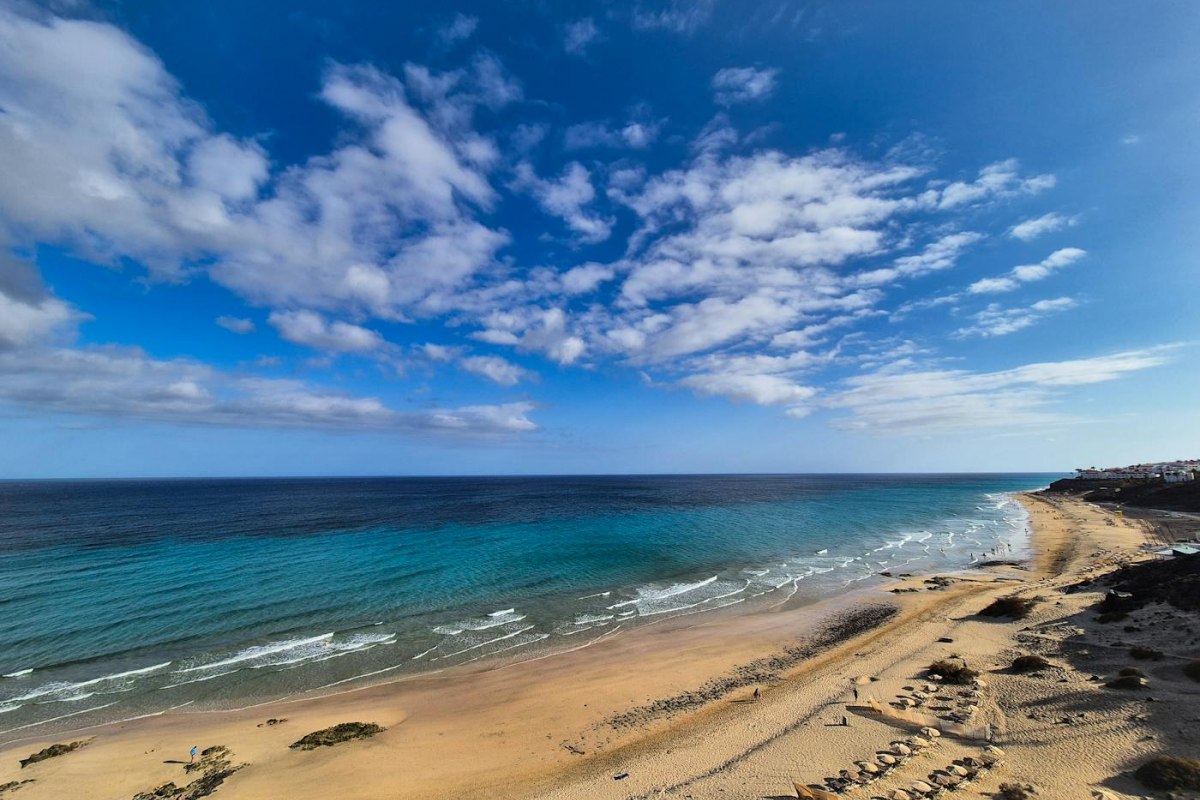
Jandia is the resort heart of southern Fuerteventura, strung along the island’s longest beach on the peninsula that points toward Africa. Staying here means trading the airport’s convenience for the finest sand on the island and a quieter, more German-flavoured holiday scene. This guide covers what the Jandia area is like, the accommodation tiers from large all-inclusive complexes to self-catering apartments, and the local features that make the south distinct. For the wider choice, see our guide on where to stay in Fuerteventura.
What staying in Jandia is like
The Jandia peninsula holds a roughly 21-kilometre run of white sand, the Playa de Sotavento and Playa de Jandia, backed by low dunes and the resort towns that grew up from the 1970s. A few things define a stay here:
- The beach is the draw: this is the longest, palest sand on Fuerteventura, with the Sotavento lagoon at the northern end and open Atlantic surf further south.
- A German-leaning scene: the south, and Jandia in particular, draws a strong German and central-European package market, which shapes the restaurants, the signage and the active, sporty tone of many resorts.
- A long transfer: Morro Jable sits around 80 to 90 minutes from the airport at Puerto del Rosario along the FV-2, so factor the drive into both ends of the trip via our airport transfer guide.
- Wind by the afternoon: the open south is breezy most afternoons, which makes it a wind-sport magnet but can cut beach time for sunbathers, with calmer mornings.
The towns within Jandia
Jandia is not one place but a string of zones, and the choice between them sets the tone of the holiday:
- Morro Jable: the original fishing village at the southern end, with a working harbour, the best concentration of seafood restaurants and a real town centre rather than a pure resort strip.
- Jandia Playa and Solana Matorral: the main resort zone behind the beach, dense with large hotels and apartment complexes and walkable to the sand.
- Esquinzo and Butihondo: quieter clusters north of Morro Jable, home to some of the bigger self-contained complexes, including the German active-holiday Robinson Club at Esquinzo.
- Costa Calma: at the northern neck of the peninsula, a separate purpose-built resort that many treat as part of the same southern run, covered in our quiet-resorts guide.
Accommodation tiers in Jandia
The peninsula carries the full spread of accommodation, weighted toward larger properties:
- All-inclusive resorts: the dominant model here, with multi-building complexes set back behind the dunes. Compared across the island in our all inclusive resorts guide.
- Adults-only hotels: a solid choice of four-star adults-only properties for couples wanting a quiet pool, part of the wider tier in our four-star hotels guide.
- Self-catering apartments: a good supply at the cheaper end, especially around Morro Jable, suited to families and longer stays, in our self-catering guide.
- Sports and active resorts: the German-oriented complexes lean into fitness, water sports and entertainment programmes more than the family resorts elsewhere.
The wild side behind the resorts
What sets Jandia apart from the other resort areas is how close the wilderness sits to the sunbeds. The peninsula’s south-western tip is protected as the Jandia Natural Park, rising to Pico de la Zarza at 807 metres, the highest point on Fuerteventura, with a walkable trail from Morro Jable. On the ocean side of the mountains lies the wild beach of Cofete, reached by a long unpaved track and overlooked by the mysterious Villa Winter. Closer to the resorts, the Saladar de Jandia near Morro Jable is a protected coastal salt marsh and an internationally recognised wetland, where the tide exposes flats that draw wading birds. These sit on the doorstep of the hotels, which is unusual for a major resort zone.
Cofete carries the island’s strangest story. Above the empty beach stands Villa Winter, a remote stone house built by the German engineer Gustav Winter around the Second World War, which local legend has tied to everything from a secret submarine base to a hideout for fleeing Nazis. The documented facts are thinner than the myths, but the isolation of the place, hours from the nearest resort on a rough track, gives the tales their grip, and the house can be visited on guided tours. The contrast between the package beaches an hour north and this windswept, half-mythologised coast is part of what makes Jandia memorable.
Eating in Morro Jable and Jandia
One real advantage of basing yourself in the south is that Morro Jable keeps a working fishing harbour, which means the seafood is closer to the source than in the purpose-built resorts. The old town behind the port has a cluster of family-run restaurants where the catch of the day, often vieja, sama or cherne, comes simply grilled with papas arrugadas and mojo. Around the harbour you will also find the local fish landed and sold, which self-catering visitors can take advantage of. Up in the resort zone the dining leans more international, shaped by the German and central-European market, with bakeries, grill restaurants and a wide spread of buffets inside the hotels. For a sense of the wider Canarian and Spanish table you will meet here, our guide to traditional food in Spain sets the context, and self-caterers can read our self-catering guide for where to shop.
Getting to and around Jandia
The long transfer is the price of the southern beaches, and planning it pays off. The drive from the airport at Puerto del Rosario down the FV-2 to Morro Jable takes around 80 to 90 minutes, and most package operators bundle the transfer into the booking. Independent travellers can pick up a hire car at the airport, which is the most flexible option given how spread out the peninsula is and how far the wild attractions sit from the resorts. There is also a long-distance bus, the line 1 guagua, linking Morro Jable with Puerto del Rosario, and a fast ferry connects Morro Jable’s port with Gran Canaria, useful for a day trip or an island-hop. Within the resort zone most things are walkable, but reaching Cofete, Pico de la Zarza or the inland villages needs a car or an organised tour.
Who Jandia suits
- Beach purists: anyone whose priority is the longest, palest sand on the island.
- Couples: the adults-only and quieter resorts suit a calm beach holiday away from the livelier north.
- Wind-sport travellers: the Sotavento end is a leading windsurfing and kitesurfing base, covered in our windsurfing guide.
- Walkers and nature travellers: the natural park, Pico de la Zarza and Cofete are within easy reach.
It suits less well anyone who wants a short airport transfer, lively nightlife or a wide choice of restaurants outside the hotels, which point toward Caleta de Fuste or Corralejo instead.
The resort zones and their character
Jandia is best understood as a chain of distinct zones rather than one resort, and the differences matter when choosing a hotel. Morro Jable at the southern tip is the only one with a real town behind it, so it suits travellers who want harbour seafood, a working centre and the ferry, alongside the resort hotels. Jandia Playa and Solana Matorral, the main resort strip behind the long beach, are the densest and most convenient, walkable to the sand, the promenade and the salt marsh. Esquinzo and Butihondo, north of Morro Jable, hold some of the largest self-contained complexes, including the German active-holiday Robinson Club, and are quieter and more enclosed, good for travellers happy to stay put. The further north along the peninsula you go toward Costa Calma, the more purpose-built and sedate the resorts become. Picking the zone, rather than just the hotel star rating, is what decides whether you have town life on the doorstep or a self-contained complex.
Beyond the hotel: reaching the wild south
What makes Jandia worth the long transfer is what lies beyond the resorts, and most of it needs planning. The trail to Pico de la Zarza, the island’s highest point at 807 metres, starts near Morro Jable and rewards a half-day climb with a view over the wild Cofete coast. Cofete itself and the lonely Faro de Punta Jandia at the island’s south-western tip sit at the end of long unpaved tracks that ordinary hire cars are barred from, so the practical way to see them is a guided jeep safari. The deep waters off the south are also the island’s best for dolphins and whales, with trips from Morro Jable harbour in our boat trips guide, and the Sotavento end is a leading windsurf and kitesurf base. A Jandia hotel, in other words, is a base for the wildest and most active corner of Fuerteventura, not merely a beach.
Frequently asked questions
How far is Jandia from Fuerteventura airport?
Morro Jable, at the southern end of Jandia, is around 80 to 90 minutes by road from the airport at Puerto del Rosario along the FV-2. Most package operators include the transfer.
Is Jandia good for families?
Yes, with a long, sandy beach and many family and all-inclusive resorts, though afternoons can be windy and the airport transfer is long. Calmer, shorter-transfer options for small children sit at Caleta de Fuste.
What is the difference between Jandia and Morro Jable?
Morro Jable is the original fishing village and town at the southern tip, with a harbour and the best seafood. Jandia is the wider resort area along the peninsula, of which Morro Jable forms the southern end.
Is Jandia mainly for German tourists?
The south draws a strong German and central-European market, which shapes the restaurants and the sporty tone of many resorts, but British and other visitors are well catered for too.
Can you reach Cofete beach from Jandia?
Yes, by a long unpaved track over the mountains from Morro Jable, by four-wheel drive, organised tour or a local bus. It is the island’s wildest beach and worth the rough trip.
Is Jandia or Costa Calma better for a quiet stay?
Both are calmer than Corralejo. Costa Calma, at the northern neck of the peninsula, is the more sedate purpose-built resort with pine-lined avenues, while the Jandia resort zone is larger and busier but closer to Morro Jable’s town life and the wild south. Couples after total quiet often prefer an adults-only hotel in either.
Is there much to do in Jandia beyond the beach?
Plenty within reach: the Pico de la Zarza hike, the wild Cofete beach and Villa Winter, the Saladar salt marsh for birds, windsurfing at Sotavento, and a ferry to Gran Canaria from Morro Jable’s port. A hire car opens up most of it.
Sources and further reading
- Cabildo de Fuerteventura, island council
- Reserva de la Biosfera Fuerteventura
- Saladar de Jandia protected wetland, Ministerio para la Transicion Ecologica