A jeep safari is the easiest way to see the wild heart of Fuerteventura without driving the rough tracks yourself. A guide handles the unpaved roads to Cofete, the volcanic interior and the old capital while you take in the landscape and the island’s history. This guide explains what a jeep tour covers, the routes worth taking, and why a four-wheel drive is the right tool for some of these places. For the full set of options, see our Fuerteventura travel guide.
What a jeep safari covers
A jeep safari is a guided four-wheel-drive day out, and the format suits travellers who want the wild places without the effort or the dust of self-driving a quad:
- Guided and driven: you ride in a four-wheel drive with a driver-guide who knows the tracks and the history, usually for a half or full day.
- Shared or private: most operators run shared convoys of several jeeps, while a private jeep lets you set the pace and the stops.
- Mixed terrain: tours combine sealed roads to cover distance with the unpaved tracks that reach the places ordinary hire cars should not.
- Commentary: a good guide turns the drive into a tour of the island’s geology, its aboriginal past and its village life.
The routes worth taking
The classic jeep itineraries reach the corners of the island that define it:
- Cofete and the Jandia peninsula: the headline trip. The long, rough, unpaved track over the mountains to the wild beach of Cofete and the mysterious Villa Winter is genuinely better in a guided four-wheel drive than a hire car, and many rental agreements forbid the road outright.
- Betancuria and the interior: the eroded central mountains, the old capital founded in 1404, and the giant statues of the aboriginal kings Guise and Ayose at their viewpoint.
- The northern volcanoes: the malpais badlands, the Calderon Hondo crater near Lajares and the views toward the Corralejo dunes and Lobos.
- Tindaya and the western plains: the sacred mountain of the aboriginal Majoreros and the empty plains where the houbara bustard lives.
Why a four-wheel drive
Some of Fuerteventura’s best places sit at the end of roads that a standard hire car cannot or should not take. The track to Cofete is the prime example: a winding, unsurfaced mountain road with steep drops, slow going and a surface that punishes ordinary cars, and most hire contracts explicitly exclude it, voiding insurance if you go. A jeep with a local driver removes the risk and the stress, and the guide reads the conditions, which change with the wind and the occasional rain. The same goes for the rougher coastal and interior tracks, where local knowledge matters as much as the vehicle.
Jeep, quad or self-drive
The off-road choices trade comfort against involvement:
- Jeep safari: the relaxed, driven option that reaches the wild places with commentary and no dust in your face, best for families and those who want to look rather than drive.
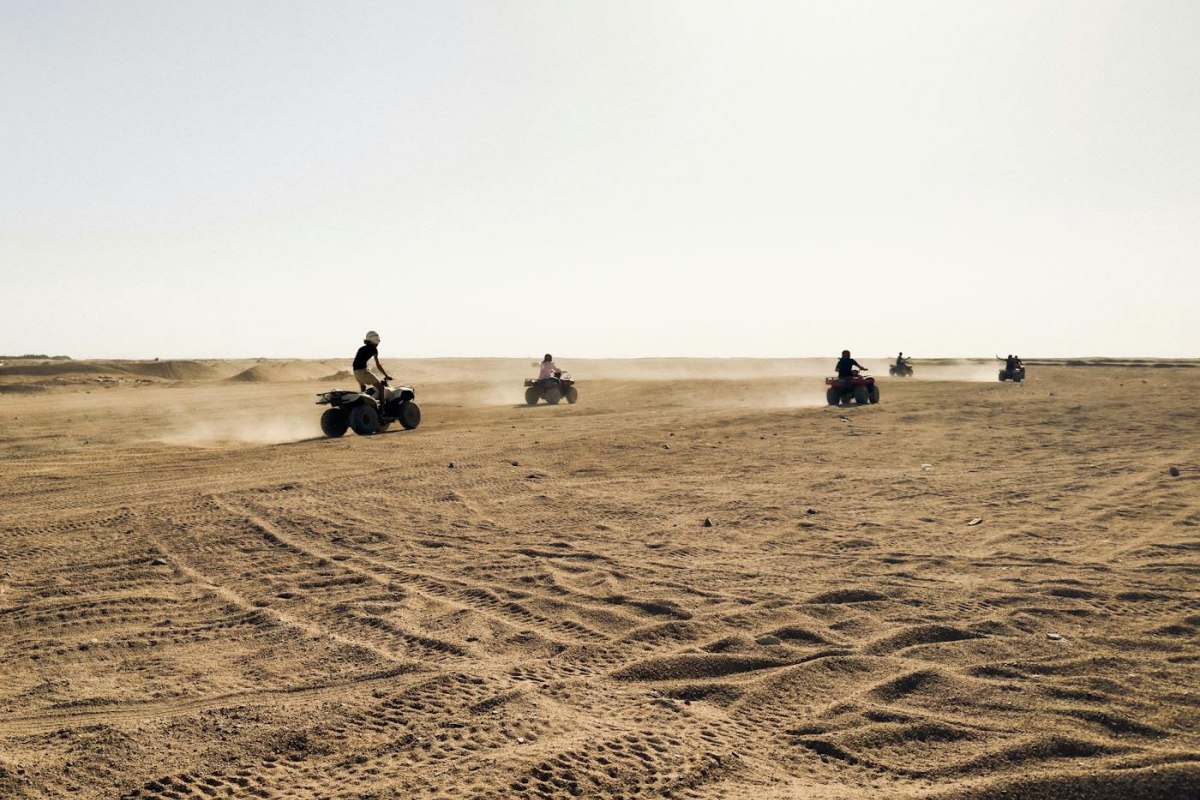
- Quad or buggy: the hands-on, drive-yourself thrill on set tracks, covered in our quad biking guide.
- Self-drive hire car: fine for the sealed roads, Betancuria and most beaches, but not for Cofete and the rough tracks. Our airport transfer guide covers car hire.
The interior tour as an alternative
Not every jeep safari heads to Cofete, and the central-and-northern route is the better choice for travellers more interested in the island’s history and villages than its wildest beach. This day weaves through the eroded interior to Betancuria, the first capital of the Canaries, with time to walk its cobbled streets and see the fifteenth-century church of Santa Maria, then climbs to the Mirador de Guise y Ayose where the giant bronze statues of the two aboriginal kings face each other across the valley. From there the route often takes in the palm-filled Vega de Rio Palmas, the craft and cheese stops where you can taste Majorero, the sacred mountain of Tindaya, and the northern volcanoes and dunes. It covers the same ground as a self-drive day but with a guide to join the dots between the geology, the aboriginal Majorero past and the island’s water-scarce farming life, which is the difference between seeing the interior and understanding it.
The protected-island rules
As across the island, jeep tours stay on authorised tracks because Fuerteventura is a UNESCO Biosphere Reserve with large protected parks where off-road driving is banned. A reputable operator runs marked routes, which keeps the fragile volcanic ground and desert plants intact. Choosing a licensed, insured operator is both the responsible and the safer choice, and it is part of what keeps places like Cofete worth visiting.
A typical Cofete day
The Cofete safari is the trip that defines the genre, and it unfolds at the pace the rough road dictates. From the resorts of the south the jeep climbs the Jandia massif on a winding unpaved track, stopping at the high pass where the wild west coast suddenly opens out below: a vast, empty beach backed by mountains, with the Atlantic rolling in unbroken from the open ocean. Down on the flat the convoy reaches Cofete itself, a scatter of houses, a tiny cemetery and the strange bulk of Villa Winter on the hillside, the house tangled up in wartime legend. Guides explain what is documented and what is myth, and there is usually time to walk the sand, though the currents make swimming dangerous. Many tours combine Cofete with a stop at the lighthouse of Punta de Jandia at the island’s south-western tip and a seafood lunch in a Cofete or Morro Jable restaurant before the slow drive back. It is a full day, and the remoteness, hours from the nearest resort on a road ordinary cars cannot take, is exactly the point.
Cofete also holds two details that a good guide will point out. Its tiny cemetery, set apart on the plain, tells the hamlet’s isolation in a single fact: before it was opened in the nineteenth century, the dead had to be tied to a dromedary and carried roughly fifty kilometres over the mountains to Pajara, the nearest town with consecrated ground, until the residents began burying their own. And for walkers, the Gran Valle trail (PR FV-55) drops over the ridge to Cofete in around two and a half hours there and back, through a valley that still holds the remains of an aboriginal settlement. The track in by vehicle runs about eighteen kilometres of dirt from Morro Jable, and the lighthouse at Punta de Jandia beyond marks the island’s southernmost point.
Costs and booking
- Shared or private: a seat in a shared convoy is the cheaper option, while a private jeep costs more but lets you set the stops and pace, better for a family or a group.
- Half or full day: interior and northern tours run as half days, while the Cofete trip is usually a full day given the distance and the slow tracks.
- Lunch: some tours include a village or Cofete lunch, others leave it free, so check before booking.
- Pick-ups: most operators collect from the main resorts, but a southern route from a northern hotel, or the reverse, adds a long road transfer, so book a tour based near your base where possible.
Practical tips for a jeep safari
- Bring sun cover and water: the stops are exposed and shadeless, so a hat, sunscreen and water matter even in winter.
- Expect a bumpy ride: the tracks are rough, so anyone prone to motion sickness should sit forward and take care.
- Pack a layer: Cofete and the high interior can be windy and cooler than the resorts.
- Check the inclusions: some tours include lunch at a Cofete or village restaurant, others do not, so confirm before booking.
- Go for Cofete specifically: if you only do one jeep trip, the Cofete and Jandia route is the one that justifies the four-wheel drive.
Frequently asked questions
Can you drive to Cofete in a normal hire car?
It is strongly discouraged and usually forbidden by hire contracts, which void your insurance on the unpaved Cofete road. A guided jeep safari or a four-wheel drive is the sensible way to reach it.
What is the best jeep safari route in Fuerteventura?
The Cofete and Jandia route is the standout, since the rough mountain track to the wild beach and Villa Winter genuinely needs a four-wheel drive. Interior tours to Betancuria and the northern volcanoes are also popular.
Are jeep safaris suitable for children?
Yes, they are the most family-friendly off-road option since you are driven rather than driving, though the tracks are bumpy and the stops exposed, so bring sun cover and water.
How long does a jeep safari last?
Most run as a half or full day. The Cofete and Jandia trip is usually a full day given the distance and the slow tracks.
Do jeep tours include lunch?
Some do, often at a Cofete or village restaurant, and some do not. Check what is included when you book.
Jeep safari or quad biking, which is better?
A jeep safari is driven, relaxed and reaches the farthest places like Cofete with commentary, which suits families and history-minded travellers. Quad biking is hands-on and exciting but stays on set tracks closer to the resorts. They answer different wants rather than competing directly.
Is the Cofete jeep trip worth it?
For most visitors, yes. It reaches the island’s wildest beach and the Villa Winter legend by a road ordinary cars cannot use, and the remoteness and scenery make it the standout off-road day on Fuerteventura.