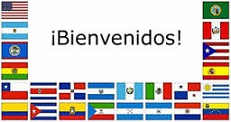
Spanish is the official or co-official language in 21 countries and one US territory, spoken as a first language by roughly 493 million people and as a first or second language by around 600 million. That makes Spanish the second-most spoken native language in the world after Mandarin Chinese, ahead of English by native speakers. The Spanish-speaking world stretches across five continents: Europe (Spain), most of Central and South America, the Caribbean (Cuba, Dominican Republic, Puerto Rico), one country in Africa (Equatorial Guinea), and a large non-official presence in the United States, the Philippines, and the Western Sahara.
This guide lists every Spanish-speaking country in the world with capital, population, and language status, groups them by region, explains where Spanish sits as an official versus widely spoken language, and covers the historical and colonial origins of the language’s spread. Practical details on dialectal differences between countries and resources for learners sit at the end.
Complete List of Spanish-Speaking Countries
The 21 sovereign states and territories where Spanish is an official language are:
| Country | Capital | Population | Region |
|---|---|---|---|
| Spain | Madrid | 48 million | Europe |
| Mexico | Mexico City | 130 million | North America |
| Guatemala | Guatemala City | 18 million | Central America |
| Honduras | Tegucigalpa | 10 million | Central America |
| El Salvador | San Salvador | 6.3 million | Central America |
| Nicaragua | Managua | 7 million | Central America |
| Costa Rica | San Jose | 5.2 million | Central America |
| Panama | Panama City | 4.5 million | Central America |
| Cuba | Havana | 11 million | Caribbean |
| Dominican Republic | Santo Domingo | 11 million | Caribbean |
| Puerto Rico | San Juan | 3.2 million | Caribbean (US territory) |
| Colombia | Bogota | 52 million | South America |
| Venezuela | Caracas | 28 million | South America |
| Ecuador | Quito | 18 million | South America |
| Peru | Lima | 34 million | South America |
| Bolivia | Sucre (constitutional), La Paz (administrative) | 12 million | South America |
| Paraguay | Asuncion | 6.8 million | South America |
| Chile | Santiago | 19 million | South America |
| Argentina | Buenos Aires | 46 million | South America |
| Uruguay | Montevideo | 3.4 million | South America |
| Equatorial Guinea | Malabo | 1.6 million | Africa |
Several countries and territories host significant Spanish-speaking populations without granting the language official status. These include the United States (41 million native Spanish speakers, more than any individual Spanish-speaking country except Mexico), the Philippines (residual colonial population), Andorra (a high share of residents), Belize (colonial neighbouring influence), Western Sahara (former Spanish territory), and parts of the southern French border.
Spain: The Origin of the Language
Spain is the European origin point of modern Spanish, though the language actually evolved from Vulgar Latin in the kingdoms of Castile, Leon, and Aragon during the early medieval period. The name Spanish comes from Castilian (castellano), the dialect of Castile that became dominant after the 13th-century reign of Alfonso X, who standardised the written language for royal administration.
Spanish today is official throughout Spain (population 48 million) but shares co-official status with three regional languages: Catalan in Catalonia and the Balearic Islands, Galician in Galicia, and Basque in the Basque Country. Approximately 75 percent of Spain’s population speaks Castilian Spanish as a first language; the remaining 25 percent includes native speakers of Catalan (7-8 million), Galician (2.5 million), and Basque (750,000) who also speak Spanish fluently.
Spain’s capital, Madrid, sits in the geographic centre of the Iberian Peninsula. Other major Spanish-speaking cities include Barcelona (bilingual Catalan-Spanish), Valencia (bilingual Valencian-Spanish), Seville, Bilbao, and Malaga. For historical context on the country’s linguistic and political development, see our historical timeline of Spain.
Mexico: The Largest Spanish-Speaking Country
Mexico holds the largest Spanish-speaking population in the world at roughly 130 million people. Spanish arrived with Spanish conquistadors after 1519, but Mexico also preserves 68 indigenous languages recognised as national languages, including Nahuatl (1.7 million speakers), Maya (860,000), and Zapotec (460,000). Spanish in Mexico shows noticeable differences from Spain: distinct vocabulary, tu versus usted usage patterns, and the absence of the European vosotros plural form.
Mexico City, the capital, holds a metropolitan population around 22 million, making it one of the largest Spanish-speaking urban areas in the world. Guadalajara, Monterrey, Puebla, and Tijuana are other major Spanish-speaking cities. Mexican Spanish has been particularly influential on United States Spanish because of geographic proximity and migration patterns over 150 years.
Central America and the Caribbean
Seven Central American countries plus three Caribbean territories speak Spanish as the official language. Geographic proximity produced a relatively unified regional Spanish with some local variations:
- Guatemala: largest Central American Spanish-speaking population (18 million). Significant Mayan indigenous language presence alongside Spanish.
- Honduras: 10 million Spanish speakers plus Garifuna and Miskito indigenous communities on the Caribbean coast
- El Salvador: smallest country in Central America but densely populated, nearly monolingually Spanish-speaking
- Nicaragua: Spanish-majority with English creole on the Caribbean coast (Miskito, Rama)
- Costa Rica: high Spanish literacy and proficiency; Costa Rican Spanish drops the “s” at the end of syllables less than most Central American varieties
- Panama: Spanish dominant with English widely used in the canal zone and business community
- Cuba: 11 million Spanish speakers, with a distinct Cuban Spanish featuring faster speech pace, loss of final “s”, and African-influenced vocabulary from the slavery era
- Dominican Republic: Dominican Spanish shares features with Cuban and Puerto Rican varieties, forming the Caribbean Spanish dialect cluster
- Puerto Rico: US territory, Spanish dominant in daily life despite English co-official status. Roughly 95 percent of the island speaks Spanish as first language.
Caribbean Spanish (Cuba, Dominican Republic, Puerto Rico) shares distinctive pronunciation: dropping the “s” at syllable ends, melting syllables together at fast speech pace, and vocabulary borrowings from West African languages via the slave trade. Cultural exports like salsa, reggaeton, bachata, and Caribbean literature have spread Caribbean Spanish into global consciousness.
South America
South America holds nine Spanish-speaking countries with a combined population of roughly 230 million. Brazilian Portuguese dominates the eastern coast, while Surinamese Dutch and Guyanese English form the northeast coastal minority. Spanish varieties across South America differ significantly:
- Colombia: 52 million speakers, known for the clearest pronunciation of standard Latin American Spanish, particularly the Bogota dialect preferred for international broadcasting
- Venezuela: 28 million speakers, Caribbean-influenced coastal Spanish plus Andean inland varieties
- Ecuador: 18 million speakers; Kichwa (Quechua) remains a co-official language with 2 million active speakers in the Andean highlands
- Peru: 34 million Spanish speakers; Quechua and Aymara are co-official languages, spoken by over 7 million indigenous people
- Bolivia: unique among Spanish-speaking countries for recognising 36 indigenous languages as co-official. Quechua (2.3 million), Aymara (1.7 million), and Guarani (60,000) are the largest.
- Paraguay: Spanish and Guarani are both official; Guarani is the dominant everyday language for roughly 90 percent of the population. Nearly all Paraguayans are bilingual.
- Chile: 19 million speakers. Chilean Spanish is famously distinct in Latin America, with fast speech, dropped consonants, and unique vocabulary.
- Argentina: 46 million speakers. Argentine Spanish (specifically the Rio de la Plata dialect centred in Buenos Aires) substitutes “sh” for “ll” and “y”, and uses vos instead of tu for informal “you”.
- Uruguay: 3.4 million speakers. Uruguayan Spanish resembles Argentine Spanish closely, given shared border and cultural connections.
Indigenous languages remain living language in five of these nine countries, producing multilingual societies quite different from Spain itself. The mixing of Spanish grammar with indigenous vocabulary produces what linguists call coexistence bilingualism, with Spanish handling government and commerce while indigenous languages hold household and cultural space.
Equatorial Guinea: Africa’s Spanish-Speaking Country
Equatorial Guinea is the only African country where Spanish holds official status, reflecting its history as a Spanish colony from 1778 to independence in 1968. The country’s 1.6 million residents distribute across the mainland (Rio Muni region) and Bioko Island (where the capital Malabo sits). Spanish competes with French (also official since 1998) and Portuguese (official since 2010) as administrative languages, alongside the widely spoken indigenous Fang, Bubi, and Annobonese languages.
Despite official status, only 13-14 percent of Equatorial Guineans speak Spanish as a first language, with Fang (65 percent) and Bubi (7 percent) dominating daily life. However, Spanish is the primary language of education, government, and media, which means most educated Equatorial Guineans speak Spanish fluently as a second language.
Spanish in the United States
The United States holds roughly 41 million native Spanish speakers, more than any Spanish-speaking country except Mexico. Spanish is not an official language at the US federal level (no federal official language exists), but states like New Mexico, Puerto Rico, and several US Virgin Island territories grant Spanish formal status. Many school systems offer bilingual Spanish-English education, especially in California, Texas, Arizona, New Mexico, and Florida.
Spanish speakers in the US divide across multiple origin communities:
- Mexican-origin (roughly 60 percent of US Spanish speakers): predominant in California, Texas, Arizona
- Puerto Rican-origin (roughly 10 percent): concentrated in New York, Florida, Puerto Rico itself
- Cuban-origin (4-5 percent): concentrated in South Florida
- Salvadoran, Guatemalan, Honduran communities: growing presence in Washington DC, Los Angeles, New York
- South American communities (Venezuelan, Colombian, Argentine): growing across Florida, New York, and the West Coast
Spanish-language media in the US includes major TV networks (Univision, Telemundo), national newspapers, and radio stations reaching most US cities. The long-term trajectory, despite some generational English shift, continues expansion because of ongoing migration and bilingual retention in immigrant families.
Historical Origins: Why Spanish Spread
Spanish’s global reach traces to Spanish colonial expansion from 1492 (Columbus’s first voyage) through the 1898 loss of Cuba, Puerto Rico, and the Philippines in the Spanish-American War. Key historical events:
- 1492: Columbus sailed from Palos de la Frontera, making landfall in the Caribbean. Same year: Castilian grammar formally codified by Antonio de Nebrija.
- 1521: Hernan Cortes conquered Tenochtitlan (modern Mexico City). Spanish became the administrative language of New Spain.
- 1533: Francisco Pizarro captured Cuzco. Spanish replaced Quechua for governance in the Andean region.
- 1565: Spanish founded Manila. The Philippines became a Spanish colony administered from Mexico City.
- 1713: Treaty of Utrecht cemented Spanish territorial control despite dynastic changes.
- 1811-1825: Latin American independence wars produced today’s Spanish-speaking countries. Spain retained only Cuba, Puerto Rico, and the Philippines.
- 1898: Spanish-American War ended Spain’s empire; the US acquired Puerto Rico, Guam, and the Philippines.
- 1936-1939: Spanish Civil War; consequences including mass emigration spread Spanish-speaking Spanish diaspora across Latin America and beyond.
The colonial administrative language became mother tongue for millions in the Americas over 300 years of Spanish rule. After independence, newly sovereign countries retained Spanish as the practical choice for government, commerce, and education across a linguistically diverse continent. For broader historical background, see our famous Spanish-speaking people guide covering influential figures across the Spanish-speaking world.
Dialectal Differences Between Spanish-Speaking Countries
Spanish remains mutually intelligible across all 21 official countries but shows significant dialectal variation:
- Peninsular Spanish (Spain): uses vosotros for plural you, distinguishes “c” and “z” (pronounced “th”) from “s”, and keeps more Arabic-origin vocabulary
- Rioplatense (Argentina, Uruguay): uses vos instead of tu, substitutes “sh” for “ll” and “y”, Italian-influenced intonation
- Andean (Peru, Bolivia, Ecuador): heavy Quechua vocabulary borrowings, slower speech pace, maintains syllable-final “s”
- Caribbean (Cuba, Dominican Republic, Puerto Rico, coastal Venezuela/Colombia): drops final “s”, rapid speech, West African-origin vocabulary
- Mexican: distinct from Central American varieties, heavy indigenous vocabulary influence (Nahuatl origins), standard for US Spanish-language media
- Chilean: famously distinct with fast speech, consonant deletion, unique slang. Chileans report that other Spanish speakers struggle to understand everyday Chilean speech.
- Central American (Guatemala, Honduras, El Salvador, Nicaragua, Costa Rica, Panama): relatively unified variety, uses voseo (vos instead of tu) inconsistently
Despite these differences, a Colombian and an Argentinian can hold a complex conversation easily. Variations are roughly comparable to British versus American English: clear regional differences in pronunciation and vocabulary, but mutual comprehension intact.
Learning Spanish: Resources and Approach
Spanish ranks among the easier languages for English speakers to learn, according to US Foreign Service Institute training time estimates of 600-750 class hours to reach professional proficiency. Key considerations for learners:
- Choose a regional focus: Spain-based courses teach Peninsular Spanish with vosotros; Latin American courses teach Latin American varieties without vosotros. Most US learners find Mexican or standard Latin American Spanish more useful.
- Grammar challenges: two forms of past tense (preterite and imperfect), subjunctive mood heavily used, gendered nouns, ser versus estar verbs
- Pronunciation is largely phonetic: spelling matches sound consistently, unlike English
- Immersion accelerates progress: many Spanish schools operate in Spain, Mexico, Guatemala, Colombia, and Argentina at affordable rates
- Free and paid apps: Duolingo, Babbel, Pimsleur, Rosetta Stone offer structured programmes
- TV and music provide immersion: Netflix’s Spanish-language catalogue, Spotify playlists, regional TV news
The main Spanish-language proficiency exam, DELE (Diplomas de Español como Lengua Extranjera), is administered by Spain’s Instituto Cervantes in six CEFR-aligned levels (A1 to C2). DELE certificates are recognised worldwide for academic and professional purposes.
Frequently Asked Questions
How many countries speak Spanish as an official language?
Twenty-one sovereign states and one US territory (Puerto Rico) have Spanish as an official or co-official language. These span Europe (Spain), North America (Mexico), Central America (6 countries), the Caribbean (Cuba, Dominican Republic, Puerto Rico), South America (9 countries), and Africa (Equatorial Guinea).
What country has the most Spanish speakers?
Mexico has the most native Spanish speakers at roughly 130 million. The United States is second at 41 million native Spanish speakers, ahead of Spain itself (48 million). Colombia, Argentina, and Peru round out the top six.
Is Spanish the most widely spoken language in the world?
Spanish is the second-most spoken native language in the world after Mandarin Chinese (1.1 billion native speakers). When counting second-language speakers, English surpasses Spanish. By official-country count, Spanish is an official language in more sovereign states than any language except English, French, and Arabic.
Is Spanish spoken in Africa?
Yes. Equatorial Guinea is the only African country where Spanish is an official language, reflecting its history as a Spanish colony from 1778 to 1968. Roughly 13-14 percent of its 1.6 million residents speak Spanish as a first language, with most educated residents speaking it fluently as a second language.
Is Spanish the same everywhere?
Spanish is mutually intelligible across all 21 Spanish-speaking countries, but varies significantly in accent, vocabulary, and grammar. Peninsular Spanish (Spain) uses vosotros; Latin American varieties do not. Argentine and Uruguayan Spanish use vos instead of tu. Caribbean Spanish drops syllable-final “s”. Chilean Spanish is famously distinct for fast speech and unique slang.
Why is Spanish so widely spoken?
Spanish’s global reach comes from Spanish colonial expansion from 1492 through the 19th century. Spain colonised most of Central and South America, Mexico, the Philippines (later lost to the US), and parts of Africa. Colonial administrative Spanish became the mother tongue of tens of millions over 300 years, and post-independence countries kept Spanish as their practical official language.
Which Spanish is best to learn?
For travel and business in Latin America, standard Latin American Spanish (often taught through Mexican or Colombian dialects) works best. For Europe-focused travel or business, Peninsular Spanish suits better. All Spanish varieties are mutually intelligible, so choice of regional focus matters less than consistent practice with quality materials.
How many people speak Spanish worldwide?
Roughly 493 million people speak Spanish as a first language. Counting second-language speakers brings the total to around 600 million. That ranks Spanish as the fourth most spoken language overall (after English, Mandarin, and Hindi) and second most spoken as a native language.
Sources and Further Reading
- Instituto Cervantes annual Spanish language report – cervantes.es
- The Story of Spanish – Jean-Benoit Nadeau and Julie Barlow, St Martin’s Press
- Ethnologue: Languages of the World, 27th edition – SIL International
- A History of the Spanish Language – Ralph Penny, Cambridge University Press
- Real Academia Española (RAE) linguistic resources – rae.es
- US Census Bureau American Community Survey language data – census.gov