The Picasso Museum Barcelona surprises most first-time visitors, because it holds almost none of the work that made Picasso famous. There is no Cubism on the scale of the Paris years, no Guernica, no late mythological nudes. What it has instead is the largest collection anywhere of the young Picasso: the teenage prodigy, the art-school exercises, the Blue Period, the years the city itself shaped. Spread across five linked medieval palaces in the Born, its 4,251 works trace how a boy from Malaga became the painter who would break Western art. This guide explains what the museum actually contains, why the building matters as much as the canvases, and how to visit without queueing.
The Picasso museum is one anchor of the wider museums in Barcelona scene, and it pairs naturally with the other big collections covered in that guide.
Five Gothic palaces, not one gallery
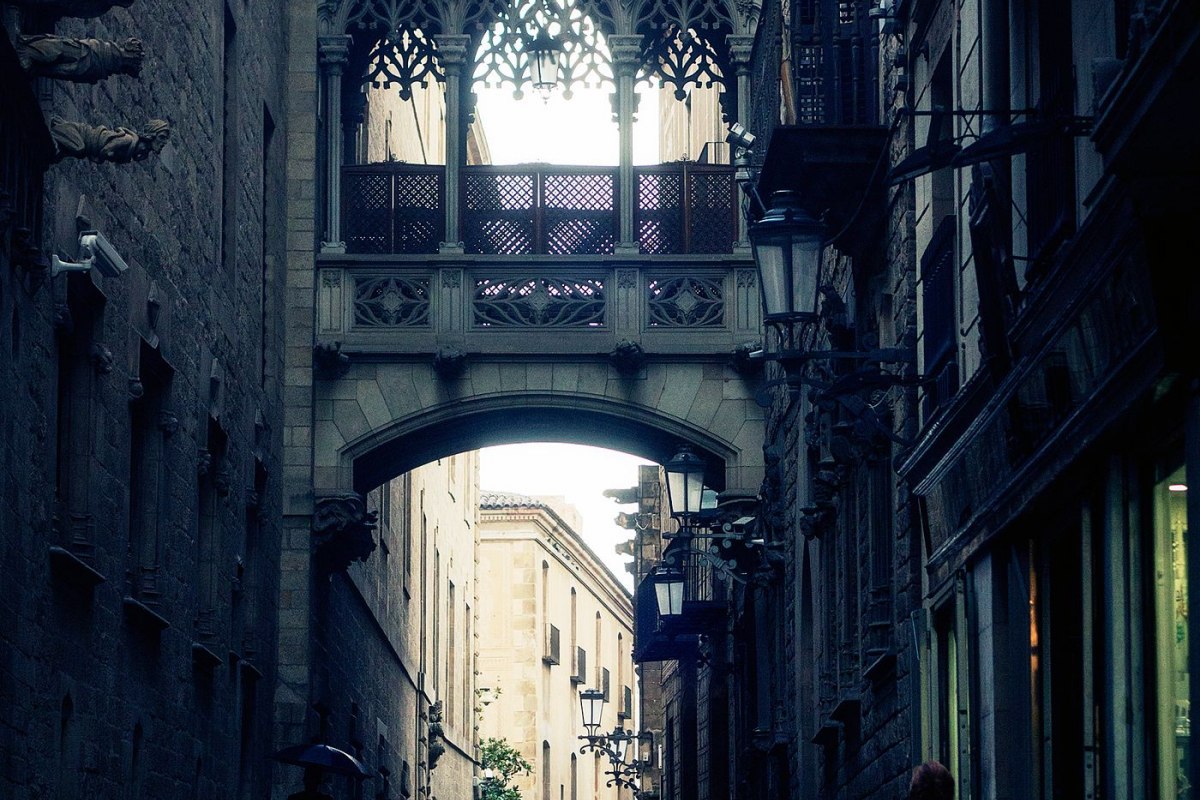
The museum is not a purpose-built block. It occupies a row of five medieval palaces on Carrer de Montcada, the street where Barcelona’s merchant families built their mansions when this was the richest quarter in the city. You move between the collection’s rooms across stone courtyards and up open external staircases, and the buildings are among the better surviving examples of Catalan civil Gothic architecture.
- Palau Aguilar opened first, in 1963, as the original museum.
- The Palau del Baró de Castellet was annexed in 1970, followed by the Palau Meca.
- A later extension brought in Casa Mauri and the Palau Finestres at the end of the century.
The effect is that you tour a fifteenth-century streetscape as much as an art collection. Allow time for the courtyards themselves, which are free to walk into from the entrance.
Carrer de Montcada is worth slowing down for in its own right. The street was the address of choice for Barcelona’s medieval merchant elite, and the same Gothic palaces that now hold the Picasso collection once stored the wealth of traders dealing across the Mediterranean. Several neighbouring mansions house other small museums and galleries, so the block rewards a wander before or after your timed entry.
What the collection actually holds
The strength of this museum is its near-complete record of Picasso’s formative years, up to and including the Blue Period. The teenage canvases are the revelation, because they show a level of academic skill most painters never reach.
- The First Communion, painted when Picasso was fourteen in 1896, was his first large public submission, accepted into a Barcelona municipal exhibition.
- Science and Charity, finished in 1897, is the showpiece: a deathbed scene of stark realism, painted at fifteen, that won an honourable mention in Madrid. His father posed as the doctor.
- The Blue Period rooms hold the melancholic, monochrome work Picasso made after the suicide of his friend Carles Casagemas, including portraits and rooftop scenes.
- A set of oils painted in Barcelona in 1917, on a visit with the Ballets Russes, marks his brief return to the city as an established artist.
Seeing the academic teenager and the experimental young master in the same building is the experience this collection offers that no other Picasso museum can.
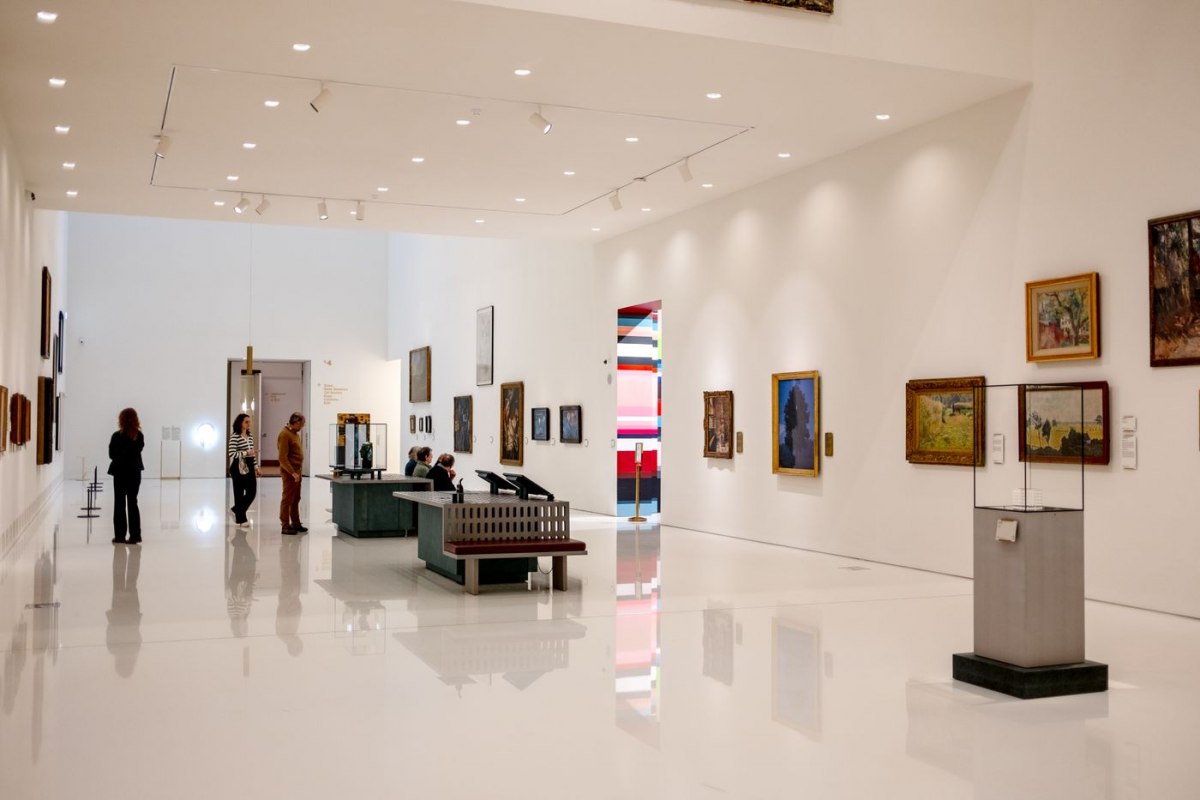
The chronological hang is the point, so resist the urge to skip ahead. The early rooms hold things most people never associate with Picasso at all: tight pencil studies of plaster casts from his art-school years, portraits of his mother and sister, careful still lifes, and the kind of competent academic painting he could have built a safe career on. Watching that control loosen, room by room, into the elongated figures and cold blues of the Casagemas aftermath is the whole drama of the visit. By the time you reach the Blue Period proper, the same hand that painted a flawless deathbed scene at fifteen is deliberately distorting bodies for feeling over accuracy.
If you are short on time: what to prioritise
The collection is large enough that a rushed visit blurs together. If you have only an hour, spend it on three things rather than trying to see everything.
- The teenage masterworks first. Stand in front of Science and Charity and The First Communion before the crowds build. These are the works that prove the prodigy, and they reward close looking at the brushwork and the staging.
- The Blue Period rooms next. This is the emotional core of the collection and the point where Picasso stops painting like everyone else.
- The Las Meninas galleries last. Leave time and energy for the 1957 series, which needs a slow walk to read as a single argument rather than a wall of variations.
Skip nothing in those three, and treat the print rooms and temporary exhibition as a bonus if your timed slot allows.
The Las Meninas series: one room you should not rush
The single most concentrated highlight is the Las Meninas series from 1957. In a few months at his home in Cannes, Picasso painted his way through Velázquez’s royal portrait again and again, dismantling it and rebuilding it in his own late style. The museum holds all fifty-eight canvases of the series, donated by Picasso himself, and shows them together in their own galleries.
It is the closest thing in any museum to watching an artist think. The variations move from near-faithful greys to bright, fractured cartoons of the same scene, and the room repays a slow, careful walk rather than a quick lap.
Beyond painting: prints and Jacqueline’s ceramics
Two further holdings round out the collection and are easy to miss if you only chase the famous canvases.
- The print collection is comprehensive, tracing Picasso’s lifelong work in engraving, etching and lithography, a side of his output that galleries elsewhere rarely show in depth.
- The ceramics, plates and vessels he made in the south of France, came to the museum through a donation by Jacqueline Roque, Picasso’s second wife, after his death.
What the museum does not have, and where to see it
Setting expectations early saves disappointment. This collection is built around the start of Picasso’s career, so the work that fills art-history textbooks is mostly elsewhere.
- No Cubism on the grand scale. The breakthrough Cubist canvases of the Paris years are held mainly in Paris and New York, not here.
- No Guernica. The 1937 anti-war mural hangs in the Reina Sofia in Madrid, and there is no version of it in Barcelona.
- Little late work. The mythological and erotic painting of Picasso’s final decades is concentrated in the Musee Picasso in Paris and in Antibes.
The trade-off is the point. What Barcelona owns, and no other museum can match, is the near-complete record of how the artist was formed. Read in that light, the gaps become the reason to visit rather than a shortfall.
How Picasso and Barcelona shaped each other
The museum exists in Barcelona, rather than Malaga or Paris, for a reason. Picasso moved here with his family in 1895, as a young teenager, when his father took a teaching post at the city’s La Llotja art school. He trained at La Llotja, took a studio of his own, and fell in with the bohemian crowd at the tavern Els Quatre Gats, where he held his first exhibition in 1900.
The museum itself was the idea of Jaume Sabartés, Picasso’s close friend and personal secretary, who donated his own holdings to found it in 1963. After Sabartés died in 1968, Picasso responded by giving the Las Meninas series and other major works directly to the city. It opened as the first museum dedicated to his work, and the only one created in his lifetime.
Planning your visit
The Picasso museum draws long queues, so timing and booking matter more here than at most Barcelona collections.
- Price: around €15 for the permanent collection, or about €19 for a combined ticket that adds the temporary exhibition. Under-18s enter free.
- Hours: open Tuesday to Sunday, roughly 9:00 to 19:00, with a late Thursday until about 21:30. Closed Mondays.
- Free entry: the first Sunday of every month, all day, plus a Thursday late-afternoon window in the winter timetable. Free slots are capped and must be reserved online.
- Booking: reserve a timed slot in advance, especially in summer and on free days, when the standard line stretches down Carrer de Montcada. The fast-track value of the Articket pass is highest here.
For where the Articket pays off and how the city’s free-entry calendar works, see the full museums in Barcelona guide. If you are deciding between collections, the contemporary MACBA sits on the other side of the old town, and both fit inside a wider trip planned through the things to do in Barcelona guide.
Best time to visit and avoiding the crowds
This is one of the busiest museums in the city, and the experience changes sharply with timing. A packed Las Meninas room is a poor place to study fifty-eight subtle variations.
- Go at opening or late. The first hour after the doors open and the last ninety minutes before closing are the calmest. The Thursday late evening, when the museum stays open after most others have shut, is the single best window.
- Avoid free days if you want quiet. The first Sunday of the month is free, which makes it the most crowded day of all. Pay on a weekday if your priority is space to look, not the saving.
- Skip mid-morning. Tour groups and cruise-ship parties peak between about 11:00 and 13:00, when the entrance queue on Carrer de Montcada is at its longest.
- Spring and autumn over summer. July and August bring the heaviest tourist numbers; the shoulder seasons are noticeably easier inside.
Frequently asked questions
Is the Picasso Museum Barcelona worth visiting?
Yes, with one expectation set correctly: this is the museum of the young Picasso, strongest on his formative years and the Blue Period rather than his famous Cubist and later work. For the teenage masterpieces, the complete Las Meninas series and the medieval buildings, it rewards a careful visit.
How long do you need at the Picasso Museum?
Allow at least two hours. The chronological collection rewards a slow start, and the Las Meninas galleries deserve unhurried time. Add the temporary exhibition and the courtyards, and a half-day is easy to fill.
Do you need to book Picasso Museum tickets in advance?
Strongly recommended. Timed slots sell out in peak season and on free days, and booking ahead skips the long entry queue on Carrer de Montcada.
When is the Picasso Museum free?
Entry is free on the first Sunday of every month, all day, and on Thursday late afternoons in the winter timetable. Both require an advance online reservation, since free tickets are limited.
Is the Picasso Museum included in the Articket?
Yes. The Articket BCN covers the Picasso museum along with five other art museums and adds fast-track entry, which is most useful here given the queues. It pays off once you plan to see three or more of the six.
Where is the Picasso Museum and how do you reach it?
The museum is on Carrer de Montcada in the Born, in the old town. The nearest metro stops are Jaume I on the yellow line and Barcelona’s Arc de Triomf, both a short walk away. The street is pedestrian and narrow, so look for the queue and the palace doorways rather than a large modern entrance.
Picasso or Miró, which museum should you choose?
Choose Picasso for the building and the formative-years story across five Gothic palaces. Choose the Miró foundation for a brighter, faster visit in a sunlit building designed for the art. First-time visitors usually pick Picasso.
Sources
- Museu Picasso de Barcelona – collection highlights, the five palaces, museum history and visiting information
- Ajuntament de Barcelona – municipal museum network and free-entry calendar
- ArticketBCN – participating museums and pass conditions