The currency of Switzerland is the Swiss franc, coded CHF by the ISO and written with the symbol “Fr.” or “SFr.” in most retail contexts. Swiss currency sits outside the eurozone because Switzerland declined EU membership; the Swiss National Bank (SNB, Schweizerische Nationalbank) issues the franc and anchors monetary policy from Zurich and Bern. Money in Switzerland is used across all four language regions – German-speaking cantons call the sub-unit the Rappen, French-speaking cantons call it the centime, Italian-speaking cantons call it the centesimo, and Romansh-speaking areas call it the rap – but every banknote and coin is the same franc regardless of which city or region you visit. The question “what currency is used in Switzerland” or “what money does Switzerland use” always returns the single answer: the Swiss franc. Even in Zurich, Geneva, Basel, Lausanne, Lugano, Bern, or any small mountain village, the monetary unit of Switzerland remains the franc – the euro is accepted in some tourist shops but always at an unfavourable rate.
Swiss Franc Basics: Denominations, Symbols, Codes
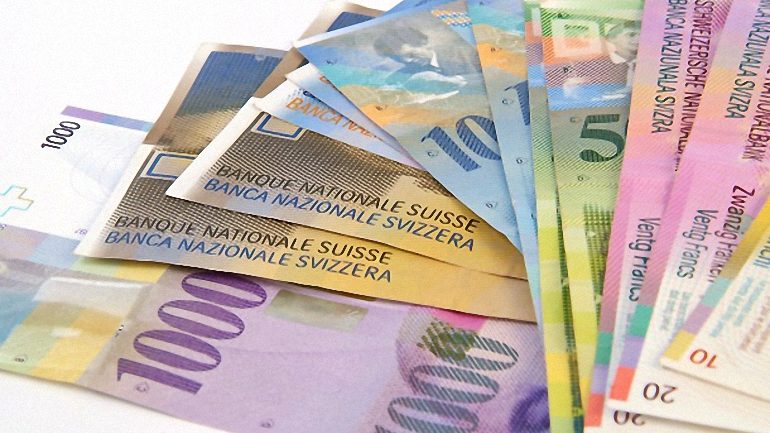
Coins come in denominations of 5, 10, 20, and 50 centimes (or Rappen), and 1, 2, and 5 francs. The 5-centime coin is the smallest in general circulation. Banknotes are issued in 10, 20, 50, 100, 200, and 1000 francs. The 1000-franc note is the highest-denomination widely accepted note in any major currency, reflecting Switzerland’s historical comfort with cash transactions and private wealth storage. The current banknote series, introduced between 2016 and 2019, is vertical in orientation and features themes like “time”, “light”, “wind”, “water”, “matter”, and “language” rather than portraits of historical figures – a departure from European convention.
Useful identification codes for Swiss currency:
- ISO 4217 code: CHF (Confoederatio Helvetica Franc). Used by banks, exchange boards, airlines, and travel booking systems.
- Symbol: Fr. or SFr. in everyday Swiss use; CHF internationally; the Unicode character ₣ is rare.
- Issuing authority: Swiss National Bank (SNB). Head offices in Zurich and Bern.
- Sub-unit: 1 Swiss franc = 100 centimes (Rappen in German, centime in French, centesimo in Italian).
- Also legal tender: Liechtenstein (by agreement with Switzerland). The Liechtenstein franc exists only as commemorative coinage.
One curiosity about the question “what currency is used in Zurich Switzerland” versus other Swiss cities: the answer is identical everywhere. Unlike some federations with regional currencies, Switzerland uses a single national currency with no cantonal variants. The only regional difference is the name of the sub-unit in the local language.
Currency Stability and the Franc as a Safe Haven
Switzerland’s currency holds a reputation as among the most stable in the world, and the Swiss franc is often classified as a “safe haven” asset along with the US dollar and the Japanese yen. During periods of global financial stress – the 2008 banking crisis, the 2011 European sovereign debt crisis, the 2022 inflation surge – investors move into the franc because of the Swiss banking system, low inflation, political neutrality, and strong current-account surpluses.
The Swiss National Bank, founded in 1907 as part of the broader federal consolidation covered in our historical timeline of Switzerland, has occasionally intervened to weaken the franc when excessive appreciation threatened Swiss exporters. The most dramatic episode was the 2011 to 2015 floor at 1.20 francs per euro, imposed by the SNB to prevent further franc strengthening during the eurozone crisis. When the SNB abandoned the floor on 15 January 2015, the franc appreciated by roughly 30% against the euro within minutes, triggering losses at several currency brokerage firms around the world. Since then the franc has floated freely with periodic but less dramatic SNB intervention.
Long-term exchange rates for reference purposes (approximate, subject to daily movement):
- 1 CHF to EUR: roughly 1.02 to 1.08 euros
- 1 CHF to USD: roughly 1.05 to 1.15 US dollars
- 1 CHF to GBP: roughly 0.85 to 0.95 British pounds
- 1 USD to CHF: roughly 0.87 to 0.95 francs
- 1 EUR to CHF: roughly 0.93 to 0.98 francs
Check live rates at xe.com, wise.com, or the Swiss National Bank website before converting significant amounts. For day-to-day travel purchases, the rate fluctuates by fractions of a percent per day and does not change the practical cost of meals, transport, or accommodation.
Getting Swiss Francs: Airports, ATMs, Banks, Exchange
Visitors rarely need to bring francs in cash. Almost every shop, restaurant, hotel, public transport ticket machine, and museum in Zurich, Geneva, Basel, Bern, and other cities accepts contactless card payments. For the small share of transactions that still need cash (some taxi rides, mountain refuges, rural kiosks, tips), an ATM withdrawal on arrival covers the trip.
Cash options:
- ATMs (Bancomat in German, Bancomat or Distributeur in French, Bancomat in Italian): Available at every airport, every SBB train station, most banks, and most shopping streets. Accept Visa, Mastercard, Maestro, Plus, Cirrus, and usually UnionPay. Fees depend on your home bank, but ATM operators themselves rarely charge Swiss customers and foreign users often pay 1 to 3 CHF plus home-bank fees per withdrawal.
- Bank counters: UBS, Credit Suisse (now part of UBS), Raiffeisen, Zurcher Kantonalbank, and smaller cantonal banks will exchange major currencies during business hours (typically 08:30-16:30, closed weekends). Rates are close to interbank but commission fees apply for non-customers.
- SBB train station exchange counters (SBB Change): Open longer hours than banks (often 07:00-20:00), no commission, and rates close to bank rates. The most convenient option for arriving travellers. Present at Zurich HB, Geneva CFF, Basel SBB, Bern, Lausanne, Lucerne, Lugano, and other major stations.
- Airport exchange desks: Present at Zurich, Geneva, Basel, and Bern-Belp airports. Convenient but typically the worst rates in the country, with spreads of 3-6% from interbank.
- Hotel desks: Change small amounts with spreads of 5-10%, used only as a last resort.
Travel cards like Wise, Revolut, and Monzo give near-interbank rates when spending or withdrawing in francs. Withdrawing roughly 300 to 500 francs in cash on arrival covers most travellers for a week.
Cards, Contactless, and Mobile Payments in Switzerland
Card penetration in Switzerland is high. Visa, Mastercard, and Maestro work almost universally. American Express is accepted at most hotels and larger restaurants but declined at smaller cafes and most supermarkets. Discover and Diners Club are rare. Contactless (paywave, tap-to-pay) works on virtually every card terminal in the country; the ceiling for PIN-free contactless payments is typically 80 francs.
TWINT is the dominant domestic mobile payment system, comparable to Swish in Sweden or Vipps in Norway. It is linked to Swiss bank accounts and used for peer-to-peer transfers, restaurant bills, farmer-market stalls, and parking meters. Foreign visitors cannot usually register a TWINT account without a Swiss bank account, but Apple Pay and Google Pay work everywhere a contactless card works, which covers virtually every retail context in the country.
A couple of practical notes for card users:
- Always select “charge in local currency” (CHF) rather than “dynamic currency conversion” when prompted at card terminals – dynamic conversion typically costs 3-8% extra.
- Some train ticket machines and automated parking meters still require coins in addition to cards; keep 5 or 10 francs in coins for these edge cases.
- Self-service checkouts at Coop and Migros accept cards and TWINT but usually not cash in all denominations.
- Tipping culture relies on small amounts left in cash or rounded up on the card terminal; 5-10% is generous and service is included in most restaurant bills by default. Our Swiss food guide covers the dining context in more depth, including which categories of establishment expect tipping and which build service into the menu price.
Cash Culture and Banking Privacy
Switzerland retains among the most cash-friendly cultures in Western Europe, alongside Austria and Germany. The 1000-franc banknote exists in circulation partly because large-denomination notes are used for legal high-value transactions – real estate deposits, used car purchases, antique sales – in a way unthinkable in most other countries. Swiss law permits cash payments up to 100,000 francs for a single transaction before anti-money-laundering reporting requirements kick in, a threshold far higher than the 10,000 to 15,000 euro limits typical in neighbouring EU countries.
The historical reputation of Swiss banking privacy has been substantially reduced since 2009, when Switzerland began dismantling banking secrecy for foreign residents under pressure from the United States and OECD. The country now participates in automatic exchange of information (AEOI) with over 100 partner jurisdictions, and Swiss banks report foreign-resident account balances to those jurisdictions’ tax authorities annually. Banking privacy for Swiss residents within Switzerland still exists but is not the same as the pre-2009 situation.
For travellers, none of this changes practical money handling. The currency for Switzerland remains the franc; cards, cash, and TWINT cover all practical transactions; and large withdrawals or exchanges require standard identification documents rather than exceptional paperwork.
Costs and Budget Expectations in Switzerland
Switzerland ranks among the most expensive countries in Europe. Typical prices to plan a budget around:
- Coffee in a cafe: 4.50 to 6.50 CHF
- Lunch at a casual restaurant: 20 to 30 CHF
- Dinner at a mid-range restaurant: 40 to 80 CHF per person without wine
- Supermarket bottle of water (1.5 L): 0.70 to 1.50 CHF at Coop, Migros, Denner, Aldi, or Lidl
- Half-day Zurich, Geneva, or Basel public transport ticket: 4.60 to 8.80 CHF depending on zones
- Museum admission (adult): 15 to 30 CHF for major museums; many public museums are free on the first Sunday of the month
- Hostel bed: 40 to 70 CHF per night in Zurich or Geneva
- Mid-range hotel room: 180 to 300 CHF per night for a double
- Swiss Travel Pass: 244 CHF for 3 days, up to 439 CHF for 15 days (unlimited SBB trains, buses, boats, most museums)
The broader facts about Switzerland page includes more background on the economic context that produces these prices – high wages, strict quality standards, and a strong currency that raises import costs.
Money Tips for Visitors from Specific Countries
Visitors from different home countries face slightly different friction when using money in Switzerland. Key points:
- From the eurozone: Euro is accepted in tourist shops and some hotels but always at a rate 2-8% worse than the official exchange. Pay in francs by card or cash.
- From the UK: Many UK debit cards charge 2-3% foreign transaction fees; Monzo, Starling, Revolut, and Wise avoid this. Check before the trip.
- From the US: Most US credit cards charge 2-3% foreign transaction fees unless you carry a travel card (Chase Sapphire, Capital One Venture). ATM withdrawal is usually cheaper than carrying cash from the US.
- From Asia-Pacific: UnionPay works at major ATMs but not all; Visa or Mastercard is more reliable. JCB is accepted at larger hotels but not supermarkets.
- From India, Africa, Middle East: Carry a reserve in cash (US dollars or euros) for emergencies; foreign ATM cards sometimes hit daily withdrawal limits lower than expected.
Language varies by region but money handling procedures are the same nationwide. Our guide to languages in Switzerland covers the multilingual context that affects the names for centimes across the country.
Frequently Asked Questions
What currency is used in Switzerland?
Switzerland uses the Swiss franc, coded CHF. The franc is issued by the Swiss National Bank and is legal tender in both Switzerland and Liechtenstein. The euro is accepted in some tourist shops and hotels but not universally, and always at an unfavourable exchange rate compared with paying in francs.
What money do they use in Switzerland?
The money used in Switzerland is the Swiss franc. Banknotes come in 10, 20, 50, 100, 200, and 1000 francs. Coins come in 5, 10, 20, and 50 centimes and 1, 2, and 5 francs. The sub-unit is called the Rappen in German-speaking Switzerland, centime in French-speaking Switzerland, and centesimo in Italian-speaking Switzerland.
What currency is used in Zurich Switzerland?
Zurich uses the Swiss franc, like the rest of Switzerland. There is no cantonal currency variation. A franc in Zurich equals a franc in Geneva, Lugano, Bern, or any small mountain village. Zurich is the headquarters of the Swiss National Bank and the largest banking centre in the country.
Can I use euros in Switzerland?
Some larger tourist shops, hotels, and restaurants in Zurich, Geneva, Basel, and major resorts accept euros, but change is usually given in francs and the exchange rate applied is 3-8% worse than the official rate. Smaller shops, rural areas, and public transport generally decline euros. Plan to use francs or card for the whole trip.
What is the monetary unit of Switzerland?
The monetary unit of Switzerland is the Swiss franc, divided into 100 centimes. The ISO code is CHF, from Confoederatio Helvetica Franc – Confoederatio Helvetica being the Latin name for the Swiss Confederation, used on coins and stamps to avoid favouring one of the four official languages.
Is Switzerland a cash or card country?
Switzerland is well adapted to card payments – contactless Visa, Mastercard, and Maestro work almost everywhere, and the domestic TWINT mobile system covers nearly all remaining gaps for Swiss residents. Cash still plays a role in rural areas, mountain refuges, some taxis, small kiosks, and high-value private transactions. Carry 100-300 francs in cash as a buffer and use cards for the rest.
How much cash should I bring to Switzerland?
For a week-long trip covering major cities, most visitors spend 200-400 francs in cash and the rest on cards. For hiking or rural travel, plan 400-600 francs in cash to cover mountain refuges, small inns, and village shops that may not accept cards. ATMs are widely available at airports and stations, so last-minute cash top-ups are easy.
Sources and Further Reading
- Swiss National Bank – snb.ch
- Swiss Bankers Association – swissbanking.ch
- Swiss Federal Statistical Office – consumer prices – bfs.admin.ch
- ISO 4217 currency codes – iso.org
- Federal Department of Finance – efd.admin.ch