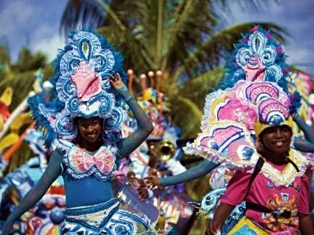
Junkanoo in Nassau begins in the dark. Some time after two in the morning on Boxing Day, a whistle cuts across Bay Street, the first cowbell answers, and a wall of goatskin drums pushes a thousand costumed dancers into the road. The parade runs until well past sunrise, and for many Bahamians it matters more than Christmas Day itself. This guide covers how the rush actually works, how to get a seat, who the competing groups are, and how to catch the spirit of it even on a cruise day in June.
Junkanoo is the national festival of the Bahamas, a competitive street parade with deep African roots that locals prepare for almost the entire year. Nassau hosts the largest version of it, and understanding the contest behind the colour is what separates a confused tourist in the crowd from someone who knows why the judges are watching every cowbell line.
How to See Junkanoo on Bay Street
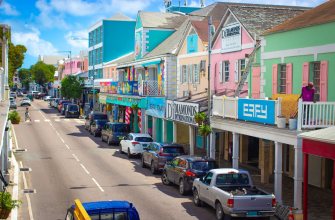
The parade route runs the length of Bay Street through downtown Nassau, with the judging grandstand at Rawson Square. You can stand free along the edges of the route, but the crowd is deep, the good kerb spots fill before midnight, and you will spend hours on your feet in the dark. Most visitors who want to see the costumes properly buy a bleacher seat.
- Where the seats are: tiered bleachers line both sides of Bay Street, with the most expensive and most contested seats in the grandstand at Rawson Square, directly in front of the judges, where every group performs at full effort.
- How to buy: tickets are sold ahead of each parade through the official Junkanoo ticketing channel and, in recent seasons, the ALIV Events app. They go on sale in early December and the front rows sell out within days.
- What to expect to pay: a bleacher seat runs roughly fifty to a hundred and fifty US dollars depending on how close to Rawson Square you sit. The Bahamian and US dollar trade at par, so pricing is simple for American visitors.
- Timing: the Boxing Day parade and the New Year parade both start in the small hours, between two and three in the morning, and run until eight or later. Arrive before the start, because once a group is rushing past your block you will not move.
If you are in port on a cruise and the dates do not line up, do not assume Junkanoo is off the table. The year-round options at the end of this guide let you see the costumes and hear the drums without staying up until dawn on the twenty-sixth of December.
The Rush, From the Small Hours to Sunrise
The word locals use for the parade is the rush, and it describes the movement exactly. A group does not stroll. It advances in a tight block, the dancers leaning into a shuffling, driving step while the brass and drums hold a relentless tempo, and the whole formation surges forward together as it passes the grandstand.
Each major group takes the better part of an hour to pass, and several groups parade in sequence, which is why the contest stretches across the whole night. Between the lead costumes come the dancers, then the cowbell ringers, then the drum line and the brass, each section drilled to hit the judging point as a unit. Boxing Day and New Year are scored as two separate parades, and the overall season title rewards the group that performs best across both nights.
The Groups and How the Judges Score Them
Junkanoo is a competition first and a party second. The big Nassau groups field organised ensembles of up to a thousand people and rehearse for months. The names to know on the front line are the established powerhouses.
- The Valley Boys: one of the oldest and most decorated groups, long associated with the late leader Gus Cooper.
- The Saxons Superstars: the Valley Boys’ great rivals, built around the family of the late Percy “Vola” Francis, and a regular winner.
- One Family, Roots and the Music Makers: the other large groups that fight for the podium, each with its own colour scheme and following.
Judges score each group across set categories rather than on a single impression. The marks are split between music, costume, choreography and dance, and theme and overall presentation, with cash prizes attached to the top placements. A group can carry the most spectacular lead costume on the street and still lose if its drum line drifts or its dancers break formation in front of the grandstand.
Below the major “A” groups parade the smaller scrap groups, looser bands of friends and neighbourhoods who rush for the love of it rather than the prize money. They give the parade its grassroots edge and are often where future “A” group leaders learn the craft.
Inside the Shack: How a Costume Is Built
The costumes that look like floating sculpture are made by hand over many months in workshops the groups call shacks. The process is closely guarded, because a group’s theme is kept secret until the costumes hit Bay Street and surprise is part of the score.
- The skeleton: a frame of cardboard and wire is cut and bent into the shape of the design, from headpieces to the towering lead pieces that need several people to carry.
- The pasting: thousands of strips of fringed crepe paper are pasted onto the frame one row at a time, overlapping like feathers, which is the slow handwork that fills the shacks through the autumn.
- The finish: modern costumes add contoured cardboard, foam, fabric, beads and rhinestones, and the largest pieces carry moving parts and three-dimensional scenes that fit the year’s theme.
A single large group can put a thousand costumed people on the street, from small back-line pieces to lead costumes that stand taller than the dancers wearing them. All of it is built to last one night of hard rushing.
The Sound of Junkanoo
The music is the engine of the rush, and it is built from a small set of instruments played at full force. The core is the goombay drum, a goatskin head stretched over a frame and tuned by holding it close to an open fire until the skin tightens to the right pitch. Around that beat sit the rest of the line.
- Cowbells: rung in a fast, locked pattern that carries the rhythm over the crowd.
- Brass: trumpets, trombones and tubas that took over the melody as the festival modernised.
- Whistles and scrapers: the high cutting layer that drives the dancers, with metal scrapers adding the rasp.
- Conch-shell horns: the deep blown note of the sea snail’s shell, a sound that ties the music straight back to the islands.
Junkanoo’s drum-and-brass sound is not the same as rake-and-scrape, the older Family Island music made with a saw played with a screwdriver, a goombay drum and an accordion. Rake-and-scrape is for dancing the heel-and-toe in a hall. Junkanoo is for marching ten thousand people up a street before dawn.
Where Junkanoo Comes From
The festival grew out of the days when enslaved Africans on the islands were given a short break around Christmas, often three days, and used the time to gather, drum, dance and parade in masks that hid their faces from the plantation order. The masking and the rhythms trace back to West African secret-society and harvest traditions, and close cousins of Junkanoo survive in Jamaica, Belize and the old plantation coast of North Carolina under the related name Jonkonnu.
Even the name is contested. One account ties it to John Canoe, a West African leader remembered for defying the English, while another reads it from the French gens inconnus, the unknown people, a nod to the masks. After fading and reviving over the decades, the parade was brought back to Bay Street as an organised event in 1948, and the modern competition between the big groups grew from there.
Seeing Junkanoo Year-Round
You do not have to be in Nassau on Boxing Day to meet Junkanoo. Several options run through the calendar, which makes the festival reachable for cruise passengers and summer visitors.
- The Educulture Junkanoo Museum: a small museum on West Street in downtown Nassau, beside the National Art Gallery, created by Arlene Nash Ferguson, who rushed from the age of four and sat on the national Junkanoo committee for more than two decades. Visitors try on real costume pieces, learn the drum patterns and hear the story from someone who lived it.
- The Atlantis Rush Out: the resort on Paradise Island stages a weekly Junkanoo rush on Friday evenings, a short live taste of the music and costumes that is easy to reach on a port day.
- Junkanoo Summer Festival: a series of summer events, with rushes around Bahamian Independence in July, that brings the parade out in daylight and warmer evenings.
For the wider picture of a day ashore, see our guide to things to do in Nassau on a cruise day, how to reach the cultural sites on the cheap local jitney buses, and where to swim afterwards at the free public beaches near town.
A History of Bans and Revival
Junkanoo survived attempts to stamp it out. After emancipation the colonial authorities saw the masked street crowds as a threat to order, and a Street Nuisance Act passed in 1899 was used to restrict the parades, which Bahamians defied and kept alive.
The sharpest break came in the 1940s. During the unrest around the Burma Road Riot the government banned large gatherings, and Junkanoo went quiet for several years. It was brought back to Bay Street on New Year’s morning in 1948, a revival led by the businessman A B Malcolm, remembered as Mr Junkanoo, with the backing of the Tribune newspaper. Organised, judged competition followed within a few years, with documented Boxing Day contests from the mid-1950s, and the modern festival of rival themed groups grew from there.
The Great Groups and Their Rivalry
The heart of modern Junkanoo is the rivalry between a handful of big groups, each with its own history and following.
- The Valley Boys: founded in 1958 by Winston “Gus” Cooper and a group of friends from the Centreville area, named for the valley between the hills, and winners of their first Boxing Day title in 1960 with a Scottish Highlanders theme.
- The Saxons Superstars: the Valley Boys’ fiercest rivals, built around the family of Percy “Vola” Francis and a fixture of the contest for decades.
- One Family: formed when a group broke away from the Saxons in 1993, with the architect and artist Jackson Burnside among its leading figures, seeking creative independence.
- The rest of the field: groups such as Roots, the Prodigal Sons, Genesis, the Z-Bandits and the Fancy Dancers fill out the A and B divisions, the smaller B groups feeding talent up to the giants.
How the Costumes Evolved
The look of Junkanoo has changed completely over a century, and the materials tell the story.
- The early days: in the 1920s costumes were trimmed with strips of natural sponge, the islands’ main export at the time.
- The shift to paper: by the 1930s makers were fringing costumes with shredded newspaper, then with bright crepe paper, which became the signature surface still pasted on today.
- The cardboard frame: from the 1940s the groups built their pieces on cut and contoured cardboard, which let the costumes grow into the towering sculptures of the modern parade.
- Theme secrecy: each group guards its yearly theme until the costumes hit Bay Street, because surprise is part of the score, so the shacks work behind closed doors all autumn.
Who Runs Junkanoo
For years the parades were organised by a National Junkanoo Committee under the Ministry of Tourism, which set the rules, ran the judging and handed out the prize money. The prizes themselves, and complaints about late payment, have been a recurring source of friction between the groups and the organisers.
To put the festival on a firmer footing, the government has advanced a National Junkanoo Authority Bill to create a permanent statutory board, a seventeen-member body, to take over the prizes, the funds and the running of the parades from the older ad-hoc committee. The aim is a stable, independent home for what is, after all, the national festival.
Frequently Asked Questions
When is Junkanoo in Nassau?
The two main parades fall in the early morning of Boxing Day, the twenty-sixth of December, and New Year’s Day. Both start between two and three in the morning and run past sunrise. Smaller rushes and a Junkanoo Summer Festival happen at other points in the year, including around Bahamian Independence in July.
Do I need a ticket to watch Junkanoo?
You can stand free along Bay Street, but the crowd is deep and arrives early. A bleacher seat gives a clear, elevated view, and seats in the Rawson Square grandstand face the judges where the groups perform hardest. Tickets sell from early December and the best rows go quickly.
How much does a Junkanoo bleacher seat cost?
Bleacher tickets run roughly fifty to a hundred and fifty US dollars, with the grandstand seats at Rawson Square at the top of that range. The Bahamian dollar is pegged to the US dollar, so prices are the same in either currency.
What are the main Junkanoo groups?
The leading Nassau groups are the Valley Boys, the Saxons Superstars, One Family, Roots and the Music Makers. They are the large “A” groups that compete for the major prizes, while smaller scrap groups parade for the love of it.
Can I see Junkanoo if I visit outside the holidays?
Yes. The Educulture Junkanoo Museum on West Street runs costume and drumming experiences year-round, Atlantis holds a weekly Friday rush out, and the Junkanoo Summer Festival brings parades to the warmer months, so cruise and summer visitors can still experience it.
Sources and Further Reading
- Bahamas Ministry of Tourism – the official festival page for dates, history and how visitors can take part
- Government of the Bahamas – the official cultural overview of Junkanoo and the National Junkanoo Committee
- Educulture Junkanoo Museum – the downtown Nassau museum founded by Arlene Nash Ferguson
- Atlantis Paradise Island – the resort’s weekly Junkanoo rush out on Paradise Island