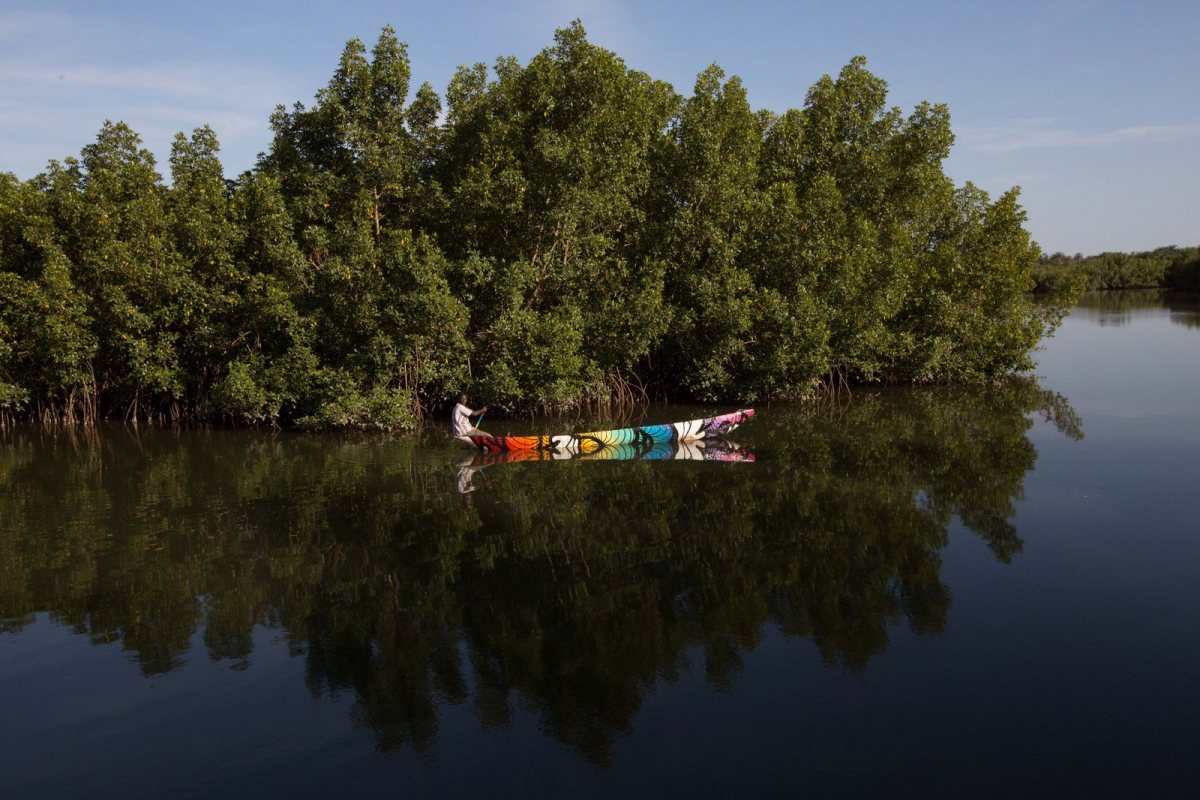
Kayaking in Nassau is less about open water than about slipping into the mangrove creeks, where a quiet paddle drifts over the nursery that feeds the whole reef. The best paddling on New Providence is at Bonefish Pond National Park, a protected belt of red mangroves on the south shore that most cruise visitors never hear about. This guide covers where to kayak around Nassau, what lives in the mangroves, the calm and rough seasons, and how to paddle with the island’s conservation rules in mind.
Nassau is a built-up island, so its wild paddling sits in the pockets of protected coast that survived development. Knowing which ones are worth the trip, and why the mangroves matter, turns a kayak hire into something closer to a wildlife trip.
Bonefish Pond National Park
The standout paddle on New Providence is Bonefish Pond National Park, a wetland covering roughly twelve hundred acres on the island’s southern shore, managed by the Bahamas National Trust. Marked kayak trails wind through tunnels of red mangrove into open tidal ponds, and the water is shallow, sheltered and calm, which suits beginners and families.
The park is a working nursery rather than scenery. The tangled mangrove roots shelter young fish before they move out to the reef, and a slow paddle here is a look into the engine room of the Bahamian fishery.
- What it protects: the park was set aside to safeguard a key nursery for queen conch, spiny lobster and reef fish, the same species that end up on the Bahamian table.
- The mangrove trail: narrow channels open into wider lagoons, so you paddle from shaded root tunnels into bright shallow flats and back.
- Restoration: replanting of red mangroves has gone on here after earlier losses, part of the Trust’s work to rebuild the wetland.
What Lives in the Mangroves
The reason to paddle slowly is the life packed into the shallows. The mangrove roots act as a sheltered crib for animals that would be eaten in the open, and a careful kayaker spots a surprising amount from the seat.
- Juvenile fish: young snapper, barracuda, needlefish and bonefish hang in the root shade, the next generation of the reef.
- Lemon sharks: the mangrove creeks are a known nursery for lemon shark pups, which spend their early years in the safety of the roots.
- Rays and turtles: southern stingrays and the occasional green turtle work the sandy flats between the mangrove stands.
- Upside-down jellyfish: the strange Cassiopea jellyfish lies bell-down on the shallow bottom, pulsing gently, common in warm mangrove ponds.
- Wading birds: herons, egrets and shorebirds feed along the channel edges, so the paddle doubles as a birdwatch.
Why the Mangroves Matter
The case for protecting a place like Bonefish Pond goes beyond the wildlife you see from the kayak. Mangroves do several jobs at once for a low-lying island like New Providence, and losing them carries a real cost.
- A storm buffer: the dense root walls absorb wave energy and slow storm surge, shielding the coast behind them during the hurricanes that cross the Bahamas.
- A fishery nursery: the conch, lobster and snapper that grow up in the roots feed both the reef and the Bahamian table, so a healthy creek today means catch tomorrow.
- A carbon store: mangrove mud locks away large amounts of carbon, which is why their loss matters far beyond the shoreline.
Nassau has cleared much of its original mangrove for development over the decades, which is what makes the surviving wetland at Bonefish Pond worth both the paddle and the protection.
Other Places to Paddle
Beyond Bonefish Pond, a few other stretches of coast suit a kayak, depending on what you want from the day.
- Clifton Heritage National Park: the protected western headland has sheltered coves and reef-fringed shallows, paired with hiking trails and snorkelling, so a paddle can be one part of a half-day there.
- Resort and beach hire: the calmer bays off Cable Beach and Paradise Island rent sit-on-top kayaks by the hour for a short, easy paddle close to shore.
- Guided eco-tours: operators run guided mangrove kayak trips that include the paddle, the wildlife and the conservation story, which is the easiest way to reach Bonefish Pond without your own transport.
The Best Season for Kayaking
Nassau’s weather splits into two paddling seasons, and the difference matters more for a kayak than for a boat trip.
- November to April: the drier, cooler season, with steadier trade winds and calmer mornings, the better window for a comfortable paddle, especially for beginners.
- May to October: hotter and wetter, with afternoon storms and rougher water on exposed coast, though the sheltered mangrove ponds of Bonefish Pond stay paddleable when open water is choppy.
- Time of day: mornings are calmest year-round, before the sea breeze builds, so an early start gives the flattest water and the best wildlife.
Planning a Mangrove Kayak Trip
Bonefish Pond sits on the south side of the island, away from the cruise terminal and the resort strip, so reaching it takes a little planning. The payoff is water most visitors never see.
- Getting there: the park is a taxi ride from downtown Nassau on fixed zone fares, or a cheaper run on the local buses, though services to the south shore are thinner than to the beaches.
- Guided or independent: a guided eco-tour is the simplest option, since it bundles the transfer, the kayak and a guide who reads the channels and finds the wildlife. Independent paddlers need their own kayak and a way to launch.
- Tides: the mangrove channels drain and fill with the tide, so a rising or high tide gives the most water to paddle through, while a low tide can leave the inner flats too shallow.
- What to bring: sun cover, water, a dry bag for a phone or camera, and shoes you can get wet, because the bottom is soft mud and seagrass rather than sand.
A morning trip on a rising tide, with a guide, is the combination that turns Bonefish Pond from a quiet paddle into a proper wildlife outing.
Paddling Responsibly in a Protected Wetland
Bonefish Pond is a national park, and the mangroves are fragile, so a few habits keep the place intact for the animals that depend on it.
- Stay on the open channels: avoid forcing a kayak through living mangrove roots, which snap and take years to regrow.
- Keep your distance from wildlife: watch the lemon shark pups and rays without chasing or feeding them.
- Take nothing: no shells, no live conch, no fishing inside the park boundary.
- Carry out your litter: plastic is deadly in a nursery this small, so leave with everything you brought.
For more of the island’s water, see our guide to snorkelling sites around Nassau and the wider things to do in Nassau on a port day, and to reach the parks on the cheap, our guide to Nassau jitney routes.
Frequently Asked Questions
Where can you kayak in Nassau?
The best paddling is at Bonefish Pond National Park on the south shore, a protected mangrove wetland with marked kayak trails managed by the Bahamas National Trust. Clifton Heritage National Park on the west coast and the calm bays off Cable Beach and Paradise Island also offer easier shore-side paddling.
What will you see kayaking the Nassau mangroves?
The mangrove creeks are a nursery, so you see juvenile snapper, barracuda and bonefish in the roots, lemon shark pups, southern stingrays, upside-down jellyfish on the bottom and wading birds along the channels. It is a wildlife paddle rather than a workout.
Is kayaking in Nassau good for beginners?
Yes. The sheltered mangrove channels at Bonefish Pond and the calm resort bays are shallow and protected from swell, which makes them well suited to first-timers and families, especially on a calm morning.
When is the best time to kayak in Nassau?
November to April is the drier, calmer season and the most comfortable for paddling. Mornings are flattest year-round before the sea breeze builds, and the sheltered mangrove ponds stay paddleable even when open water turns choppy.
Do you need a guide to kayak Bonefish Pond?
You do not need a guide if you have your own kayak and transport, but a guided eco-tour is the easiest way to reach the south-shore park, and a guide reads the tidal channels and finds the lemon shark pups and rays you might otherwise paddle straight past. For a first visit, the guided option is the better value.
Sources and Further Reading
- Bahamas National Trust – the body that manages Bonefish Pond and the national parks of New Providence
- Bahamas Ministry of Tourism – the official guide to kayaking and water activities across the islands
- Nassau Paradise Island – the official destination guide to nature and water activities on New Providence