The character a Chinese parent picks for a son is the same kind of two-week project as for a daughter, but the radical pool tilts differently. Boys’ names cluster around grand-scale nature, scholarly virtue, ambition, and historical figures borrowed by 字 (courtesy name) reference. The 2024 birth registries from Public Security Bureaus in Nantong, Sichuan, and Chongqing share the wider 沐 / 泽 / 辰 wave with girls’ names, but the male top picks read 沐辰, 浩宇, 瑞泽, 星辰, where each second character anchors a different masculine register: cosmos, prosperity, brightness, starlight. This guide names the male characters, where the literate ones come from, and how the male side of the registry is moving in the current cohort.
Most pages on Chinese boy names list 50 to 200 entries with a sentence per name. That format ignores the operational layer behind the picks. Globerove maps the working pool: characters by virtue cluster, the Tang and Song poetry-sourced names that educated families still use, the Republican-era pseudonyms that 古风 parents now mine, the rare male hanzi approved for registration, and the male 五行 cure radicals. For the structural backbone (xing/ming, 八字 mechanics, 字辈 generational poems, 三才五格 stroke math), see the Chinese baby names hub. For sister content on female naming traditions, see girls’ names with classical poetry citations.
How Chinese Boys’ Names Work: Structure and Modern Length
A Chinese boy carries a one-character surname (姓 xìng) inherited from the father plus a one or two-character given name (名 míng) chosen by parents. Two-character given names dominate at over three-quarters of male registrations in the 2010s and 2020s, the same rate as for girls. The combinatorial reason is plain: about 5,000 active surnames across 1.4 billion citizens force families toward two characters in the given name to avoid duplicate-full-name overload.
Single-character given names persist among Han clans with strong genealogical traditions, especially in Hakka, Fujianese, and Cantonese-speaking lineages where a 字辈 (zìbèi) generational poem dictates the second character so a one-character given name reads cleaner. The full system of 字辈 and the canonical Zhang-family case is covered in the naming hub; this page leaves the mechanics there and focuses on the male character pool.
Boys historically carried more layered name forms than girls because educated men picked up a 字 (zì, courtesy name) at age 20, often a 号 (hào, literary sobriquet), and sometimes a posthumous name from the imperial registry. Wikipedia’s Chinese courtesy name article notes that direct use of a peer’s given name was considered disrespectful among educated men; the 字 was the working public name during Tang-Ming literary life. The 1949 reforms removed 字 from official registry, but the names of canonical men of letters still circulate as the source pool that modern parents draw from.
Names from Strength and Resilience
Strength characters anchor the most stable layer of the male pool. The semantic field reads as physical or moral fortitude, with character choices tracking the family’s preferred register from raw force to disciplined courage.
- 勇 yǒng – brave, courageous. Top male characters of the 1980s reform era; still active in compounds like 勇浩, 勇刚.
- 刚 gāng – hard, firm. The metallurgical sense of “tempered steel” carries over to character. Common compounds: 志刚 (resolute and firm), 国刚 (national firmness).
- 毅 yì – determined, resolute. Stronger register than 勇; appears in 毅然 (resolutely) as an adverbial root. 毅 reads as a quiet kind of toughness, not a brash one.
- 虎 hǔ – tiger. Used directly in given names like 虎子 (Hǔzi) or in compounds 伯虎 (eldest tiger, the 字 of Ming painter Tang Yin).
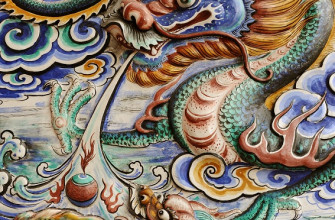
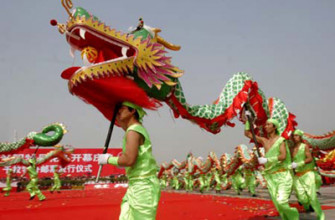
- 龙 lóng – dragon. The most prestigious creature in the Chinese mythological hierarchy; given to boys born in dragon years (2024 was the most recent) at peak rates.
- 军 jūn – army. Reform-era 1980s favorite; now feels generational and rare in 2024 registries.
- 翔 xiáng – to soar. Compound 翱翔 (āoxiáng) means soaring flight; given to boys whose families want ambition without aggression.
- 锐 ruì – sharp, keen. Metal-radical character, doubles as 五行 cure for 缺金 charts.
Names That Express Wisdom and Scholarship
The Confucian tradition built a male vocabulary around mental sharpness, learning, and literary achievement. Britannica’s Confucianism entry treats 智 (zhì, wisdom) as one of the five primary virtues alongside 仁义礼信; parents who name a son with this register signal an educated household.
智 (zhì) sits at the center of the cluster as the wisdom-virtue itself. 睿 (ruì, far-seeing, sage) reads as a higher-status synonym, registered at lower volume but treated as a literary upgrade. 哲 (zhé, philosophical, sage-like) shows up in compounds like 思哲 (Sīzhé, contemplating wisdom).
The scholar-track characters add another layer. 文 (wén, literature, refined) is the foundational cultural-capital character; it appears in over a thousand of the most-registered male compounds across the past century. 博 (bó, broad, learned) has the same root as 博士 (bóshì, doctor degree). 学 (xué, learn) reads as plainer and more modern, common in 1980s-1990s name pools. 翰 (hàn, writing brush, scholar’s pen) is the literary-flagship rare character, used in compounds like 翰林 (hànlín, the imperial Hanlin Academy).
The character 弘 (hóng, vast, expansive) carries Buddhist as well as Confucian weight; the monk Master Hongyi (弘一法师, 1880-1942) is the most cited modern bearer, and parents who pick 弘 often mean the disciplined-mind sense rather than raw breadth.
Names from Nature and Cosmos: Sun, Mountain, Sky
Where girls’ nature names cluster around flowers, jade, and intimate-scale beauty, boys’ nature names tilt to grand-scale terrain and cosmic imagery. The aesthetic logic comes from classical landscape painting (山水画 shānshuǐ huà), where the human figure is small against mountain and water. A son receives a name that places him in that scale.
- 浩 hào – vast, expansive. The dominant 2024 male compound character, paired in 浩宇 (vast universe), 浩然 (vast and upright), 浩辰 (vast stellar). Top boys’ name in Sichuan 2024 was 浩宇.
- 宇 yǔ – universe, cosmos. Carries the 宀 (mián) roof radical, originally meaning “eaves of a house”; the cosmic sense developed in classical philosophy.
- 辰 chén – stellar body, the fifth earthly branch in the 八字 system. Compound 沐辰 (bathed in starlight) was Nantong’s 2024 #1 male name.
- 海 hǎi – sea. Less common as a single character, more common in 海涛 (sea wave), 海林 (sea forest).
- 山 shān – mountain. Often paired in 嵩山 (Songshan) styled compounds.
- 嵩 sōng – lofty mountain, specifically the central peak of the Five Sacred Mountains. Doubles as 五行 cure for 缺土.
- 旭 xù – rising sun. 缺火 cure character; reads as “morning energy.”
- 晨 chén – morning, dawn. Compound 晨曦 (chénxī, morning light).
- 晟 shèng – bright, flourishing. Less common alone, frequent in 永晟 (forever bright).
- 渊 yuān – deep abyss, profundity. Compound 渊博 (yuānbó, profound and broad), used as a name to suggest depth of character.
The cosmic register reaches its high point in 浩宇, 沐辰, 星辰 (Xīngchén, stellar morning), and 璟泽 (Jǐngzé, jade luster and marsh). Modern Chinese parents who pick from this pool are signaling a son framed against terrain rather than guild or dynasty.
Names from Tang and Song Classical Poetry
Tang dynasty (618-907) and Song dynasty (960-1279) poetry supply the literary high-status pool of male names. A name drawn from a recognized poet’s 字 or a quoted line carries the same class-coded credential signal that 诗经 names carry for daughters. The mechanism is older than the poem: educated families pass the reference recognition through the household, and children read the source line at school, generating a quiet exchange that no Western-style baby-name list can reproduce.
| Name | Pinyin | Bearer / source | Origin | Translation |
|---|---|---|---|---|
| 太白 | Tàibái | Li Bai, courtesy name | Li Bai 701-762, Tang poet | Great White; the planet Venus, named for the white-robed sage in his mother’s dream. |
| 子美 | Zǐměi | Du Fu, courtesy name | Du Fu 712-770, Tang poet | Beautiful son; a self-effacing scholar-courtesy in classical style. |
| 子瞻 | Zǐzhān | Su Shi, courtesy name | Su Shi 1037-1101, Song poet and statesman | Looking forward; from the verb 瞻 meaning to gaze ahead. |
| 摩诘 | Mójié | Wang Wei, courtesy name | Wang Wei 701-761, Tang poet-painter | Buddhist transliteration of Vimalakirti, the householder-sage of the sutra. |
| 牧之 | Mùzhī | Du Mu, courtesy name | Du Mu 803-852, late Tang poet | Tending; from 牧 meaning to herd or shepherd. |
| 浩然 | Hàorán | Meng Haoran’s given name | Meng Haoran 689-740, Tang poet | Vast and upright, a phrase from Mencius 浩然之气, the moral energy that fills heaven and earth. |
| 子建 | Zǐjiàn | Cao Zhi, courtesy name | Cao Zhi 192-232, Three Kingdoms poet | Established son; carrier of the Seven Steps Poem legend. |
| 伯虎 | Bóhǔ | Tang Yin, courtesy name | Tang Yin 1470-1524, Ming painter and poet | Eldest tiger; Tang Yin was born in a Year of the Tiger and was the eldest son. |
A parent who picks 浩然 today is borrowing two layers at once: the Tang poet Meng Haoran and the Mencian moral-energy concept that informed the poet’s pen-name in the first place. A parent who picks 子瞻 is borrowing Su Shi’s 字 directly and the painter-statesman archetype it carries. The reference depth is what separates these from generic auspicious-meaning names; a 子瞻 in a kindergarten roster reads as quietly cultured, where a Western-formatted “Hao” reads as flat romanization.
Modern Naming Trends 2024: What Chinese Parents Pick for Boys
Public Security Bureau registries in major Chinese cities released 2024 newborn name reports each January 2025. Across Nantong (Jiangsu), Chongqing, Sichuan, and Huai’an, the male top pick rotated to a small cluster of names anchored by water radicals (氵), stellar/cosmic characters, and prosperity radicals (王 jade, 钅 metal, 氵 water).
The Nantong 2024 report from the city’s Public Security Bureau put 沐辰 (Mùchén) at first place for boys after two consecutive years at second. Seven of the top twenty male given names in Nantong contained the character 沐, and the cohort 沐辰 / 沐恒 / 沐宸 / 沐凡 spread across the boys top ten. Sichuan named 浩宇 (Hàoyǔ) as boys top after consecutive years on the throne. Chongqing’s 2024 report put 瑞泽 (Ruìzé) at first for boys, followed by 星辰 (Xīngchén), 璟泽 (Jǐngzé), 沐辰, and 奕辰 (Yìchén) in the top five. Huai’an in Jiangsu showed 瑞泽 at first, with the name appearing in roughly 8 of every 1,000 newborn boys recorded.
The naming logic the 2024 wave reveals:
- 沐辰 (bathed in starlight) – water radical 沐 satisfies 缺水 charts, stellar 辰 connects to 八字 earthly branches, the visual pair reads balanced on smartphone keyboards.
- 浩宇 (vast universe) – 浩 carries water radical and Mencian moral weight, 宇 supplies cosmic register.
- 瑞泽 (auspicious marsh) – 瑞 means lucky omen, 泽 carries water radical and a Confucian moral charge from the Shijing.
- 星辰 (star and stellar body) – dual cosmic compound, no overlap with girls’ name pools.
- 奕辰 (luminous stellar) – 奕 means bright and grand; the compound reads as elevated and unsaturated.
Decade-by-decade waves on the male side compress into a tighter sequence than girls because boys carry more of the state-ideology imprint per cohort:
- 1949-1965 – 建国 (jiànguó, build the country), 援朝 (yuáncháo, aid Korea), 卫东 (wèidōng, defend the East). Direct political naming.
- 1980s – 军 (army), 勇 (brave), 伟 (great), 强 (strong). Reform-era ambition with kept martial undertone.
- 1990s-2000s – 张伟, 王勇, 李强. Plain, two-syllable, registry-saturating.
- 2010s – 子轩, 子涵, 浩轩, 子豪. Drama-driven 古风 lite; 子-prefix saturation by 2018.
- 2024 – 沐辰, 浩宇, 瑞泽, 星辰. Cosmic + water-radical convergence.
The 古风 (gǔfēng, ancient style) anti-trend pushes parents away from 子轩 saturation toward names with classical pedigree: 浩然, 子瞻, 翰林, 砚秋. These names carry references that competitor SERP-leader sites do not surface, and they let parents flag a son’s literacy before the child can spell.
Republican-era Literary Men’s Names
The years between 1911 and 1949 produced a cohort of educated men whose pen names, courtesy names, and pseudonyms still circulate as the primary 古风 name source for sons today. The format combined a registry given name, a 字 chosen at age 20, a 号 literary sobriquet, and often a Western pen-name layer for international reach. The system died after 1949 when the Communist marriage law and the simplified character reform of 1956 flattened naming.
Lu Xun, the writer whose lifespan ran from 1881 to 1936 and who founded modern Chinese fiction with the story 狂人日记 (A Madman’s Diary), wrote under a pseudonym. His registry name was 周樹人 (Zhōu Shùrén). Wikipedia’s Lu Xun entry traces 樹人 to a phrase about cultivating an educated person; the family chose the second character at the same time the elder Zhou took the first. 樹人 still reads as a class-coded name today.
Lao She, born 舒慶春 (Shū Qìngchūn) in Beijing in 1899 and active until his death in 1966, took his pen name from the syllable 舒 in his surname plus 老 (“old”); the result reads as a literary nickname of an elder brother. Mao Dun, registry name 沈雁冰 (Shěn Yànbīng) and active 1896 to 1981, picked the pseudonym 茅盾 (“contradiction”) to mark his political position.
Ba Jin, born 李堯棠 (Lǐ Yáotáng) in Chengdu in 1904 and active until 2005, built his pen name from the Chinese transliterations of Bakunin (巴枯宁 Bākūníng) and Kropotkin (克鲁泡特金 Kèlǔpàotèjīn) – first character of one anarchist plus last character of the other. Wen Yiduo, born in 1899 and active until his assassination in 1946, carried the registry name 闻一多 (Wén Yīduō) where 一 and 多 read as a Yijing-philosophical pair, “the One and the Many.”
Cai Yuanpei, born in 1868 and the founding chancellor of Peking University until his death in 1940, registered under 蔡元培 (Cài Yuánpéi) where 元 means “primal” and 培 means “to cultivate.” Qian Zhongshu, born in 1910 and the author of the satirical novel 圍城 (Fortress Besieged) until his death in 1998, carried 钱钟书 (Qián Zhōngshū) where 钟 means “to favor” and 书 means “books”; his courtesy name was 默存 (Mòcún, “preserved in silence”).
What survives from the Republican era is the lexicon: 樹, 默, 存, 元, 培, 钟, 一, 多, 雁, 冰. 古风 parents who want a son to read as cultured-without-display draw from this pool with confidence that few peer families will hit the same combinations.
Rare and Strong Characters in Boys’ Names
Mainland Chinese name registration runs against the Common Standard Chinese Character List of 8,105 hanzi; anything outside the list gets rejected by the Ministry of Public Security 户口 system. The table below pulls from the registry-approved subset, with each character verified as registerable in 2024 birth records and chosen for male semantic register.
| Character | Pinyin | Meaning | Note |
|---|---|---|---|
| 翊 | yì | To assist, to support | Bird radical 羽; reads as a quiet helper-virtue. Used in 翊辰 (Yìchén) compounds. |
| 珩 | héng | Jade ornament for a belt | Refined Han-classical character; appears in Tang and Song poetry as a symbol of high office. |
| 璟 | jǐng | Jade luster, sparkle | Top three rare male characters in Chongqing 2024 registries. |
| 麟 | lín | Qilin, the Chinese mythical beast | From the Shijing tradition; signals Confucian high virtue. |
| 翰 | hàn | Writing brush, scholar’s pen | 翰林 (Hanlin Academy) compound is the imperial-era flagship use. |
| 骁 | xiāo | Brave, valiant | Horse radical 马; reads as cavalry-courage register. |
| 骏 | jùn | Handsome horse, fine steed | Compound 骏马 means thoroughbred; transferred sense to a high-quality young man. |
| 砚 | yàn | Ink stone | Scholar’s tool; 砚秋 (Yànqiū, ink stone autumn) is a Beijing opera master’s name. |
| 弘 | hóng | Vast, expansive | Buddhist and Confucian dual register; Master Hongyi 弘一法师 is the canonical bearer. |
| 翀 | chōng | Bird soaring upward | Almost dormant since Tang; revived by 古风 parents post-2018. |
| 玺 | xǐ | Imperial seal | Carries weight of state authority; rare and high-register. |
| 觉 | jué | To awaken, to perceive | Buddhist context; 觉慧 (Juéhuì, awaken to wisdom) appears in Ba Jin’s Family novel. |
| 钰 | yù | Treasure, precious metal | Metal radical, doubles as 缺金 cure character. |
Picking a rare character has the same operational cost on the male side as on the female side. Bank tellers, airline systems, and digital identity infrastructure sometimes display rare hanzi as placeholder boxes, and the family explains the name at every official touchpoint. Parents who choose this pool accept the friction in exchange for a name that no other classmate will share.
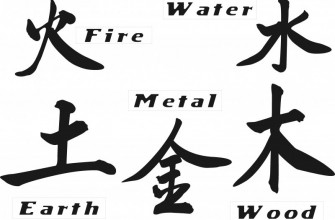
Five Elements (五行) for Boys: Male Cure Radicals
The 八字 (bāzì) chart and the 五行 elemental cure logic operate the same way for boys as for girls; the underlying mechanics live on the naming hub. What differs is the cure character pool – the male side tilts toward grand-scale, action-leaning, or virtue-coded characters within each element. Date conversion for the chart relies on the Chinese lunar calendar and the year animal feeds in through the Chinese zodiac system.
| Deficient element | Radical | Male cure characters |
|---|---|---|
| 缺水 (water) | 氵 / 水 | 浩 hào, 涛 tāo, 渊 yuān, 滨 bīn, 泽 zé, 沂 yí, 江 jiāng, 海 hǎi, 沐 mù |
| 缺火 (fire) | 火 / 日 | 烨 yè, 旭 xù, 暲 zhāng, 灿 càn, 焕 huàn, 昕 xīn, 晟 shèng, 熙 xī |
| 缺木 (wood) | 木 / 艹 | 楷 kǎi, 楚 chǔ, 桓 huán, 樾 yuè, 槐 huái, 杰 jié, 林 lín, 栋 dòng |
| 缺金 (metal) | 钅 / 金 | 锐 ruì, 铎 duó, 锋 fēng, 钧 jūn, 钊 zhāo, 鑫 xīn, 钰 yù, 铭 míng |
| 缺土 (earth) | 土 / 山 | 坤 kūn, 嵩 sōng, 垒 lěi, 圣 shèng, 城 chéng, 垚 yáo, 培 péi, 圻 qí |
The 三才五格 stroke numerology applies equally to boys, with the difference that a small subset of the 81-number lucky table reads more strongly for sons. Numbers like 3, 7, 11, 13, 21, 23, 31, 33, and 41 carry favorable readings that consultants often flag for boys; numbers like 4, 9, 19, and 28 warn for both sexes. The full grid math is on the naming hub; parents who run a paid 起名 (qǐmíng) consultation receive a shortlist that has already passed the male-leaning grid filter.
A worked example: a son born on a 缺水 chart in a Sichuan family that wants a 古风 name with cosmic register might receive 浩辰 (Hàochén, vast stellar). 浩 supplies the water radical for the 缺水 cure, 辰 supplies the cosmic register and an 八字 earthly-branch reference, and the combined Kangxi stroke total of 17 hits a male-favorable 三才 grid. The choice satisfies three layers – 五行, classical poetry, modern aesthetic – in a single move.
Choosing a Name for a Son: What Chinese Parents Consider
Selecting a son’s name traditionally carried succession weight that daughters’ names did not. A boy’s name announced the family’s place in the patrilineal genealogy, the parents’ aspiration for the son’s career, and in clan-strong regions the generational position dictated by the 字辈 poem. The succession framing has thinned in mainland urban families since the one-child policy era, but it remains active in rural Fujian, Guangdong, and Hunan and across overseas Chinese communities.
The modern process runs through five filters. Tonal flow is tested by speaking the full surname plus given name aloud as if calling the boy across a courtyard. Visual balance is checked by writing the candidate by hand and inspecting stroke density across surname and given name. Semantic depth is verified against the 康熙字典 entry for each character. A 八字 reading is run if the family takes that seriously, identifying the deficient element and pulling the radical pool from the table above. The MPS 重名查询 (chóngmíng cháxún) duplicate-check service is queried to filter out saturated combinations; homophone pitfalls are caught at the family-discussion stage.
Paternal grandparents on the male side hold a quiet veto in most southern Chinese families. A new mother in Guangzhou or Hong Kong will often submit a shortlist of two or three boys’ names to the elder generation before the 出生证明 (chūshēng zhèngmíng, birth certificate) is filed. The negotiation produces the visible compromise pattern: an elder-approved first character paired with a parent-approved second.
For surname history that shapes the visual and tonal logic of the boys’ name pairing, see the most common Chinese surnames. Some families also weight the name against Chinese family symbols already carried in household decorations or genealogical records, especially for the second character in clans where a dragon, phoenix, or fish marker has been passed through the lineage.
Frequently Asked Questions
What are the most popular Chinese boys’ names in 2024?
The 2024 top picks across regional Public Security Bureau reports are 沐辰 (Mùchén, Nantong #1), 浩宇 (Hàoyǔ, Sichuan #1), 瑞泽 (Ruìzé, Chongqing and Huai’an top), 星辰 (Xīngchén, top five Chongqing), and 奕辰 (Yìchén, top five Chongqing). All five share the cosmic-water-radical aesthetic that replaced the 子轩 / 子涵 saturation of the 2010s.
What does 沐辰 mean and why did it become so popular?
沐辰 reads as “bathed in starlight” or “bathed in stellar energy.” 沐 (mù) means “to bathe” or “to be washed by” and carries a poetic association with morning dew and ritual cleansing; the water radical 氵 satisfies 五行 cures for water-deficient charts. 辰 (chén) is the fifth earthly branch in the 八字 system, also meaning a stellar body or the time period 7-9 AM. The name climbed from second to first place in Nantong 2024, and seven of the top twenty male given names in Nantong contained the character 沐.
How do Chinese parents choose a name for their son?
The standard sequence: read the surname plus candidate given name aloud to test tonal flow, write the candidate by hand to check stroke balance, look up classical and modern meanings of each candidate character, run a 八字 reading to identify a 五行 deficient element, calculate 三才五格 grid totals against the 81-number lucky table, query the MPS 重名查询 service to check duplication, and submit two or three finalists to the paternal grandparents for sign-off. For the full system mechanics see the naming hub.
What is the difference between traditional and modern Chinese boys’ names?
Traditional male names emphasized succession, virtue, and the 字辈 generational character imposed by the family poem. Modern names since 2000 prioritize aesthetic and individual character traits, with a shift away from state-ideology compounds (建国, 援朝) toward cosmic and water-radical compounds (浩辰, 沐宸). The 古风 (ancient style) counter-trend since 2018 brings classical-source names like 浩然, 子瞻, and 翰林 back into urban use.
Can a foreign boy be given a Chinese name?
Yes. The process follows the same character-selection logic Chinese parents use. A non-Chinese family or adult picks a one-character surname (often a sound or semantic match to the original) and a one or two-character given name from the registry-approved subset. The 八字 layer is optional for foreigners; many skip it and select by sound and meaning. Behind the Name and Wikipedia’s Chinese given name article list registerable characters with verified etymologies. The chosen name is used in business, study, and social contexts but does not replace the legal Western name on a passport.
What does 浩 mean in boys’ names and why is it so common?
浩 (hào) means “vast, expansive, great in scale.” The character carries a water radical 氵 that satisfies 五行 cures for 缺水 charts, and the Mencian phrase 浩然之气 (vast flowing moral energy) gives it a Confucian backing. 浩 reads as both a 五行 cure and a virtue-character, which is why it appears in the 2024 top male picks across multiple regions in compounds like 浩宇, 浩辰, and 浩然.
Sources and Further Reading
- Britannica – Du Fu (the Tang poet whose courtesy name 子美 anchors the literary-source pool for boys)
- Britannica – Li Bai (Tang poet, courtesy name 太白, source of one of the canonical literary boys’ names)
- Britannica – Su Shi (Song-era poet and statesman whose courtesy name 子瞻 still circulates in 古风 boys’ name picks)
- Wikipedia – Lu Xun (Republican-era writer whose registry name 周樹人 illustrates the cultivation-coded male naming pool)
- Wikipedia – Chinese courtesy name (字) (the male coming-of-age second-name system that fed Tang-Song-Ming literary culture)
- Guangming Daily – 2024 regional newborn name reports (Sichuan 浩宇, Huai’an 瑞泽, the 沐 and 泽 radical wave)