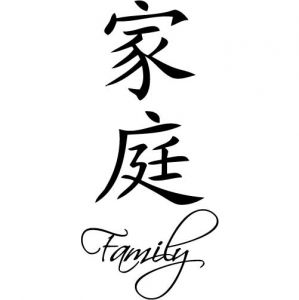
The Chinese character for family is 家 (jiā). The shape combines a roof radical above and a pig below, a composition that freezes three thousand years of agrarian history into fourteen brush strokes: a household that owns livestock under its own roof is a stable family. The character has barely changed since the Shang dynasty oracle bone inscriptions of roughly 1200 BCE, and it reads the same in simplified script used on the mainland, traditional script used in Taiwan and Hong Kong, and the Japanese and Korean writing systems that absorbed it.
This guide covers the main Chinese family symbols, what each character means and how it is used, the visual logic of the 家 composition, related characters for happiness, filial piety, and unity, and how Chinese families use these symbols in home decor, wedding ceremonies, tattoos, and ancestor veneration.
家 (Jiā): The Character for Family and Home
家 is the single most common character used to mean family in Chinese. It carries meanings across a range from the literal physical house to the abstract concept of lineage. The same character appears in:
- 家 (jiā) alone means home or family. 我的家 (wǒ de jiā) translates as “my family” or “my home”.
- 家人 (jiārén) means family members specifically, with the 人 (rén) for “person” added.
- 家庭 (jiātíng) refers to the family unit as a social institution, used in legal and academic contexts.
- 家族 (jiāzú) means extended family, clan, or lineage across generations.
- 国家 (guójiā) combines the characters for country (国) and family (家) to mean nation, showing how deeply the family model shapes Chinese political thought.
The character’s internal structure is readable to anyone who studies the radical system. The top part (宀) is the roof radical, which appears in many characters for buildings and shelter (室 room, 宫 palace, 守 guard). The bottom part (豕) is an older character for pig or boar. The visual logic is specific to Chinese agrarian society: a household with pigs under the same roof as people was a self-sufficient unit, capable of feeding itself through the winter. The symbol fossilises that economic reality.
Modern Chinese urban life has little to do with pigs under roofs, but 家 carries the feeling of food, safety, and family precisely because the original composition pointed to all three. This is why Chinese people often describe the character as “warm” even when they cannot consciously decode the pig radical.
Double Happiness: 囍 (Shuāngxǐ)
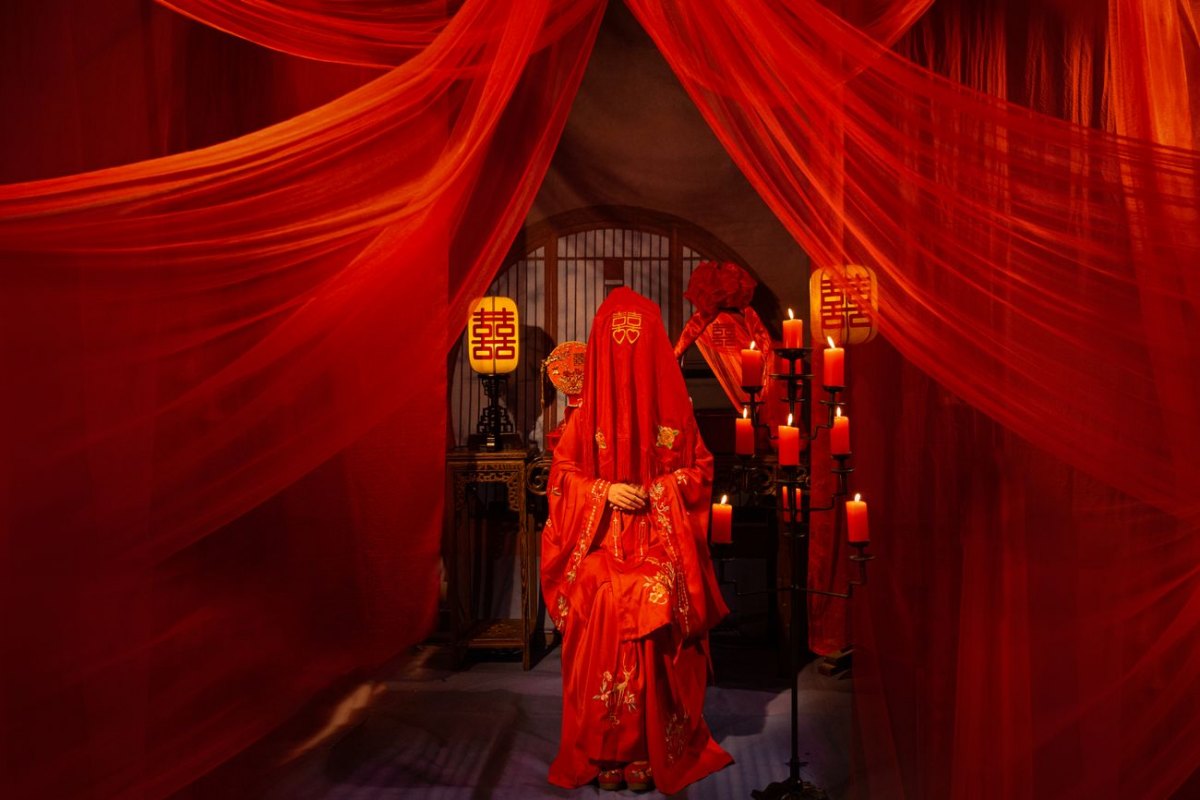
The Double Happiness symbol 囍 is the second most recognisable Chinese family symbol after 家. It is formed by writing the character 喜 (xǐ, happiness) twice side by side, and it appears at Chinese weddings, on wedding invitations, at the entrance of a new marital home, and on gifts exchanged between the two families during the engagement.
The origin story of Double Happiness points to a scholar-official from the Song dynasty (960-1279) who, on the day of his wedding, also received word that he had passed the imperial examination with distinction. To celebrate both joys at once, he wrote two happiness characters together. Whether the story is historical or legendary, the symbol’s meaning rests on the same compression: two good things happening at the same moment, each amplifying the other. A Chinese wedding couple displays 囍 because the union itself is a double happiness: the joy of the bride and the joy of the groom, fused.
Double Happiness is almost always written in red, the colour of luck and celebration in Chinese tradition. Our companion guide to Chinese love symbols covers 囍 alongside the other wedding-focused characters and animal motifs. Red paper cut-outs of 囍 decorate wedding venues, and the symbol also appears embossed in gold on wedding cakes, on the red envelopes (红包, hóngbāo) that guests give the couple, and on the back of wedding chairs at the banquet. The red silk qipao and other wedding garments are covered in our guide to traditional Chinese clothing.
孝 (Xiào): Filial Piety
孝 is the Confucian concept of filial piety, the respect and care that children owe to their parents and, by extension, to their ancestors. The character combines 耂 (an older form of the character for “old”) on top and 子 (child) below, picturing a child supporting an old person. The visual composition is the moral argument: the young carry the old.
Filial piety occupies a central place in Chinese family ethics that has no direct Western equivalent. Confucian philosophy treats 孝 as the root virtue from which all others grow: a person who does not respect their parents cannot be trusted to act with integrity in any other relationship. The Analects (Lunyu) devote several passages to defining what 孝 means in practice, and the answer is narrower than simple obedience: it includes caring for parents in their old age, mourning them for three years after death, continuing their unfinished work, and producing grandchildren to continue the lineage.
Modern Chinese law encodes elements of 孝 directly. The Elderly Rights Law of 2013 requires adult children to visit their elderly parents at reasonable intervals and to attend to their spiritual as well as material needs. The law created enforcement mechanisms including the right of parents to sue children for neglect. The philosophical root of this legal structure is 孝. The social hierarchy that surrounded filial piety in imperial times is covered in our piece on Ancient China social classes.
福 (Fú): Fortune and Blessing
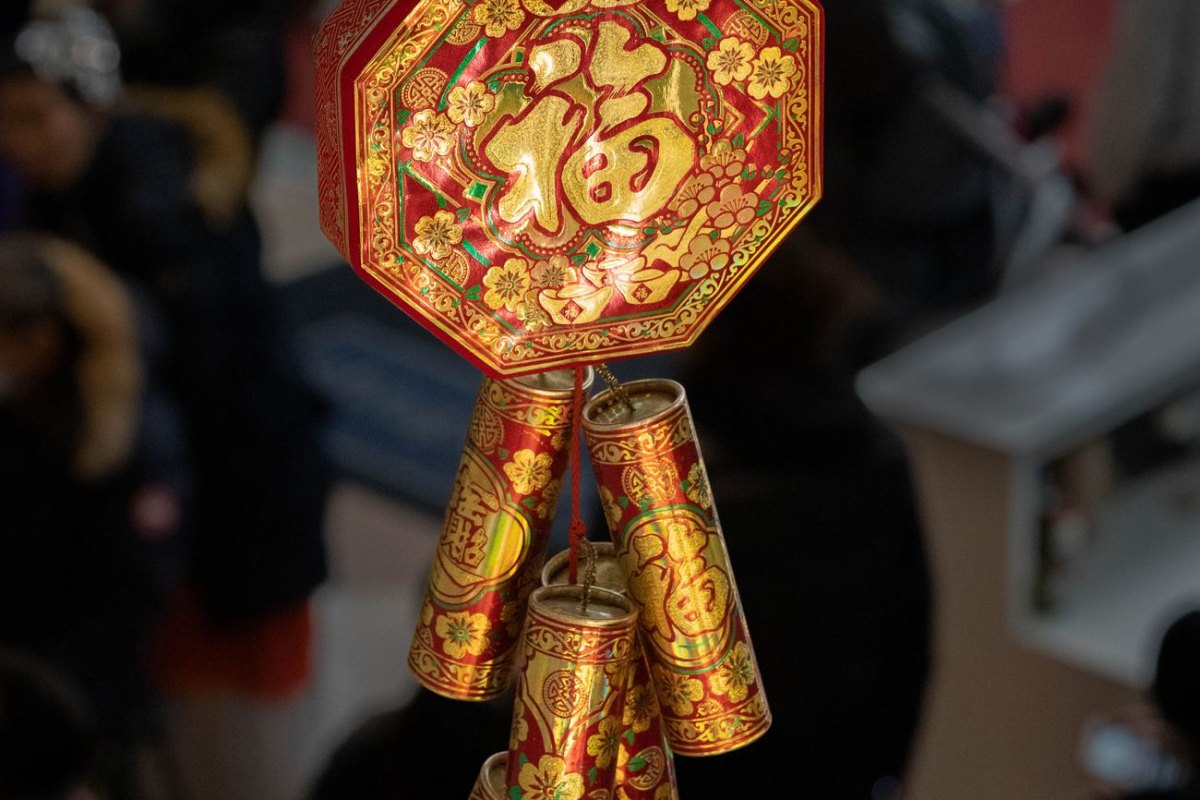
福 is the character for fortune, blessing, and good luck. Chinese families paste red squares of paper with 福 written in black or gold on their front doors at New Year, and a specific tradition involves hanging the character upside down. The inverted 福 is a pun: “upside down” in Chinese is 倒 (dào), which sounds like 到 (dào, to arrive). An upside-down 福 therefore means “fortune has arrived”.
The 福 character shows 礻 (the altar radical) on the left and a composite meaning “abundance” on the right. The altar radical links 福 to religious offering and divine blessing, while the right side carries connotations of a full granary or a large jar of wine. Fortune in the Chinese sense comes both from heaven’s favour and from material security; 福 captures both sources in one character.
The Five Blessings and the Lucky Bat
The deepest source for what a Chinese family wishes for itself is the 五福 (Wufu), the Five Blessings, set down more than two thousand years ago in the Hong Fan chapter of the Book of Documents, one of the oldest Chinese classics.
- 壽 (shou): a long life.
- 富 (fu): wealth and prosperity.
- 康寧 (kangning): health and peace of mind.
- 攸好德 (you hao de): the love of virtue, the wish to be a good person.
- 考終命 (kao zhong ming): a natural death at the end of a full life, dying peacefully in old age.
These five run through family decoration to this day, and the bat carries them in code. The word for bat, 蝠 (fu), sounds exactly like 福 (fu, fortune), so a bat is a rebus for blessing. A common design, the 五福捧壽 (wufu peng shou), shows five bats circling the longevity character, a silent prayer for all five blessings at once, and it appears carved on furniture, embroidered on robes and painted on porcelain in traditional Chinese homes.
寿 (Shòu): Longevity
寿 is the longevity character, paired with 福 at birthday celebrations for elderly family members. A 60th birthday (the completion of the traditional Chinese zodiac cycle) and a 70th birthday both involve the 寿 character prominently on decorations, gifts, and red banners. The character is also carved on longevity peaches (寿桃, shòutáo), a steamed bread shaped to look like a peach, served at these birthdays.
The character combines elements for “old” and “long”, and in calligraphy it often appears in one hundred different stylistic variations arranged in a grid called 百寿图 (Bǎishòu Tú), the Hundred Longevities picture. A family hanging a Bǎishòu Tú in the living room wishes every member of the household a long life, written out in every traditional calligraphic style from the past two millennia.
Fu Lu Shou: The Three Star Gods of the Household
Three of these wishes are personified as gods who stand in countless Chinese homes and shops, the 福禄寿 (Fu Lu Shou), the three star gods, each tied to a star or planet.
- Fu (福): the god of fortune, in the centre, often holding a child or a ruyi sceptre, the wish for good luck and a thriving family.
- Lu (禄): the god of rank and prosperity, dressed as an official, the wish for success, salary and standing.
- Shou (寿): the god of longevity, an old man with a high bald forehead and a long white beard, holding a peach and a staff, the wish for a long life.
A set of Fu Lu Shou figures on a shelf is one of the most common sights in a Chinese household and family business, a compact statement of everything a family hopes to pass down: luck, success and long life together.
和 (Hé): Harmony
和 is the character for harmony, peace, and balanced coexistence. It combines 禾 (rice plant) with 口 (mouth), forming the visual picture of rice in a mouth: a family that eats together is at peace. The character appears in 和谐 (héxié, harmony), 和睦 (hémù, family harmony), and 和平 (hépíng, peace).
Chinese families prize 和 as the condition in which filial piety (孝) actually functions. A family that is at peace can honour its ancestors, support its elderly, raise its young, and meet its obligations to the wider community. Chinese folk wisdom says 家和万事兴 (jiā hé wàn shì xīng): “When the family is in harmony, all things prosper”.
Ancestor Characters: 祖 (Zǔ) and 宗 (Zōng)
祖 means ancestor or grandparent, and 宗 means lineage or ancestral hall. Together 祖宗 (zǔzōng) covers the full chain of ancestors, from parents back to the founding ancestor of the family line. Chinese ancestor veneration uses these characters on tablets in the ancestral hall (祠堂, cítáng), where living family members make offerings of food, incense, and paper money during the Qingming Festival each April and the Chongyang Festival each October.
The 祖 character contains the altar radical 示 and a right-side element representing the penis (in its oldest pictographic form), which together point to the male ancestor as the source of the family line. Chinese lineage traditionally traces through the male line, and surname inheritance follows the father’s side. Modern Chinese law allows either parent’s surname, but the older pattern remains culturally dominant in ancestor rituals.
Surname, Lineage and Generation Names
The family symbol that a Chinese person carries every day is their surname, the 姓 (xing), worn at the front of the name where the West puts the given name last. Surnames sit at the heart of a lineage system far older and more structured than most outsiders realise.
- The Hundred Family Surnames: the 百家姓 (Baijiaxing), a classic rhyming list of surnames memorised by children for a thousand years, opens with Zhao, Qian, Sun, Li. A handful of names, Wang, Li, Zhang and Liu among them, are each shared by tens of millions.
- Generation names: in many clans a character in the given name, the 字辈 (zibei), marks the exact generation, so that cousins across a whole region share one character and seniority can be read from a name. The characters are drawn in order from a generation poem set down by an ancestor, sometimes hundreds of characters long, and worked through one generation at a time.
- The clan genealogy: the 族谱 (zupu) is the family record book, tracing the line back through dozens of generations with births, marriages, migrations and biographies. Many were burned in the Cultural Revolution of the 1960s and 1970s as one of the Four Olds, and families today work to rebuild them.
These three together, the shared surname, the generation character and the genealogy book, are how a Chinese family writes itself down across centuries, and they sit behind the ancestor veneration that the characters 祖 and 宗 mark.
How to Write 家 in Chinese Calligraphy
A Chinese calligrapher writing 家 follows a fixed stroke order that has not changed in two millennia. The broader history of how these strokes evolved from oracle-bone pictographs is covered in our history of Chinese writing. The ten strokes go as follows:
- A short dot at the top centre (the peak of the roof).
- A horizontal stroke forming the top of the roof.
- A left-falling stroke sweeping down the left side of the roof.
- A right-falling stroke forming the right side of the roof.
- A horizontal stroke starting the pig’s body.
- A left-falling stroke for the pig’s front.
- A right-falling stroke for the pig’s back.
- A short horizontal for the pig’s middle.
- A left-falling stroke for the pig’s leg.
- A final dot for the pig’s tail.
Calligraphy students spend weeks on a single character at the beginning of their training. The 家 character is often among the first they master because its combination of horizontal, vertical, and diagonal strokes covers most of the basic stroke types. A well-written 家 balances the roof’s proportions with the pig’s proportions, leaves appropriate white space in the interior, and shows the brush’s pressure changing smoothly through each stroke.
団圓 (Tuanyuan): The Value of Reunion
Behind every family symbol sits one idea that the characters only point at: 团圆 (tuanyuan), the wholeness of a family gathered together. It is the emotional core of Chinese family life and the reason the symbols carry such weight.
Two festivals are built around it. The reunion dinner on the eve of Lunar New Year, the 年夜饭 (nianyefan), brings every member of the family back to the elders table for the most important meal of the year, and the round mooncakes of the Mid-Autumn Festival echo the full moon as an image of the family circle complete. The pull of reunion drives the chunyun, the New Year travel rush that is the largest annual human migration on earth, as hundreds of millions cross the country to be home. A family that achieves tuanyuan has, in the traditional view, achieved the thing the other symbols only wish for.
Family Symbols in Home Decor
Chinese homes traditionally display family symbols in specific places with specific meanings attached:
- Front door: 福 in red at New Year, sometimes paired with spring couplets (春联, chūnlián) in verticals flanking the door.
- Living room: 家 or 和 calligraphy on a central wall, often in a frame or scroll mount. Large 家 characters in brush calligraphy are a common housewarming gift.
- Dining room: 和 near the table to reinforce harmony at family meals.
- Ancestral alcove: 祖 or 宗 on tablets bearing ancestors’ names, with a small altar for offerings.
- Elderly parent’s room: 寿 on scrolls or embroidered pillowcases, especially if the parent has passed 60.
- Newlyweds’ bedroom: 囍 on the wall, headboard, or wardrobe, usually as part of the wedding decoration that stays up through the first year.
Chinese Family Tattoos: What to Know Before You Get One
Western interest in Chinese character tattoos peaked in the early 2000s and has settled into a steady trickle since. The 家 character tops the list of family-themed tattoo requests, followed by 爱 (ài, love), 兄弟 (xiōngdì, brothers), and 姐妹 (jiěmèi, sisters).
Common mistakes when getting a Chinese family tattoo:
- Using the wrong character: Some tattoo flash books contain characters drawn by non-speakers, with strokes in the wrong order or components missing. Always check with a native speaker before inking.
- Asking for “family” and getting “family name”: 姓 (xìng) means surname, not family. They are different characters with different meanings.
- Mirrored or upside-down characters: Happens when the tattoo artist works from a reference image that was flipped. A mirrored 家 is meaningless gibberish.
- Simplified vs traditional: 家 is the same in both systems, but some related characters differ. 爱 (simplified love) lacks the heart radical that 愛 (traditional) contains. Consider which you want.
- Poor calligraphic quality: A machine-printed font looks cheap when applied as a tattoo. Commission a calligrapher for a proper brush rendering, then take that to the tattooist.
Frequently Asked Questions
What is the Chinese symbol for family?
The primary Chinese symbol for family is 家 (jiā). It combines a roof radical on top with a pig below, representing a household with livestock, which was the definition of a stable family in ancient agrarian China. The character has remained unchanged for about three thousand years.
What is the difference between 家 and 家庭?
家 (jiā) is the general character for family or home, used in everyday speech. 家庭 (jiātíng) is a compound word meaning family unit or household, used in formal, legal, and academic contexts. A person introducing their family in casual conversation would say 我的家 (wǒ de jiā), while a social worker filling in a case file would write 家庭 (jiātíng).
Why is the Chinese character for family upside down on doors at New Year?
The upside-down character is not 家 but 福 (fú, fortune). “Upside down” in Chinese is 倒 (dào), which sounds like 到 (dào, to arrive). An inverted 福 therefore creates the pun “fortune has arrived”, and families paste inverted 福 characters on their front doors at Lunar New Year to invite good luck into the household.
Is 家 the same in simplified and traditional Chinese?
Yes. 家 is written identically in both simplified and traditional Chinese scripts. Simplification reforms in the 1950s and 1960s reduced the stroke count of many characters, but 家 was not among them because its ten strokes were already manageable and its structure was already compact.
What is the Chinese symbol for extended family?
家族 (jiāzú) means extended family or clan, covering relatives across multiple generations linked by a shared surname and ancestry. The character 族 alone means lineage or tribe. 家族 is often used when discussing family trees, ancestral lineage, or historical noble houses.
How do I write my family name in Chinese?
Surnames in Chinese are written as a single character or, rarely, two characters. Common single-character surnames include 李 (Lǐ), 王 (Wáng), 张 (Zhāng), 刘 (Liú), and 陈 (Chén). For given names, our overview of Chinese girls’ names covers the naming conventions and meanings attached to characters used in personal names. Double-character surnames include 欧阳 (Ōuyáng) and 司马 (Sīmǎ). For transliteration of a Western surname into Chinese, each syllable is matched to a character whose pronunciation approximates the sound, with sound matches taking priority over meaning.
Sources and Further Reading
- Chinese Text Project, the Analects of Confucius on filial piety
- Chinese Text Project, the Book of Documents (Hong Fan) on the Five Blessings
- FamilySearch, Chinese generation poems and genealogy
- MDBG Chinese-English dictionary, character meanings and components
- The Palace Museum, Beijing, on auspicious symbols and decorative arts