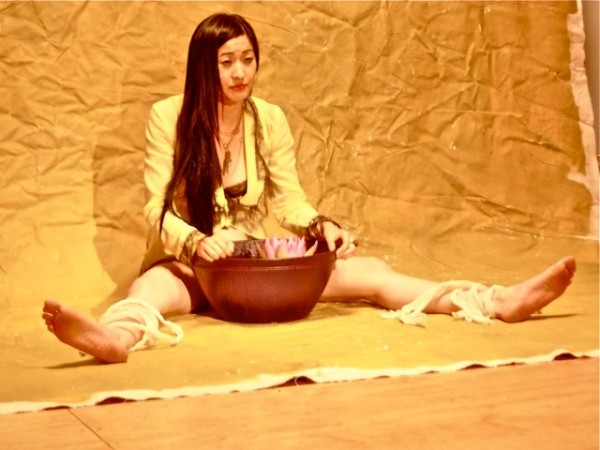
Roughly nine hundred years stand between the late tenth century, when court dancers in southern Tang China began wrapping their feet in silk strips, and the founding of the Republic of China in 1912 that ended the practice as a national norm. Across that span, women in much of imperial China bound their feet from early childhood to slow and reshape their growth. Most other documented body modification traditions across the world lasted a fraction of that time, and foot binding may have shaped the lives of hundreds of millions of women across more than thirty generations of Chinese family life. This article walks through the origin story in Southern Tang court culture, the physical process and the resulting deformity, the marriage market that kept the custom going, the failed Manchu bans, the late Qing reform societies, the staged abolitions of 1912 and 1949, and the small Yunnan village where the last bound-feet women still live.
Origins in the Southern Tang Court
The earliest references that historians read as foot binding come from the late tenth century, in the courts of the Five Dynasties period that followed the collapse of the Tang dynasty in 907. The most often cited origin story attaches the practice to a court dancer named Yao Niang at the Southern Tang court of Li Yu, the last ruler of that short-lived southern kingdom which fell to the Song in 976. The account survives in a Song-era anecdotal record called the Daoshan Xinwen, which describes Li Yu commissioning a six-foot golden lotus pedestal, asking Yao Niang to wrap her feet in silk strips into a crescent-moon shape, and watching her dance on her toes within the lotus.
Whether the Yao Niang story is historical or court legend, the documentary record shows the practice spreading through court and elite households during the Song dynasty between 960 and 1279, the period whose dating framework our overview of the ancient Chinese calendar traces in detail. By the Southern Song period in the twelfth and thirteenth centuries, foot binding had moved beyond the court into the wider Han Chinese gentry class and carried associations with refinement and high status. The practice was not uniform across the population. Women who worked in agriculture, in southern coastal areas where rice paddies required active foot use, often went unbound or bound their feet less tightly.
The Mongol Yuan dynasty that ruled China from 1271 to 1368 did not ban the practice, and the Han Chinese Ming dynasty that followed it from 1368 to 1644 saw foot binding spread into smaller landowning households and into urban merchant families. By the late Ming period, the custom had reached the level of a near-universal practice among Han Chinese women in the central provinces.
The Mechanics of Binding
Foot binding began when a girl was between four and seven years old, before the bones of her feet had hardened. The procedure was carried out at home, often by the girl’s mother or grandmother. The four smaller toes on each foot were bent down and inward toward the sole, and the foot was wrapped in long strips of cloth that pulled the heel and the front of the foot toward each other. The binding cloth was tightened over weeks and months, breaking the small bones and forcing the arch into a high, rigid curve.
The bandages were removed for cleaning and rebound at intervals over the following years, and the binding remained part of daily care into adulthood. Several preparation techniques recur across Chinese household manuals from the Ming and Qing periods:
- Soak before binding: feet were softened in a hot wash containing vinegar, alum, or herbal mixtures to make the skin more pliable
- Toenail removal: nails were cut short and sometimes pulled to prevent ingrown nails from cutting the toes folded underneath
- Cloth strips: cotton bandages around two metres long, tightened progressively over weeks of rebinding
- Sleeping support: a wooden last or specially shaped indoor shoe held the foot in shape overnight
- Daily walking drills: short forced walks pressed the bones into the desired arch
The end result was a foot a few inches long that could fit inside a shoe of around 7.5 to 10 centimetres. The terminology used in Chinese sources separated bound feet into three grades. The smallest, called the gold lotus, measured around three inches and was the most prized. Silver lotus feet ran around four inches and were the second category. Larger bound feet were called iron lotus and were treated as a failure of the binding process. Many women suffered chronic infections, paralysis of the toes, broken skin that would not heal, and reduced mobility for the rest of their lives. Some girls died from complications during childhood from the binding itself.
Lotus Feet and the Marriage Market
The persistence of foot binding across nine centuries was tied to the marriage market more than to any single court fashion. Bound feet became a marker of female virtue, parental discipline, and family standing in much of Han Chinese society between the Song and the late Qing periods. A bride with bound feet signalled to her in-laws that her family had invested in her appearance and had observed the customary order of female upbringing, and the size and shape of the foot were standard topics in marriage negotiations recorded in late imperial sources.
The economic logic ran in the same direction as the social logic. A woman with bound feet was held back from heavy outdoor labour, which positioned her for indoor work such as weaving, sewing, embroidery, and household management; the wider framework of household textile labour fits inside the picture given in our overview of the ancient China economy. In gentry families, this was a status marker; in poorer households, it was a survival calculation tied to textile income from female labour. The practice spread downward through the social ladder in part because families that could not afford to send their daughters to outdoor work substituted a marriage market advantage instead.
The lotus foot also produced its own visual culture, including specialised shoes, sleeping slippers, and the elaborate stitched and embroidered footwear that survives in museum collections today. The shoes were valued objects in their own right and were sometimes commissioned and stored as wedding gifts. Chinese household sources from the late Qing record women keeping dozens of lotus-shoe pairs ranked by occasion: red silk for weddings, embroidered satin for festivals, plain cotton for daily indoor use.
Hakka, Manchu, and Other Exceptions
Foot binding was a Han Chinese practice, but not all Han Chinese women bound their feet. Several groups stayed outside the custom for economic and ethnic reasons.
- Hakka women: the Hakka subgroup of Han Chinese, concentrated in Guangdong, Fujian, and Jiangxi, did not bind their daughters’ feet because Hakka households relied on women’s outdoor agricultural labour in mountainous terrain. Hakka women remained famous in late imperial sources for natural feet and field work.
- Manchu women: the Manchu founders of the Qing dynasty banned foot binding among their own population. Manchu women wore raised platform shoes called qixie or flower-bowl shoes, which created an upright narrow-stepping gait that imitated the appearance of a bound foot without the deformation. The visible difference between Manchu platform shoes and Han bound feet became a marker of ethnic identity at the Qing court.
- Southwest minorities: the Yi, Miao, Zhuang, Dai, and other non-Han populations of the southwest never adopted the practice. Some adopted it selectively where Han migration created mixed communities, but the core minority cultures stayed outside.
- Coastal Tanka boat people: the Tanka or boat-dwelling communities of the Pearl River Delta and Fujian coast did not bind because daily work on fishing vessels required full foot use.
These exceptions create a clearer picture of who actually bound feet during the late imperial period. The practice ran strongest among Han women in central agricultural provinces and Han urban gentry households. Outside that band, regional variation was substantial.
Manchu Bans and Han Continuation
The Manchu rulers of the Qing dynasty issued repeated edicts forbidding foot binding among Han Chinese subjects. The Shunzhi Emperor issued a first ban in 1645. The Kangxi Emperor renewed the prohibition in 1664 with provisions for punishment of families whose daughters were bound. None of these edicts succeeded against the established Han custom, and Kangxi withdrew the renewed ban in 1668 after four years of evident non-compliance. Later Qing emperors issued symbolic restatements but did not attempt new enforcement.
The Qing administration came to accept Han foot binding as a tolerated practice while keeping the ban in force for Manchu women. Han Chinese women in central China continued to bind their daughters’ feet through the eighteenth and nineteenth centuries, with regional variation. The practice ran strongest in the central provinces of Henan, Shanxi, Shaanxi, and Hebei, weaker along the southern coast and in some western provinces, and rare among the non-Han ethnic minorities of the southwest.
The Taiping Rebellion of the 1850s and 1860s, which controlled large parts of southern China for more than a decade, included the abolition of foot binding among its policies. The rebellion’s military defeat ended this attempt at reform, and the affected provinces returned to the prior practice within a generation. The episode showed that organised political pressure could halt foot binding in a specific region, even though the rebellion itself failed.
Anti-Binding Movement: 1874 to 1902
A serious organised anti-binding movement began in the 1870s, decades before the late Qing reform writers raised the issue at the national level. The earliest documented societies grew out of port cities where Chinese Christians and Protestant missionaries worked together.
- 1874: Jie Chan Zu Hui (Society to Quit Foot Binding) founded in Xiamen, the earliest known organised society against the practice
- 1875: Tianzu Hui or Natural Foot Society organised at Xiamen by 60 to 70 Chinese Christian women under the missionary John MacGowan
- 1883: Kang Youwei founded an anti-foot-binding society near Canton, drawing local gentry support
- 1887: Kang Youwei and Qu Eliang established the Foot Emancipation Society in the Nanhai district of Foshan, the largest such body in Guangdong
- 1895: British missionary Alicia Little founded a national Tianzu Hui chapter in Shanghai with English-language publications and Chinese-elite recruitment
- 1898: Combined membership of anti-binding societies across China claimed to reach 300,000, drawing both reformist scholars and Christian converts
- 1902: Empress Dowager Cixi issued an imperial edict against foot binding, framed as a non-binding moral exhortation rather than enforceable law
Late Qing reformers Kang Youwei and Liang Qichao treated foot binding as a symbol of the practices they believed had weakened China and contributed to its defeats by foreign powers. Their published essays linked the abandonment of foot binding to national strengthening, education for women, and the broader reform programme that culminated in the failed Hundred Days Reform of 1898.
The 1912 Republican Ban and Later Enforcement
The fall of the Qing dynasty and the founding of the Republic of China in 1912 produced a clean legal break. On 13 March 1912, Sun Yat-sen, in his capacity as Provisional President, signed a decree banning the binding of women’s feet across the territory of the new republic. The decree carried the weight of a national law rather than the moral exhortation of the 1902 Qing edict.
Enforcement built up through a sequence of follow-up measures:
- 1915: Provincial inspectors gained authority to levy fines on families that continued to bind their daughters’ feet, with the first wave of penalties recorded in the Yangtze coastal provinces
- 1929: The Nationalist government issued the Foot-Unbinding Proclamation (Fang Zu Bugao), assigning dedicated inspectors to enforce compliance, particularly in the rural interior
- 1949: The new People’s Republic of China issued its own ban shortly after taking power, with stronger enforcement than the previous republican governments
- 1957: The last documented new case of foot binding in mainland China was recorded, after which the practice ceased to begin in new families
The practice fell out of common use during the 1910s and 1920s in cities, and through the 1930s and 1940s in the rural interior. Existing bound-feet women lived with the consequences for the rest of their lives. The last cohort of women whose feet were bound in childhood, born in the early decades of the twentieth century, lived into the 1980s, 1990s, and a small number into the 2010s.
Liuyi Village and the Last Survivors
One Yunnan village holds a particular place in the closing chapter of foot binding history. Liuyi village in Tonghai county, about 140 kilometres south of Kunming, sat among the more isolated Han Chinese settlements at the time of the 1912 ban. Inspectors did not reach the village reliably until well after the founding of the People’s Republic, and binding continued there into the early 1950s.
Liuyi gained the unofficial name of “China’s last small-feet tribe” in Chinese press coverage from the 2000s. The numbers tracked the close of the practice in detail:
- Late 1990s: more than 200 women with bound feet still lived in and around Liuyi
- 2007: NPR documented around 50 surviving bound-feet women in the village
- Recent years: fewer than 20 to 22 women with bound feet remain, all in their late eighties or nineties
The British photographer Jo Farrell documented around 50 of the last bound-feet survivors across multiple Chinese provinces, with Liuyi as one of the central sites. Her portraits and oral histories form one of the largest visual records of the practice in its final phase. Other photographers and researchers, including Yang Yang and Hong Kong-based academics, have collected interviews on the lived experience of binding, the marriage market context, and the slow disappearance of the practice in their lifetimes. The visual record allows present-day readers to see what nine hundred years of household discipline produced in a single foot.
Frequently Asked Questions
When did Chinese foot binding start?
Foot binding emerged in the late tenth century at the Southern Tang court of Li Yu, with the earliest reference linked to a court dancer named Yao Niang in the Song-era Daoshan Xinwen record. The custom spread through the Song gentry in the eleventh and twelfth centuries and reached near-universal practice among Han Chinese women in central provinces by the late Ming period.
How small were bound feet?
The most prized bound feet, called the gold lotus, measured around three inches in length, or around 7.5 centimetres. Silver lotus feet at around four inches were the second category. Larger bound feet were called iron lotus and were treated as a failure of the binding process. The smallest feet often hovered just under three inches.
Did Manchu women bind their feet?
No. The Manchu rulers of the Qing dynasty banned foot binding among their own population. Manchu women wore raised platform shoes called qixie or flower-bowl shoes that imitated the appearance of a small step without the deformation. The visible difference between Manchu platform shoes and Han bound feet became a marker of ethnic identity at the Qing court.
When was foot binding banned?
The Republic of China banned foot binding by national decree on 13 March 1912, signed by Provisional President Sun Yat-sen. Earlier Qing edicts in 1645, 1664 (Kangxi), and 1902 had failed against the established custom. The People’s Republic of China reissued the ban in 1949, and the last documented new case dates to 1957. The practice fell out of common use in cities during the 1910s and 1920s and in the rural interior through the 1930s and 1940s.
Where are the last bound-feet women in China today?
Liuyi village in Tonghai county, Yunnan province, about 140 kilometres south of Kunming, holds the largest known surviving group of women with bound feet. The village had more than 200 bound-feet women in the late 1990s and fewer than 20 to 22 in recent years, all in their late eighties or nineties. British photographer Jo Farrell documented around 50 of the last survivors across multiple Chinese provinces.
Sources and Further Reading
- Dorothy Ko, Cinderella’s Sisters: A Revisionist History of Footbinding, University of California Press
- Wang Ping, Aching for Beauty: Footbinding in China, University of Minnesota Press
- Patricia Buckley Ebrey, The Cambridge Illustrated History of China
- Smithsonian Magazine, Why Footbinding Persisted in China for a Millennium
- NPR, Painful Memories for China’s Footbinding Survivors
- Jo Farrell photographic project, Living History: Bound Feet Women of China
- McClung Museum, Bound to Be Beautiful exhibition reference