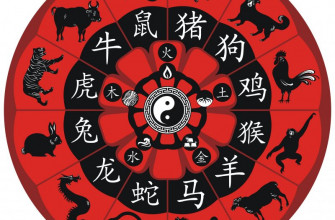
Chinese zodiac elements sit under the Wu Xing (五行) system, a philosophical framework that Han-dynasty scholars used to explain everything from weather and human health to dynastic succession and battlefield tactics. Wu Xing translates as “Five Phases” or “Five Movements,” and the five elements – Wood, Fire, Earth, Metal, Water – apply to every zodiac year on a rotating pattern. A Dragon year returns every 12 years, but a Metal Dragon returns only every 60. That longer rotation gives parents, matchmakers, and traditional doctors a finer tool than the 12-animal cycle alone.
This page covers each of the five elements in detail, the two cycles (productive and destructive) that govern their interactions, the 60-year sexagenary stem-and-branch calendar that Chinese historians still cite, and practical examples showing how element modifiers change the personality profile of each zodiac animal. For the animals themselves, see our Chinese zodiac signs overview.
Wood (木 mù)
Wood governs years ending in 4 or 5 (1984 Wood Rat, 1985 Wood Ox, and so on). The element is associated with spring, the colour green, the direction east, the Liver and Gallbladder in traditional Chinese medicine, and a taste for sour food.
Personality traits linked to Wood include growth, ambition, creativity, and generosity. Wood-born people plant projects and watch them grow over decades: founders, writers, teachers, environmentalists. Wood animals are more social than their same-sign element siblings; a Wood Tiger is more collaborative than a Metal Tiger.
Fire (火 huǒ)
Fire rules years ending in 6 or 7 (1986 Fire Tiger, 1987 Fire Rabbit). Fire aligns with summer, the colour red, the direction south, the Heart and Small Intestine, and a preference for bitter food.
Fire personalities run on energy, passion, and communication. They work well in sales, performance, law, and public-facing leadership. Fire-born Chinese zodiac animals tend toward extroversion and quick decision-making. A Fire Horse, in particular, is an especially intense combination in the zodiac: fast, fierce, and sometimes reckless. The 1966 Fire Horse generation saw a notable drop in Japanese birth rates because of folk beliefs about temperamental daughters born in that year.
Earth (土 tǔ)
Earth occupies years ending in 8 or 9 (1988 Earth Dragon, 1989 Earth Snake). The element connects to late summer (the Chinese calendar recognises a fifth season between summer and autumn), the colour yellow, the centre direction, the Spleen and Stomach, and sweet tastes.
Earth-born people are reliable, practical, and rooted. They build long-term relationships and careers, often staying with one employer or community for decades. Earth Oxen and Earth Dogs double down on loyalty and steadiness. An Earth Rat is the saver of savers; an Earth Monkey is unusually patient for a Monkey.
Metal (金 jīn)
Metal governs years ending in 0 or 1 (2020 Metal Rat, 2021 Metal Ox). Metal corresponds to autumn, the colour white, the direction west, the Lungs and Large Intestine, and pungent or spicy tastes.
Metal personalities bring precision, discipline, and determination. They excel in engineering, finance, surgery, military careers, and quality-critical industries. Metal can sharpen the sign’s edges: a Metal Tiger is more authoritative than a Water Tiger; a Metal Rooster is more perfectionist than a Fire Rooster. Metal people tend to say what they think, sometimes harder than the listener wanted to hear.
Water (水 shuǐ)
Water covers years ending in 2 or 3 (1972 Water Rat, 1973 Water Ox). Water aligns with winter, the colour black or dark blue, the direction north, the Kidneys and Bladder, and salty food.
Water personalities move with intuition, empathy, and adaptability. Water-born zodiac animals communicate well and read subtle emotional cues. Water Rabbits are gentle and artistic; Water Snakes are philosophical; Water Pigs are unusually generous. The element softens harsher signs (a Water Tiger is more diplomatic than a Metal Tiger) and deepens softer ones.
The Productive Cycle (相生 xiāng shēng)
Elements relate through two cycles. The productive cycle describes how each element nourishes the next in a repeating chain:
- Wood feeds Fire (trees burn)
- Fire makes Earth (ash becomes soil)
- Earth bears Metal (ores form in rock)
- Metal holds Water (condensation on cold metal)
- Water grows Wood (rain nourishes trees)
In compatibility readings, productive-cycle pairs support each other. A Wood partner and a Fire partner strengthen each other’s efforts. A Metal parent and a Water child pair well; the child builds on the parent’s foundation rather than clashing with it.
The Destructive Cycle (相克 xiāng kè)
The destructive cycle runs in a different sequence:
- Wood drains Earth (roots exhaust the soil)
- Earth blocks Water (dams stop rivers)
- Water douses Fire
- Fire melts Metal
- Metal cuts Wood (axes, saws)
Destructive-cycle pairings create tension. Traditional astrologers historically advised caution on marriages where one partner was Metal and the other Wood, or Earth and Water. Modern practitioners treat the cycle as a lens for anticipating friction rather than a disqualifying verdict.
The 60-Year Sexagenary Cycle
Chinese calendars track years using the stem-and-branch system (干支 gānzhī). Ten Heavenly Stems (two for each element) pair with 12 Earthly Branches (the zodiac animals) to produce 60 unique combinations before the cycle repeats. The Stems are:
- Jiǎ and Yǐ: Wood (yang and yin)
- Bǐng and Dīng: Fire (yang and yin)
- Wù and Jǐ: Earth (yang and yin)
- Gēng and Xīn: Metal (yang and yin)
- Rén and Guǐ: Water (yang and yin)
Each element pairs with a yang (masculine, active) stem and a yin (feminine, receptive) stem. That gives a Wood-yang Jiǎzǐ year as the cycle’s first combination, which Chinese historians use as the starting point for dating events. The year 1984 was a Jiǎzǐ year, the last time the full 60-cycle began. The next Jiǎzǐ year will be 2044.
Element Modifiers by Animal
The same animal differs markedly by element. A few examples from recent decades:
- 1984 Wood Rat (think creative tycoon): entrepreneurial, socially connected, generous with resources
- 1996 Fire Rat: outspoken, charismatic, sometimes impulsive with money
- 2008 Earth Rat: practical saver, long-term planner, family-oriented
- 2020 Metal Rat: disciplined, precise, tends toward perfectionism
- 1972 Water Rat: intuitive, analytical, strong at reading social dynamics
The same rotation applies to every animal. A Fire Dragon born in 1976 carries more warmth and showmanship than an Earth Dragon born in 1988, who plans more carefully. A Water Tiger born in 1962 negotiates more smoothly than a Metal Tiger born in 1950. Birth element analysis has traditionally been used in baby-naming (adding characters with the missing element to balance the chart), feng shui home placement, and career guidance.
Elements in Home Decoration and Feng Shui
Traditional Chinese interior design pulls directly from the five elements. A home balanced across all five elements is considered supportive for its occupants; an imbalance (too much Metal, for instance, which can make a space feel cold and critical) is corrected by adding objects from the complementary element.
Practical examples from feng shui practice:
- Wood: houseplants, bamboo furniture, green upholstery, tall rectangular shapes
- Fire: candles, red accents, triangular shapes, images of the sun or stars
- Earth: ceramics, stone floors, yellow or terracotta tones, square shapes
- Metal: white walls, stainless steel, round shapes, mirrors, crystal
- Water: aquariums, fountains, black or deep blue accents, wave patterns
A person with a Metal birth element is advised to bring more Water (the element Metal produces) into a bedroom and less Fire (which melts Metal) into a workspace. These pairings come from the productive and destructive cycles described earlier.
How to Find Your Element
The quickest method uses your birth year’s last digit:
- Ends in 4 or 5: Wood
- Ends in 6 or 7: Fire
- Ends in 8 or 9: Earth
- Ends in 0 or 1: Metal
- Ends in 2 or 3: Water
As with the zodiac animal, the year boundary falls on Lunar New Year rather than January 1. Somebody born in early January 2020 is still a 2019 Earth Pig; somebody born in late February 2020 is a Metal Rat. Our Chinese Lunar Calendar page lists the exact cutoff for every year since 1900.
Frequently Asked Questions
What is my Chinese zodiac element?
Look at the last digit of your birth year: 4-5 Wood, 6-7 Fire, 8-9 Earth, 0-1 Metal, 2-3 Water. Somebody born in 1994 is a Wood Dog; somebody born in 2007 is a Fire Pig.
What does the five element cycle mean?
The productive cycle (Wood feeds Fire, Fire makes Earth, Earth bears Metal, Metal holds Water, Water grows Wood) describes supportive relationships. The destructive cycle (Wood drains Earth, Earth blocks Water, Water douses Fire, Fire melts Metal, Metal cuts Wood) describes tension.
Which element is luckiest?
No element is objectively luckiest. Each has cultural associations: Wood brings growth, Fire brings recognition, Earth brings stability, Metal brings precision, Water brings adaptability. Traditional astrologers match elements to the specific situation rather than rank them.
How do elements affect Chinese zodiac compatibility?
Elements layer on top of animal compatibility. A Rat and a Dragon are a strong animal match; if the Rat is Water and the Dragon is Wood, Water grows Wood in the productive cycle, which reinforces the match.
What is the difference between Chinese and Japanese zodiac elements?
Japanese astrology uses the same five elements but applies slightly different stem-branch combinations to western-calendar years, due to historical calendar reform. The underlying Wu Xing philosophy is shared.
Why does the 60-year cycle matter?
Chinese historians, feng shui practitioners, and traditional medicine doctors cite sexagenary dates because the element-animal combination repeats only once every 60 years. A 60th birthday (huanjia) in Chinese tradition marks a full cycle return to the birth element-animal combination.
Sources and Further Reading
- The Five Elements and Chinese Tradition – Stephen L. Field, Trinity University Press
- Chinese Philosophy: The Wu Xing System – Stanford Encyclopedia of Philosophy plato.stanford.edu
- Chinese Astrology and Fortune Telling – China Highlights chinahighlights.com
- Traditional Chinese Medicine Five Element Theory – NCBI National Library of Medicine ncbi.nlm.nih.gov
- Lunar calendar conversion tables – Hong Kong Observatory hko.gov.hk