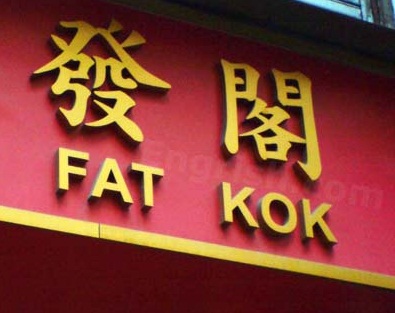
The name 杜紫藤 reads as “purple wisteria, a Du-family daughter,” a refined character set worthy of a Tang poet. The same name spoken aloud in Mandarin sounds nearly identical to 肚子疼 (dùzi téng, stomachache). A Chinese parent who registers 杜紫藤 hands the child a school-yard joke that lasts until graduation. Naming-related humor in Chinese rarely comes from invented funny names; it comes from the gap between the written character set and the way the syllables collide in casual speech, in regional dialects, and in surname-and-given-name combinations the parent did not test out loud.
This page treats funny Chinese names as a parental checklist, not a humor list. The categories below cover the homophones Chinese parents catch during the family-discussion stage: death-words, ugly-words, animal-words, and the dialect-specific shifts that turn a Mandarin-clean name into a Cantonese disaster. The page also covers foreign-name transliterations that go funny when crossed between languages, real public figures whose names read awkwardly in Pinyin, and the workflow Chinese families run before submitting a 出生证明 (chūshēng zhèngmíng, birth certificate). For the broader naming system – structure, tonal flow, 八字 method – see the Chinese baby names hub. For girls’ and boys’ name pools where these homophone rules apply, see the girls’ names and boys’ names spokes.
Why Funny-Sounding Chinese Names Happen: Tones and Homophones
Mandarin uses about 400 distinct base syllables, multiplied by four tones plus a neutral tone, producing roughly 1,300 to 1,600 spoken units that map to over 8,000 commonly used hanzi. The math is unforgiving: each spoken syllable maps to several to dozens of distinct characters. The Wikipedia article on homophonic puns in Standard Chinese cites the 辞海 (Cíhǎi) dictionary listing 149 different characters for the syllable “yì” alone.
The four tones carry as much semantic weight as vowels in Western languages. The syllable “ma” reads as 妈 (mā, mother) in first tone, 麻 (má, hemp) in second, 马 (mǎ, horse) in third, and 骂 (mà, scold) in fourth. A speaker who flattens the tone produces a different word. Naming risk follows directly: a character with an auspicious meaning under one tone reading shifts to an unfortunate homophone if pronounced with a different tone or in a different dialect.
The Britannica entry on Chinese languages notes that Chinese exists in mutually unintelligible regional varieties classified as separate languages. A name written in identical hanzi reads in Mandarin, Cantonese, Hokkien, Hakka, and Wu Chinese with different sound values. A character that sits cleanly in Mandarin can produce a homophone disaster in Cantonese. Multilingual Chinese families run the read-aloud test in two or three dialects before signing off on a name.
Death and Misfortune Homophones in Names
The most absolute taboo category. Characters or syllables that overlap with 死 (sǐ, death), 失 (shī, to lose), 丧 (sàng, mourn), 病 (bìng, illness), or 灭 (miè, extinguish) get rejected at the family-discussion stage even when the chosen character is positive in isolation.
The number 4 (四 sì) sits adjacent to 死 (sǐ, death) tonally. Building floors are routinely numbered to skip 4, and parents pause before approving a name whose final syllable sounds like 4 in casual speech. A given name like 思丝 (Sīsī, “thought silk”) is acceptable on paper because both characters carry positive meanings, but the doubled “si” syllable can read as 死死 to a careless ear. Parents either pick a name with tonal contrast (1st-3rd tone or 4th-2nd tone pairs) or change a character.
The surname plus given name combination introduces a second-order risk. A father named 王 (Wáng) considering 思敏 (Sīmǐn, “thoughtful and clever”) for a daughter has to test the full sequence Wáng Sīmǐn aloud. The “Wáng Sī” two-syllable read in fast Mandarin can collapse toward 王死 if the listener is not paying attention. In strict households the candidate gets dropped; in pragmatic ones it stays, with the family relying on the listener’s parsing to land on the right character.
The character 失 (shī, to lose) sounds identical to 师 (shī, teacher) and 诗 (shī, poetry) in tone-1 Mandarin. A name with 诗 reading is auspicious; a name with 失 reading is forbidden. Parents specify the character in the registration form, but the spoken name carries both readings, and a child named 梦诗 (Mèngshī, “dream poetry”) may have to spell out the character at every introduction.
Ugly and Stupid Homophones in Names
The second-tier rejection category covers homophones with 丑 (chǒu, ugly), 臭 (chòu, stinking), 蠢 (chǔn, stupid), 笨 (bèn, dumb), and 傻 (shǎ, foolish).
The opening example 杜紫藤 / 肚子疼 (Dù Zǐténg vs dùzi téng, stomachache) is well-attested in Chinese internet humor and represents the most common pitfall: a refined-character given name that collapses to a banal physical complaint when spoken in fast Mandarin. The Du family is real, and a daughter registered as 杜紫藤 will hear the 肚子疼 read every time her name is called over a school PA system.
The character 厚 (hòu, thick or generous) is a positive register character. Paired with the surname 牛 (Niú, cow), the combination 牛厚 reads close to 牛后 (niúhòu, “behind a cow”) in some Beijing speech, with the secondary connotation of “tail of the herd.” Parents named Niu typically avoid 厚 as a given-name character.
The character 范 (Fàn) is both a surname and a homophone of 饭 (fàn, rice/meal). A son of the Fan family named Fàn Tǒng 范桶 reads as 饭桶 (fàntǒng, “rice bucket,” slang for “useless person”). Parents named Fan check every candidate given name against the food-related compound list before signing off.
Cantonese-speaking families face additional risk because the same hanzi reads with different tones and shifts homophone alignments. A name that reads cleanly in Mandarin can fall into 蠢 or 傻 territory in Cantonese, especially around the syllables “fai,” “ngai,” and “hai,” which map to different valences in the two language varieties. Hong Kong parents often run the candidate through a Cantonese friend before locking it in.
Animal Homophones That Backfire
Not all animals carry equal naming weight. 龙 (lóng, dragon), 凤 (fèng, phoenix), 虎 (hǔ, tiger), and 麟 (lín, qilin) sit at the top of the auspicious-creature pool and appear in male and unisex given names without homophone risk. 鹿 (lù, deer) and 羊 (yáng, sheep) are gentle and acceptable.
The bottom of the animal pool carries the homophone problems. 狗 (gǒu, dog) is a direct insult in Mandarin slang (“son of a dog” is a common curse), and any character that overlaps tonally with 狗 gets cut. 猪 (zhū, pig) doubles as a slur for stupidity; a name with 朱 (Zhū, vermilion red, also a top-30 surname) needs careful given-name pairing to avoid the unintended pig reading.
The most cited tonal-shift disaster in modern Chinese internet humor is 鸡 (jī, chicken) versus 妓 (jì, prostitute). The two characters share the same initial and final, differing only in tone. A daughter named with a 鸡 character reading is mostly avoided in modern naming because of the tonal proximity to 妓; a son named with the same character is acceptable in classical contexts but rare in modern registries.
The Cantonese-Mandarin shift produces additional animal disasters. The Mandarin character 庚 (gēng, age or seventh heavenly stem) reads as “gang” in Cantonese, close to the Cantonese pronunciation of 鸡 (gai). A name registered in Mandarin with 庚 can read as the chicken-slang in Hong Kong school yards.
Funny Foreign Name Transliterations
Chinese transliteration of foreign names runs through the 音译 (yīnyì) phonetic-matching process, where translators pick characters whose Mandarin syllables approximate the source-language sound. The process is constrained by the 1,300-syllable Mandarin pool and the parallel pressure to pick characters with positive or neutral meanings. The results split between successes that read as semantic gifts and failures that read as accidental jokes.
Successes:
- Coca-Cola as 可口可乐 (Kěkǒu Kělè) – “tasty and enjoyable.” The 1928 transliteration is regularly cited as the strongest foreign-brand-to-Chinese translation in commercial history.
- Pepsi-Cola as 百事可乐 (Bǎishì Kělè) – “a hundred things enjoyable.” Built to compete tonally and semantically with the Coke translation.
- Nike as 耐克 (Nàikè) – “endure and conquer.” The two-character compound carries an athletic register without sacrificing phonetic match.
- BMW as 宝马 (Bǎomǎ) – “precious horse.” Adapted from the German abbreviation but fully naturalized as a separate semantic unit.
Awkward outcomes:
- Trump as 川普 (Chuānpǔ) in casual Mandarin internet usage – reads as “Sichuan plain,” a regional dialect rather than a name. The official transliteration 特朗普 (Tèlǎngpǔ) is more neutral but feels heavy.
- KFC as 肯德基 (Kěndéjī) – the transliteration carries 基 (jī) as the final character, which is the same syllable as 鸡 (jī, chicken). The brand-syllable overlap is unintentionally appropriate but reads to native speakers as a slightly comic phonetic coincidence.
- Airbnb as 爱彼迎 (Àibǐyíng) – launched in 2017, withdrawn after market reaction noted the awkward semantic of “love each other and welcome.” The brand reverted to the English wordmark.
- Bing (Microsoft search engine) as 必应 (Bìyìng) replaced the original 病 (bìng, illness) homophone problem; the company switched fast after Chinese internet users flagged the original phonetic.
Foreign personal names face the same constraint. A Western parent who picks a Chinese name for a daughter named Jessica might land on 杰西卡 (Jiéxīkǎ, “outstanding west card”) which reads adequately, while a name like Suzanne becomes 苏珊 (Sūshān, “Suzhou coral”) cleanly. Names ending in unusual Western consonant clusters often produce a comic Chinese phonetic.
Real Celebrity Names That Read Funny Across Languages
Public figures whose Chinese names cause cross-language confusion are a small but well-known set. The pattern usually runs in one direction: the Chinese name reads cleanly to native speakers but produces an awkward Pinyin or English transliteration.
The actor 黄秋生 (Huáng Qiūshēng), known internationally as Anthony Wong, carries a Cantonese romanization Wong that overlaps with the English nickname for Chinese as a generic surname. The Cantonese pronunciation Wong Chau-sang is standard in Hong Kong; the Mandarin reading Huang Qiusheng is rare in Western press. The dual romanization causes some Western readers to misidentify the family connection.
The novelist 莫言 (Mò Yán), the 2012 Nobel laureate, carries a pen name that means “do not speak.” His given registry name is 管谟业 (Guǎn Móyè). The pen name plays on the irony of a writer whose entire work consists of speaking, and the choice was deliberate. Western readers usually do not catch the reference and treat Mò Yán as a straightforward family name plus given name.
Names that travel poorly across languages are an occupational concern for Chinese diplomats, businesspeople, and academics. Some keep the Mandarin Pinyin on official documents and use a chosen Western name in social contexts; others push for the Pinyin everywhere on principle. The 2019 Chinese Foreign Ministry policy stiffened the official-Pinyin requirement on diplomatic passports, with limited exceptions for established public-life Western names.
How Chinese Parents Check Before Naming
The pre-registration workflow runs through five filters. Parents who skip these steps account for most of the regretted naming cases that surface on Chinese parenting forums each year.
Read aloud in three dialects – the candidate full name is spoken in Mandarin, the family’s home dialect (Cantonese, Hokkien, Hakka, Wu, or Min Nan as applicable), and at least one neighbor dialect for the city of residence. Hong Kong families test in Cantonese plus Mandarin; a Shanghainese family tests in Wu plus Mandarin; an overseas Hokkien family tests in Hokkien plus Mandarin plus the local English approximation.
Show the elders – paternal grandparents in most Chinese families hold a quiet veto. The elder generation often catches dialect-specific homophones the parents miss because the elder grew up in a different language environment. The veto is exercised politely but firmly; a candidate name that the grandfather refuses rarely makes it onto the registration form.
Run the MPS 重名查询 service – the Ministry of Public Security operates a national 重名查询 (chóngmíng cháxún, “duplicate name check”) tool through the 国家政务服务平台 portal. A registered parent enters the candidate full name and receives the count of citizens nationally carrying that exact combination. Parents who care about non-saturation reject candidates above 5,000 to 10,000 nationally.
Check English transliteration – overseas Chinese parents and parents who anticipate the child studying abroad run the Pinyin spelling through informal English-speaking checks. Names where the Pinyin produces an unfortunate English-language reading get caught here. The Pinyin “Shi” and “Si” surnames create the most documented cross-language issues; parents named Shi or Si put extra weight on the given name to balance the surname’s English baggage.
Check 八字 compatibility – families that take the 五行 / 八字 method seriously run a final check that the chosen characters do not clash with the child’s birth chart. The mechanics live in the Chinese baby names hub and use the lunar date converted from Chinese lunar calendar dates. Surname compatibility against the most-common-surname pool, covered on the Chinese surnames reference, also feeds into this check.
Frequently Asked Questions
What is the funniest Chinese name?
The most-cited example in Chinese internet humor is 杜紫藤 (Dù Zǐténg), a refined-character name that sounds nearly identical to 肚子疼 (dùzi téng, stomachache). The pattern is typical: an objectively elegant name that collapses to a banal physical complaint when spoken in fast Mandarin. Other commonly cited examples are 范桶 (Fàn Tǒng, sounds like 饭桶 “rice bucket”), and 史冠 (Shǐ Guān, sounds like 屎罐 “shit jar” with the surname Shi). All three are real surnames whose given-name combinations parents would normally avoid.
How do Chinese parents avoid embarrassing names?
Parents run a five-filter workflow: read the full name aloud in Mandarin and the family’s home dialect, show the candidate to paternal grandparents who hold a quiet veto, run the Ministry of Public Security 重名查询 duplicate-check service, check the English Pinyin spelling for cross-language issues, and verify 八字 compatibility for families that take the 五行 method seriously. Skipping the dialect read-aloud step accounts for most regretted naming outcomes.
Are some Chinese names treated as offensive?
The Ministry of Public Security 户口 system rejects names containing taboo characters automatically: 死 (death), 病 (illness), and characters with the 死 radical are filtered at the registration stage. Parents face a separate cultural filter for homophone risk. A name that passes registry rules but produces a homophone disaster (animal slur, ugly compound, or death-word shift) is technically legal but socially impossible. The family-discussion stage catches most of these before submission.
What about funny English names in Chinese?
The 音译 (yīnyì) phonetic-matching process for foreign names produces a parallel set of awkward outcomes. Coca-Cola’s 可口可乐 (“tasty and enjoyable”) is the canonical success; Airbnb’s 爱彼迎 was withdrawn from the market after Chinese internet users flagged the awkward semantic of “love each other and welcome.” Western personal names usually transliterate cleanly when they end in vowels (Anna, Sara, Lina) but produce comic Chinese phonetics when they end in consonant clusters foreign to the Mandarin syllable inventory.
Can Cantonese pronunciation make a Mandarin name funny?
Yes, and this is the most common dialect-shift disaster. The same hanzi reads with different tones and slightly different finals in Mandarin and Cantonese. A name that sits cleanly in Mandarin around the syllables “fai,” “ngai,” “hai,” “gang,” or “gau” can fall into stupidity-slang or animal-slur territory in Cantonese. Hong Kong, Macao, and Cantonese-diaspora families run candidate names through a Cantonese-speaking elder before submission. Hokkien, Hakka, and Wu Chinese-speaking families face analogous dialect-shift checks.
Sources and Further Reading
- Wikipedia – Homophonic puns in Standard Chinese (linguistic mechanics behind the homophone density and the 149-character yì syllable example)
- Wikipedia – Standard Chinese phonology (the four-tone system and the syllable inventory that underwrites the homophone risk)
- Britannica – Chinese languages (mutually unintelligible regional varieties: Mandarin, Cantonese, Hokkien, Hakka, Wu)
- Hutong School – 10 Chinese Homophones You Don’t Want to Confuse (paired-example collection covering the sleep-vs-dumplings and similar tonal pitfalls)