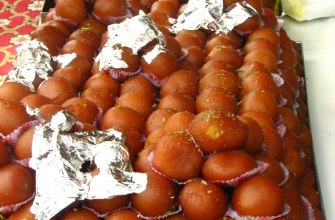
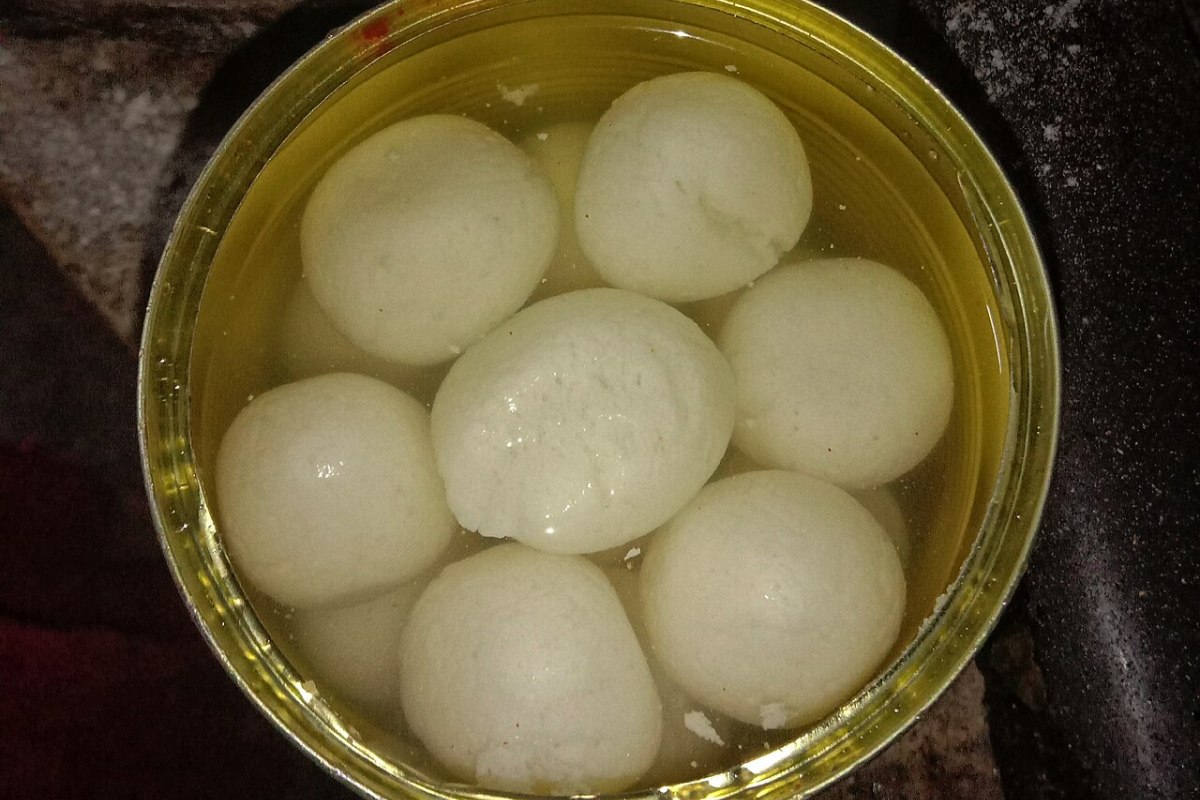
The rasgulla is a sponge made of cheese. A ball of fresh curdled-milk chenna, boiled in light sugar syrup until it swells and turns springy, it is the sweet that should bounce back when you press it and flood your mouth with syrup when you bite. Bengalis call it rosogolla, a ball of juice, and they fought a state next door for years over who invented it. This rasgulla recipe is about the one thing that decides success, the chenna and how you treat it, and it carries the history that makes this humble white ball among the most argued-over sweets in India.
Rosogolla, not rasgulla: a name and two states
The spelling shifts with the language, and the shifts matter. In Bengali it is rosogolla or roshogolla; in Odia it is rasagola; the Hindi rasgulla most outsiders use is a borrowing of the Bengali. All of them mean the same thing: ros or ras is juice, golla is a ball, so the name is simply a ball of juice, which is exactly what a good one is.
Behind those spellings sits one of India’s fiercest food fights. West Bengal and Odisha both claim the rasgulla as their own, and the quarrel ran for years before the law settled it. The two are not quite the same sweet, which is how the dispute ended in a draw, and knowing the difference is half of understanding the rasgulla.
Who invented the rasgulla
Bengal’s claim has a name and a date. Nobin Chandra Das, a confectioner from the Bagbazar area of Kolkata, is credited with creating the modern spongy white rasgulla in 1868, working out how to boil balls of chenna and semolina in sugar syrup so they stayed soft and held together. He is remembered in Bengal as the Rosogolla Columbus, the man who discovered the sweet.
His family turned the invention into an institution. His son Krishna Chandra Das introduced vacuum-packing in 1930, which let the rasgulla be canned and shipped far beyond Bengal, and the family firm K.C. Das was formally established in 1946. A grandson is credited with inventing rasmalai from the same base. Other heritage Kolkata sweet houses, among them Balaram Mullick and Radharaman Mullick, trading since the 1880s, kept the chenna tradition alongside the Das family. The rasgulla, in other words, is one of the few sweets with a documented inventor and a family dynasty behind it. That documentation is partly why Bengal won its case: a named confectioner, a fixed date and a shop address are hard evidence in a way that folklore is not, and the K.C. Das story gave the Banglar Rosogolla claim a paper trail few sweets can show.
Odisha’s claim and the dual tag
Odisha tells a longer story. There, the rasagola has been part of the Niladri Bije ritual at the Jagannath temple in Puri for centuries, offered to the goddess Lakshmi to placate her when the deities return to the temple. The folklore holds that a temple priest taught the cowherds of Pahala, a village near Bhubaneswar, the art of curdling milk and making rasagola, and Pahala became the great market for chenna sweets. By this telling the sweet is far older than Nobin Chandra Das, a temple offering rather than a confectioner’s invention.
The two states took the fight to the Geographical Indication registry, and the resolution was to recognise both. West Bengal won a GI for Banglar Rosogolla in 2017, its white, spongy, springy version credited to 1868; Odisha won a separate GI for Odisha Rasagola in 2019. The Odia version is softer, browner and less springy, cooked differently and tied to the temple. They are cousins, not the same sweet, and both claims were allowed to stand. It is, fittingly, the rare food war that everyone won.
Why Bengal curdles its milk
The rasgulla could only have come from the east, because most of India long refused to do the one thing it requires: deliberately split milk. Across much of the country, curdling milk on purpose was seen as wasteful or impure, and the great sweets of the north were built instead on milk slowly reduced to khoya. Bengal went the other way. Cheese-making is widely linked to the Portuguese, who settled in Bengal and brought the habit of curdling milk into curds, and Bengali confectioners took that fresh chenna and built an entire sweet tradition on it, from sandesh to rasgulla.
This is the deep reason a Kolkata sweet shop and a Delhi one barely overlap. The same fresh curds that Bengal keeps soft for a rasgulla are, when pressed firm, the paneer of a northern curry, one ingredient taken in two directions. The rasgulla is the purest expression of the chenna line: nothing but fresh cheese, sugar and water, with no flour, no khoya and no frying to hide behind, which is exactly why the texture is so unforgiving to get wrong.
The chenna is everything
Whatever the history, a rasgulla lives or dies by its chenna, the fresh cheese it is made from, and the texture is built before the ball ever reaches the syrup. Chenna is milk curdled with an acid, the curds drained of whey, and it must be neither too wet nor too dry: too dry and the rasgulla turns rubbery and shrinks, too wet and it falls apart in the syrup. Rinsing the curds in cold water removes the sourness and stops the cooking, and the chenna is hung only briefly so it keeps some moisture.
Then comes the kneading, which is the real skill. The chenna is worked with the heel of the hand, often with a spoon of semolina, until it turns completely smooth, uniform and free of any grain, which takes a few minutes of patient pressing. Knead too little and the surface stays crumbly and the balls crack; knead too much and the chenna goes sticky and dense, and the rasgullas shrink and toughen after cooking. The target is smoothness, not time. When a pinch of the chenna rolls into a crack-free ball between your palms, it is ready. The warmth of the hands helps here, since the friction of kneading softens the fat in the curds and brings the chenna together, which is why a cold, hurried knead so often leaves a cracking, crumbly dough.
Ingredients for rasgulla
| Ingredient | Amount | Role |
|---|---|---|
| Full-fat milk | 1 litre | Makes the chenna |
| Lemon juice or vinegar | 2 to 3 tablespoons | Curdles the milk |
| Semolina (sooji) | 1 teaspoon | Binds and helps the sponge |
| Sugar | 1.5 cups | For the thin syrup |
| Water | 4 cups | A watery, not thick, syrup |
| Cardamom and rose water | a little | To scent the syrup |
How to make rasgulla step by step
- Boil the milk, take it off the heat and add the lemon juice slowly until it curdles into curds and clear whey.
- Strain through muslin, rinse the curds in cold water, and hang briefly so they keep some moisture.
- Knead the chenna with the semolina on a board until completely smooth, then roll into small, crack-free balls, remembering they will double.
- Boil the sugar and water into a thin, watery syrup in a wide, deep pot, and scent it with cardamom.
- Slip the balls into the rapidly boiling syrup, cover, and cook fifteen to twenty minutes. They will swell to double. Never stir with a spoon; swirl the pot gently if you must.
- Cool them in the syrup, then chill. They are best cold, soaked through.
The pot matters more than it seems. Use a large, deep one, because the rasgullas double in size and need room and plenty of syrup around them. Crowd them or use a shallow pan and they come out flat on the bottom and dense.
The halwai details that decide a rasgulla
The Bengali sweet-makers and the Hindi food press add a few specifics that the basic method leaves out, and each one is the difference between a sponge and a stone.
- Curdle off the heat. The most common mistake named in the Hindi guides is adding the lemon or acid while the milk is still boiling on the flame. Take the pan off the heat first, then add the acid, or the chenna toughens.
- Do not let a skin of malai form. If cream sets on the milk before you curdle it, the rasgullas will not puff and turn oily. Curdle fresh, un-skinned milk.
- A teaspoon of cornflour in the chenna. Kneaded in, it helps the balls hold their shape and stops them cracking in the syrup.
- Cook on high, not low. Counter-intuitively, the rasgullas cook covered on a strong boil, not a gentle one; a low heat makes them dense and hard. After the heat is off, keep the pan covered for twenty minutes and they finish swelling soft.
Why rasgulla fails at home
- Hard or rubbery. Chenna too dry, over-kneaded, or cooked too long or too hot. Keep some moisture, knead only to smooth, and cook at a steady rolling boil.
- Flat-bottomed. The syrup was too shallow. Use a deep pot with plenty of syrup so the balls float and expand evenly.
- Shrinking after cooking. Over-kneaded or too-dry chenna. Stop kneading when it is smooth, and do not over-drain the curds.
- Cracking balls. Under-kneaded, crumbly chenna. Knead longer until the surface is even and a test ball holds without cracks.
- Deflating. Cooked at too high a heat so they puff and collapse. Keep the syrup at a strong but steady boil, not a violent one.
The rasgulla in Bengali life
In Bengal, mishti, sweets, are not an afterthought to a meal but a part of how life is marked, and the rasgulla sits at the centre of that. It is offered to a guest the moment they arrive, carried to a relative’s home as a matter of course, distributed when a child is born or an exam passed, and eaten at the end of almost every celebration. The Bengali son-in-law is feasted on sweets at Jamai Shashthi, and no Durga Puja or wedding is complete without trays of them. A Bengali who says they are full will still find room for a rasgulla.
That cultural weight is why the GI fight ran so hot. When Bengal won its tag in 2017, the day was celebrated as Rosogolla Dibos, Rosogolla Day, because the sweet is treated as a piece of Bengali identity rather than just a dessert. To call the rasgulla Odia rather than Bengali, or the reverse, is to touch something closer to pride than to food, which is how a soft white ball of cheese ended up arguing its case before a government registry.
What to make from a rasgulla
The rasgulla is a base as much as a finished sweet, and Bengal builds on it.
- Rasmalai, flattened chenna discs in thickened, cardamom-scented milk, the richer cousin invented from the same chenna.
- Rasgulla with rabri, the syrupy balls served in reduced milk for a doubly rich dessert.
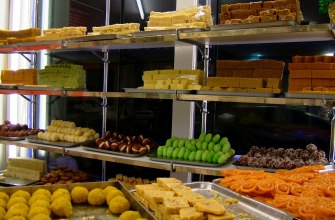
- Sandesh and the chenna family, the wider world of Bengali fresh-cheese sweets the rasgulla belongs to.
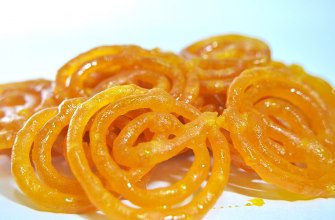
It sits firmly on the chenna side of the divide set out in the mithai guide, the opposite pole from the reduced-milk gulab jamun of the north, and beside the syrup-soaked jalebi as one of the great sweets you eat dripping.
Frequently asked questions
Why is my rasgulla hard and not spongy?
Usually the chenna was too dry or over-kneaded, or the balls were cooked too long or at too high a heat. Keep some moisture in the chenna, knead only until smooth, and cook at a steady rolling boil in plenty of thin syrup.
What is the difference between Bengali and Odisha rasgulla?
The Bengali Banglar Rosogolla is white, spongy and springy, credited to Nobin Chandra Das in 1868. The Odisha Rasagola is softer, browner and less bouncy, tied to the Jagannath temple tradition. Both hold separate GI tags, won in 2017 and 2019, as distinct sweets.
Why did my rasgullas shrink or flatten?
Over-kneaded or too-dry chenna makes them shrink, and a shallow pot with too little syrup makes them flat on the bottom. Knead only to smoothness, keep the chenna moist, and use a deep pot with plenty of room.
What kind of sugar syrup does rasgulla need?
A thin, watery syrup, not a thick or one-thread one. The watery syrup is what the rasgulla absorbs to become juicy. A thick syrup stays on the surface and leaves the inside dry.
Can I make rasgulla in a pressure cooker?
Yes, many cooks do, cooking the balls in syrup under pressure for a few whistles, which speeds the swelling. The open-pot method gives more control over the boil, but a pressure cooker is a reliable shortcut if you keep enough syrup around the balls.
What milk makes the best chenna?
Full-fat cow’s milk gives the softest, springiest chenna and the best rasgulla. Buffalo milk is richer and sets firmer, which suits some sweets but makes a denser rasgulla. Avoid low-fat or ultra-pasteurised milk, which curdles poorly and gives a mean, dry chenna.
How long do rasgullas keep?
Kept in their syrup in the fridge, they last four to five days and are best cold, fully soaked. They do not freeze well, since the sponge texture suffers, so they are a sweet to make in a batch and eat through the week rather than store long.
Why rinse the chenna in cold water?
Rinsing washes away the sourness of the lemon or vinegar used to curdle the milk and stops the heat from cooking the curds further, which keeps the chenna soft. Skipping it can leave a faint acidic taste and a firmer, less springy ball.
Sources
- Rasgulla, history, the dispute and the dual GI
- Nobin Chandra Das and the 1868 invention
- Dassana’s Veg Recipes, rasgulla chenna technique
- Image: Rasgulla, Wikimedia Commons, CC BY-SA 4.0, by Billjones94