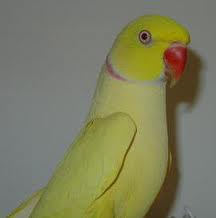
The lutino Indian ringneck is a sex-linked color mutation of the Indian ringneck parakeet (Psittacula krameri manillensis) that replaces the bird’s natural green plumage with bright yellow feathers, a red beak, and pink-red eyes. The mutation blocks melanin production while leaving yellow carotenoid pigments intact, producing the distinctive citron-yellow coloring that has made the lutino a top-selling color variant among aviculturists and pet owners. Lutino ringnecks share the same 25-to-30-year lifespan, dietary needs, and behavioral traits as wild-type green birds – the color difference is genetic rather than physiological. This article covers the genetics behind the mutation, physical identification, care requirements, breeding patterns, and the other color mutations that breeders have developed from the same species.
Genetics of the Lutino Mutation
The lutino mutation is sex-linked recessive, meaning the gene responsible sits on the X chromosome. Male Indian ringnecks carry two X chromosomes (XX in avian genetics), so a male can be “split” to lutino – carrying one copy of the gene without showing the color visually. Female ringnecks carry one X and one Y chromosome (XY), so a single copy of the lutino gene on the X chromosome produces the full visual mutation. This inheritance pattern means that a lutino male bred to a normal green female will produce green sons that are split to lutino and lutino daughters.
The ino gene suppresses melanin deposition in the feathers, skin, and eyes. In a green base bird, removing melanin leaves only the yellow carotenoid pigments, producing the lutino phenotype. In a blue base bird, the same ino gene removes melanin from feathers that lack carotenoid pigments entirely, producing an albino – a white bird with red eyes and a pale beak. This relationship between lutino and albino is central to ringneck breeding programs that work across multiple mutation lines.
A second form called the NSL (non-sex-linked) lutino exists but is far rarer. This version follows autosomal recessive inheritance, meaning both males and females can carry the gene without showing it. NSL lutinos look identical to standard lutinos, and breeders distinguish them only through test pairing results across multiple generations.
Physical Appearance and Identification
Lutino Indian ringnecks display a uniform bright yellow across the body, wings, and tail. The beak is deep red, and the eyes are pink-red with visible blood vessels in the iris – a direct result of the absence of melanin that normally darkens the iris pigment. The feet and legs are flesh-colored rather than the grey-green of wild-type birds.
Males develop the signature neck ring at sexual maturity, around 18 to 36 months of age. On a lutino male, the ring appears as a rose-pink band with a thin white mandibular stripe below it, rather than the black and blue ring seen on green males. Females and juveniles lack the neck ring entirely, making sex identification by appearance difficult until the male’s ring develops. DNA testing provides a definitive answer for breeders who need early identification.
Key physical traits of the lutino Indian ringneck:
- Plumage – citron yellow across body, wings, and tail
- Beak – deep red, both upper and lower mandible
- Eyes – pink-red (no melanin in iris)
- Feet and legs – flesh-colored
- Male neck ring – rose-pink band with white mandibular stripe, visible from 18-36 months
- Body length – approximately 40 cm including two long central tail feathers
Housing and Cage Requirements
Lutino ringnecks need the same housing as any Indian ringneck parakeet – a cage large enough for the bird to spread its wings and move without the long tail feathers catching on bars. The minimum recommended cage size for a single bird is 24 inches wide by 18 inches deep by 36 inches tall, though larger is always better. Bar spacing should not exceed 0.75 inches (1.9 cm) to prevent the bird from getting its head caught between bars.
Ringnecks are active birds that need time outside the cage each day. A playstand or T-perch on top of the cage gives the bird a landing spot during supervised free-flight sessions. Toys that encourage foraging – puzzle feeders, shreddable wood blocks, leather strips to pull apart – keep the bird mentally occupied. Ringnecks that lack stimulation develop behavioral problems including feather plucking and repetitive screaming.
Place the cage away from drafts, direct sunlight through glass, and kitchen fumes. Nonstick cookware releases polytetrafluoroethylene gas when overheated, which is lethal to parrots at concentrations that produce no symptoms in humans. Lutino ringnecks, like all parrots, need 10 to 12 hours of uninterrupted sleep in a quiet, dark environment each night.
Diet and Nutrition
A balanced diet for a lutino Indian ringneck combines high-quality pellets as the base (roughly 60-70% of intake), supplemented with fresh vegetables, fruits, and a small amount of seeds and nuts. Pellets provide consistent nutrition without the selective eating that seed-only diets encourage – a bird fed only seeds will pick out sunflower and safflower seeds and ignore the rest, leading to vitamin A and calcium deficiencies over time.
Daily fresh food should include dark leafy greens (kale, spinach, Swiss chard), orange vegetables (carrot, sweet potato, butternut squash), and fruits like apple, grape, and berries. Avoid avocado, chocolate, caffeine, onion, and garlic – all toxic to parrots. Seeds and nuts work best as training treats rather than dietary staples. Almonds, walnuts, and pine nuts provide healthy fats in small quantities.
Fresh water must be available at all times. Some owners provide a shallow dish for bathing alongside the drinking container, since ringnecks enjoy splashing and will bathe daily if given the option. Bathing helps maintain feather condition and gives the bird an outlet for natural behavior.
Lutino ringnecks can be prone to feather discoloration if their diet lacks variety. A bird fed primarily on seed may develop dull or uneven yellow plumage. Vitamin A deficiency shows up as rough, flaky skin around the nares (nostrils) and feet. Calcium deficiency, common in seed-heavy diets, weakens bones and eggshells in breeding females. Cuttlebone or mineral blocks placed in the cage supplement calcium intake between meals.
Behavior and Socialization
Indian ringnecks go through a “bluffing” phase between 4 and 12 months of age, during which even hand-raised birds may bite, lunge, or refuse handling. This hormonal phase tests the patience of new owners but passes with consistent, gentle interaction. Breeders recommend daily handling sessions of 15 to 30 minutes to maintain tameness through the bluffing period and into adulthood.
Ringnecks are strong talkers. Many learn 50 to 200 words and short phrases, with some individuals developing clear pronunciation that rivals larger parrots like African greys. Lutino ringnecks show no difference in talking ability compared to other color mutations – the gene affects pigment, not cognition or vocal anatomy. Training with repetition and positive reinforcement (treat rewards) produces the fastest vocabulary growth.
Ringnecks bond closely with one primary caregiver but can learn to tolerate other household members with gradual introduction. They tend toward one-person attachment if not socialized broadly during their first year. Households with children should supervise interactions, since ringnecks have strong beaks relative to their size and may bite when startled. The bird’s morning and evening vocalization periods produce loud calls that carry through walls – apartment dwellers should consider this before choosing a ringneck over a quieter species like a cockatiel or budgerigar.
Breeding Lutino Indian Ringnecks
Indian ringnecks reach breeding age at 2 to 3 years. Females typically lay clutches of 2 to 6 eggs, which incubate for approximately 23 days. Both parents share feeding duties after the chicks hatch, though the female does most of the incubation. Chicks fledge at 6 to 7 weeks and wean at 8 to 10 weeks.
Breeding lutino to lutino produces all-lutino offspring. Breeding a lutino male to a green female produces green sons split to lutino and lutino daughters. Breeding a green male split to lutino to a lutino female produces lutino sons, green sons split to lutino, lutino daughters, and green daughters in roughly equal proportions. Breeders who cross lutinos with blue-series birds can produce albino offspring in the second generation when both the ino and blue genes combine.
Other Color Mutations in Indian Ringnecks
Aviculturists have developed over 30 recognized color mutations in the Indian ringneck parakeet. The main categories beyond lutino include:
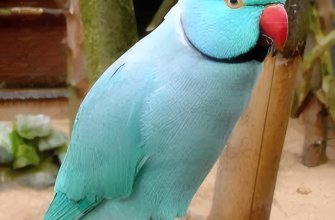
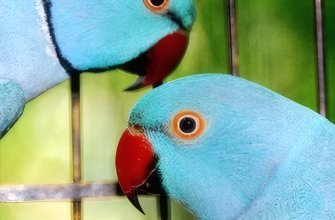
- Blue – autosomal recessive mutation that removes yellow pigment, producing a sky-blue bird with a black neck ring
- Turquoise – partial reduction of yellow pigment, creating a blue-green intermediate
- Cinnamon – sex-linked mutation that converts black melanin to brown, producing a warm olive-green
- Violet – a dark factor combined with blue, creating deep purple-blue plumage
- Albino – combination of ino gene with blue base, producing a pure white bird with red eyes
- Lacewing (cinnamon yellow-head) – combination of cinnamon and lutino background, creating yellow plumage with faint brown wing markings
Frequently Asked Questions
What makes a lutino Indian ringneck yellow?
The lutino mutation blocks melanin production while leaving yellow carotenoid pigments intact. Melanin normally combines with carotenoids to produce the green color of wild-type ringnecks. Removing melanin leaves only the yellow layer, creating the lutino phenotype with pink-red eyes and a red beak.
How long do lutino Indian ringnecks live?
Lutino ringnecks have the same lifespan as wild-type birds – typically 25 to 30 years with proper care. Some individuals exceed 30 years. The color mutation does not affect longevity, organ function, or immune response.
Can you tell if a lutino ringneck is male or female?
Males develop a rose-pink neck ring with a white mandibular stripe at 18 to 36 months of age. Females and juveniles lack the ring. Before the ring appears, DNA testing is the only reliable method for sex identification in lutino ringnecks.
What is the difference between a lutino and an albino ringneck?
A lutino results from the ino gene acting on a green-base bird, producing yellow plumage. An albino results from the same ino gene acting on a blue-base bird, producing white plumage. Both have red eyes and pale beaks. The genetic difference lies in whether the bird carries the blue mutation alongside the ino gene.
Sources and Further Reading
- AFA Watchbird – Indian Ring-necked Parakeet Trivia: History of the Lutino, Blue, Turquoise, and Albino Mutations (watchbird-ojs-tamu.tdl.org)
- Beauty of Birds – Indian Ringneck Parrot Mutations (beautyofbirds.com)
- Parrot Junkie – Indian Ringneck Parakeets: An Overview of Characteristics and Care (parrotjunkie.com)
- Find Parrot Breeders – Lutino Indian Ringneck Parrot: Key Facts (findparrotbreeders.com)