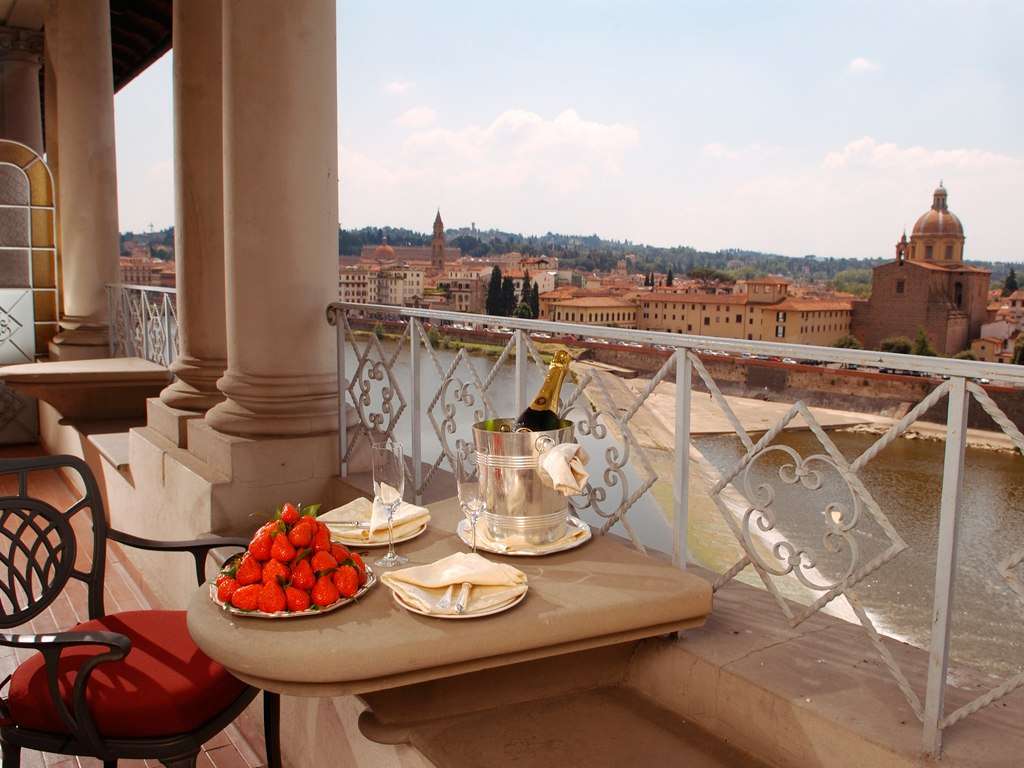
Florence is where the Renaissance began, and the historic centre is small enough to cross on foot in twenty minutes, which is exactly why it feels so concentrated: Brunelleschi’s dome, Michelangelo’s David and Botticelli’s Birth of Venus sit within a few streets of each other. The catch is that the headline sights now run on timed entry, and turning up without a booking in summer means either a long queue or no ticket at all. The most useful thing this guide can do is tell you what to see and, just as important, what to reserve before you arrive.
Below are the sights worth your time, the practical detail that makes a visit run smoothly, and a few things the quick lists miss, starting with the cathedral that defines the skyline.
The Duomo and Brunelleschi’s Dome
The cathedral of Santa Maria del Fiore is a complex of separate monuments, and the engineering of its dome is the reason Florence has a claim on the start of the modern age. When Filippo Brunelleschi raised the dome between 1420 and 1436, no one had spanned such a width since antiquity, and he did it without a wooden support frame, laying the bricks in a self-supporting herringbone pattern between two shells. It is still the largest masonry dome ever built.
- Climbing the dome: 463 steps lead up between the two shells, past the Vasari and Zuccari Last Judgment frescoed inside the cupola, to a terrace with the best view in the city. The climb needs a separate timed reservation and sells out first.
- Giotto’s Campanile: the free-standing bell tower beside it is 414 steps and gives you the dome itself in your photograph, which the dome climb cannot.
- The Baptistery: the octagonal building opposite holds Ghiberti’s gilded bronze doors that Michelangelo called the Gates of Paradise. The originals are protected in the Museo dell’Opera del Duomo, with copies in place outside.
A single combined ticket, often sold as the Brunelleschi Pass, covers the dome climb, the campanile, the baptistery, the crypt and the cathedral museum. Book it online and pick your dome slot well ahead.
The Uffizi Gallery
The Uffizi holds the greatest collection of Renaissance painting anywhere, built from the private holdings of the Medici. The building was raised in the sixteenth century by Giorgio Vasari as government offices, the uffizi, and its long corridors now run through room after room of work you have seen in reproduction all your life.
The signatures of a visit are Botticelli’s Birth of Venus and Primavera, Leonardo’s Annunciation, Michelangelo’s Doni Tondo and rooms of Titian, Raphael and Caravaggio. The collection survives in Florence at all because of Anna Maria Luisa de’ Medici, the last of the dynasty, whose Family Pact of 1743 left everything to the city on condition that nothing ever leave it. Our guide to the museums of Florence goes deeper into the galleries; for the Uffizi, reserve a timed entry weeks ahead in high season.
Michelangelo’s David at the Accademia
The most important thing to know about the David is where it actually is. The figure standing in the Piazza della Signoria is a copy. The original is in the Galleria dell’Accademia, where Michelangelo’s giant has stood since the nineteenth century under a purpose-built skylight.
Michelangelo carved it between 1501 and 1504, when he was in his twenties, from a tall, flawed block of marble that other sculptors had abandoned. The Accademia is small and most people spend an hour or two, lingering also over his unfinished Prisoners, figures that seem to be struggling out of the raw stone. It is the second sight, after the Uffizi, that you should book before you travel.
Piazza della Signoria and Palazzo Vecchio
The political heart of Florence is an open-air sculpture gallery you can walk through for free. The Loggia dei Lanzi on one side shelters Cellini’s bronze Perseus holding the head of Medusa and Giambologna’s Rape of the Sabine, among others, with no ticket required.
The fortress-like Palazzo Vecchio anchors the square. Inside, the vast Salone dei Cinquecento is hung with Vasari’s battle frescoes, beneath which art historians still hunt for a lost Leonardo, the Battle of Anghiari. You can climb the Arnolfo tower for another high view, and the Neptune Fountain and the copy of the David stand outside.
Ponte Vecchio and the Arno
The Ponte Vecchio, the old bridge, has spanned the Arno since 1345 and is lined with shops as it has been for centuries. They were butchers and tanners until 1593, when the Medici grand duke ordered them replaced with goldsmiths to suit the corridor his architect Vasari had built over the top to link the Uffizi with the Pitti Palace. The jewellers are still there.
The bridge carries one more story: in 1944 the retreating German army blew up every bridge in Florence except this one, reportedly on Hitler’s own order, leaving it the only medieval crossing to survive. It is free to walk at any hour, best early before the crowds.
Across the River in the Oltrarno
The south bank, the Oltrarno, is the artisans’ quarter and a quieter half-day. The huge Pitti Palace, the later Medici residence, holds several museums, and behind it the Boboli Gardens climb the hillside in formal terraces. A single ticket also opens the smaller Bardini Gardens nearby, less crowded and with a postcard view back over the dome.
Two streets away, the Brancacci Chapel in Santa Maria del Carmine holds Masaccio’s frescoes, the works where Renaissance painters first solved perspective and where Michelangelo came to study. The workshops around Santo Spirito still turn out leather, gold leaf and restored furniture.
Churches and the Best Views
Beyond the headline trio, the churches of Florence hold much of its art and history:
- Santa Croce: the Franciscan basilica is the burial place of Michelangelo, Galileo and Machiavelli, and the building so overwhelmed one nineteenth-century visitor that the rush of emotion took his name, Stendhal.
- The Medici Chapels at San Lorenzo: Michelangelo designed the New Sacristy and its brooding tombs of the Medici, with the figures of Day, Night, Dawn and Dusk.
- San Marco: the friars’ cells are each painted with a quiet fresco by Fra Angelico, one of the calmest spaces in the city.
- Piazzale Michelangelo: the terrace above the river gives the classic panorama of Florence, free and at its best at sunset, with the Romanesque church of San Miniato al Monte just above it.
Florentine Food
Florence eats well and plainly. The local steak, bistecca alla fiorentina, is a thick T-bone from Chianina cattle, grilled over wood and served rare by weight. Street stalls sell lampredotto, the slow-cooked tripe sandwich that is the true Florentine fast food, and the covered Mercato Centrale is the place to browse and eat. Florence even claims the invention of gelato, traced to the Medici court, and the artisan shops away from the Duomo are worth seeking out. For the wider national picture see our guide to Italian food.
Practical Tips for Visiting Florence
A handful of details decide whether a visit feels smooth or fraught:
- Book the big three ahead: the Uffizi, the Accademia and the dome climb all run on timed entry and sell out in the April-to-October season. Reserve them online weeks in advance rather than queueing.
- Remember the David is a copy outside: the original is inside the Accademia, so do not skip the ticket thinking you have seen it in the square.
- Do not drive into the centre: the historic core is a restricted traffic zone, and cameras fine cars without a permit. Florence is in any case best on foot.
- Allow time for a day trip: Pisa and its leaning tower are an easy ride away, covered in our guide to things to do in Pisa, and Florence sits at the centre of a wider route in our seven-day Rome, Florence and Venice itinerary.
Frequently Asked Questions
How many days do you need in Florence?
Two full days cover the essentials, the Duomo complex, the Uffizi, the Accademia and a walk across the Ponte Vecchio into the Oltrarno. A third day lets you slow down for the churches, the Boboli Gardens and a meal at the Mercato Centrale, or take a day trip to Pisa or Siena.
Do I need to book tickets in advance?
Yes, for the Uffizi, the Accademia and the dome climb. All three use timed entry and sell out in the busy months from April to October, so reserve online weeks ahead. Smaller sights and the churches can usually be visited on the day.
Where is the real statue of David?
The original David by Michelangelo is in the Galleria dell’Accademia. The version in the Piazza della Signoria, where the statue once stood, is a full-size copy, and there is a second copy at Piazzale Michelangelo.
Is climbing the Duomo worth it?
For most visitors, yes. The 463-step climb passes the frescoes inside the cupola and ends with the finest view in Florence. If stairs are a problem, Giotto’s Campanile beside it is a similar climb and puts the dome itself in your photographs.
What can you do in Florence for free?
A great deal. The Loggia dei Lanzi sculptures, the Ponte Vecchio, the exterior of the Duomo, the view from Piazzale Michelangelo and the churches of San Miniato and Santo Spirito cost nothing, and wandering the Oltrarno workshops is free in itself.
Sources and Further Reading
- Gallerie degli Uffizi – the official site of the Uffizi, Pitti Palace and Boboli Gardens, with booking
- Opera di Santa Maria del Fiore – the official body for the Duomo, dome climb, campanile and baptistery
- Galleria dell’Accademia – the official site for Michelangelo’s David and the gallery
- Feel Florence – the official tourism portal of the city of Florence