Self-catering is the route that lets you eat the island rather than the buffet. With your own kitchen you can shop the Canarian supermarkets and the weekly markets, cook the local fish and cheese, and set your own mealtimes, all for less than a meal plan. This guide covers the self-catering property types on Fuerteventura, the supermarket and market scene that makes it work, and the local food worth buying. For the wider accommodation picture, see our guide on where to stay in Fuerteventura.
What self-catering covers here
Self-catering on Fuerteventura spans several property types, and the right one depends on your group and budget:
- Apartments and aparthotels: the most common and best-value option, with a kitchenette, a shared pool and often a weekly clean, detailed in our holiday apartments guide.
- Villas and holiday homes: more space and a private pool for groups and families, covered in our villas with pools guide.
- Rural houses (casas rurales): restored inland homes near villages like Villaverde or Lajares, for a quiet, local stay with a car.
- Studios and surfer lets: small, cheap bases in the north around Corralejo and El Cotillo, popular with wind and wave travellers.
Private self-catering lets are regulated as a vivienda vacacional, and a registration code on the listing marks a legal, declared property.
The supermarket scene
Stocking a kitchen is easy, and knowing the chains helps you shop well:
- HiperDino: the most widespread Canarian chain, running large HiperDino stores for a full weekly shop, mid-sized SuperDino branches, and small late-opening HiperDino Express markets handy in the resorts.
- SPAR and EuroSpar: common in the tourist areas and villages, including El Cotillo, useful for a quick top-up.
- Padilla Supermercados: a local chain found in the shopping centres, such as the Atlantico centre at Caleta de Fuste.
- Mercadona: the big mainland chain has a presence in Puerto del Rosario for a cheaper bulk shop if you have a car.
The Canarian supermarkets carry a good local section, so you can fill a basket with island produce without leaving the resort.
The markets and local food worth buying
For the real island flavour, the weekly markets beat the supermarket. The Mercado de la Biosfera in Puerto del Rosario and the craft and food markets at La Oliva and Tarajalejo sell directly from local makers. The things to fill a self-catering kitchen with:
- Queso Majorero: the island’s protected goat cheese, the first goat cheese in Spain to win a Designation of Origin, sold young, semi-cured or cured, often rubbed with paprika, gofio or oil. Buy it at the markets or any HiperDino.
- Gofio: toasted, milled grain, the aboriginal Canarian staple, stirred into milk for breakfast, thickened into escaldon, or used in desserts.
- Papas and mojo: small local potatoes boiled in salt for papas arrugadas, served with the red and green mojo sauces sold in jars everywhere.
- Fresh fish: vieja, sama and cherne from the harbours at Morro Jable and Gran Tarajal, simple to grill in a self-catering kitchen.
- Tomatoes and aloe products: the island grows both well, and farm shops near Antigua and La Oliva sell aloe vera alongside local honey and jam.
Why choose self-catering
- Cost: a kitchen cuts the biggest holiday expense after the room, and the islands’ 7 percent IGIC plus no tourist tax keep food bills low.
- Diet and children: self-catering suits special diets, babies and fussy young eaters, where the buffet can be a daily battle.
- Eating local: cooking the island’s fish, cheese and potatoes is a closer way into the place than a hotel buffet.
- Flexibility: your own mealtimes work for early-rising surfers, late risers and large groups alike.
A few self-catering meals to try
Half the pleasure of a kitchen here is cooking the island simply, the way locals do. A handful of easy meals make the most of what the markets and harbours sell:
- Papas arrugadas con mojo: small potatoes boiled hard in very salty water until the skins wrinkle, served with the red mojo picon and the green coriander mojo from a jar. The simplest island plate and almost foolproof.
- Grilled local fish: vieja or sama from the harbour, scored, salted and grilled or pan-fried, with the same potatoes and a wedge of lemon.
- Gofio escaldado: toasted gofio whisked into hot fish stock until thick, a traditional starter that uses the island’s oldest ingredient.
- Cheese and tomato: young Majorero cheese with the island’s tomatoes, bread and local olive oil makes an effortless lunch on a hot day.
- Conejo or pollo with mojo: rabbit or chicken roasted with garlic and the same mojo sauces, for a heartier evening meal.
Tips for the self-catering kitchen
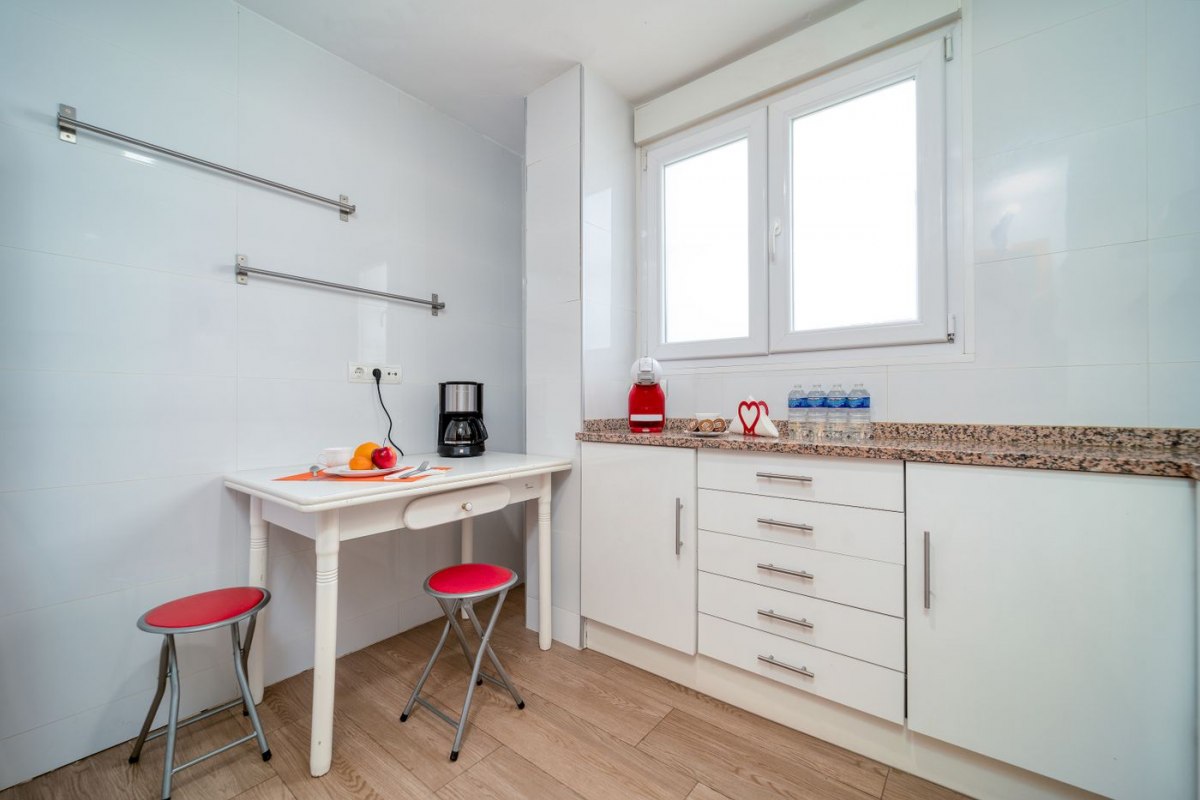
A few practical points make self-catering smoother on Fuerteventura. Most apartment kitchens are basic, with a two-ring hob, a fridge and a few pans rather than a full oven, so plan meals you can cook on the hob or grill. Bottled water is the norm for drinking, sold cheaply by the large bottle in every supermarket, since tap water on the island largely comes from desalination and is safe but not to everyone’s taste. The big HiperDino stores open long hours and on Sundays in the resorts, while village shops keep shorter hours and may close for a midday break, so a weekly shop on arrival saves trips. Markets run on fixed days, the Mercado de la Biosfera in Puerto del Rosario on Saturdays and the La Oliva and Tarajalejo markets on set mornings, so check the day before relying on them for fresh produce.
Self-catering by area
The area shapes the experience:
- Corralejo: the widest choice of apartments and studios, walkable to supermarkets, restaurants and the ferries.
- Caleta de Fuste: family self-catering complexes around the calm bay, with the Atlantico shopping centre for the weekly shop.
- El Cotillo: small studios and apartments in a quiet village with a SPAR and a few good fish restaurants.
- Jandia and Morro Jable: cheaper apartments near the long beach and the harbour fish market.
Eating out as a self-caterer
Self-catering does not mean never eating out, and the smart approach mixes the two. Cooking breakfast and lunch from the supermarket while saving dinners for local restaurants gives you the savings of a kitchen and the pleasure of the island’s food without the rigidity of a meal plan. The best value sits in the village and harbour restaurants rather than the resort strips: a plate of grilled fish with papas in Morro Jable or El Cotillo costs a fraction of a tourist-menu equivalent and tastes closer to the source. Look for places busy with locals, the menu del dia at lunchtime for a cheap three-course set meal, and the guachinche-style and family-run spots inland. Tap water is desalinated and safe but bottled is the norm at the table, and the lower IGIC keeps restaurant bills below mainland levels. Pairing a few self-catered days with one or two meals out is the route most experienced visitors settle on.
The cheese route and the weekly markets
Self-catering is the best way to eat the island’s own produce, and Fuerteventura makes a virtue of it. The island has around 29 active cheese dairies, the queserias, working the milk of the native cabra majorera, and many sell direct from the farm, so a self-caterer can follow an informal cheese route and buy Queso Majorero at the source, young, semi-cured or cured and rubbed with paprika, gofio or oil. The weekly craft and produce markets are the other key stop, each on its own day: the Mercado de la Biosfera in Puerto del Rosario and the markets at La Oliva and Tarajalejo sell cheese, gofio, honey, mojo and fresh vegetables straight from local makers, usually on weekend or set weekday mornings, finishing by early afternoon. Buying at the markets and the farms is cheaper, fresher and more interesting than the supermarket, and it puts your money into the island’s traditional economy, which is much of the point of self-catering here rather than eating every meal in a resort.
Long stays and rural homes
Self-catering comes into its own for longer stays, and the island has a quiet niche of rural homes that suit them. Beyond the resort apartments, restored rural houses, the casas rurales, in inland villages like Villaverde, Lajares and the centre offer a slower, more local base with space and character, usually needing a hire car. For two weeks or more, or for winter-sun visitors and remote workers escaping the northern cold, a self-catering home with a proper kitchen and a laundry is far more livable than a hotel, and weekly and monthly rates fall well below the nightly equivalent. The mild winter climate, the cheap local produce, the low IGIC tax and the absence of a tourist tax all make Fuerteventura a strong long-stay choice, which is why a steady community of seasonal residents winters on the island in self-catering homes rather than hotels.
Frequently asked questions
Is self-catering cheaper than all-inclusive in Fuerteventura?
For light eaters, couples and small families, usually yes, once a kitchen cuts the cost of eating out, helped by the islands’ low IGIC and lack of a tourist tax. All-inclusive can still win for heavy eaters and drinkers.
What supermarkets are there in Fuerteventura?
The main chains are the Canarian HiperDino in its various sizes, SPAR and EuroSpar in the villages, the local Padilla in shopping centres, and Mercadona in Puerto del Rosario.
Where can you buy local food like cheese and gofio?
At any HiperDino or Padilla, and best of all at the weekly markets such as the Mercado de la Biosfera in Puerto del Rosario and the food and craft markets at La Oliva and Tarajalejo, which sell directly from local producers.
What local dishes can you cook in a self-catering kitchen?
Papas arrugadas with mojo, grilled local fish such as vieja, and anything using Majorero cheese or gofio are simple and authentic options from the supermarket or market.
Do self-catering apartments have pools?
Most apartment complexes share a central pool, though not all are heated. Villas and holiday homes more often have a private pool, sometimes heated for an extra charge.
Can you drink the tap water in Fuerteventura?
The tap water is desalinated and treated, so it is safe, but many visitors find the taste flat and buy cheap bottled water by the large bottle for drinking. Tap water is fine for cooking, coffee and brushing teeth.
Sources and further reading
- Consejo Regulador Queso Majorero, points of sale
- Cabildo de Fuerteventura, island council
- Reserva de la Biosfera Fuerteventura