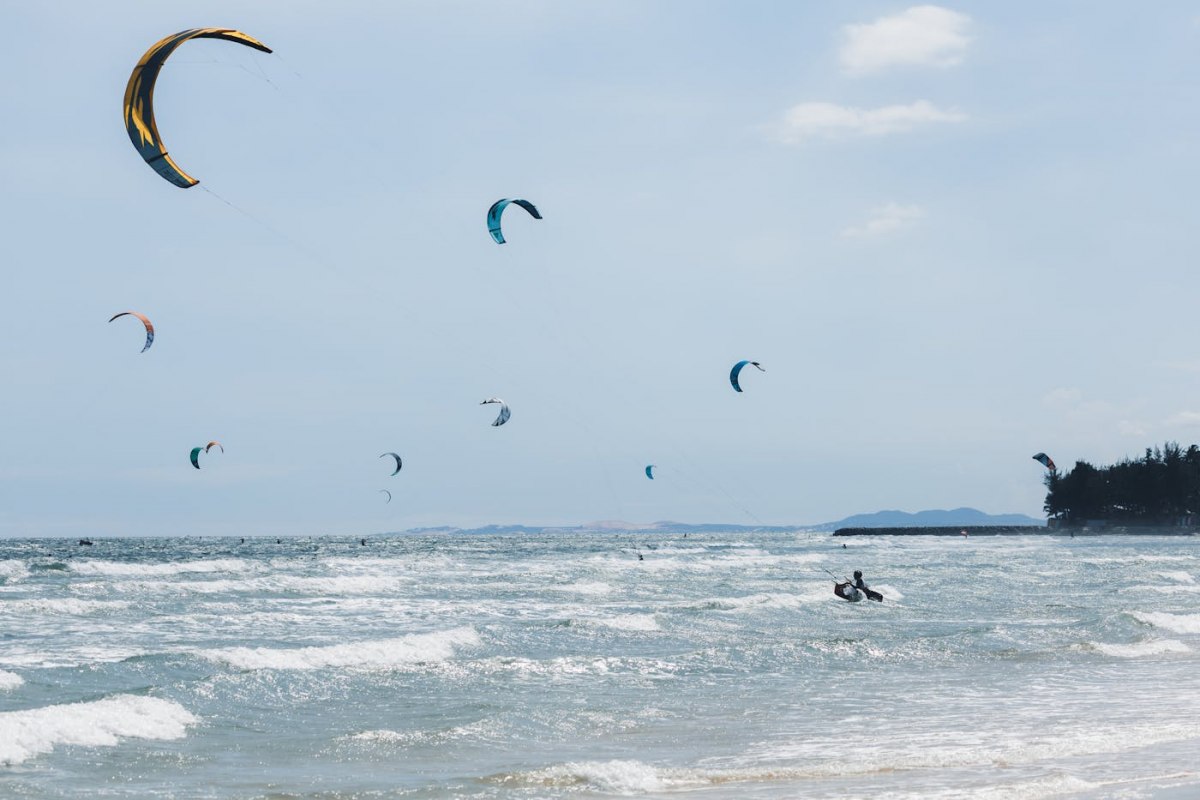
Fuerteventura is one of the defining windsurfing and kitesurfing destinations in Europe, and the reason is a single stretch of the south coast where a shallow lagoon, steady trade winds and a 40-year competition history come together. This guide explains where to ride by ability, where to learn, when the wind blows hardest, and the local story that put the island on the world map for board sports. For the wider picture, see our Fuerteventura travel guide.
Sotavento: the heart of it
The Playa de Sotavento, on the eastern side of the Jandia peninsula near Costa Calma, is the island’s wind-sport centre of gravity, and it owes that to one man and one feature. The Swiss windsurfer Rene Egli came across the wind here in the early 1980s and built a windsurf centre on the beach from 1984, now one of the largest in the world. Two years later he persuaded the professional tour to hold the first Fuerteventura World Cup at Sotavento, and the French rider Pascal Maka promptly set a world speed record of 38.86 knots at the event. The competition has run almost every summer since and now counts among the longest-standing fixtures on the professional windsurfing calendar, with a kiteboarding World Cup added in its early years.
What makes Sotavento special is the tidal lagoon. At certain tides a vast sheet of shallow water forms behind a sandbar, warm and waist-deep, which is the safest beginner and freestyle water you will find anywhere. Outside the bar, the open bay carries the wind and chop for speed and wave sailing. The same beach therefore suits a first-timer and a World Cup pro on the same afternoon, which is rare.
Where to ride by ability
The island has spots for every level, and matching the spot to your ability matters here more than usual because the wind is strong:
- Beginners: the Sotavento lagoon at the right tide, and Flag Beach near Corralejo in the north, both with shallow, manageable water and the main schools.
- Intermediates: the open Sotavento bay, Costa Calma, and the bays around Corralejo, for stronger wind and small swell to progress on.
- Advanced and wave riders: the north shore breaks near Corralejo and El Cotillo, and Punta Blanca on the west, where Atlantic swell meets the trade wind.
- Kitesurfers: Flag Beach at Corralejo is the main kite school zone, with Sotavento and the southern flats also popular once you can ride upwind.
When the wind blows
The trade winds blow most reliably and hardest in the summer, from roughly May to September, which is why the World Cup runs in July or August when the acceleration zone off the south coast is at its most consistent. In the peak months the south regularly sees a steady force four to six, and the geography funnels and accelerates the wind as it bends around the Jandia massif, which is the technical reason Sotavento delivers such dependable conditions when other European spots go flat. The wind blows year-round, but spring and autumn bring lighter, more variable days that suit learners, while winter is the lightest and least predictable season for sailing even though it is the island’s tourist peak. Afternoons are generally windier than mornings across the island, the opposite of the calm-morning pattern that sun-seekers prefer, which is why the wind sports and the beach holidays coexist so well here. A practical tip from regular visitors: if you are learning, book a spring or autumn trip, where the wind is strong enough to progress but rarely so fierce that lessons get cancelled, which can happen at the height of summer.
Watching the World Cup
You do not have to ride to enjoy the wind here. The Fuerteventura World Cup at Sotavento each summer is one of the longest-running events on the professional tour, and it is free to watch from the beach as the world’s best slalom and freestyle riders, and now wing foilers, perform a few metres offshore. The grandstand is the sand itself, and the lagoon setting means the action sits close to the spectators rather than far out to sea. For families and non-riders staying in the south during the event, it is a genuine spectacle and a reason to time a trip to the competition weeks, though it also means booking accommodation and gear well ahead, since the southern resorts fill with the windsurfing world.
Learning to windsurf or kite
The island is one of the best places in Europe to learn, with a dense cluster of accredited schools at Sotavento, Costa Calma, Corralejo and El Cotillo. A few practical points shape a course:
- Lagoon lessons: beginner windsurf courses run in the shallow Sotavento lagoon or at Flag Beach, where you can stand up and the consequences of a fall are small.
- Kite courses are longer: kitesurfing takes more lesson hours than windsurfing to reach independence, so budget several days rather than one or two.
- Equipment hire and storage: the big centres rent the full range of boards and rigs and store gear between sessions, which suits travellers who fly without their own kit.
- Wetsuit: a shorty or full suit is normal outside high summer, since the Atlantic stays cool even when the air is warm.
Beyond the board
The same wind and water feed a wider scene. Surfing is strong on the north shore reefs around Corralejo, Lajares and El Cotillo, and wing foiling has grown fast at Sotavento alongside the older sports. Many visitors pair a wind-sport trip with a relaxed base, and our guides to hotels in Jandia for the south and things to do in Corralejo for the north cover where to stay near the action. On a no-wind day, the island’s volcanoes, beaches and boat trips fill the time.
The north shore and the surf scene
While the south is the flatwater and speed kingdom, the north of the island is where the Atlantic swell does the work, and the two halves attract different crowds. The reefs and beach breaks between Corralejo, Lajares, Majanicho and El Cotillo make up among the most consistent surf zones in the Canaries, picking up swell that wraps around the north coast through the autumn and winter. This is the opposite season to the summer wind peak, so the island effectively has two sports calendars: wind sports at their best in summer on the south coast, and surfing at its best in winter on the north shore. Wave windsurfing and the fast-growing sport of wing foiling bridge the two, and the El Cotillo and Corralejo schools cater to all of them. For travellers who want the surf and town life together, our guide to things to do in Corralejo covers the northern base in full, while the wider sandy coastline is in our best beaches guide.
What a wind-sport holiday costs and includes
Knowing how the money works helps you plan a trip rather than guess at it. The main lines are equipment and tuition, and both run a step cheaper than mainland Europe thanks to the islands’ lower IGIC sales tax. A few pointers:
- Lesson packages: schools sell beginner courses by the multi-day block as well as single sessions, and a block almost always works out cheaper per hour than booking day by day.
- Equipment hire: the large centres rent boards, rigs and kites by the day, the week or the fortnight, with weekly rates the best value, and most store your gear between sessions so you need not haul it back to the hotel.
- Storage and insurance: rental usually includes basic equipment insurance, but check the excess, since wind sports are hard on kit in strong conditions.
- Your own gear: experienced riders who bring boards face airline excess fees, so weigh the cost of flying with kit against renting on the spot, which is straightforward here given the density of centres.
Pairing tuition with the right base, the south for the lagoon, the north for the surf, is the single decision that most shapes the trip, so set that before booking the hotel.
Practical tips for a wind-sport trip
- Pick your base by your sport: south at Costa Calma or Jandia for the Sotavento flatwater and speed, north at Corralejo for kite, surf and wave.
- Travel in summer for the strongest wind, or spring and autumn if you are learning and want it gentler.
- Check the tide for the lagoon, since the famous Sotavento flatwater only forms at certain states of the tide.
- Book lessons and gear ahead in the World Cup weeks, when Sotavento fills with riders and spectators.
- Respect the protected coast: much of the shoreline sits within protected areas, so follow access and parking rules at the beaches.
Frequently asked questions
Why is Fuerteventura so good for windsurfing?
Steady, strong summer trade winds, the warm shallow Sotavento lagoon for learning and freestyle, open bays for speed and waves, and a 40-year competition history with one of the world’s largest windsurf centres at Sotavento.
Where do beginners learn on the island?
The Sotavento lagoon near Costa Calma at the right tide, and Flag Beach near Corralejo, both shallow and served by accredited schools. Kitesurf beginners mostly start at Flag Beach.
When is the windiest time in Fuerteventura?
The trade winds are strongest and most reliable from May to September, which is why the World Cup runs in mid-summer. Afternoons are windier than mornings year-round.
What is the Sotavento lagoon?
A large, shallow sheet of warm water that forms behind a sandbar at certain tides on the Sotavento beach, ideal for beginners and freestyle, with the open windier bay just outside it for advanced riders.
Is windsurfing or kitesurfing easier to learn here?
Windsurfing usually reaches a fun, independent level faster, often within a few days in the lagoon. Kitesurfing takes more lesson hours to ride safely, so plan a longer course if you start from scratch.
Sources and further reading
- Rene Egli Center, Sotavento windsurf history
- Fuerteventura Windsurf and Wingfoil World Cup
- Reserva de la Biosfera Fuerteventura