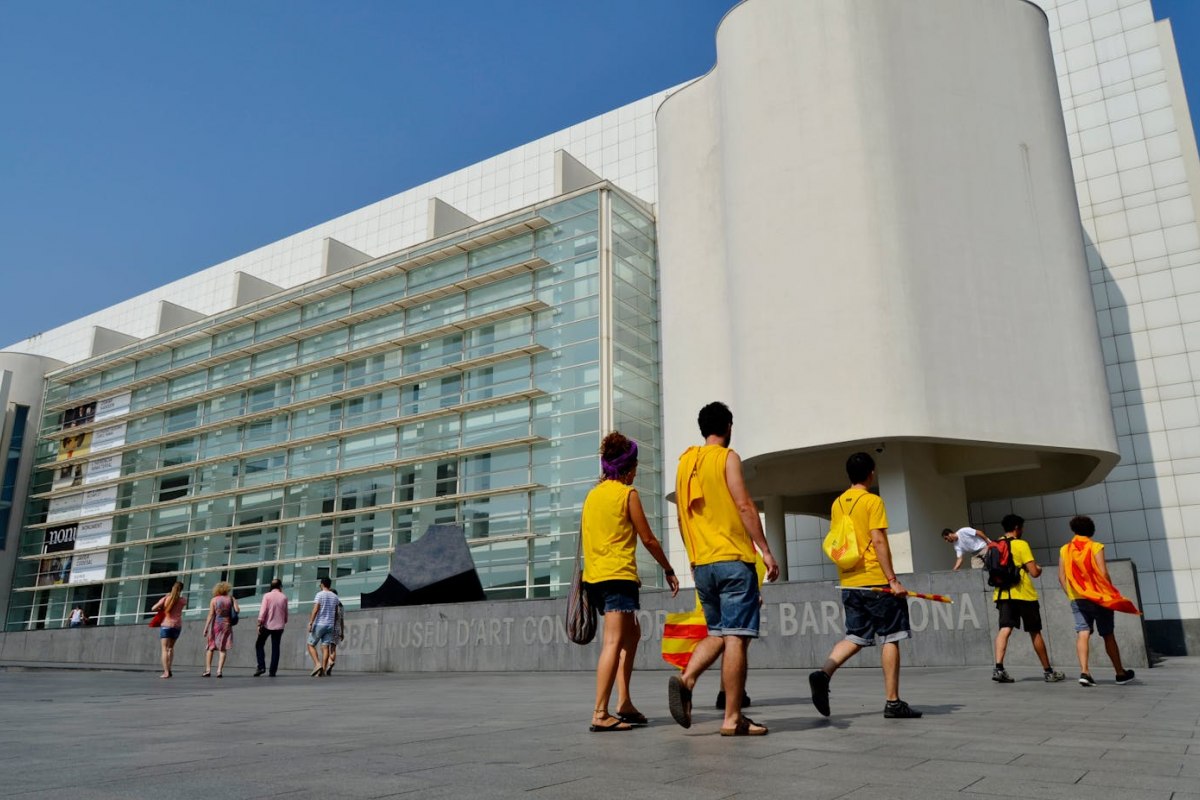
MACBA is the white building that locals use as a meeting point, a skate park and an art museum, in that order of fame. Richard Meier’s gleaming structure on the Plaça dels Àngels has become among the most photographed pieces of modern architecture in Barcelona, and the plaza in front of it is a pilgrimage site for skateboarders from across the world. Inside sits a collection of more than six thousand works charting art from the 1950s to now, with a deep Catalan core. One detail trips up more visitors than any other: the museum closes on Tuesdays, not Mondays. This guide covers the building, the collection, the plaza and how to time a visit.
MACBA is one of the contemporary anchors among the museums in Barcelona, and it sits a short walk from several others in the old town.
Richard Meier’s white machine
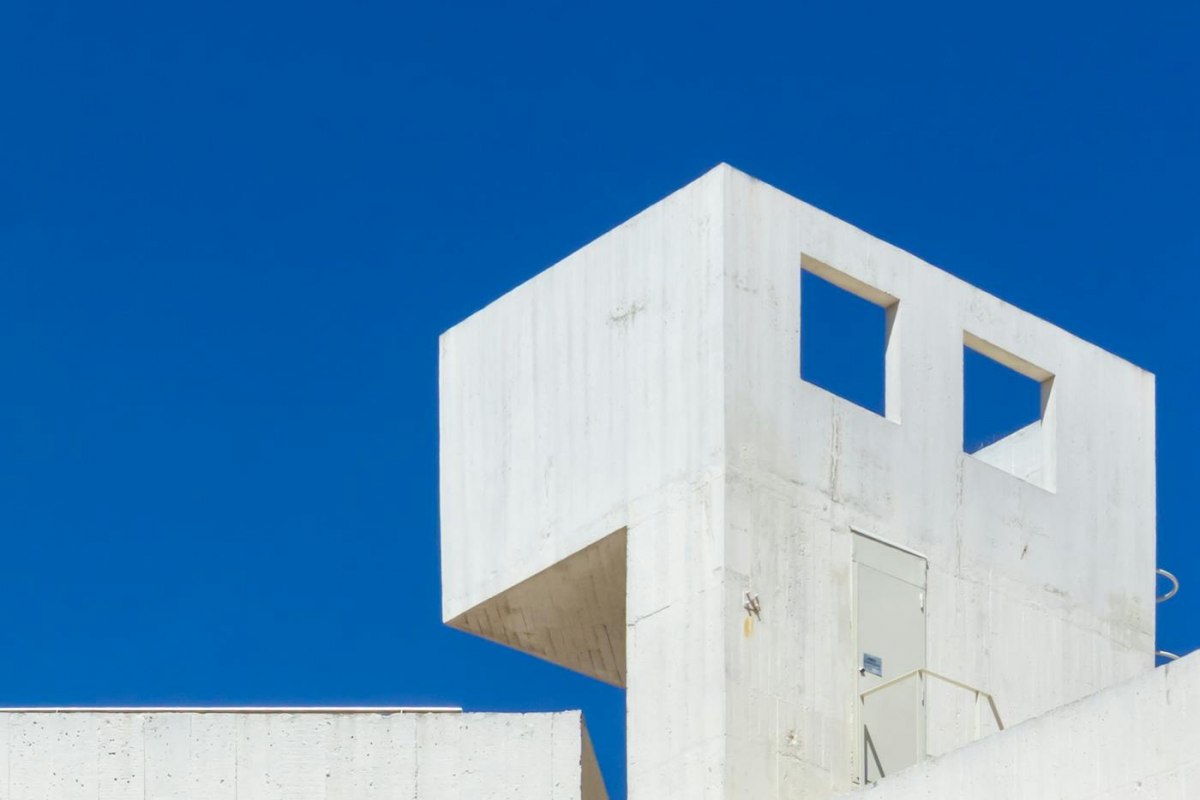
The American architect Richard Meier designed MACBA in 1990 and the building went up between 1991 and 1995. It is a study in white surfaces, glass and natural light, set down deliberately against the dense, dark medieval fabric of the Raval district around it.
- Scale: the structure runs about 120 metres long and 23 metres high, with roughly 14,300 square metres of floor space.
- The ramp: a long glazed ramp climbs the full front of the building, so visitors move up through the galleries with the plaza always in view through the glass wall.
- The light: Meier filtered Mediterranean sun through louvres and skylights to keep the galleries bright without burning the work, a signature of his museum designs.
The Catalan government declared the building a cultural landmark in its own right, and many visitors come for the architecture as much as the art inside.
The plaza that became a skateboarding shrine
The wide, smooth, traffic-free Plaça dels Àngels in front of the museum turned into among the most famous street-skating spots on earth, almost by accident. Its polished surfaces, ledges and gentle banks draw skaters from morning to night, and skate videos filmed here have made the square a destination for a global subculture that has nothing to do with the ticketed galleries above it.
The museum and the skaters have reached an uneasy coexistence over the years. For a visitor, the result is a piece of unplanned street theatre that runs free outside the door, and one of the liveliest plazas in the Raval.
The collection: Catalan and international art since the 1950s
MACBA holds more than six thousand works and keeps the display rotating, so the permanent collection is shown in changing thematic hangs rather than a fixed route. The spine of it is the art of the second half of the twentieth century, with particular weight on Catalonia and Spain.
- Catalan post-war avant-garde: the collection is strong on the Dau al Set group and on figures such as Antoni Tàpies and the poet-artist Joan Brossa, who reshaped Catalan art under and after the Franco dictatorship, often working in code to slip past censorship.
- International movements: pop, minimal and conceptual art sit alongside the local material, placing Barcelona inside the wider story of late-century art rather than treating Catalan work in isolation.
- Photography and Latin America: dedicated strands cover photography and art from Spanish-speaking America, an area many European museums neglect, which gives the collection a reach beyond the usual Western canon.
- Idea-led work: much of the holding is conceptual, meaning text, documentation, video and installation carry as much weight as painting and sculpture. This is a museum of art as argument, not only as object.
The collection grows by acquisition and donation each year, so a work you saw on one visit may be in storage on the next. That churn is deliberate: MACBA treats its holding as a living archive to be re-read, not a fixed display to be memorised.
Because the hang changes, check what is on before you go. The temporary exhibitions are often the main reason to buy a ticket, and they range across film, sound, performance and political art.
MACBA also treats its collection as a research project rather than a fixed canon. The museum publishes, runs a study centre and stages talks, and it has built a reputation for shows that argue a position rather than simply display objects. A visitor who expects a quiet picture gallery can be wrong-footed by work that is documentary, archival or openly activist. Reading the exhibition notes makes the difference between a confusing visit and a rewarding one.
The Capella MACBA and the Convent dels Àngels
Directly across the plaza from Meier’s white box stands its opposite: the Convent dels Àngels, a sixteenth-century Gothic convent that is part of Barcelona’s protected heritage. The contrast between the two buildings, modern and medieval facing each other across one square, is the most rewarding short architecture lesson in the district.
Since 2006 the convent’s old chapel has served as the Capella MACBA, an extension exhibition space the museum uses for single-artist projects. It is worth crossing the square to see whatever is installed under its Gothic vaults.
The Raval around the museum
MACBA did not land in the Raval by chance. The museum was built as the anchor of a deliberate cultural regeneration of what had long been the city’s poorest and most overlooked quarter, and the institutions that followed it turned the streets around the plaza into Barcelona’s densest cluster of culture.
- CCCB, the Centre de Cultura Contemporania, sits directly next door in a former charity house and runs large themed exhibitions. It is the natural second stop for an afternoon, and it keeps no permanent collection of its own.
- Bookshops and galleries have spread through the surrounding lanes, drawn by the museum and its student crowd, giving the Raval the best concentration of independent art spaces in the centre.
- The old Raval still runs right up to the plaza, a working immigrant neighbourhood of markets and cheap kitchens that gives the area an edge the polished gallery district does not erase.
The result is a single square where a white modernist museum, a Gothic convent, a skate scene and a multicultural quarter all press up against each other. That collision, more than any single canvas inside, is what makes a MACBA visit memorable.
Reading the art: what to expect as a first-timer
More visitors leave MACBA confused than leave any other major Barcelona museum, and almost always for the same reason: they came expecting paintings on walls and met rooms of text, film and objects whose meaning is not obvious. A little preparation turns that frustration into the most thought-provoking visit in the city.
- Read the wall texts and the room sheets. Here they are not optional background. With conceptual work, the idea is the art, and the text is how you reach it. Pick up the printed guide at the entrance.
- Give single works time. A pile of material or a long video can look like nothing until you sit with it. The museum rewards patience over a quick lap.
- Take the free guided tour. Booked in advance at no charge, it is the fastest way for a newcomer to get a foothold in difficult shows.
- Treat discomfort as the point. Much of the work is political or unsettling by design. If a piece provokes you, it is doing its job.
Come with that mindset and MACBA shifts from baffling to the richest conversation a museum in Barcelona will offer you. Come expecting a quiet picture gallery and you may wonder what you paid for.
Planning your visit
The closing day catches people out, so read this before you build a day around MACBA.
- Closed Tuesdays, not Mondays. This is the opposite of most major Barcelona art museums, which makes MACBA a useful Monday option when MNAC, Picasso and Miró are dark.
- Price: around €12, and the ticket stays valid for a full month with repeat visits to current shows. Under-18s enter free.
- Hours: open Monday and Wednesday to Friday late morning to early evening, with longer Saturday hours and a short Sunday morning. Times shift between the winter and summer timetables.
- Free entry: Saturdays from 16:00, plus a free first Sunday of the month, all day. Booked guided tours are also free.
- The pass: MACBA is one of the six museums on the Articket, so it folds into an art-focused trip.
For the Articket math and the wider free-entry calendar, see the museums in Barcelona guide. The neighbouring CCCB sits next door for a contemporary double bill, while the Picasso museum in the Born makes the natural classical counterpoint. Fit it all into a wider trip with the things to do in Barcelona guide.
Frequently asked questions
What day is MACBA closed?
MACBA closes on Tuesdays, the opposite of most Barcelona art museums, which shut on Mondays. It also closes on 1 January and 25 December. Because it opens on Mondays, it is a strong choice when the larger museums are dark.
How much does MACBA cost?
General admission is around €12, and the ticket is valid for a full month with repeat visits to the current exhibitions. Visitors under 18 enter free, and there are reduced rates for students and seniors.
When is MACBA free?
Entry is free every Saturday from 16:00, and on the first Sunday of each month for the whole day. Free guided tours are available by advance booking.
Is MACBA worth visiting?
For contemporary art and modern architecture, yes. The Meier building, the rotating collection of post-1950 Catalan and international art, and the Capella MACBA across the square reward a focused visit. The plaza’s skate scene is a free spectacle in itself.
How long do you need at MACBA?
Around ninety minutes to two hours covers the current hang and a temporary show. Add time for the plaza and the Convent dels Àngels chapel opposite.
Where is MACBA and how do you get there?
MACBA stands on the Plaça dels Angels in the Raval, a few minutes on foot from the Ramblas. The closest metro stops are Universitat and Catalunya, both a short walk away. The plaza is open and easy to spot, marked by the white facade and the skaters in front of it.
What is the difference between MACBA and CCCB?
MACBA holds a permanent collection of contemporary art in Meier’s building. The CCCB next door keeps no permanent collection and programmes large themed shows on cities, ideas and culture. Many visitors pair the two in one afternoon.
Sources
- MACBA Museu d’Art Contemporani de Barcelona – building, collection, Capella MACBA and visiting information
- Ajuntament de Barcelona – Convent dels Àngels heritage and municipal museum network
- ArticketBCN – participating museums and pass conditions