Barcelona has more than fifty museums, and the ones worth your time are not spread evenly across the city. They bunch up on Montjuïc hill, in the medieval lanes of the Born, and along a single Gothic street in the old town, which means a planned route can string four collections together on foot while a random one burns half a day on the metro. The museums also run a layered free-entry system that almost no visitor decodes in time, and a single art pass that pays for itself only past a certain count. This guide covers museums in Barcelona the way a resident actually uses them: which collections justify a timed ticket, how to read the free-entry calendar, when the Articket beats single tickets, and how to group everything by neighbourhood so you walk, not commute.
For where these museums sit inside a full city trip, see the wider things to do in Barcelona guide. This page handles the museums in depth.
The big collections you build a day around
Six art institutions carry the city’s reputation. Each one rewards a slow visit, so treat these as anchor stops rather than tick-boxes. Two of them hide a story that the standard listings skip, and that story is the reason to go.
MNAC: a Romanesque hall of frescoes that were peeled off mountain churches
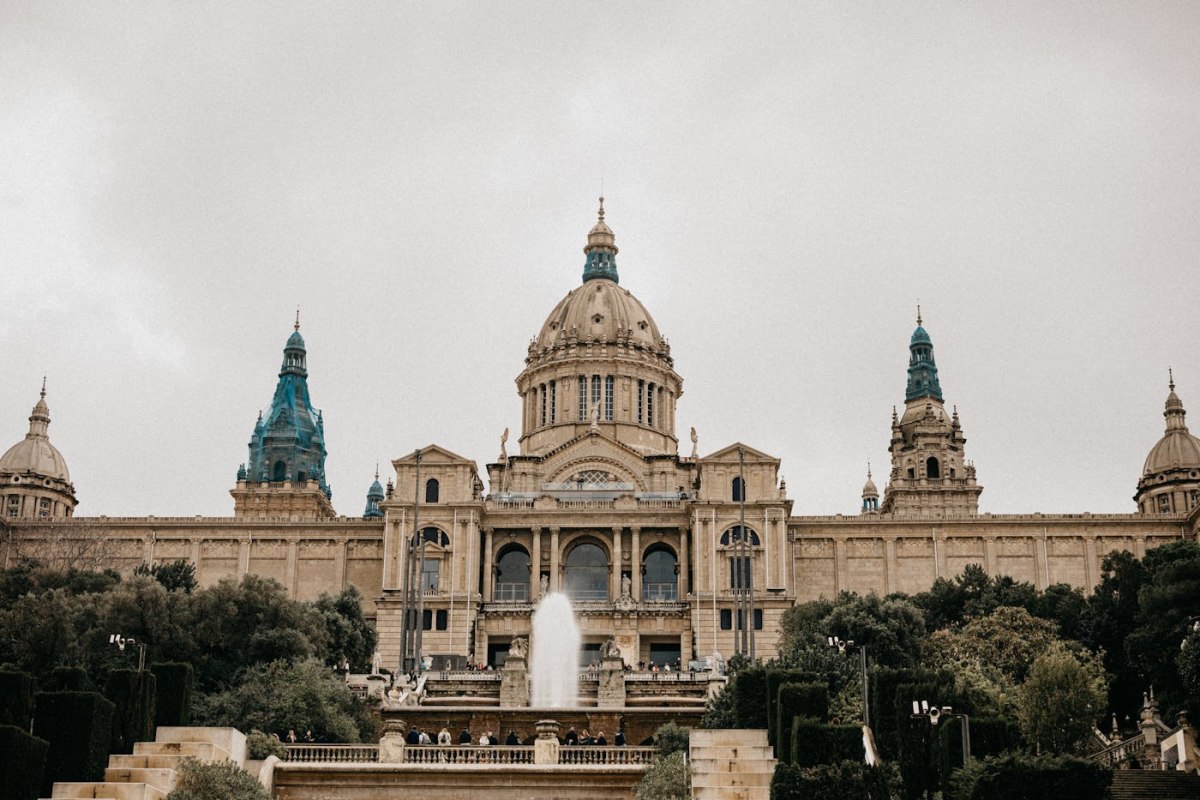
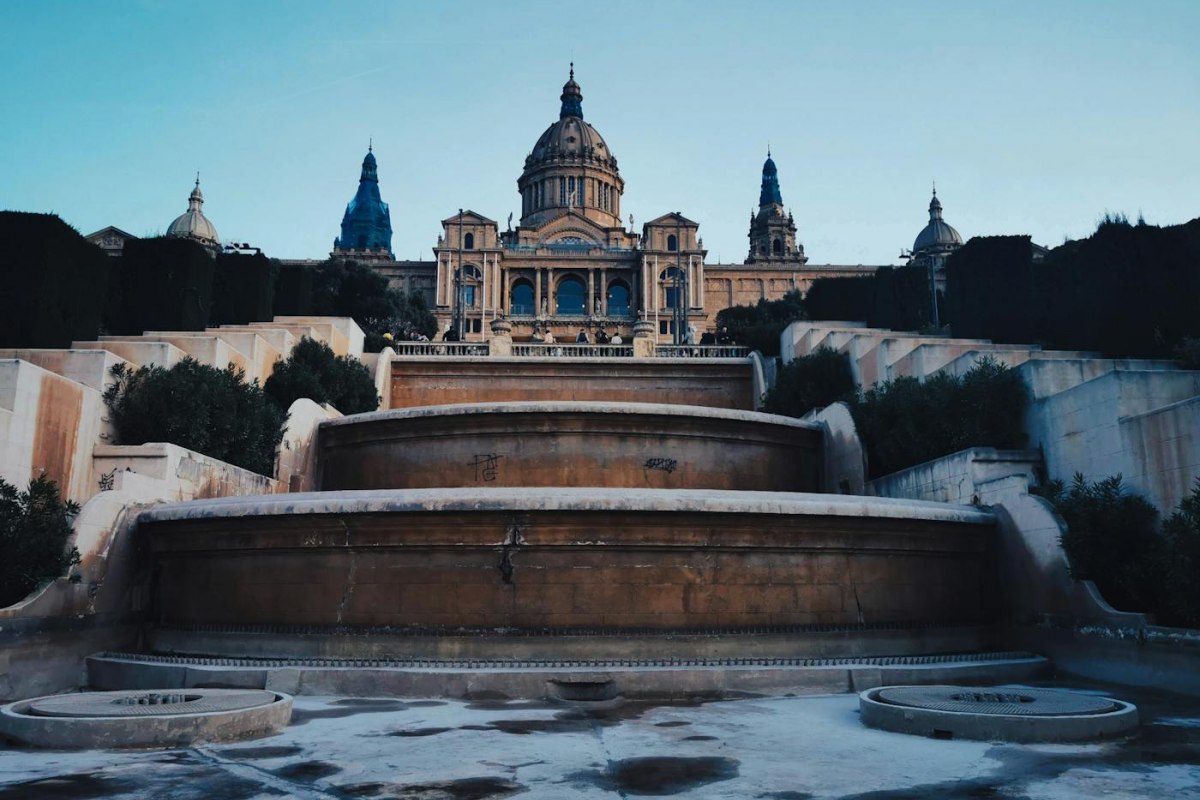
The Museu Nacional d’Art de Catalunya sits inside the Palau Nacional, the domed palace above the Magic Fountain on Montjuïc. Most visitors come for the view and the Gothic and Modernisme galleries, then walk past the most singular room in Barcelona without grasping what it holds. The Romanesque hall does not display paintings that were made in a museum. It displays the painted skins of remote Pyrenean churches.
- How they got here: in the early twentieth century, art was being stripped out of isolated mountain chapels and sold abroad. To stop the loss, conservators detached the murals on site using the strappo method, lifting only the top pictorial layer, a film barely a millimetre thick, off the plaster and onto canvas.
- What you see: apses and vaults reassembled indoors on curved wooden frames that copy the original church geometry, so the Pantocrator of Sant Climent de Taüll looms over you exactly as it did over a valley congregation nine centuries ago.
- The Sixena room: one set, taken from the chapter house of the Santa Maria de Sixena monastery, survived a 1936 fire only as calcined fragments and was rescued by the same lifting technique. It remains among the most studied groups of medieval painting in southern Europe.
- Practical: general admission is around €12 and the ticket stays valid across two days in the same month, which suits the building’s size. Closed Mondays. The rooftop terraces are part of the ticket, so save them for the end.
For the wider context of art in Spain, MNAC is the single best starting point in the country.
Museu Picasso: five Gothic palaces, not one gallery
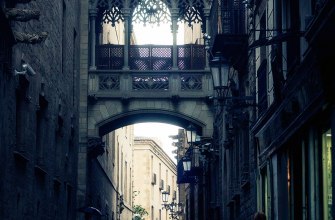
The Picasso museum is treated everywhere as “the Picasso collection,” which misses half of what you are visiting. The museum is a row of five linked medieval palaces on Carrer de Montcada, a street of merchant mansions in the Born. You move through stone courtyards and up external staircases between the rooms, and the building itself is one of the better surviving examples of Catalan civil Gothic architecture.
- How it came together: the collection opened in the Palau Aguilar in 1963, driven by the donation and persistence of Jaume Sabartés, Picasso’s lifelong friend and secretary. The museum later spread into the Baró de Castellet and Meca palaces, then a 1999 extension into Casa Mauri and the Palau Finestres.
- What the collection is strong on: not the famous late masterpieces, but the formative years, the academic studies, the Blue Period, and the complete Las Meninas series, where Picasso reworked Velázquez fifty-eight times in one burst.
- Practical: general admission runs about €15 for the permanent collection, more for combined exhibition tickets. Closed Mondays, open late on Thursdays. Free on the first Sunday of the month and on Thursday evenings in the winter timetable, with a reserved slot.
The full single-museum walkthrough, room by room, lives in the dedicated Picasso Museum Barcelona guide.
Fundació Joan Miró: a building made for the art
Up on Montjuïc, a short walk from MNAC, the Miró foundation is the rare museum where the architecture was designed around the collection rather than retrofitted. Josep Lluís Sert, Miró’s friend, built white volumes and rooftop light wells that pull Mediterranean sun straight onto the canvases and sculptures. The holdings cover Miró’s full range, from his early avant-garde canvases to the large late tapestries, plus a room of pieces by other artists that Miró admired.
- Practical: tickets run around €17 online. Closed Mondays apart from a handful of public holidays. Reduced rates for students and over-65s, free for young children.
- Pair it: MNAC and Miró are the natural Montjuïc double, doable in one full day if you start early.
MACBA, Tàpies and CCCB: the contemporary trio
Three contemporary institutions complete the headline set, two of them in the Raval district behind the Ramblas.
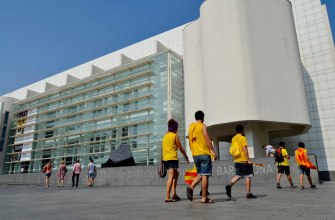
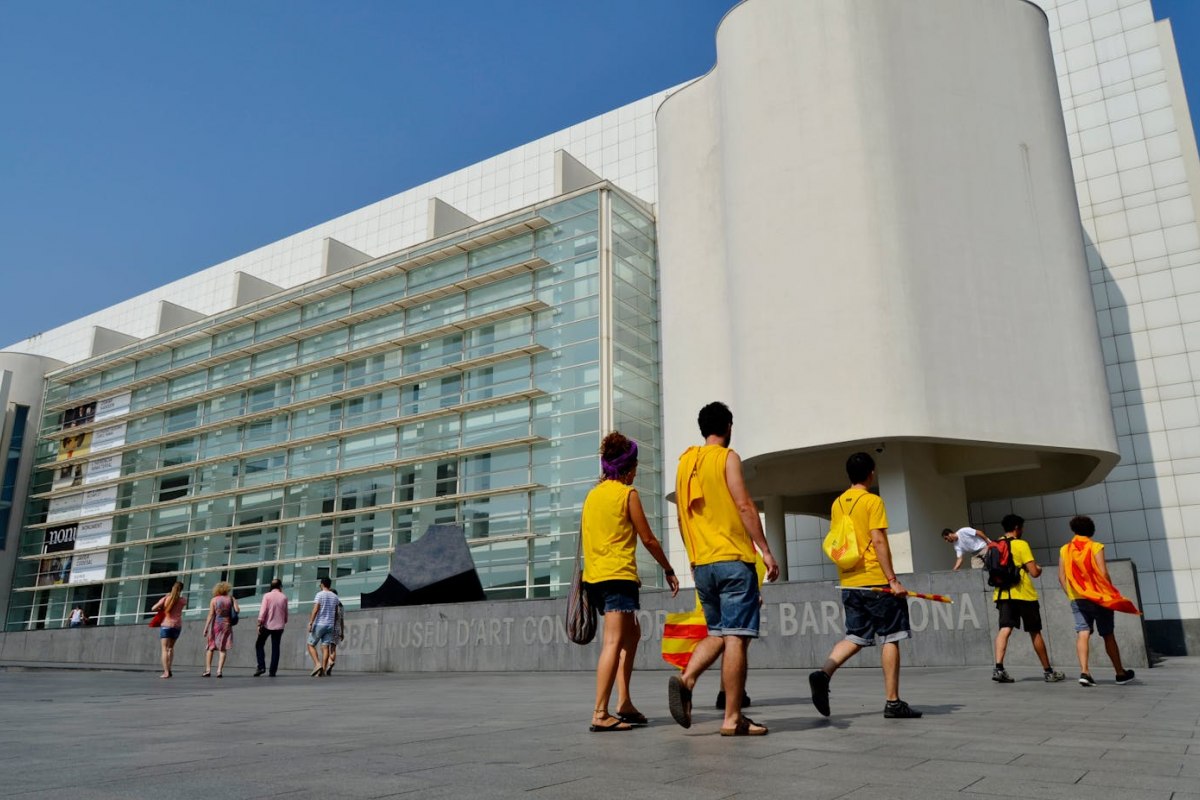
- MACBA is the white Richard Meier building whose plaza became the city’s skateboarding hub. Inside is the leading collection of art from the last half-century in Catalonia and beyond. Full detail in the Museum of Contemporary Art Barcelona guide.
- Fundació Antoni Tàpies sits in a Modernista brick building in the Eixample, crowned by Tàpies’s own wire sculpture Cloud and Chair. It is the place to understand Catalonia’s most important post-war artist.
- CCCB, next door to MACBA, runs no permanent collection at all. It programmes ambitious temporary shows on cities, technology and ideas, and it is the most consistently surprising ticket in town for a return visitor.
Museums in Barcelona, grouped by district so you walk, not commute
The single biggest time saver is to visit museums by neighbourhood. Barcelona’s collections cluster tightly, and crossing the city between two of them wastes the part of the day when the galleries are quietest.
Montjuïc hill: the museum mountain
- MNAC and the Fundació Joan Miró are the anchors.
- CaixaForum, in a former textile factory by Puig i Cadafalch, runs strong touring exhibitions and is often free or low cost.
- The Mies van der Rohe Pavilion, a rebuilt 1929 modernist landmark, is a ten-minute architecture stop rather than a full museum.
- The Olympic and Sports Museum and the Castell de Montjuïc fill out a hill that can absorb a whole day on foot or via the cable car.
El Raval: contemporary art behind the Ramblas
- MACBA and CCCB sit side by side, an easy pairing for one afternoon.
- The neighbourhood itself, once the city’s roughest, now carries the densest concentration of galleries and bookshops in Barcelona.
El Born and La Ribera: medieval streets and sweet stops
- Museu Picasso on Carrer de Montcada is the heavyweight.
- A few doors along, the Museu Europeu d’Art Modern shows figurative nineteenth and twentieth century work in another Gothic palace.
- The Museu de la Xocolata runs on a famous gimmick: your entry ticket is a bar of chocolate. It is the easiest museum in the city to visit with restless children, and the full story is in the Chocolate Museum Barcelona guide.
- The El Born Centre de Cultura i Memòria preserves an excavated 1700s neighbourhood under a former market hall, free to walk into.
The Gothic Quarter: the city under the city
- MUHBA Plaça del Rei is the standout. Below the medieval royal square, a lift drops you onto the largest excavated stretch of Roman Barcino open to the public, where you walk raised gangways over streets, a laundry, a garum fish-sauce works and a wine cellar from the first centuries of the city.
- The Museu Frederic Marès, in a wing of the old royal palace, mixes medieval sculpture with one collector’s obsessive hoard of everyday Spanish objects, from fans to tobacco pipes.
Eixample and Poblenou: Modernisme and design
- The Fundació Antoni Tàpies and the small, eccentric Egyptian Museum anchor the Eixample, along with the photography-led Moco Museum.
- Out at Glòries, the Museu del Disseny gathers four design collections, from fashion to product design, in one sharp modern block. The Can Framis contemporary painting museum sits a short walk away in a converted Poblenou factory.
Niche collections worth a detour
Past the art headline names, several specialist museums reward a visitor with a particular interest, and two of them sit in buildings as notable as their contents.
- Museu Marítim de Barcelona occupies the Reials Drassanes, the royal shipyards, one of the largest surviving medieval shipbuilding halls anywhere, with vast stone naves that launched galleys from the 1200s onward. A full-scale replica of the royal galley from the battle of Lepanto fills one nave, and your ticket includes the Pailebot Santa Eulàlia, a restored schooner moored at the nearby quay. Admission is about €7, free on Sunday afternoons.
- CosmoCaixa, the science museum, is the best wet-weather choice for families. Its centrepiece is a flooded section of recreated Amazon rainforest under glass, complete with the humidity, fish and birds.
- Museu de la Música holds a deep instrument collection and offers free Sunday and Thursday evening slots.
- The FC Barcelona Museum draws football fans into the Camp Nou complex; it links naturally to the football and stadium notes in the main city guide.
Passes and free entry, decoded
This is the section the listicles skip, and the one that changes what a museum day costs. Barcelona runs two overlapping systems: a paid art pass, and a public free-entry calendar.
The Articket: do the math before you buy
The Articket BCN is a single pass covering six art museums: MNAC, Picasso, Miró, MACBA, Tàpies and CCCB. It costs about €38 and adds fast-track entry at each one, with accompanied under-16s free.
Whether it pays depends on a simple count, which no listing actually runs for you:
- Three of the six already cover the cost. MNAC at €12, Picasso at €15 and Miró at €17 add up to about €44, so seeing those three alone beats the single-ticket total.
- Below three, skip it. Two museums rarely clear €38, so a short trip is cheaper on single tickets.
- The hidden value is the queue. At the Picasso museum, the fast-track lane is worth as much as the saving in high season, when the standard line stretches down Carrer de Montcada.
The free-entry calendar, in plain order
Many of the strongest museums are free at set times, but the pattern is layered and easy to misread. The rule of thumb: aim for the first Sunday of the month, fall back to a regular Sunday afternoon, and reserve a slot online wherever one is offered, because the free tickets are capped.
- First Sunday of every month, free all day: Picasso, MNAC, CCCB, the Disseny Hub, the Museu Blau natural science museum and several other municipal sites.
- Every Sunday from 15:00, free: the Maritime Museum, the Museu del Disseny, the Museu Blau and the Museu de la Música, among the municipal network.
- MNAC adds Saturdays from 15:00, free, on top of its first-Sunday slot.
- Picasso adds a Thursday late-afternoon window in the winter timetable.
- Always free: the El Born Centre’s main hall, plus permanent reductions for under-16s and over-65s almost everywhere.
The Barcelona Card, sold for transport, bundles free or discounted museum entry and suits visitors planning heavy metro use rather than museum density alone.
How to plan your museum time
Concrete routes save more time than any single tip. Pick the one that matches your day.
The free-Sunday route
Land on a first Sunday of the month. Start at MNAC when it opens, give it two hours, walk down Montjuïc to the Miró foundation, then take the metro to the Born for the Picasso museum in the afternoon. Three flagship collections, no admission paid, as long as you reserve the capped slots in advance.
The rainy-day route
Weather is the reason CosmoCaixa exists in this list. Pair its indoor rainforest with the covered Maritime Museum down at the port, both large, both dry, both child-friendly, and skip the open-air sights entirely.
The with-kids route
Lead with the Chocolate Museum, where the edible ticket buys instant goodwill, then cross to the Roman ruins under MUHBA Plaça del Rei, which read like an underground treasure hunt, and finish at the Maritime Museum’s galley. None demands long attention spans.
The art-lover two-day route
Buy the Articket. Day one: MNAC and Miró on Montjuïc. Day two: Picasso in the Born, then MACBA, Tàpies and CCCB across the centre. Five of the six pass museums in two days, fast-tracked past the queues.
The Monday salvage
Most of the heavyweight art museums close on Mondays, including MNAC, Picasso, Miró and Tàpies. A Monday arrival is not wasted: MACBA (which closes on Tuesdays instead), the Maritime Museum, CosmoCaixa, the Chocolate Museum, the FC Barcelona museum, the Museu Frederic Marès and the El Born Centre all stay open, enough for a full day.
Frequently asked questions
Which Barcelona museums are free, and when?
The most reliable free window is the first Sunday of every month, when Picasso, MNAC, CCCB, the Disseny Hub and several municipal museums open at no charge all day. Many municipal sites add a second free slot every Sunday from 15:00, MNAC also waives entry on Saturdays from 15:00, and the El Born Centre’s main hall is always free. Free tickets are capped, so reserve online where the option exists.
Is the Articket pass worth it?
It pays off once you plan to see three or more of its six museums. MNAC, Picasso and Miró alone cost more in single tickets than the €38 pass, and the pass adds fast-track entry, which matters most at the Picasso museum in peak months. For a two-museum trip, single tickets are cheaper.
Do you need to book museum tickets in advance?
For the Picasso museum, yes, especially in summer and on free days, when timed slots sell out. MNAC and Miró handle walk-ups more easily, but booking a slot still skips the queue. Every free-entry slot that requires reservation should be locked in days ahead.
Which museums are best with kids?
CosmoCaixa for its indoor rainforest and hands-on science, the Chocolate Museum for the edible ticket, the Maritime Museum for the full-size galley, and the Roman ruins under MUHBA Plaça del Rei, which work like a walk-through excavation.
Can you see MNAC and the Miró foundation in one day?
Yes, and it is the natural pairing. Both sit on Montjuïc within a short walk or one cable-car ride of each other. Start at MNAC on opening, allow two to three hours for its scale, then move to Miró after lunch.
Are Barcelona museums open on Mondays?
Most of the major art museums close on Mondays, including MNAC, Picasso, Miró and Tàpies. MACBA is the exception, since it closes on Tuesdays instead, so it stays open on Mondays along with the Maritime Museum, CosmoCaixa, the Chocolate Museum and the FC Barcelona museum. A Monday is best spent on those.
Picasso or Miró, if you only pick one?
Choose Picasso for the building and the formative-years story, set across five Gothic palaces and strong on his early development rather than his famous later work. Choose Miró for a brighter, faster visit in a sunlit building designed for the art. First-time visitors usually pick Picasso; returning ones often prefer Miró.
Sources
- Museu Nacional d’Art de Catalunya (MNAC) – Romanesque collection, strappo mural transfer, schedules and prices
- Museu Picasso de Barcelona – the five palaces, Sabartés donation, collection history
- Fundació Joan Miró – building, collection and visiting information
- ArticketBCN – participating museums and pass conditions
- Ajuntament de Barcelona, municipal museum network – free-entry calendar
- Museu Marítim de Barcelona – Reials Drassanes royal shipyards and the Pailebot Santa Eulàlia