Traditional Chinese clothing is built around three classical garment types – the pien-fu, the shen-yi, and the chang pao – that defined court and everyday dress across more than two thousand years of imperial Chinese history, later evolving into the twentieth-century qipao through Shanghai tailoring in the 1920s. The oldest of the three, the pien-fu, combined a knee-length silk tunic with a matching ankle-length skirt and a cylindrical hat, and served as the formal ceremonial outfit across Chinese courts from the Zhou dynasty onward.
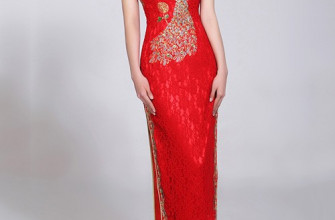
The red wedding qipao often carries embroidered versions of the Chinese love symbols, with Double Happiness 囍 as the most common motif on bridal dress.
Chinese clothing operated as a social language: the cut of a robe, the colour of its fabric, and the symbols embroidered on its surface told anyone who looked exactly where the wearer stood in the social hierarchy. This article covers the three classical garment types in detail with particular focus on the pien-fu, traces how clothing evolved across the major dynasties, explains the sumptuary laws that regulated who could wear what, and follows the transition from hanfu to the qipao.
Traditional Chinese Clothing at a Glance
The core of the traditional Chinese clothing system can be summarised as follows:
- Pien-fu: the oldest type, a two-piece tunic and skirt paired with a cylindrical pien hat, worn as formal ceremonial dress from the Zhou dynasty onwards
- Shen-yi (deep robe): a one-piece wraparound garment that stitched the tunic and skirt together, popular from the Warring States period across all social levels
- Chang pao (long robe): a simpler one-piece robe from shoulder to ankle, the standard daily garment for men across the later imperial period, reflecting how daily life in ancient China shaped clothing choices by class and season
- Qipao (cheongsam): the twentieth-century fitted dress redesigned in 1920s Shanghai from Manchu women’s changpao using Western tailoring
- Colour code: yellow for the emperor from the Tang dynasty onwards, purple and crimson for high officials, white for mourning, red for weddings
The Three Classical Garment Types
Chinese historical sources identify three primary garment forms that defined traditional dress across the imperial period. Each served different social functions, from court ceremonies to daily wear, and all three shared a preference for loose fits, straight-line cuts, natural folds, and generous fabric use.
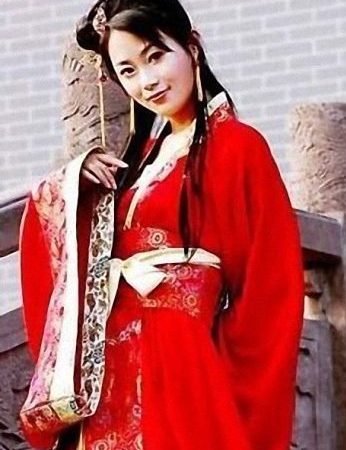
Pien-Fu
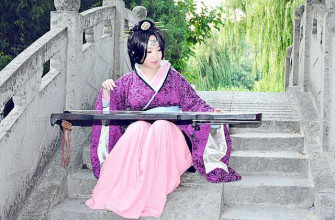
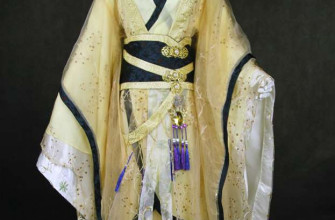
The pien-fu (also written pienfu or pien fu) consisted of two separate pieces: an upper tunic called the yi that extended to the knees, and a lower garment, either a skirt (chang) for women and formal occasions or trousers for men in less formal settings. The ensemble reached from the shoulders to the ankles and was secured at the waist with a sash or belt. The pien-fu took its name from the pien, a flat or cylindrical hat worn on top to complete the outfit. Without the pien hat, the ensemble was considered incomplete for ceremonial purposes.
The pien-fu functioned as the standard formal and ceremonial dress across the Zhou dynasty (1046-256 BCE) and into the Han period. Court officials, scholars, and aristocrats wore the pien-fu at state ceremonies, ritual sacrifices, and formal audiences with the ruler. The garment’s two-piece construction allowed for layering in winter and lighter wear in summer, with the quality of fabric and the complexity of embroidery indicating the wearer’s rank.
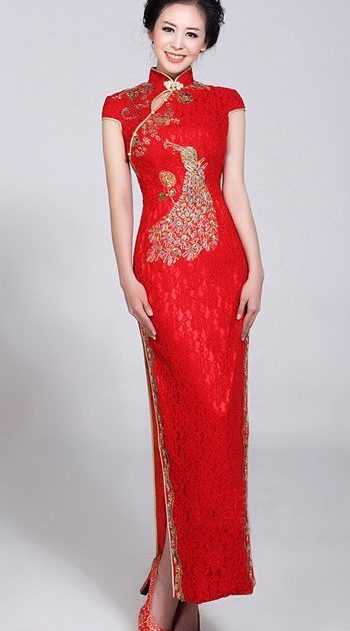
Shen-Yi
The shen-yi (deep robe) modified the pien-fu by stitching the upper tunic and lower skirt into a single continuous garment. The result looked similar to the pien-fu when worn but eliminated the visible division at the waist. Historical sources trace the shen-yi to the late Zhou dynasty, and by the Warring States period (475-221 BCE) it had become the most widely worn garment across all levels of Chinese society, from scholars and officials to commoners.
The shen-yi’s popularity came from its versatility. A single garment replaced the two-piece pien-fu for everyday use while retaining enough formality for government offices and scholarly gatherings. The wrapping construction, with the right side folded over the left and secured with a sash, became the standard method of wearing Chinese robes across all later dynasties. Wrapping left over right was reserved for burial garments and for non-Han peoples, making the direction of the wrap a cultural marker.
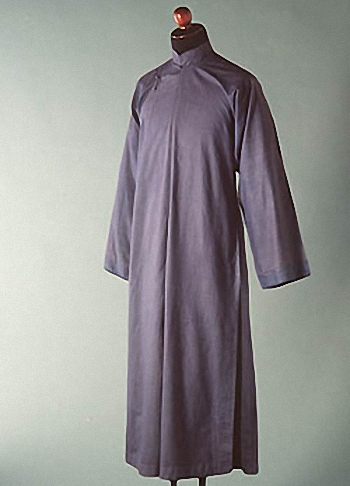
Chang Pao
The chang pao (long robe) was a one-piece garment that ran from the shoulders to the ankles without a visible waist division. Simpler in construction than either the pien-fu or the shen-yi, the chang pao became the standard daily garment for Chinese men across the later imperial period. It combined elements of both older forms into a practical, easy-to-wear robe that required minimal tailoring. The chang pao could be worn loose for casual settings or belted tightly with a sash for more formal occasions.
The Pien-Fu in Detail
The pien-fu deserves closer examination as the foundational ceremonial garment of Chinese civilization. Archaeological evidence and bronze vessel inscriptions from the Western Zhou period (1046-771 BCE) confirm that the two-piece tunic-and-skirt format was already standardized for court use by the early first millennium BCE.
The upper tunic of a pien-fu typically featured wide, flowing sleeves that extended well past the hands. Sleeve length corresponded to formality: the longer and wider the sleeves, the higher the occasion. The fabric draped from straight-cut panels rather than shaped seams, creating a silhouette defined by the body underneath rather than by tailored construction. This flat-panel cutting method remained the dominant approach in Chinese garment making until Western tailoring techniques arrived in the 19th century.
The lower skirt in a formal pien-fu was constructed from multiple fabric panels sewn together and pleated or gathered at the waist. Men’s versions used wider panels with deeper pleats, while women’s versions could use narrower panels with finer gathering. The skirt length reached the ankles and was intended to cover the feet when the wearer stood still, creating a continuous line from waist to floor.
The pien hat came in several forms depending on the dynasty and the wearer’s rank. Zhou-era pien hats were flat-topped or slightly rounded, made from fabric stretched over a frame. Later versions incorporated jade ornaments, silk tassels, and beaded curtains that hung from the brim to partially conceal the wearer’s face during formal ceremonies.
Fabrics, Colors, and the Dress Code
Chinese sumptuary laws regulated clothing materials, colors, and decorative motifs by social rank. These laws changed across dynasties but maintained a consistent logic: visual distinctions in dress reinforced the social order.
Silk served as the primary marker of high status. Only officials, scholars, and members of the imperial household could legally wear silk in many periods. Commoners and peasants wore hemp, ramie, or later cotton in muted natural tones. The penalty for a person of low rank wearing silk without authorization ranged from fines to physical punishment, depending on the dynasty and the severity of the offense.
Color regulation centered on yellow, which was reserved exclusively for the emperor from the Tang dynasty onward. Imperial yellow robes embroidered with five-clawed dragons became the most recognizable symbol of Chinese imperial power. Four-clawed dragon motifs (called mang or python patterns) were permitted on the robes of high-ranking nobles and officials. The phoenix motif was reserved for the empress and senior imperial consorts.
Officials in the Tang and later dynasties wore color-coded robes indicating their bureaucratic rank. Purple denoted the highest civil ranks, followed by crimson, green, and blue in descending order. The clothing of each rank also specified the type of belt material (jade, gold, silver, or copper), the pattern of embroidery, and the shape of the official hat.
White held a specific association with mourning across all periods. Families of the deceased wore undyed white garments during funeral rites and for prescribed mourning periods that could last up to three years for the death of a parent. Red signified celebration, joy, and good fortune, making it the standard color for wedding garments and festival dress.
Accessories, Jade, and Hairstyles
Accessories completed the traditional Chinese outfit and carried their own social weight. Jade was the central ornament of Chinese personal adornment from the Neolithic through the Qing, and Chinese ritual texts attributed eleven virtues to the stone, including benevolence, wisdom, and integrity. Women of the scholar-official class often wore carved jade pendants suspended from a sash at the waist, and the chime of multiple jade pieces against each other when a woman walked was treated in Confucian literature as an audible marker of her status and composure.
Jade also appeared in male dress, in belt plaques for officials, court-ceremony scepters called gui, and in the beaded curtains that hung from the pien hat of the emperor. The shape and colour of the jade used in each ornament were regulated by sumptuary law in the same way as the fabrics and colours of the outer robe.
Hairstyles in imperial China carried almost as much meaning as the robes themselves. Cutting the hair short was considered unfilial and barbaric, since Confucian teaching held that the body and its hair were gifts from the parents that should be preserved. Men tied the hair into a knot or topknot on the crown of the head and covered it with a cloth, a scholar-cap, or an official hat depending on rank and occasion. Women braided the hair and coiled it into buns held in place by hairpins called zan or ji, carved from jade, ivory, bone, lacquered wood, or gold for the highest ranks.
The Qing dynasty Manchu rulers broke this Han Chinese hair tradition by imposing the queue on all adult Han men in 1645: the front of the head was shaved and the back was plaited into a single long braid hanging down the back. Refusing the queue was punishable by death, and the haircut became a defining visible marker of Manchu political authority until the fall of the Qing in 1912.
Peasants wore simpler accessories: wide-brimmed conical straw hats called douli for field work and travel, straw sandals, and plain cotton sashes. The douli remained in use through the twentieth century across rural China and shows up in surviving photographs of late Qing and early Republican farm work.
How Clothing Evolved Across Dynasties
Each major dynasty left its mark on Chinese clothing, though the underlying principles of loose fit, layered construction, and rank-based regulation persisted throughout.
The Han dynasty (206 BCE-220 CE) formalized the shen-yi as standard dress and established the first systematic court dress codes. Han robes featured a distinctive curved hem and cross-collar wrapping that became the template for all later hanfu styles. The term hanfu itself, meaning “clothing of the Han people,” derives from this period.
The Tang dynasty (618-907) represented the most cosmopolitan period in Chinese clothing history. Trade along the Silk Road brought Central Asian, Persian, and Indian textile influences into Chinese fashion. Tang women adopted the qixiong style, wearing the skirt above the chest with sheer silk scarves draped over the shoulders. Tang clothing used brighter colors, bolder patterns, and more diverse fabrics than any previous period.
The Song dynasty (960-1279) pulled clothing in a more restrained direction. Song scholars favored muted colors, simple lines, and understated elegance over Tang-era flamboyance. The scholar’s robe of the Song period, a straight-cut garment in dark blue or gray silk, became the visual archetype of the Confucian intellectual.
The Ming dynasty (1368-1644) restored Han Chinese clothing traditions after the Mongol-ruled Yuan period. Ming court dress reached its most elaborate form, with multiple layers, detailed rank badges (buzi) on the chest and back of official robes, and strict regulations governing every element from hat shape to boot material.
The Qing dynasty (1644-1912), ruled by the Manchu minority, imposed Manchu clothing styles on the Han Chinese population. The Manchu changpao (a straight-cut robe with a Mandarin collar and side slits) replaced the crossed-collar hanfu as standard dress. The queue hairstyle was mandated for Han men, and resistance to the clothing regulations was punished severely. The modern qipao or cheongsam descends from Manchu women’s changpao as redesigned in 1920s Shanghai.
From Hanfu to Qipao
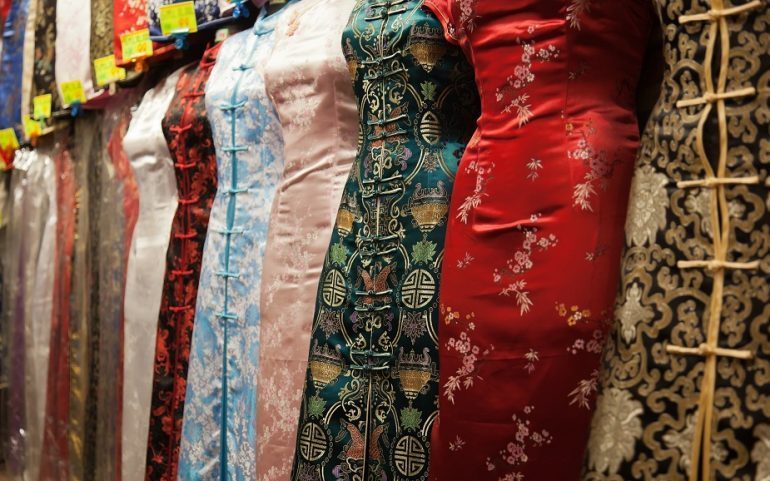
The transition from hanfu to qipao represents one of the sharpest shifts in the history of any national dress tradition. Hanfu, in its various dynastic forms, operated as a multi-layered, loose-fitting system that concealed the body’s shape beneath flowing fabric. The qipao, as it emerged in Shanghai during the 1920s and 1930s, did the opposite: a single fitted garment that followed the body’s contours, used darts and tailored seams borrowed from Western dressmaking, and shortened the hemline to show the legs.
The catalysts for this transformation included the fall of the Qing dynasty in 1912, the May Fourth Movement’s rejection of traditional social structures, Shanghai’s status as a cosmopolitan treaty port, and the influence of Western fashion magazines and cinema. Shanghai tailors transformed the loose Manchu changpao into a form-fitting dress that combined Chinese collar and frog-button closures with Western silhouette tailoring.
The qipao became an international symbol of Chinese femininity during the mid-20th century. It declined in mainland China after 1949 under Communist-era dress codes that favored uniform styles, but continued as formal wear in Hong Kong, Taiwan, and overseas Chinese communities. The modern hanfu revival movement, which began in the early 2000s among young Chinese people, has brought pre-Qing clothing forms back into public visibility as cultural wear for festivals, weddings, and social media.
Frequently Asked Questions
What is a pien-fu?
A pien-fu (also written pienfu or pien fu) is the oldest of the three classical Chinese garment types. It consists of two pieces: an upper tunic (yi) extending to the knees and a lower skirt or trousers (chang) extending to the ankles, completed by a cylindrical or flat-topped hat called a pien. The pien-fu served as the primary ceremonial and formal dress across the Zhou and Han dynasties.
What are the three main types of traditional Chinese clothing?
The three classical types are the pien-fu (a two-piece tunic and skirt), the shen-yi (a one-piece deep robe created by stitching the tunic and skirt together), and the chang pao (a long robe from shoulder to ankle). All three share loose fits, straight-line cuts, and sash closures. The pien-fu was the most formal, the shen-yi the most versatile, and the chang pao the most practical for daily wear.
What did clothing colors mean in ancient China?
Yellow was reserved for the emperor from the Tang dynasty onward. Purple and crimson indicated the highest civil official ranks. White signified mourning and was worn during funeral rites. Red represented joy, celebration, and good fortune, making it standard for weddings. Commoners wore muted natural tones – blues, blacks, and undyed fabrics. These color codes were enforced through sumptuary laws that varied by dynasty.
What is the difference between hanfu and qipao?
Hanfu is the general term for traditional Han Chinese clothing spanning over 4,000 years, characterized by loose fits, layered construction, and cross-collar wrapping. The qipao (cheongsam) is a 20th-century garment that evolved from Manchu women’s robes, redesigned in 1920s Shanghai with Western tailoring techniques to create a fitted, single-piece dress. Hanfu predates the qipao by thousands of years and represents a different design philosophy.
Could anyone wear silk in ancient China?
No. Sumptuary laws restricted silk to the upper classes in many periods. Officials, scholars, and members of the imperial court wore silk, while commoners and peasants were required to wear hemp, ramie, or cotton. Wearing silk without authorization could result in fines or physical punishment. These restrictions loosened during periods of economic prosperity and were most strictly enforced during the early phases of new dynasties.
What is ancient Chinese clothing called?
Ancient Chinese clothing is collectively called hanfu, meaning clothing of the Han people. The oldest documented forms are the three classical types known as pien-fu, shen-yi, and chang pao. Hanfu refers specifically to the pre-Qing Han Chinese tradition of loose, layered robes with cross-collar wrapping. The Manchu-era changpao and the twentieth-century qipao emerged later and follow a different tailoring logic.
How did Chinese clothing change across dynasties?
Chinese clothing kept the core hanfu principles of loose fit and cross-collar wrapping across most dynasties. The Han formalised the shen-yi. The Tang brought Silk Road textile influences. The Song favoured muted scholarly restraint. The Ming restored elaborate court dress. The Qing replaced hanfu with Manchu changpao, and the qipao emerged in 1920s Shanghai from that base with Western tailoring.
What accessories did ancient Chinese wear with traditional clothing?
The key accessories in traditional Chinese dress were jade pendants worn on a sash at the waist, carved jade or ivory hairpins for women, belt plaques and court sceptres for officials, and the pien, scholar-cap, or official hat that completed the outfit. Peasants wore wide conical straw hats called douli for field work. Jade was treated as the central ornament of personal adornment and was regulated by the same sumptuary laws that controlled fabric and colour.
What were ancient Chinese hairstyles like?
Chinese men tied their long hair into a topknot on the crown of the head and covered it with a cloth or hat from the Zhou period through the fall of the Ming. Women braided their hair and coiled it into buns secured by hairpins of jade, ivory, bone, or gold. Cutting the hair short was considered unfilial across all Han Chinese dynasties. The Qing dynasty Manchu rulers imposed the queue haircut on Han men in 1645, shaving the front of the head and plaiting the back into a single braid.
Why is pien-fu sometimes spelled differently?
The garment name appears as pien-fu, pien fu, and pienfu in English sources because it is a romanization of the Chinese term. The hyphenated form pien-fu follows the older Wade-Giles romanization system, while pienfu appears as a single word in some modern usage. All three spellings refer to the same two-piece ceremonial garment. The pinyin romanization would render it as bianfu.
Sources and Further Reading
- Metropolitan Museum of Art, Heilbrunn Timeline of Art History, Chinese textiles and costume sections, metmuseum.org
- The Palace Museum in Beijing, official collection and exhibition pages on Ming and Qing court dress, dpm.org.cn
- Valerie Steele and John S. Major, China Chic: East Meets West, Yale University Press, 1999
- Victoria and Albert Museum, Chinese dress and textiles collection pages, vam.ac.uk
- John E. Vollmer, Ruling from the Dragon Throne: Costume of the Qing Dynasty, Ten Speed Press, 2002
- Dorothy Ko, Cinderella’s Sisters: A Revisionist History of Footbinding, University of California Press, 2005
Chinese New Year dress codes vary by year, with colours and motifs often chosen to suit the incoming Chinese zodiac signs – Dragon years favour gold and red, Rabbit years softer greens and pastels.