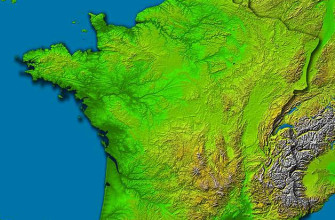
France is the mountain playground of Western Europe. It holds the highest Alpine peaks, the largest linked ski area on earth, the highest ski resort in Europe and long-distance trails that cross whole ranges on foot, all within a temperate country reachable by train from half the continent. Five mountain regions, the Alps, the Pyrenees, the Massif Central, the Jura and the Vosges, give skiers, hikers, climbers and cyclists somewhere to go in every season. This guide is about the mountains as a destination: where to ski, walk, climb and ride, how to use the refuges and cable cars, when to go, and how to stay safe. For how the ranges were formed and where they sit, see our guide to the major landforms of France.
The five mountain ranges, for visitors
Each range offers a different kind of trip, and knowing the character of each saves you choosing the wrong one.
- The Alps: the high ground, with Mont Blanc at 4,807 metres, the big glaciers and the major resorts. The headline range for skiing, mountaineering and the most dramatic scenery, busy and well-served.
- The Pyrenees: wilder, quieter and cheaper than the Alps, a 430-kilometre wall along the Spanish border with its own ski stations, thermal spa towns, and the last brown bears in France.
- The Massif Central: the old volcanic uplands of the centre, gentler and greener, for walking among extinct cones, deep gorges and high lakes rather than chasing altitude.
- The Jura: folded limestone ridges on the Swiss border, the heart of French cross-country skiing and gentle walking, with caves, gorges and waterfalls.
- The Vosges: rounded, forested summits above Alsace, with a scenic crest road, family slopes and the wine villages of the plain below.
Skiing in the French mountains
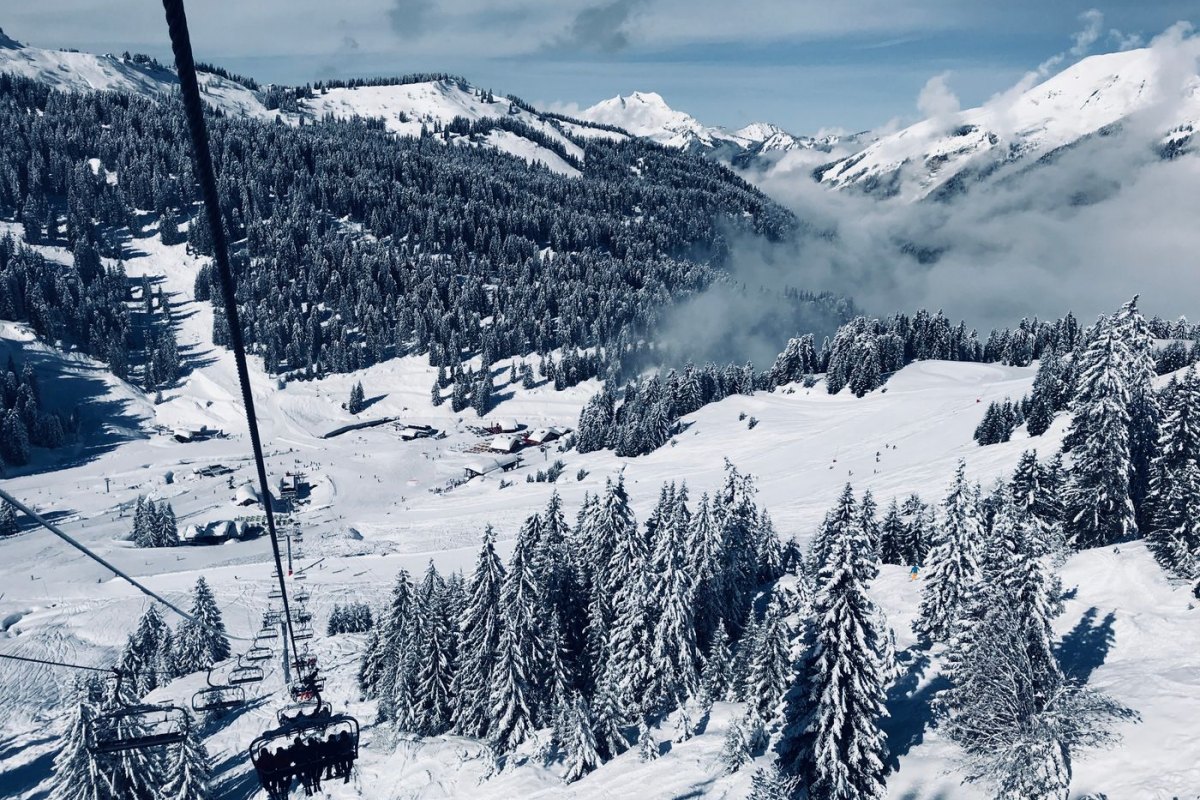
France runs more skiers through its lifts than almost anywhere, and the Alps hold the biggest and highest areas in the world.
- Les Trois Vallees: the largest connected ski area on earth, around 600 kilometres of linked pistes joining Courchevel, Meribel and Val Thorens on one pass. Val Thorens, at 2,300 metres, is the highest resort in Europe and is repeatedly voted the world’s best.
- Espace Killy and Paradiski: Val d’Isere with Tignes, and Les Arcs with La Plagne, the other giant linked areas, high and snow-sure deep into spring.
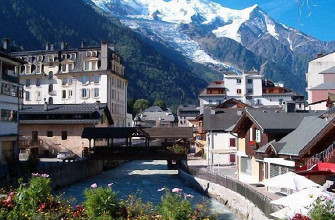
- Chamonix: less a single piste map than a mountaineering capital under Mont Blanc, famous for steep off-piste and the Vallee Blanche, a glacier descent of around twenty kilometres from the Aiguille du Midi.
- Portes du Soleil: a vast cross-border circuit of a dozen villages straddling the French-Swiss frontier, strong for intermediate cruising.
- The Pyrenees and the smaller ranges: resorts such as Saint-Lary, Cauterets and Font-Romeu give shorter, cheaper and less crowded skiing, while the Jura and the Vosges are the centres of French cross-country and nordic skiing.
The season runs roughly from December to April, with the high purpose-built resorts holding snow longest and the lower valley villages offering more charm. The French school holidays in February are the busiest and priciest weeks, and a multi-area lift pass is worth the sums if you plan to roam.
Hiking and the long-distance trails
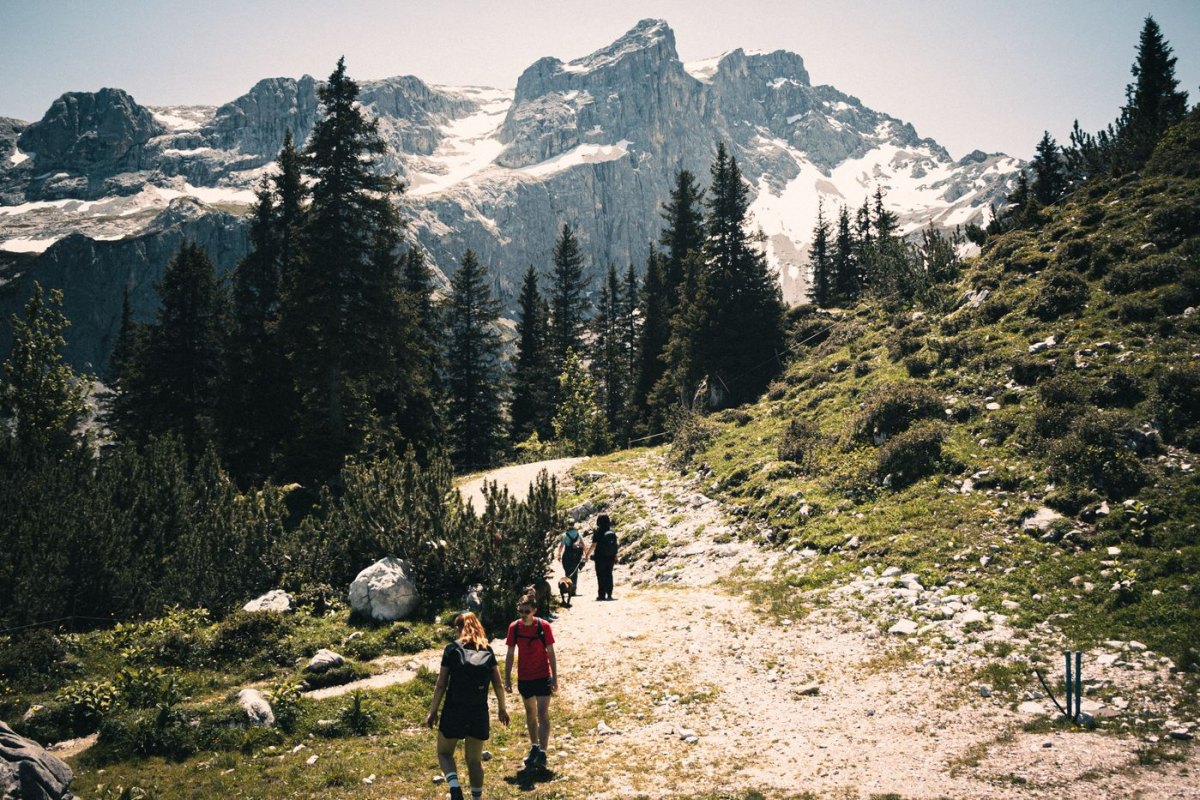
In summer the same mountains become a hiking network unmatched in Europe, threaded by the waymarked Grande Randonnee, or GR, paths, with their red-and-white blazes.
- The Tour du Mont Blanc: a roughly 170-kilometre circuit of the Mont Blanc massif through France, Italy and Switzerland, the most famous multi-day walk in the Alps, usually done in ten to eleven days with nights in mountain refuges.
- The GR5: the grand traverse of the French Alps, around 600 kilometres from Lake Geneva to Nice through the Vanoise, the Queyras and the Mercantour, a several-week through-hike with refuges spaced a day apart.
- The GR10: the full crossing of the Pyrenees, around 920 kilometres from the Atlantic to the Mediterranean, wild and demanding, taking experienced walkers six to eight weeks from the Basque coast to Catalan country.
- The GR20 in Corsica: widely rated the toughest waymarked trail in Europe, around 180 kilometres of granite ridge over roughly fifteen days, for fit and experienced hikers only.
The national parks of the Vanoise, the Ecrins, the Mercantour and the Pyrenees protect the best high country and keep the paths and refuges in order. Many refuges are run by the Club Alpin Francais, staffed through the summer and serving half-board, and the popular ones fill months ahead, so booking is essential. One stretch of the Mercantour, the Vallee des Merveilles, holds thousands of Bronze Age rock engravings and can only be entered with a guide in its protected zones. Our guide to the hiking routes of the French Alps covers the shorter day walks, and the season for the high trails runs roughly mid-June to late September, once the snow has cleared the passes.
Mountaineering and climbing
Chamonix is the birthplace of alpinism, where the sport was effectively invented, and the French Alps remain the centre of European mountaineering.
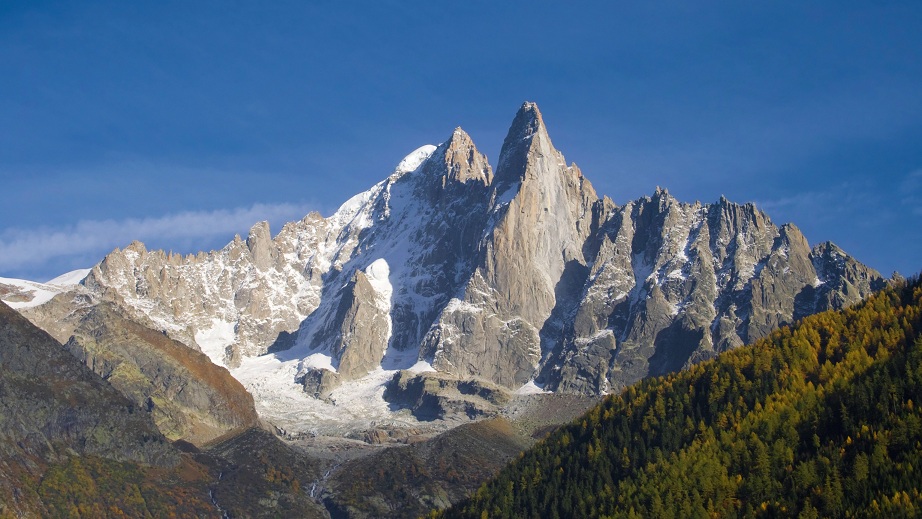
The Mont Blanc ascent draws thousands of climbers each summer by routes such as the Gouter, a serious undertaking that needs fitness, acclimatisation and almost always a guide, with deaths most years among the unprepared. Around it sit classic objectives on the Aiguilles de Chamonix and the Ecrins peaks. For rock climbers, the limestone walls of the Verdon Gorge in Provence are a destination for climbers from around the world, and the Calanques near Marseille add sea-cliff routes. Across all the ranges, via ferrata routes, protected climbing paths with fixed cables and ladders, let non-technical visitors reach exposed ground safely, a tradition borrowed from the Italian Alps and now widespread in France.
The legendary cycling cols
The same passes that challenge hikers are the stuff of cycling legend, and in summer the mountains fill with riders following the Tour de France.
- The Alpine giants: the Col du Galibier, the Col de l’Iseran (the highest paved pass in the Alps), and the hairpins of Alpe d’Huez are bucket-list climbs ridden by amateurs all summer.
- The Pyrenean classics: the Col du Tourmalet, the highest paved pass in the French Pyrenees, and the Col d’Aubisque are the range’s defining ascents.
- Mont Ventoux: the bare, wind-scoured “Giant of Provence” on the edge of the Alps, one of the hardest and most feared climbs in cycling.
Many cols close under snow in winter and reopen from late spring, and a few host car-free days when only cyclists and walkers may use the road.
Cable cars, trains and easy access
You do not need to climb to reach the high mountains. France has built some of the most spectacular mountain transport in the world.
- The Aiguille du Midi: the cable car from Chamonix rises to 3,842 metres, one of the highest in the world, for a face-to-face view of Mont Blanc and a glass box, the Pas dans le Vide, stepped out over a kilometre of air.
- The Montenvers railway: a historic rack train from Chamonix to the Mer de Glace, the largest glacier in France, whose retreat is marked by signs showing where the ice once reached.
- The Pic du Midi: a cable car in the Pyrenees to a mountaintop astronomical observatory at 2,877 metres, open for day visits and overnight stays under some of Europe’s clearest skies.
- The Panoramique des Domes: a rack railway up the Puy de Dome in the Massif Central for the view along eighty volcanic cones.
Mountain towns, spas and the table
The valley towns are half the reason to come, and the food is a destination in itself.
- The base towns: Chamonix under Mont Blanc, lakeside Annecy at the foot of the Alps, and Grenoble, the largest Alpine city, make comfortable bases with restaurants, markets and life well beyond the lifts.
- The spa tradition: the Pyrenees built a culture of thermal spa towns, Cauterets, Bagneres-de-Luchon and Ax-les-Thermes among them, where hot springs have drawn visitors for centuries.
- Mountain food: the cold-weather cooking of the Alps is a draw of its own, from fondue and raclette to the potato-and-cheese tartiflette of the Savoie, with the cheeses Beaufort, Reblochon and Comte and the wines of the same valleys.
- Living traditions: summer still brings the transhumance, the move of herds up to high pastures, marked by festivals in many valleys, a reminder that the mountains are worked as well as visited.
Mountain safety and when to go
The French mountains are well organised for visitors, but they are real mountains and demand respect.
- Rescue: mountain rescue is handled by the PGHM, the specialist gendarmerie units, and is highly professional, though a rescue can be charged for, so travel insurance that covers mountain activities is essential.
- Avalanche and snow: off-piste and ski touring carry avalanche risk, rated daily on a five-point scale, and anyone leaving the marked runs should carry a transceiver, shovel and probe and know how to use them.
- Altitude and weather: the thin air is felt above 3,000 metres, the weather turns fast, and afternoon storms are common in summer, so start early and check the mountain forecast.
- When to go: December to April for snow sports, June to September for hiking, climbing and cable-car sightseeing, with late spring and autumn quieter but with some lifts and refuges closed.
The Alps are reached easily by rail and air through Geneva, Lyon, Grenoble and Chambery; the Pyrenees from Toulouse, Pau and Lourdes; and the smaller ranges from Clermont-Ferrand, Besancon and Strasbourg.
What walkers and skiers say
Read across trail journals and ski forums and a few themes come up again and again, worth knowing before you book.
- Book refuges early: the Tour du Mont Blanc and the popular GR huts fill months ahead for summer, and walkers who leave it late end up camping or rerouting.
- The GR20 humbles people: hikers consistently warn that Corsica’s trail is far harder than it looks, with long, rocky, exposed days, and advise serious training rather than treating it as a holiday walk.
- High resort for snow, valley village for charm: skiers rate the high, purpose-built resorts such as Val Thorens for reliable snow and the older valley villages for atmosphere, and choose by which they value more.
- Altitude is real: visitors going straight up the Aiguille du Midi to 3,842 metres often mention feeling the thin air, and the advice is to move slowly at the top.
- Shoulder seasons reward the flexible: late June and September draw praise for quiet trails and good weather, with the caveat that the highest passes may still hold snow in early summer.
Frequently Asked Questions
What are the main mountain ranges in France?
France has five mountain regions: the Alps along the Italian and Swiss border, the Pyrenees along the Spanish border, the Massif Central in the centre, the Jura on the Swiss border, and the Vosges above Alsace. The Alps are the highest, topped by Mont Blanc at 4,807 metres, the highest summit in Western Europe.
Where is the best skiing in France?
The French Alps hold the best-known areas, led by Les Trois Vallees, the largest linked ski area in the world, whose Val Thorens is the highest resort in Europe at 2,300 metres. Val d’Isere and Tignes, Les Arcs and La Plagne, and Chamonix for off-piste are the other major Alpine areas, while the Pyrenees offer smaller, cheaper resorts and the Jura and Vosges lead on cross-country skiing.
What is the most famous hike in the French mountains?
The Tour du Mont Blanc, a roughly 170-kilometre circuit of the Mont Blanc massif through three countries, is the most famous, usually walked over ten to eleven days. For a full range crossing, the GR5 traverses the Alps over about 600 kilometres and the GR10 the Pyrenees over about 920, while Corsica’s GR20 is rated among the toughest trails in Europe.
When is the best time to visit the French mountains?
For skiing, December to April, with the high Alpine resorts holding snow longest. For hiking, climbing and cable-car sightseeing, June to September, once the snow has left the high trails and passes. The February school holidays are the busiest ski weeks, and late June and September are the quieter shoulder times for walking.
Can you go up Mont Blanc without climbing?
Yes. The Aiguille du Midi cable car from Chamonix rises to 3,842 metres, one of the highest in the world, for close views of Mont Blanc without any mountaineering. The Montenvers railway reaches the Mer de Glace glacier nearby. Reaching the summit of Mont Blanc itself, at 4,807 metres, is a serious climb that needs fitness, acclimatisation and usually a guide.
Are the French mountains safe?
They are well organised, with professional PGHM mountain rescue, but they are real high mountains. Off-piste skiing carries avalanche risk, the weather turns quickly, and the altitude is felt above 3,000 metres. Follow local advice, carry the right gear, and take out travel insurance that covers mountain activities, as rescue can be charged for.
Sources and Further Reading
- France Montagnes, the French mountain resorts body
- Federation Francaise de la Randonnee Pedestre (GR trails)
- Club Alpin Francais, mountain refuges
- Chamonix-Mont-Blanc official tourism
- Parc national des Pyrenees