Fuerteventura is the best birdwatching island in the Canaries, and for a particular reason: its dry, open plains are the closest thing in Europe to an African desert, and they hold birds you cannot easily see anywhere else on the continent. Two of them, the houbara bustard and the Canary Islands stonechat, draw birders here from across Europe. This guide covers the species worth seeking, exactly where to find them, when to go, and how to watch them responsibly. For the full island picture, see our Fuerteventura travel guide.
The birds that make the island special
A handful of species turn a general holiday into a birding trip, and they are the ones to learn before you arrive:
- Canary Islands stonechat: a small, smart passerine found nowhere on Earth but Fuerteventura, the only endemic bird here, which haunts the rocky ravines and barrancos. For many visiting birders it is the single species worth the trip.
- Houbara bustard: the faunal symbol of the island, a large, stately steppe bird that strides the open plains feeding on plants and insects, with a spectacular display in the breeding season. The Canary subspecies is rare and protected.
- Canarian Egyptian vulture: known locally as the guirre, a large scavenger that survives only on Fuerteventura and Lanzarote, with a wingspan of around 1.65 metres. Once close to vanishing, it is the subject of a long conservation effort and is the most emblematic bird of the island.
- Cream-coloured courser: a pale, desert-running wader of the open stony plains, scarce in Europe and one of the prizes of a Fuerteventura trip.
The wider cast
Beyond the headline species, the island’s habitats hold a rich supporting list:
- Steppe and desert birds: black-bellied sandgrouse, stone curlew, lesser short-toed lark, Berthelot’s pipit and the trumpeter finch all share the plains.
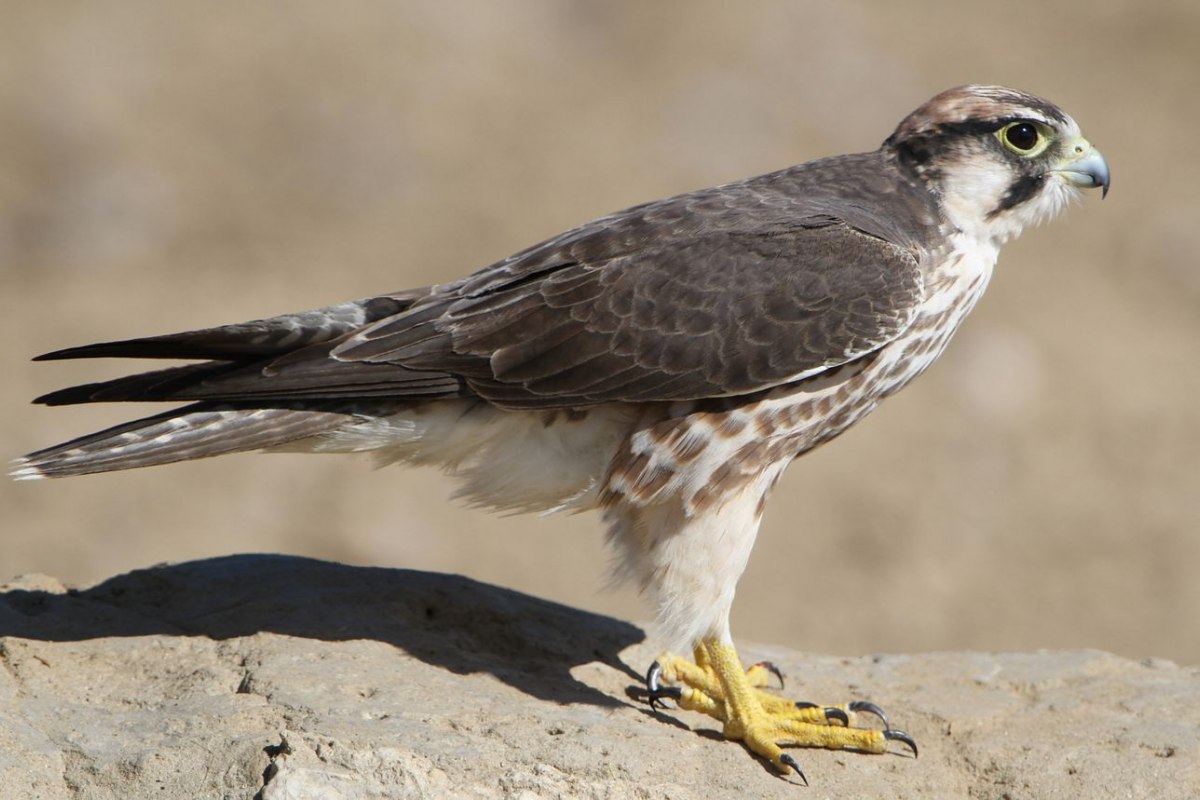
- Birds of prey: common buzzards, kestrels, barbary falcons and the occasional migrant raptor hunt over the open ground.
- Coastal and wetland birds: the salt flats and lagoons draw waders, plovers, egrets, spoonbills and the occasional flamingo, especially on passage and in winter.
- Seabirds: Cory’s shearwaters breed on the cliffs and around Lobos, streaming past on summer evenings.
Where to go birdwatching
The island has 13 protected natural areas and a great range of habitats packed into a small space. The best sites are spread across the north and the interior:
- The plains of La Oliva and Tindaya (El Jable): the prime steppe ground in the north for houbara bustard, cream-coloured courser, sandgrouse and larks, best worked slowly by car at dawn.
- Vallebron and the northern barrancos: ravine country that is among the most reliable for the Canary Islands stonechat and for guirres.
- Barranco de la Torre and Salinas del Carmen: an eastern ravine and salt-pan combination, good for stonechat, waders and the coastal species.
- Catalina Garcia lagoon, near Tuineje: the island’s best freshwater wetland, drawing waders, ducks and herons, especially in winter and on migration.
- Embalse de los Molinos: a reservoir in the west that pulls in waterbirds in an otherwise dry landscape.
- The Jandia salt marsh and Costa Calma: the Saladar de Jandia in the south for waders on the tidal flats.
When to go
The resident specialities, stonechat, houbara, guirre, courser and sandgrouse, are present all year, so any trip can target them. Timing still helps. The cooler months from October to March bring wintering waders and wildfowl to the lagoons and salt flats and are more comfortable for walking the plains, while spring adds passage migrants and the houbara’s display. Across the year, the first and last couple of hours of daylight are by far the most productive, both because the desert birds are active then and because the midday heat and haze shut activity down. As a rule, plan to be out at dawn on the plains and save the middle of the day for the coast or the pool.
The guirre and a conservation story
The guirre is worth understanding as more than a tick on a list. This Canarian race of the Egyptian vulture once ranged across the islands but collapsed to a tiny population confined to Fuerteventura and Lanzarote, hit by poisoning, power lines and the loss of the carrion it depends on. A sustained recovery programme, with feeding stations, nest protection and tracking, has slowly pulled it back from the edge, and the bird has become a symbol of the island’s wider conservation effort as a UNESCO Biosphere Reserve. Seeing one ride the thermals over a barranco is a reminder that the empty-looking plains are a working ecosystem, not a wasteland, which is exactly why the access and disturbance rules matter.
Why the desert birds are here at all
What makes the island’s bird list special is geography. Fuerteventura sits barely 100 kilometres off the Sahara, and its flat, arid, stony plains recreate the North African steppe more closely than anywhere else in Europe. That is why birds with a fundamentally African distribution, the houbara bustard, the cream-coloured courser, the black-bellied sandgrouse and the trumpeter finch, hang on here at the very edge of their range, reachable on a short flight from northern Europe rather than an expedition to the desert. The Canary Islands stonechat went a step further: isolated on this one island for long enough to evolve into a species found nowhere else on Earth, a textbook case of island endemism. For a birder, the appeal is that a single week here can deliver a set of African specialities and a unique endemic without leaving the European Union, which no other Canary island matches.
How the houbara is faring
The houbara is more than a birding prize; it is a conservation emergency, and knowing its status sharpens why the disturbance rules matter. The Canarian houbara is endemic to Lanzarote and Fuerteventura alone and is listed as Endangered in both the national and the Canary Islands catalogues of threatened species. A 2023 census put the entire world population at only around 508 birds, the lowest estimate since the 1990s, split roughly between Lanzarote, with about 388, Fuerteventura, with about 108, and a handful on La Graciosa. The density on Fuerteventura works out at well under one bird per square kilometre, far lower than on Lanzarote, so sightings are genuinely special and the birds are easily pushed off their feeding and display grounds. Conservation groups including SEO/BirdLife and GREFA monitor the population each year, and SEO/BirdLife runs the El Cercado ornithological reserve at Los Alares in central Fuerteventura, east of Antigua, set up in 2005 specifically to protect this species and its habitat. Watching from a distance and staying on tracks is, for the houbara, more than etiquette: it is a direct contribution to its survival.
Watching responsibly
The desert birds are easily disturbed and some are genuinely threatened, so how you watch matters:
- Keep your distance: use binoculars and a scope rather than approaching, especially around the houbara, which abandons display and feeding if pushed.
- Stay on tracks: the plains and the protected areas are fragile, so watch from existing roads and paths and never drive off-piste to get closer.
- Never disturb nests: keep well clear of breeding birds and birds of prey on the cliffs.
- Go quietly and patiently: the best desert birding is slow, scanning from a vehicle used as a hide, rather than walking the birds up.
Practical tips for a birding trip
- Hire a car: the best sites are spread across the north and interior and need a vehicle, ideally used as a mobile hide on the plains.
- Bring optics and sun cover: a scope helps on the open ground, and there is no shade, so a hat, sunscreen and water are essential.
- Base in the north: Corralejo, La Oliva or the northern villages put you closest to the best steppe and ravine sites for a dawn start.
- Combine with a walk: the same northern landscape holds the volcano trails in our volcano walk guide and the calm beaches in our best beaches guide.
- Download a checklist: knowing the handful of target species and their calls in advance turns a general drive into a productive morning.
Frequently asked questions
What birds is Fuerteventura famous for?
The Canary Islands stonechat, found only on Fuerteventura, the houbara bustard, the island’s faunal symbol, the cream-coloured courser and the guirre or Canarian Egyptian vulture, which survives only here and on Lanzarote.
Where is the best birdwatching on the island?
The northern plains around La Oliva and Tindaya for steppe birds, the Vallebron ravines for the stonechat and guirre, and the Catalina Garcia lagoon near Tuineje and the salt flats for waders and wetland birds.
When is the best time to watch birds in Fuerteventura?
The resident specialities are present year-round, but winter adds wintering waders and wildfowl and is cooler for walking, while spring brings migrants and the houbara display. Dawn and dusk are by far the most productive times.
What is a guirre?
The local name for the Canarian Egyptian vulture, a large scavenger with a wingspan of around 1.65 metres that survives only on Fuerteventura and Lanzarote and is the subject of an ongoing conservation programme.
Do you need a guide for birdwatching here?
Not essential, since the sites are well documented and reachable by hire car, but a local bird guide greatly improves the odds for tricky species like the houbara and the stonechat and knows the current hotspots.
Why is Fuerteventura better for birds than the other Canary Islands?
Its flat, arid plains recreate the North African steppe more closely than anywhere else in Europe, holding African desert species like the houbara bustard and cream-coloured courser, plus the Canary Islands stonechat, an endemic found on no other island.
Sources and further reading
- Reserva de la Biosfera Fuerteventura
- Cabildo de Fuerteventura, protected natural areas
- Canary Islands stonechat, endemic species overview