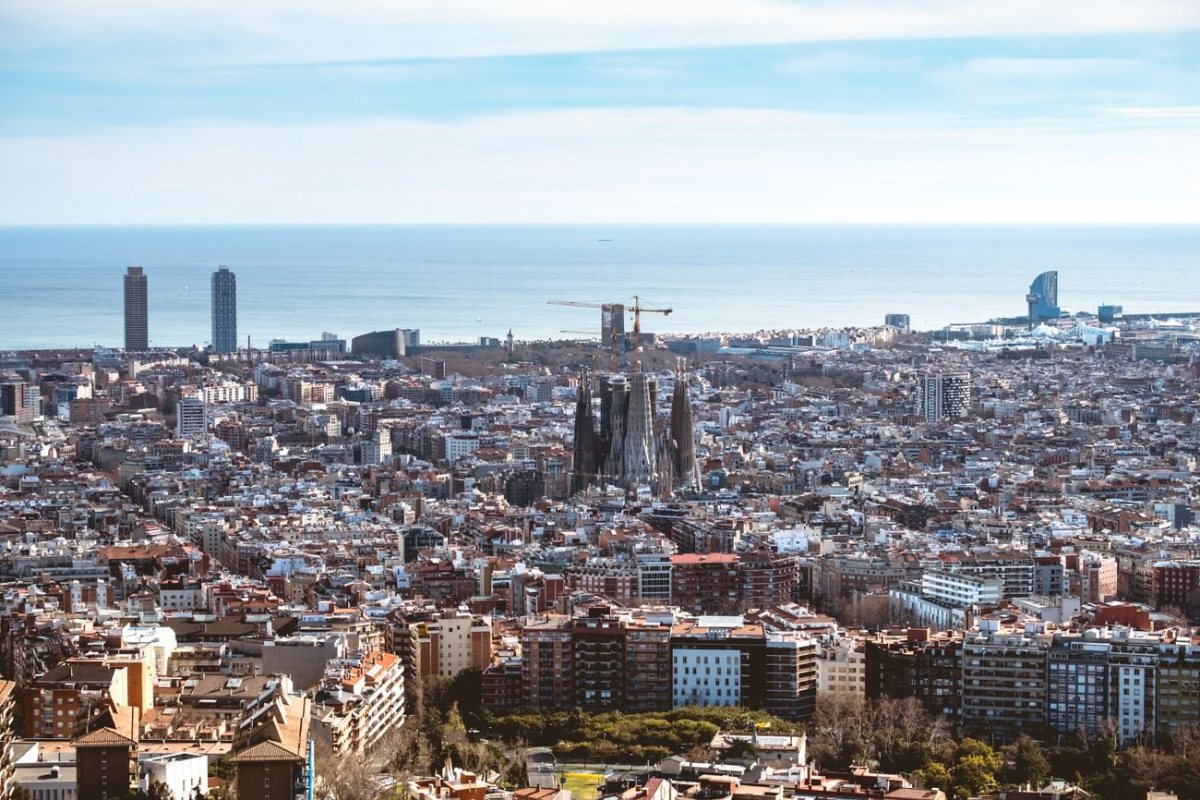
Barcelona packs almost everything a traveller wants into a compact, walkable grid pressed between the Collserola hills and the Mediterranean. Gaudí’s towers, a medieval old town, a working food market, city beaches and a football cathedral all sit within a few metro stops of each other. This guide groups the city by the way you actually move through it, from the unmissable landmarks to the neighbourhood corners locals defend, with the practical detail, the seasonal calendar and the responsible-visiting rules that turn a checklist trip into a good one. It links down to our detailed guides on the museums, shopping and places to stay.
Gaudí and the Modernisme trail
For the full architect’s guide, all seven UNESCO works and the best route between them, see the dedicated Gaudí in Barcelona guide, with deep guides to the Sagrada Família and Park Güell.
Catalan Modernisme, the local strand of Art Nouveau that ran from the 1880s into the 1920s, is the single biggest reason most people come to Barcelona. Antoni Gaudí is the headline, but he worked alongside Lluís Domènech i Montaner and Josep Puig i Cadafalch, and the city protects much of their work as UNESCO World Heritage. Seven Gaudí sites carry the listing, and chasing the quieter ones is the way to escape the worst of the queues.
Sagrada Família
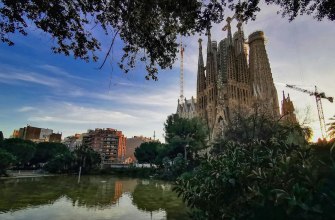
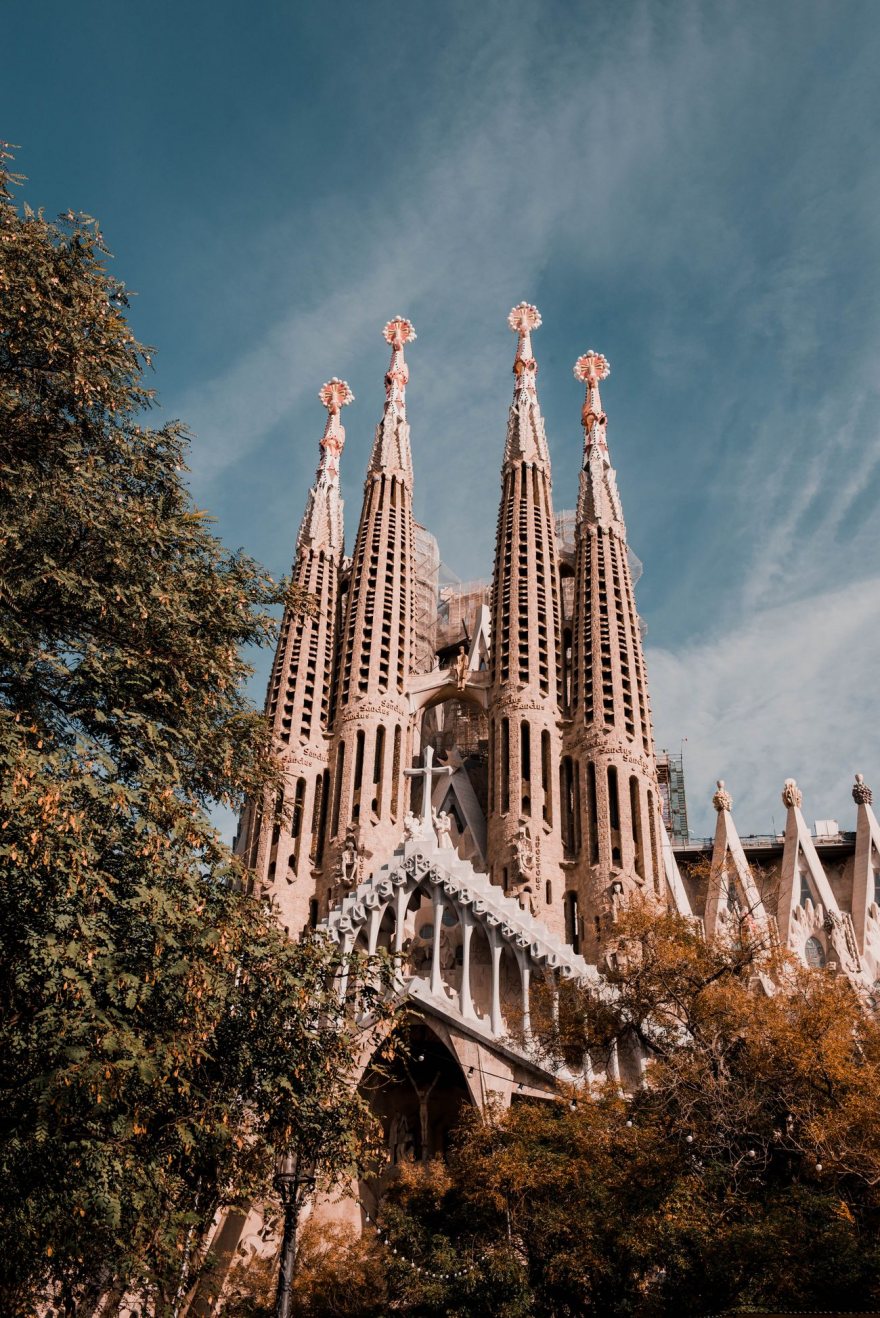
Gaudí’s unfinished basilica has been under construction since 1882, and the work is now in its final stretch. The central Tower of Jesus Christ, crowned by an illuminated cross, has topped out at 172.5 metres, making the Sagrada Família the tallest church in the world, ahead of Germany’s Ulm Minster. Interior detailing and the monumental Glory facade, the main south entrance, remain in progress, so the building you photograph today is still changing.
- Book a timed slot in advance on the official sagradafamilia.org site. Entry is by half-hour window and the popular slots sell out days ahead in high season. Buying direct also costs less than the reseller bundles.
- Pay extra for a tower lift if you want the close view down over the spires and the city. Tower access is a separate timed ticket, comes down on foot by a tight spiral stair, and is not available to very young children.
- Go early or late for the light. Morning sun fires the blues and greens of the Nativity-side windows; late afternoon lights the reds and oranges over the Passion side. The interior, not the facade, is the reason to go in.
- Read the two old facades against each other. The Nativity facade is the one Gaudí finished himself, dense and organic; the Passion facade, with Josep Maria Subirachs’s stark angular figures, was carved decades after his death and splits opinion to this day.
- Note the permit history. The basilica was built for 137 years without a municipal works permit, and only obtained a legal one in recent years after an agreement with the city, a quirk that says a lot about how the project sits outside normal timelines.
Casa Batlló and La Pedrera on Passeig de Gràcia
Two of Gaudí’s residential masterpieces stand a short walk apart on the smart shopping boulevard of Passeig de Gràcia, on the block nicknamed the Illa de la Discòrdia, the block of discord, where the rival Modernista architects each built a showpiece.
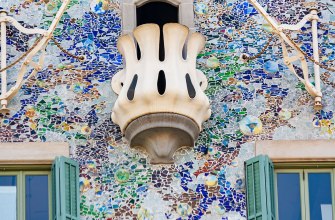
- Casa Batlló: the bone-and-scale facade, often read as Saint George slaying the dragon, with a scaled blue light-well inside that darkens from white to deep blue as it rises. Evening visits and rooftop music sessions run in summer.
- Casa Milà, or La Pedrera: the wave-fronted apartment block whose rooftop chimneys, the warrior-helmet guardians, are the real prize. The attic exhibition under brick catenary arches explains Gaudí’s structural thinking, and a restored period flat shows bourgeois life of the era.
- Buy ahead for both: walk-up queues are long and timed entry is the norm. The two are easily paired in a half-day on Passeig de Gràcia, with Puig i Cadafalch’s Casa Amatller next door to complete the block.
Park Güell
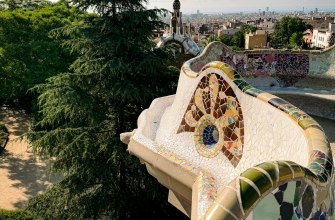
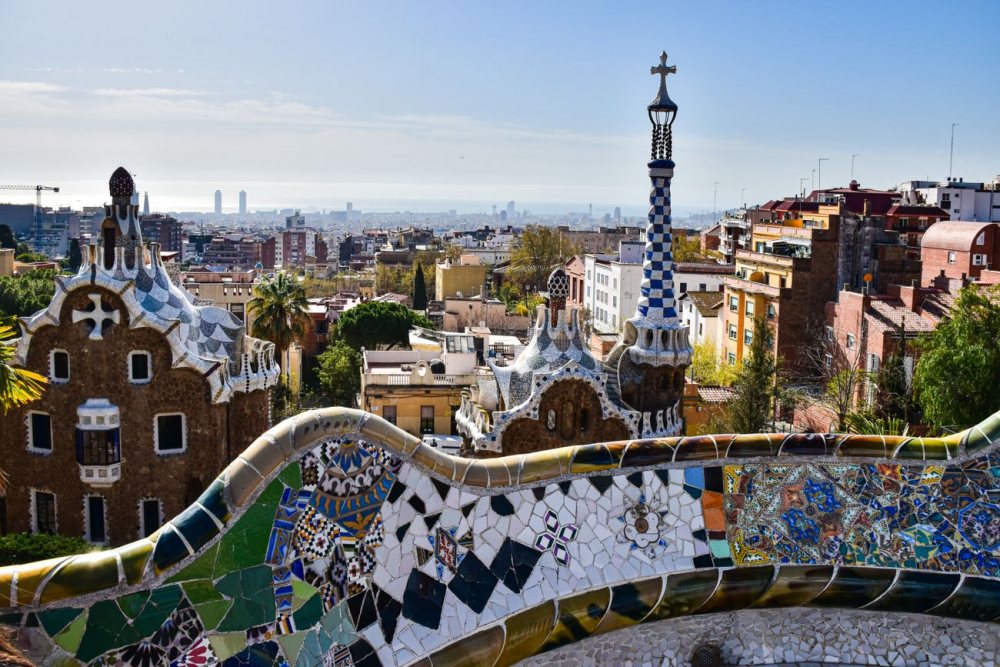
Gaudí’s hillside park began as a failed garden-city housing estate and is now his most photographed public space. The decorated Monumental Zone, with the mosaic dragon El Drac on the entrance stair and Josep Maria Jujol’s serpentine trencadís bench wrapping the main terrace, has charged admission since the city introduced timed tickets to control crowds.
- The Monumental Zone is ticketed; the surrounding wooded park is free to walk. Buy the timed ticket on parkguell.barcelona before you climb the hill, since on-the-day slots run out.
- Registered Barcelona residents enter the Monumental Zone free, a local detail worth knowing if you are staying with friends in the city.
- It is a real climb from the metro. The outdoor escalators from Lesseps or the Bus Turístic stop save your legs in the heat, and the free upper terraces give a view almost as good as the paid zone.
- The Gaudí House Museum inside the park is the pink villa where the architect actually lived for two decades, a separate small ticket most visitors skip.
The quieter Gaudí: the sites that skip the queues
Three more Gaudí works carry the UNESCO listing and almost none of the crowds.
- Casa Vicens: Gaudí’s first house, a tiled, oriental-flavoured villa in Gràcia, opened to the public only recently and rarely busy. It shows the young architect before the curves took over.
- Palau Güell: the dark, lavish town palace he built just off La Rambla for his patron Eusebi Güell, with a parabolic-arch entrance and a roof forest of mosaic chimneys, a small-scale rehearsal for everything that followed.
- Colònia Güell crypt: out at Santa Coloma de Cervelló, the unfinished church crypt where Gaudí tested the hanging-chain models and leaning columns he later used on the Sagrada Família, a half-day pilgrimage for anyone serious about his engineering.
The other Modernisme: Domènech i Montaner and Puig i Cadafalch
Skip the Gaudí queues for an afternoon and see the buildings most visitors miss, several UNESCO-listed.
- Palau de la Música Catalana: a concert hall built for a choral society, with an inverted stained-glass skylight that pours daylight into the auditorium and a stage framed by muses in mosaic. Guided tours run by day; a concert is the better way in. Details at palaumusica.cat.
- Hospital de Sant Pau: a former working hospital laid out as a garden village of pavilions linked by underground tunnels, restored and open to visit as an art-and-architecture site a short walk from the Sagrada Família. See santpaubarcelona.org.
- Casaramona, now CaixaForum: Puig i Cadafalch’s brick Modernista textile factory at the foot of Montjuïc, repurposed as a free-to-cheap art centre with strong touring shows.
The old city: Ciutat Vella on foot
Barcelona’s medieval core is a knot of districts best seen slowly and on foot. This is where the city’s two thousand years are stacked closest together, and where a paper map beats a phone among the narrow lanes.
Barri Gòtic
- Barcelona Cathedral: the Gothic seat of the city, with a cloister where thirteen white geese are kept, one for each year of the life of the martyr Santa Eulàlia. The rooftop terrace gives a close view over the old town.
- Roman Barcino: the city began as a Roman colony, and you can still trace it. Sections of the third and fourth-century walls survive around Plaça Nova and Plaça Ramon Berenguer, and the underground excavations at the MUHBA city-history museum on Plaça del Rei let you walk the Roman streets, dye works and wine vats beneath the square.
- Plaça Sant Felip Neri: a quiet square whose church wall is still scarred by shrapnel from a Civil War bombing, the most quietly moving corner in the old town.
- Plaça Reial: the arcaded square off La Rambla, with Gaudí’s first public commission, the two lamp-posts crowned by Mercury’s winged helmet, and a ring of bars under the palms.
- Els Quatre Gats: the Modernista tavern on Carrer Montsió where a teenage Picasso designed the menu and held his first show, still serving in the Puig i Cadafalch building.
El Born and La Ribera
- Basilica of Santa Maria del Mar: the pure Catalan Gothic church built by the medieval port parish, famous for its plain, soaring stone interior and the story told in the novel Cathedral of the Sea. Climb the roof terraces on a guided ticket.
- The Picasso Museum: five linked medieval palaces on Carrer Montcada hold the world’s deepest collection of the artist’s early and formative work. We cover it in full in our guide to the Picasso Museum in Barcelona.
- El Born Centre de Cultura: a former market hall built over the streets of the 1700s city that were demolished after the 1714 siege, now excavated and on show under the iron roof, with the date that still defines Catalan identity.
- Passeig del Born and Carrer Montcada: the lane of Gothic merchant palaces and the wide old jousting promenade, now the best tapas-crawl streets in the city.
El Raval
The grittier, fast-changing district on the other side of La Rambla holds the white bulk of MACBA, the contemporary art museum whose plaza is the city’s unofficial skateboarding capital. Nearby sit the medieval Sant Pau del Camp, one of the oldest churches in the city, and Botero’s plump bronze cat on the Rambla del Raval. We go deeper in our guide to the Museum of Contemporary Art in Barcelona.
La Rambla, the markets and the Liceu
La Rambla, the tree-lined pedestrian spine running down to the harbour, is the most famous street in the city and the most crowded. Treat it as a way through rather than a destination, and dip off it for the things that make it worth the walk.
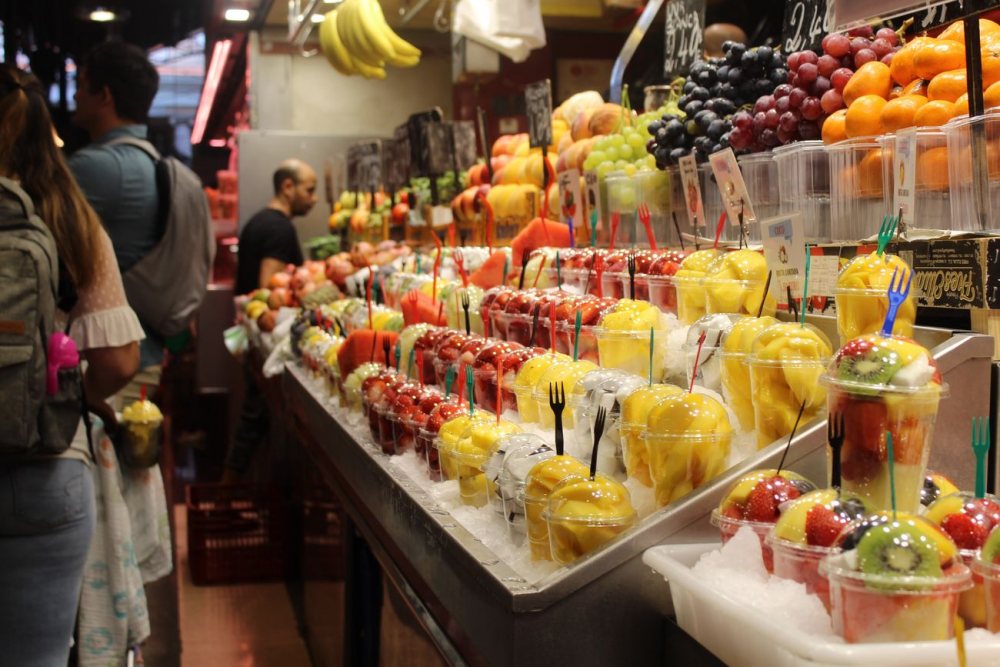
- La Boqueria: the great covered market off La Rambla, a working food hall of jamón, fish, fruit and counter bars. Go in the morning before the tour groups, eat at a stall stool, and shop at the back where the locals do rather than at the bright juice stands by the entrance.
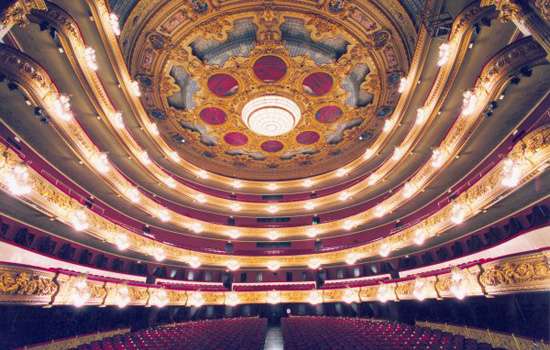
- Gran Teatre del Liceu: Barcelona’s grand opera house on La Rambla, rebuilt after a fire in the 1990s and still the city’s main lyric stage. Daytime guided tours take in the gilt auditorium and the Modernist Cercle del Liceu rooms; an evening performance is the full experience.
- The Miró pavement mosaic: look down near Liceu metro for the round Joan Miró mosaic set into the paving, a small public work most of the crowd walks straight over.
- Palau Güell: Gaudí’s town palace sits just off the lower Rambla, an easy add-on to the walk down to the harbour.
- Mirador de Colom: the Columbus column at the harbour end, with a lift to a cramped viewing platform inside the sphere for a low view over the port.
Markets beyond La Boqueria
- Mercat de Sant Antoni: the restored iron market in the Eixample where locals actually shop, with a Sunday old-book and collectors’ market around the outside.
- Mercat de Santa Caterina: near the cathedral, under Enric Miralles’s rolling, multicoloured ceramic roof, with a small archaeological site of the convent it replaced and one of the best market bars in the city.
- Mercat de la Llibertat: the neighbourhood iron market at the heart of Gràcia, a Domènech-school building with none of the tourists.
The Eixample and the Cerdà grid
Step off the old-town map and the city snaps into a perfect grid of octagonal blocks. This is the Eixample, the 19th-century expansion designed by engineer Ildefons Cerdà, and it is an attraction in its own right once you know what you are looking at.
- The xamfrà corners: every block has its corners cut at 45 degrees, the chamfered xamfrans that Cerdà designed so trams, and now traffic and terraces, would have room to turn and breathe. They give the district its distinctive octagonal junctions.
- Superilles, the superblocks: the city has been knitting groups of blocks into low-traffic superblocks, closing through-roads to give the space back to pedestrians, benches and trees. Sant Antoni and Poblenou show the idea working.
- The Quadrat d’Or: the golden square of the Eixample around Passeig de Gràcia is where the rich merchants of the era commissioned the Modernista houses, so the grandest architecture and the best shopping overlap.
- Cerdà’s lost ideal: the engineer designed the blocks to be built up on only two sides with gardens in the middle. Speculation filled the courtyards instead, and the city is now slowly reopening some of these interior gardens to the public, a quiet way to escape the street heat.
Montjuïc: a hill for a full day
The seaward hill of Montjuïc carries more sights than any other district, most of them left over from two world fairs and one Olympics. Ride up by the Telefèric cable car or the funicular from Paral·lel metro, then work downhill.
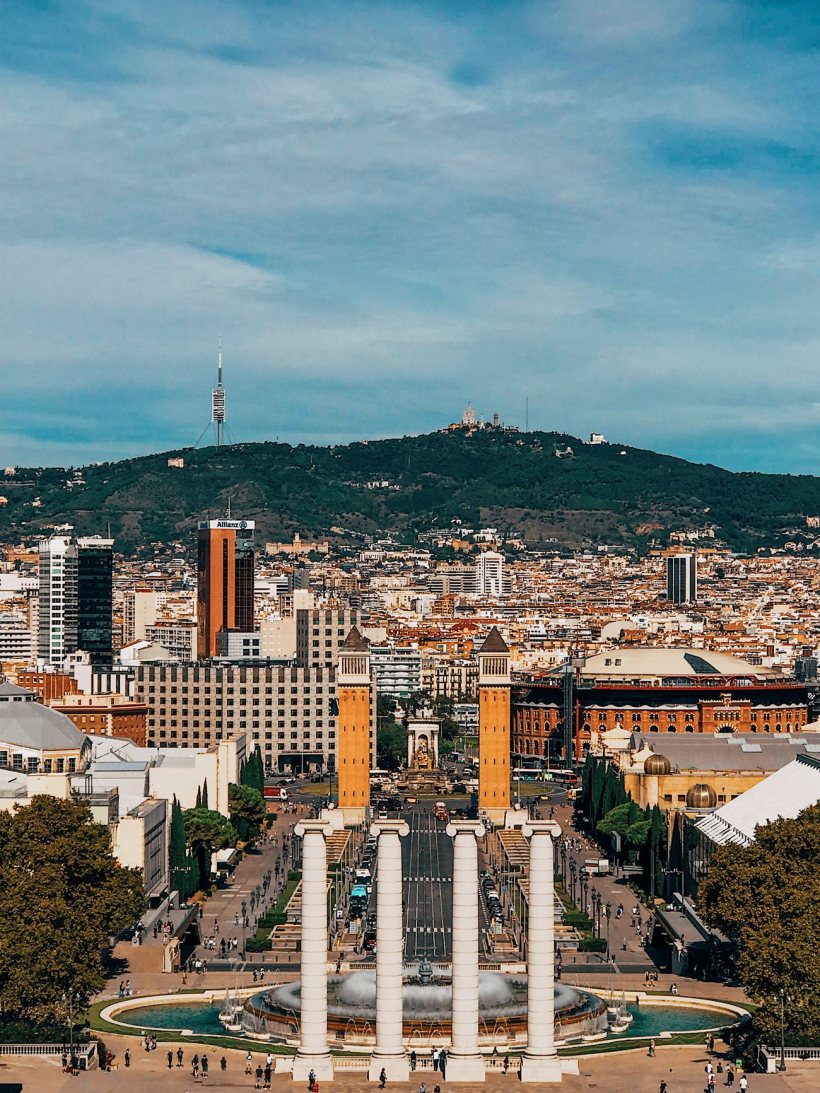
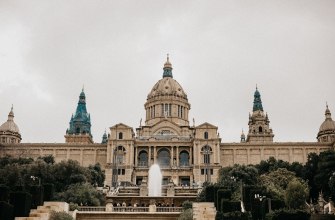
- MNAC in the Palau Nacional: the National Art Museum of Catalonia holds the world’s finest collection of Romanesque church frescoes, lifted whole off the walls of remote Pyrenean chapels to save them, alongside Gothic, Renaissance and Modernista rooms.
- Font Màgica de Montjuïc: the great fountain below the Palau Nacional, designed by Carles Buïgas for the 1929 fair, puts on free weekend evening shows of water, colour and music in the warmer months.
- Fundació Joan Miró: the bright gallery of the Barcelona-born painter, in a luminous building by his friend Josep Lluís Sert, with a rooftop sculpture terrace.
- Mies van der Rohe Pavilion: the rebuilt German pavilion from the 1929 fair, a touchstone of modern architecture in marble, glass and chrome, home of the Barcelona chair.
- Poble Espanyol: an open-air village of full-scale replica buildings from across Spain, also from 1929, touristy but a painless tour of the country’s regional styles, with craft workshops inside.
- The Olympic ring and the castle: the 1992 stadium and the Calatrava communications tower stand on the crown of the hill, and the seventeenth-century Castell de Montjuïc above gives a clean view over the port from its ramparts.
- The gardens: the Jardí Botànic, the Mossèn Cinto Verdaguer water gardens and the Joan Brossa park make Montjuïc the green lung of the city, free to wander.
More viewpoints: how to see Barcelona from above
The city reads best from height, with the grid below and the sea beyond. There is a viewpoint for every effort level.
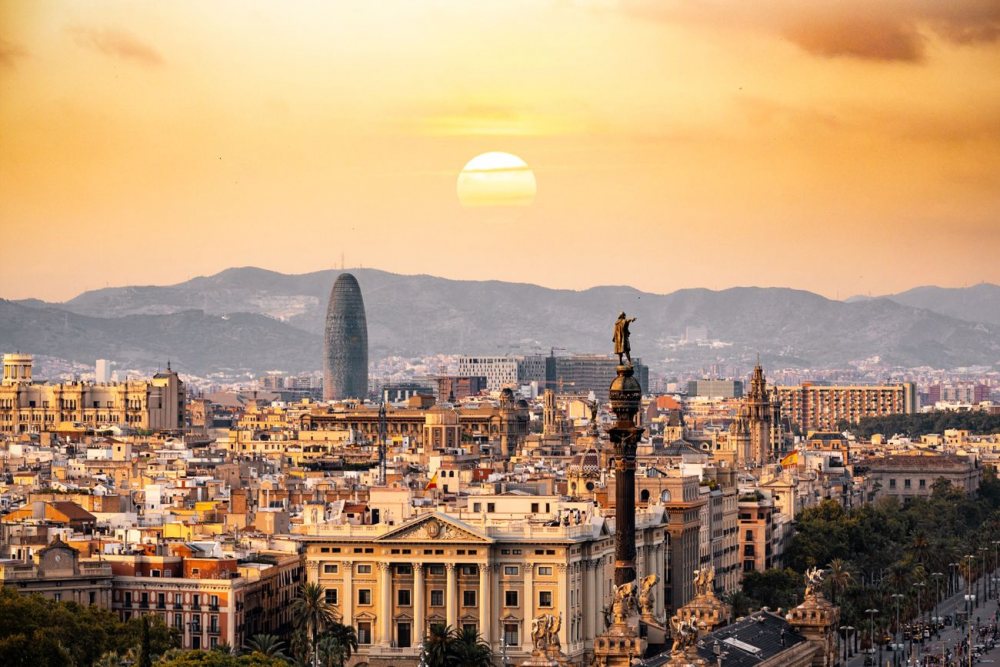
- Bunkers del Carmel: the old Civil War anti-aircraft battery on the Turó de la Rovira, now the locals’ favourite free 360-degree viewpoint, best at sunset. Bring your own drinks; there is no kiosk at the top.
- Tibidabo: the highest point of the Collserola ridge, with a century-old amusement park and the Sagrat Cor church on top, reached by the historic Tramvia Blau and funicular for a classic day out with children.
- The cathedral and Santa Maria del Mar roofs: for a close-up view down into the old town rather than a wide panorama, the terrace tickets at both churches are the quiet alternative.
- Mirador de l’Alcalde and the cable car: the Transbordador Aeri harbour cable car swings from Barceloneta up to Montjuïc for the most dramatic ride over the port.
Beaches and the seafront
For every city beach, the theft and jellyfish reality and where locals actually swim, see the full beaches in Barcelona guide.
Barcelona only turned to face its sea for the 1992 Olympics, when the industrial shore was cleared for the beaches that now run for several kilometres. They are free, central and city beaches in every sense, busy and watched.
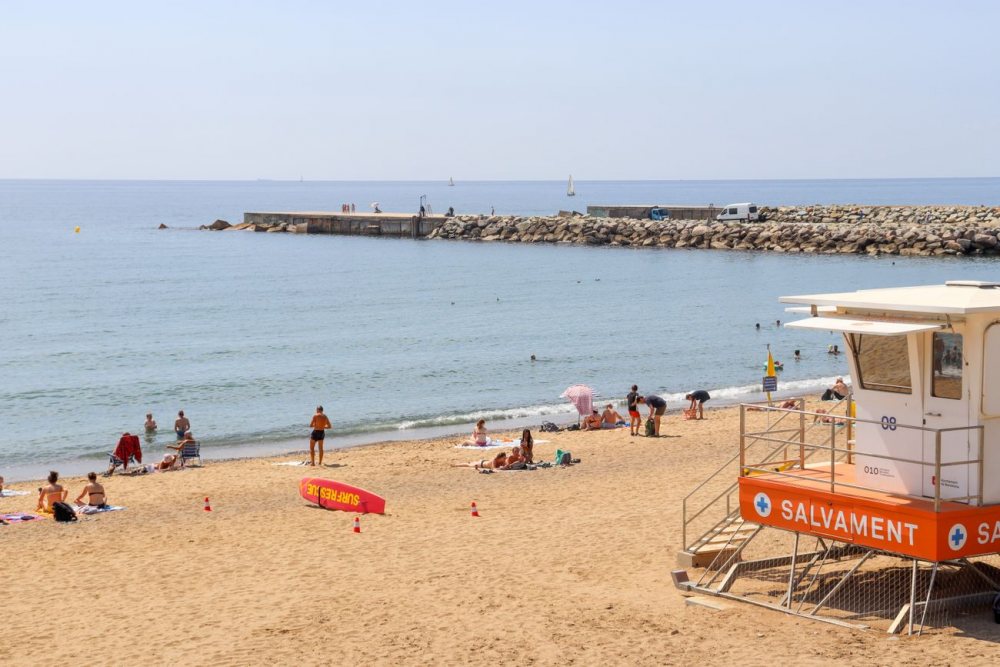
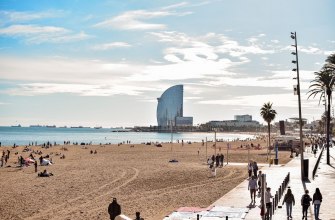
- Barceloneta: the closest and most famous beach, backed by the old fishermen’s quarter and its seafood restaurants. It is busy, social and easy to reach on foot from the old town.
- The quieter strands north: keep going past the Olympic Port towards Bogatell, Mar Bella and Nova Mar Bella for wider sand, fewer crowds and the calmer family stretches, with a small naturist section at the far end of Mar Bella.
- The seafront promenade: the flat Passeig Marítim links the beaches and is made for a run, a bike or a slow walk past the W hotel sail and Frank Gehry’s golden fish sculpture.
- Beach sense: the sand is free with no booking, but bag theft is common, so take little and keep an eye on it. Ignore the unlicensed mojito and beer sellers, and use the chiringuito beach bars for drinks instead.
Museums and galleries
Barcelona’s museums run from Romanesque frescoes to Miró, and reward a rainy day or an art-led trip. Many of the municipal ones open free on the first Sunday of the month and on Sunday afternoons, worth planning around. We keep a full set of dedicated guides for the deeper dives.
- The big art names: MNAC and the Fundació Joan Miró on Montjuïc, the Picasso Museum in the Born, MACBA in the Raval and the Fundació Antoni Tàpies in the Eixample cover the city’s modern art weight.
- Our museum guides: start with the overview in museums in Barcelona, then the single-site guides to the Picasso Museum and the MACBA contemporary art museum.
- For a lighter visit: the Chocolate Museum in the Born is an easy stop with children, with an edible ticket and chocolate models of city landmarks.
- The unusual ones: the CosmoCaixa science museum with its indoor Amazon glasshouse, the Maritime Museum in the medieval royal shipyards of the Drassanes, and the Disseny Hub design museum at Glòries round out a longer stay.
Camp Nou and FC Barcelona
For many visitors the football club is reason enough to come. FC Barcelona’s home, Camp Nou, is the largest stadium in Europe, and it has been rebuilt under the long-running Espai Barça redevelopment.
- Stadium and museum reopen in phases as the rebuild finishes, so check the club’s own site for current match-day, tour and museum availability before you plan a visit.
- The museum holds the trophy hall and the Messi and Cruyff galleries; the stadium tour walks the tunnel, dugout and press areas.
- Match tickets go on general sale through the club a few weeks before each game; buy through the official channel to avoid resale mark-ups, and remember the club’s roots as a symbol of Catalan identity under Franco, captured in the motto més que un club, more than a club.
Festivals: time your visit to the calendar
Barcelona’s street festivals are where the Catalan traditions come out in public, and most are free. Lining a trip up with one changes the whole feel of the city.
- La Mercè, late September: the city’s biggest festival, around the feast of its patron the Mare de Déu de la Mercè on the 24th. Expect castellers building human towers, the correffoc fire-run of devils and dragons down the streets, parades of gegants giant figures, the bestiari of mythical beasts, and the Piromusical fireworks-and-music finale at the Font Màgica.
- Sant Jordi, 23 April: Catalonia’s day of books and roses, when La Rambla and every high street fill with book and flower stalls and couples exchange a rose and a book. It is the warmest, most romantic day in the city’s year.
- Festa Major de Gràcia, mid-August: the Gràcia neighbourhood competes to decorate its streets around a theme, building elaborate hanging scenes from recycled material, with music and food in the dressed-up squares.
- Sant Joan, the night of 23 June: the midsummer bonfire night, when the beaches and squares fill with fireworks, cava and coca flatbread. It is loud, late and very local.
- Winter traditions: the Cavalcada de Reis on 5 January brings the Three Kings into Port Vell by sea before a citywide parade, and Catalan Christmas adds its own oddities, the caganer figure hidden in the nativity and the Tió de Nadal log that children beat to give presents.
Food, drink and where Catalans actually eat
For the full local food guide, the dishes worth ordering, the markets and the named old-school bars, see the dedicated food in Barcelona guide.
Eat on Catalan time and to the Catalan calendar. Lunch is the big meal at around two, dinner runs late from nine, and many kitchens shut between the two services. Vermouth before lunch on a weekend, fer el vermut, is a local ritual worth joining.
The plates to find
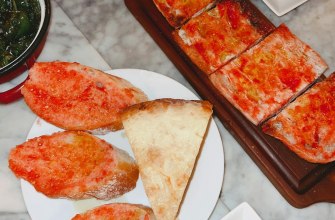
- The Catalan staples: pa amb tomàquet, bread rubbed with tomato and oil, beside everything; escalivada of roasted peppers and aubergine; botifarra sausage with white beans; fideuà, the noodle cousin of paella; and crema catalana to finish.
- Seasonal specialities: calçots, the sweet spring onions char-grilled and dipped in romesco at a winter calçotada; bolets wild mushrooms in autumn; and panellets, the pine-nut marzipan sweets eaten around All Saints.
- The sweet stops: an old-fashioned granja for thick hot chocolate and xurros, with the cafes of Carrer Petritxol the classic address, and a turró almond nougat counter at Christmas.
Where to drink it
- Cava and vermouth bars: the city’s own sparkling cava is poured cheap and standing at old bars like the harbourside xampanyeries near Santa Maria del Mar, the proper local aperitif.
- Bodegas and tapas streets: the tapas bars of El Born and Gràcia, the seafood of Barceloneta, and the pintxo bars of Carrer Blai in Poble-sec, where you pay by the toothpick.
- Value at lunch: look for the menú del dia, a fixed multi-course weekday lunch with a drink, the best-value meal in any Spanish city.
Shopping
From the luxury houses of Passeig de Gràcia to the independent shops of Gràcia and El Born and the high-street run of Portal de l’Àngel, the city covers every budget. Our guide to shopping in Barcelona breaks down the districts and markets in detail.
The neighbourhoods, one by one
Barcelona rewards picking a district and walking it slowly. Each barri has its own character well beyond the headline sights.
- Gràcia: a former separate town of low streets and small squares, full of independent shops, vermouth bars and a young, local crowd. Plaça del Sol and Plaça de la Vila are the evening gathering points.
- Poble-sec: the unflashy district under Montjuïc that has become the city’s best-value eating street, Carrer Blai, with theatres along the Paral·lel.
- Sant Antoni: the Eixample edge that locals rate for its restored market, Sunday book fair and a wave of good small restaurants, with a superblock calming the traffic.
- Poblenou: the old factory district reborn as a tech and design quarter, the so-called 22@, with the Rambla del Poblenou running down to its own quieter beaches.
- El Putxet and Sarrià: the leafy upper districts where Barcelona feels like a wealthy provincial town, good for a calm stroll away from any tourist.
Getting around
Barcelona is a walking city with an excellent metro behind it. You rarely need a taxi and never need a car.
- The T-casual ticket: a single-person card good for ten journeys across metro, bus, tram and the city-zone trains, far cheaper than single tickets. It cannot be shared for simultaneous travel, so buy one each if you all ride together.
- From the airport: the Aerobús express coach runs to Plaça Catalunya; the R2 Nord train links Terminal 2 to the city centre; and metro line L9 Sud reaches both terminals, though it sits outside the standard fare zone and needs its own airport ticket.
- The Barcelona Card: bundles unlimited transport with free or discounted museum entry, worth doing the sums on if you plan several paid sights in a few days.
- Bus Turístic and bikes: the hop-on-hop-off bus is useful for the spread-out Montjuïc and Tibidabo sights; the city’s Bicing share scheme is for residents, so visitors should use a private bike-hire shop.
- Taxis and apps: the black-and-yellow taxis are metered and honest, hailed in the street or by app; private-hire apps are restricted in the city, so the official taxi is usually quicker.
Practical Barcelona
A few local habits and rules make the difference between fitting in and standing out.
- Two languages: Catalan and Castilian Spanish are both official, and signs, menus and place names lean Catalan. Everyone understands Spanish, but a bon dia and a gràcies are warmly received.
- Opening hours: shops and kitchens keep Spanish hours, with smaller shops closing in the afternoon and dinner served late. Plan museums for the day and eating for the evening, not the reverse.
- Tipping: not expected the way it is in some countries; rounding up or leaving small change for good service is plenty.
- Pickpockets: the one real nuisance. They work La Rambla, the metro, the Sagrada Família crowd and the beach. A cross-body bag, a zipped pocket and an eye on your phone defeats almost all of it.
- Free culture: many municipal museums open free on the first Sunday of the month and Sunday afternoons, and the Modernista facades, the markets, the beaches and the viewpoints cost nothing at all.
Day trips and active days
For every worthwhile day trip with the exact train line, station and journey time, see the full day trips from Barcelona guide.
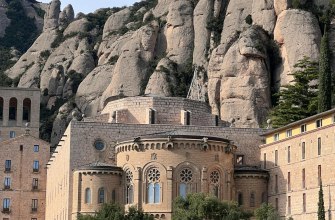
- Montserrat: the serrated holy mountain and its monastery, an hour out by train and cable car or rack railway, for the Black Madonna, the boys’ choir and high ridge walks.
- Sitges: the elegant beach town down the coast, easy by local train, for calmer swimming, a Modernista seafront and a famously open, lively scene.
- Costa Brava and Girona: the medieval city of Girona, with its painted riverfront and cathedral steps, and the coves of the Costa Brava make a longer day north.
- Penedès wine country: the cava cellars around Sant Sadurní d’Anoia and Vilafranca del Penedès, a short train ride for the source of all that sparkling wine.
- Stay active in the city: beyond the beaches, visitors who want to keep their game up can book courts and coaching at a tennis academy in Barcelona.
A first-timer’s three-day plan
- Day one, the Eixample and Gaudí: Sagrada Família first thing on a pre-booked slot, then Hospital de Sant Pau nearby, Casa Batlló and La Pedrera on Passeig de Gràcia, and an evening in Gràcia.
- Day two, the old city: the cathedral and Roman Barcino, the Picasso Museum and Santa Maria del Mar in the Born, La Boqueria and the Liceu on La Rambla, and tapas in El Born after dark.
- Day three, the hill and the sea: Park Güell early, then Montjuïc by cable car for MNAC and the Miró foundation, finishing with a swim at Barceloneta and the Font Màgica show at night.
Visiting responsibly
Barcelona has become one of the clearest cases of a city pushing back against mass tourism, and a visitor who understands why has a better and a more welcome trip.
- The tourist tax: every overnight stay carries a regional tax plus a city surcharge, charged per person per night and rising for higher-category hotels and cruise stopovers. It is added to your accommodation bill.
- Tourist flats are being phased out: the city council will not renew any of its short-term tourist-apartment licences once they expire, removing more than ten thousand holiday flats from the market by November 2028 to return them to residents. Book a licensed apartment or a hotel rather than an unlicensed let. Our full where to stay in Barcelona guide covers the areas, the tax and the licensing in detail. Our guide to Barcelona apartment rentals covers what to look for.
- Read the mood: residents have protested loudly against overtourism in recent seasons, including the water-pistol marches that made the news. Spreading out beyond the Sagrada-Rambla-Boqueria triangle, eating where locals eat and keeping the noise down at night is the practical response.
- Tread lightly on the old town: the Gòtic and Barceloneta are residential, not theme parks. Keep voices down at night, dress to leave the beach, and the welcome stays warm.
Frequently Asked Questions
How many days do you need in Barcelona?
Three full days cover the headline Gaudí sites, the old town, a beach afternoon and one viewpoint without rushing. A fourth and fifth day let you add the Montjuïc museums, a festival or a day trip to Montserrat or Sitges. Two days is enough only for the Sagrada Família, Park Güell and a walk through the Barri Gòtic.
What is the best area to stay in Barcelona?
The Eixample is the central, well-connected choice with the Modernista architecture on the doorstep. El Born and the Gòtic put you in the medieval streets but can be noisy at night. Gràcia feels like a village and suits a longer, slower stay. Barceloneta is for beach-first trips. Whatever the area, book a licensed flat or a hotel.
Do you need to book the Sagrada Família in advance?
Yes. Entry is by timed half-hour slot bought on the official sagradafamilia.org site, and the slots, especially the tower-lift tickets, sell out days ahead in summer and on weekends. Walk-up tickets are rarely available in high season.
Is Barcelona walkable, and is the metro easy?
The old town and the Eixample are flat and very walkable. The metro is clean, frequent and simple, and a T-casual ten-journey ticket covers it cheaply. You only need transport for the hilltop sights of Montjuïc, Park Güell, Bunkers del Carmel and Tibidabo.
When is the best time to visit Barcelona?
Late spring and early autumn, in May, June, September and early October, bring warm weather, swimmable sea and the big festivals of Sant Jordi and La Mercè without the peak-summer heat and crowds. July and August are hot and packed; winter is mild, quiet and good for the museums.
Is Barcelona safe for tourists?
Barcelona is broadly safe, but it has a serious pickpocketing problem aimed at tourists on La Rambla, in the metro, around the Sagrada Família and on the beach. Carry a cross-body bag, keep your phone off the cafe table and watch your pockets in crowds, and the risk drops sharply.
Is Barcelona expensive?
It is the most expensive city in Spain but still cheaper than northern Europe. The big paid sights add up, so a Barcelona Card or careful free-Sunday planning helps; meanwhile the menú del dia at lunch, the markets, the beaches and the Modernista street architecture keep the daily cost down.
Sources
- Basílica de la Sagrada Família, official site
- Park Güell, official site
- Barcelona City Council
- Barcelona Tourism (Turisme de Barcelona)
- Palau de la Música Catalana
- Museu Nacional d’Art de Catalunya (MNAC)
- Recinte Modernista de Sant Pau
- Mercat de la Boqueria