Norway, known as the “Land of the Midnight Sun”, is a ruggedly beautiful northern country of glaciers, fjords and quiet mountain villages. It offers a true escape from the rush of urban Europe, and like the Vikings before you, you can come and explore one of the most unspoiled countries on the continent. From Oslo’s harbour cafes and the wooden warehouses of Bergen to the Northern Lights of Tromso and the soaring cliffs of Lysefjord, Norway packs more landscapes per kilometre than almost anywhere else in the world. This 2026 guide walks through the geography, history, regions, cities and key sights to help you plan your trip.
Norway at a Glance
Norway lies on the western edge of the Scandinavian peninsula and covers an area of 385,207 square kilometres, including the Svalbard archipelago in the High Arctic. The country is home to roughly 5.6 million people, most of whom live in the southern half. Norway has one of the longest and most indented coastlines in the world, deeply carved by fjords, and a mountainous interior that holds some of the largest glaciers in mainland Europe, including the Jostedalsbreen icefield.
The capital is Oslo, the official language is Norwegian (with two written forms, Bokmal and Nynorsk), and the currency is the Norwegian krone (NOK). Norway is not a member of the European Union but belongs to the European Economic Area and the Schengen zone, so most European travellers can enter without a visa.
The Midnight Sun and the Polar Night
One of the most distinctive natural features of Norway is the extreme variation in daylight between summer and winter. The further north you travel, the more dramatic the difference becomes.
- The Midnight Sun. At Nordkapp in the far north, the sun never drops below the horizon from 14 May to 30 July. Locals call it “the season that never ends”.
- Long summer days. Even in the south, daylight stretches from around 4:00 to 23:00 in midsummer.
- The Polar Night. The opposite happens in winter, when the sun does not rise at all in the far north from late November until late January. The light during these weeks turns soft and blue, ideal for photography and Northern Lights hunting.
A Short History of Norway
The first inhabitants of Norway arrived around 10,000 years ago at the end of the last Ice Age, hunting reindeer and fishing along the newly ice-free coast. Rock carvings from this period survive at sites like Alta in the far north.
The Nordic pirates known as Vikings arrived in England in 793 AD, attacking the monastery at Lindisfarne in what is usually considered the start of the Viking Age. Over the next three centuries, the Vikings raided across Europe, established settlements as far as Greenland and Newfoundland and reshaped the politics of the British Isles. The Viking Age came to an end when the Norwegian king Harald Hardrada was defeated at the Battle of Stamford Bridge in 1066, just weeks before the Norman conquest of England.
In 1380 Norway came under Danish rule, and the country was ceded to Sweden in 1814 as part of the post-Napoleonic settlement. Norway finally won full independence in 1905 and established a constitutional monarchy that still operates today under King Harald V. The discovery of North Sea oil in 1969 transformed the country into one of the wealthiest nations in the world and funded the modern social welfare system, the Sovereign Wealth Fund and the cultural infrastructure that visitors enjoy today.
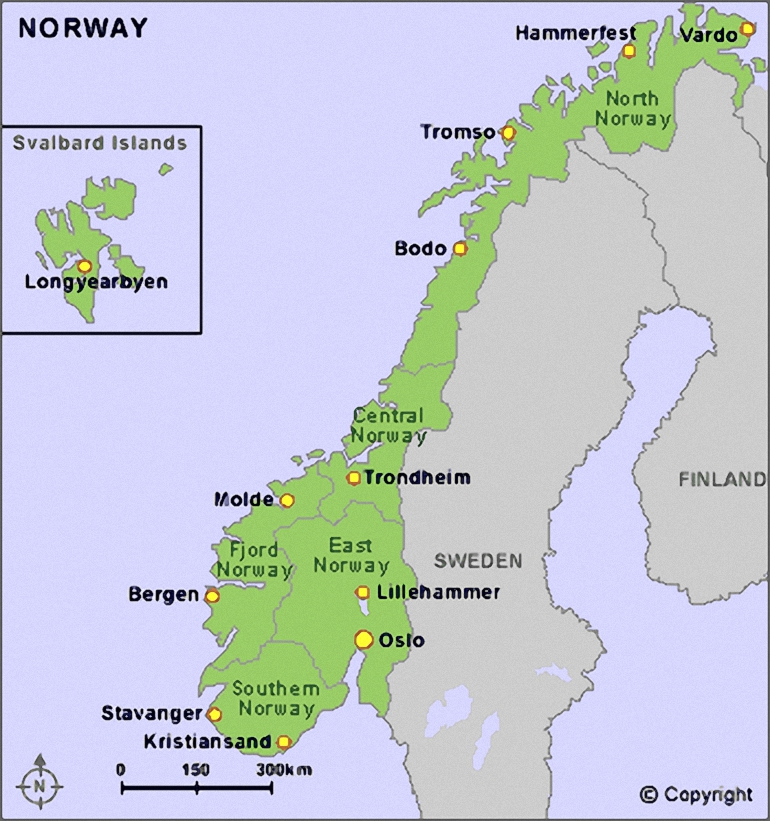
The Regions of Norway
Norway divides naturally into several distinct travel regions, each with its own character and landscape.
- Bergen and the Southwestern Fjords. Home to Bergen, the gateway to the fjord country, plus Lysefjord, Preikestolen and Kjeragbolten.
- Central Norway. Built around Trondheim, the medieval coronation city, with rolling farmland and the Trollheimen mountain range.
- Nordland and the Far North. The land of the Lofoten Islands, Tromso, Nordkapp and the Sami indigenous culture, all north of the Arctic Circle.
- Southern Norway. The gentler coastline and white wooden villages around Kristiansand and Mandal, popular with Norwegian families in summer.
- The Western Fjords. The UNESCO-listed Geirangerfjord and Naeroyfjord, the Jostedalsbreen glacier and the spectacular Trollstigen mountain road.
Map of Norway
Norwegian Culture and Famous Norwegians
Norway has produced an outsized number of artistic sons and daughters for a country of its size. The expressionist painter Edvard Munch, best known for The Scream, the Romantic composer Edvard Grieg, and the playwright Henrik Ibsen (often called the father of modern drama) all left a lasting mark on world culture. The polar explorers Fridtjof Nansen and Roald Amundsen, the first man to reach the South Pole, came from a small coastal nation that turned ice and ocean into a national identity.
Norway holds strong to many of its cultural traditions, and folk dancing, fiddle music, knitted sweaters and storytelling remain part of daily life, especially in rural areas. The annual Constitution Day on 17 May brings the country together in a sea of national costume (bunad), brass bands and children’s parades.
Cities and Towns of Norway
- Bergen, the historic gateway to the fjords, with the UNESCO-listed Bryggen wharf.
- Oslo, the capital and the oldest of the Scandinavian capitals.
- Stavanger, the prosperous oil capital and gateway to Lysefjord, Preikestolen and Kjeragbolten.
- Tromso, the “Gateway to the Arctic” and the unofficial Northern Lights capital of Europe.
- Trondheim, the medieval royal city with the famous Nidaros Cathedral.
Top Sights and Experiences in Norway
Oslo
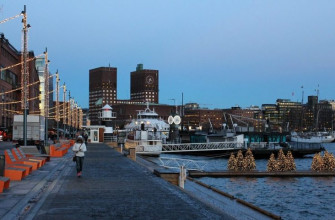
The capital, Oslo, is the oldest of the Scandinavian capitals. Founded around 1040 and granted city status in 1048, it is the largest city in Norway and home to the spectacular Akershus Fortress, a medieval castle and fortress whose origins go back to 1299. Its banquet halls, staterooms and chapel are still used for royal functions today. Beyond the fortress, Oslo holds the new Munch Museum, the white marble Opera House on the harbour, the Vigeland Sculpture Park and the famous museums of the Bygdoy peninsula.
Bergen and the Western Fjords
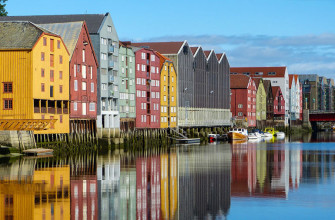
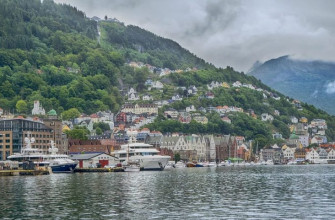
The historic city of Bergen is ideal for exploring the natural attractions of the western coast. From here you can reach Sognefjord, the longest and deepest fjord in Norway at 204 km long and over 1,300 metres deep, the breathtaking waterfalls at Geirangerfjord (a UNESCO World Heritage site) and the enormous Jostedalsbreen glacier, the largest glacier in mainland Europe. The Bryggen wharf in central Bergen, with its row of leaning wooden warehouses from the Hanseatic League era, is itself a UNESCO site and the most photographed view in the city.
Tromso and the Arctic North
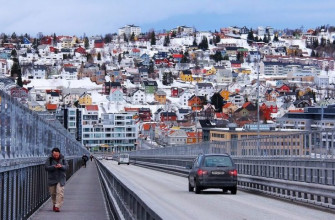
The northern town of Tromso is known as the “Gateway to the Arctic” and is one of the most lively places in the country, with street music, a famous music scene and more pubs per capita than anywhere else in Norway. The town sits 350 km north of the Arctic Circle and serves as the launch point for whale-watching, dog-sledding, snowmobile trips and Northern Lights tours.
The Northern Lights at Hammerfest and Beyond
For a truly spectacular experience, journey north to Hammerfest, Tromso or the Lofoten Islands to see the Northern Lights. Known scientifically as the aurora borealis, the lights appear as streamers of coloured light in the sky caused by the interaction of charged particles from the sun with atoms in the upper atmosphere. The lights are visible from September to early April, on clear nights away from city lights, and the experience stays with you for life.
Lofoten Islands
The Lofoten Islands, a chain of dramatic peaks rising straight from the sea above the Arctic Circle, hold some of the most photogenic landscapes in all of Norway. Tiny fishing villages of red wooden cabins (rorbuer) sit beneath jagged mountains, and the islands offer hiking, sea kayaking, surfing in cold Arctic water and excellent seafood.
Preikestolen and Kjeragbolten
The two most famous clifftop hikes in Norway both rise above Lysefjord, near Stavanger in the southwest. Preikestolen (“Pulpit Rock”) is a flat granite slab that drops 604 metres straight down to the fjord, reached by a two-hour hike from the trailhead. Kjeragbolten is an oval boulder wedged between two vertical cliffs about 1,000 metres above the water, where brave hikers step out for one of the most shared photographs on the internet.
Nordkapp (the North Cape)
Nordkapp, on the island of Mageroya in the far north, is widely considered the northernmost point of mainland Europe. The 307-metre cliff faces the Barents Sea and gives the most dramatic possible view of the midnight sun in summer or the polar night in winter.
The Norway in a Nutshell Tour
For travellers who want a taste of the fjord country in a single day, the famous Norway in a Nutshell tour combines a train ride on the Bergen Railway, the steep Flam Railway down to the fjord, a cruise along the UNESCO-listed Naeroyfjord and a bus journey across the mountains. It is one of the most popular day trips in the country.
Practical Information
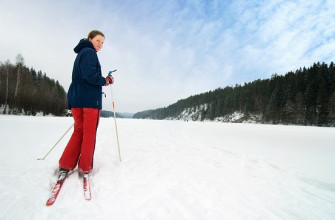
- When to visit. May to September gives long daylight, mild temperatures and the best conditions for hiking and fjord cruises. December to March works for skiing, dog-sledding and the Northern Lights.
- Currency. Norwegian krone (NOK). Norway is one of the most cashless countries in the world; cards work everywhere, including buses and small kiosks.
- Language. Norwegian, but English is spoken to a high standard almost everywhere.
- Transport. A combination of trains, coastal ferries, buses and the famous Hurtigruten coastal voyage connects most of the country. Renting a car gives the most freedom in the fjord regions.
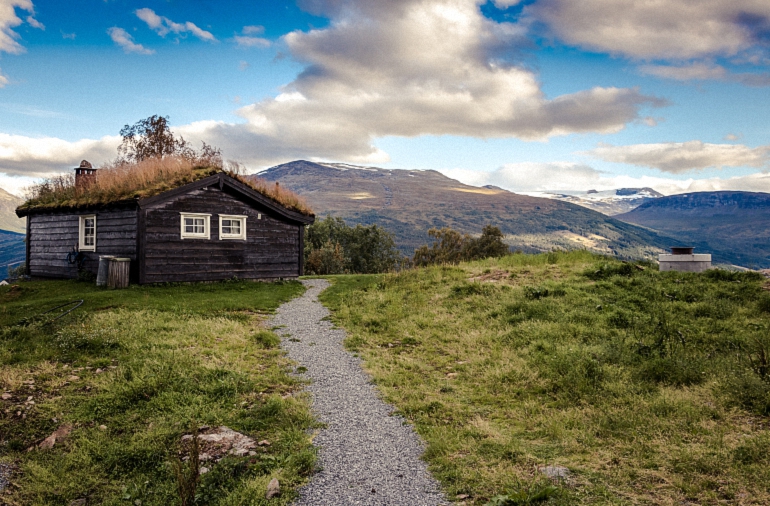
- Budget. Norway is one of the most expensive countries in Europe. Save money by stocking up at supermarkets such as Rema 1000 and Kiwi, drinking the excellent tap water and staying in cabins (hytter), hostels or campsites instead of hotels.
- Right to roam. The Norwegian allemannsretten (“everyman’s right”) lets you walk and camp freely on most uncultivated land, as long as you respect the environment and stay 150 metres from inhabited buildings.
Final Thoughts
Norway is a country of dramatic contrasts: midnight sun and polar night, glaciers and ocean, ancient Viking sagas and quietly modern cities. Whether you spend a long weekend in Oslo, hike the cliffs above Lysefjord, chase the Northern Lights from Tromso or sail the coast on the Hurtigruten, the experience will stay with you long after you return home. Like the Vikings before you, come and explore one of the most unspoiled corners of Europe.