In Cuba, sticking out your thumb is not a last resort. It is a government-run system: many state vehicles are legally required to stop for waiting passengers, and an official in uniform decides who gets the ride. Cubans call it hacer botella, and it grew out of the fuel and transport collapse of the 1990s into a permanent part of daily life. This guide explains how the botella works, who the amarillos are, why the system exists, how the fuel crisis of recent years has strained it, and how a foreign traveler fits in.
What Hacer Botella Means
To hitchhike in Cuba is to coger botella or hacer botella, literally to catch or make a bottle. The name comes from the gesture: a raised thumb tipped toward the mouth looks like someone drinking from a bottle. Cubans also say pedir botella, to ask for a ride.
This is not fringe behaviour. With private cars scarce and public transport thin, hitchhiking is an everyday way Cubans move between towns, get to work, or reach a hospital, and a person at a roadside with a raised hand is doing something completely routine. Whole families, nurses in uniform and students with backpacks wait together at the busier points.
The Amarillos and the Punto Amarillo
The system has a referee. At junctions and on the edges of towns stand officials known as amarillos, named for the mustard-yellow uniforms they wore when the role appeared. Their post is the punto amarillo, the yellow point. The amarillo flags down state vehicles that have empty seats, takes your destination, sets the order of priority among those waiting, and assigns you to a car. A small fixed fee is collected, and it goes to the state rather than the driver.
The figure is openly part of Cuban officialdom: state transport inspectors enforce the rule that government vehicles must stop at official boarding points, a duty the Ministry of Transport has restated publicly. In Havana the uniform has recently changed to blue, and the inspectors there are now sometimes called azules rather than amarillos, though the older name has stuck across the island. The corps has marked three decades of service, a sign that the state treats roadside lift-sharing as public infrastructure rather than a stopgap.
Which Vehicles Have to Stop
The obligation falls on state vehicles, and Cuba’s licence plates traditionally signal who must, should, or need not pull over.
| Plate colour | Vehicle | Stops for hitchhikers? |
|---|---|---|
| Yellow, caramel, white | State and government | Required at official points |
| Brown | Military | Should, not obliged |
| Blue | Private | Should, not obliged |
| Green | Rental and tourist | Not expected |
| Black | Diplomatic | Not expected |
Away from a punto amarillo, private drivers may stop for a small payment, since the fee then goes to them rather than the state. That informal pickup is usually faster, but it costs a little more. Cuba overhauled its plate scheme in 2013 and colours have shifted since, yet the principle holds: state plates carry the duty to stop, private and foreign plates do not.
Why Cuba Hitchhikes: the Special Period
The botella system is a child of crisis. When the Soviet Union collapsed in 1991, Cuba lost the subsidised oil and trade that had run its economy, and the United States embargo tightened the following year through the Cuban Democracy Act. The result was the Periodo especial, the Special Period, a long emergency in which fuel all but vanished and the bus fleet ground to a halt. Our note on the Cuban Democracy Act of 1992 covers the legal side of that pressure.
Out of that shortage the state made hitchhiking official. Empty seats in government cars and trucks became a public resource, the amarillos were posted to manage them, and a population without petrol learned to move by thumb. What began as an emergency measure never went away.
The scale of the shortage is hard to overstate. As Soviet oil dried up, Cuba imported more than a million bicycles from China and built more at home, and Havana turned into a city of cyclists almost overnight. Buses ran a fraction of their routes and factories idled for want of power, and the daily problem of simply crossing the city is what fixed the botella into Cuban life for good.
The Cuban Transport Ecosystem
Hitchhiking sits inside a wider patchwork of improvised transport that is worth knowing before you travel.
- Guaguas: the public buses, crowded and irregular. See our guide to buses in Cuba.
- Camellos: the Special Period camel buses, long trailer-drawn vehicles built to carry more than 300 people and named for the twin humps of their trailer. Designed by Cuban engineer Jorge Hernandez Fonseca and the national industrial-design office, they were retired from Havana around 2008 when newer buses arrived, and they are reappearing in some cities as the latest crisis bites.
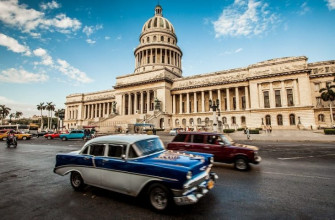
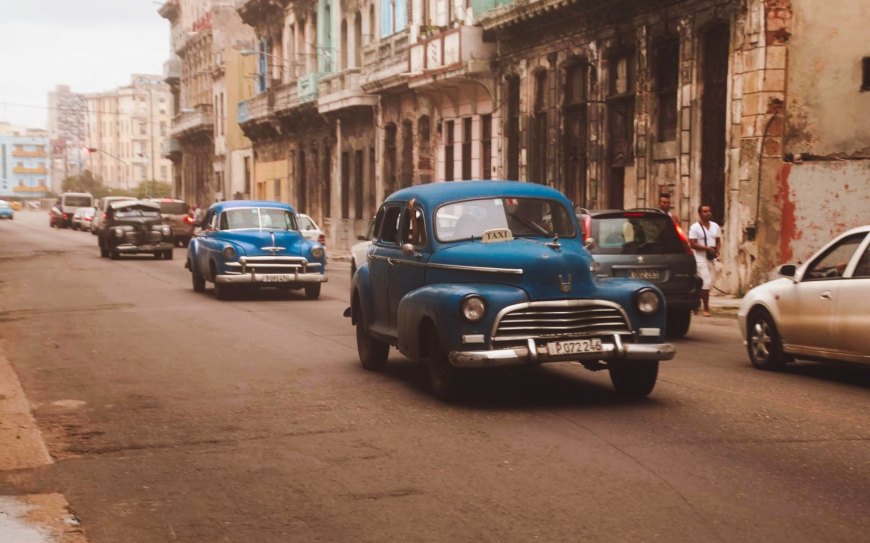
- Almendrones: vintage American cars running fixed routes as shared taxis, also called maquinas, paid in pesos.
- Camiones: converted flatbed trucks fitted with benches and a roof, the backbone of intercity travel for locals.
- Viazul: the air-conditioned coach line aimed at tourists, the one part of the system that runs to a timetable.
For the rail and road alternatives, our guides to trains in Cuba and driving in Cuba cover the detail.
The Fuel Crisis and the Botella Today
The system is under its heaviest strain in three decades. A severe fuel shortage that began to bite in 2019 and worsened sharply through 2023 and 2024 has left service stations rationing fuel or selling it only in US dollars and the hard-currency MLC system, while on the informal market a litre of petrol has reached around 6,000 Cuban pesos in Havana, a figure beyond most monthly wages. Vans and almendrones that once linked the capital with nearby towns have stopped for lack of diesel, and long queues form wherever a station takes a delivery.
The effects ripple straight back to the roadside. With fewer private cars running, more people fall back on the botella, the queues at the puntos amarillos lengthen, and the camellos that symbolised the 1990s are being pulled out again. For Cubans the wait for a ride has rarely been longer.
Hitchhiking in Cuba as a Foreign Traveler
Hitchhiking is legal and broadly safe for visitors, and it offers a closer look at daily Cuban life than any tour. Two limits are worth understanding. Tourist and rental cars carry plates that are not expected to stop, so as a foreigner you depend on state vehicles and on the goodwill of locals. And the amarillos give Cubans heading to work or home a fair priority, which is reasonable given how essential the system is to them.
Carry small notes in Cuban pesos for the fee, learn enough Spanish to name your destination and ask donde esta el punto amarillo, and treat the wait as part of the trip. For fixed schedules and comfort between major sights, Viazul remains the simpler tourist option, with the botella as the way to travel like a local on shorter hops.
Solo travelers, women included, generally describe hitchhiking in Cuba as low-risk by regional standards, helped by the open, semi-official nature of the puntos amarillos where rides are assigned in plain view. Apply the same judgement you would anywhere: favour the official points, keep your bag with you, and step out of any ride that feels wrong.
Practical Tips for the Road
- Stand at or near a punto amarillo on the edge of town, where state vehicles are obliged to stop.
- Travel early. Mornings bring more traffic and shorter waits, and afternoons thin out fast.
- Keep small peso notes ready, since the amarillo fee and informal drivers both want exact change.
- Write your destination clearly or learn to say it, as many lifts are short hops between towns rather than one long ride.
- Carry water, sun cover and patience: a wait of an hour or more is normal, especially now.
Frequently Asked Questions
Is hitchhiking legal in Cuba?
Yes. It is an official, state-managed system. Government vehicles with empty seats are required to stop at designated points, and uniformed officials called amarillos organise the queue and assign riders.
What does botella mean?
Hacer or coger botella is the Cuban term for hitchhiking. It refers to the raised-thumb gesture, which resembles the motion of drinking from a bottle.
Who are the amarillos?
They are state transport inspectors, named for the yellow uniforms they once wore, who staff the roadside points and flag down state vehicles for waiting passengers. In Havana their uniform has changed to blue, so some now call them azules.
How much does it cost to hitchhike in Cuba?
A small fixed fee in Cuban pesos at an official point, which goes to the state. Away from a punto amarillo, a private driver who stops will usually charge a little more, paid directly to them.
Can tourists hitchhike in Cuba?
Yes, and it is legal and generally safe, but tourist and rental plates are not expected to stop, so visitors rely on state vehicles and local goodwill. Cubans travelling to work get priority at the points. For schedules, the Viazul tourist coaches are the easier choice.
Why is hitchhiking so common in Cuba?
It began during the Special Period of the 1990s, after the Soviet collapse and the tightened US embargo cut fuel and crippled public transport. The state formalised it, and the fuel shortages of recent years have made it more necessary than ever.
Is it safe to hitchhike alone in Cuba?
By regional standards it is considered low-risk, partly because the official puntos amarillos assign rides in the open and many lifts are in state vehicles. Solo and women travelers commonly use it, with normal caution: stick to official points, keep your bag with you, and decline a ride that feels off.
Sources and Further Reading
- Cubadebate – the Ministry of Transport on the duty of state vehicles to stop at boarding points
- OnCuba News, Los Amarillos – photo report on the roadside inspectors and the punto amarillo
- Granma – the official daily on getting around Havana by almendron
- 14ymedio – the return of the camellos amid the fuel crisis
- Periodo especial reference – background on the 1990s crisis that created the system
- Hitchwiki, Cuba – traveler-sourced notes on routes and current practice